Loading...
Le Loi vs Philip IV the Fair
Le Loi leads by 8.9 pts · 2 figures compared
…
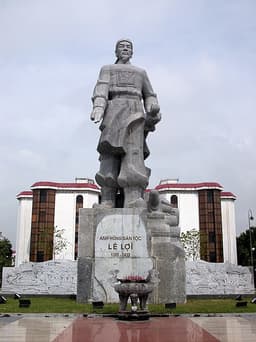
Le Loi
Emperor · Medieval
68.2Total
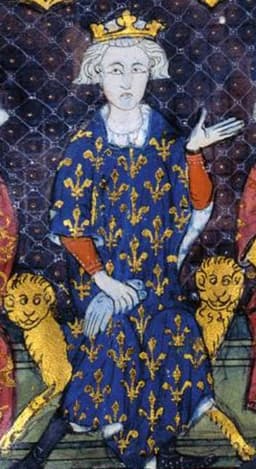
Philip IV the Fair
Emperor · Medieval
59.3Total
Basic Information
Born
1385
1268
Died
1433
1314
Era
Medieval
Medieval
Nationality
Vietnam
France
Occupation
Emperor
Emperor
Civilization
Eastern
Western
Score Comparison
Military (10%)
74.7
50.0
Political (20%)
60.0
72.0
Influence (20%)
68.0
60.0
Legacy (20%)
68.0
56.0
Leadership (15%)
72.0
68.0
Strategy (15%)
69.1
43.3
TOTAL
68.2
59.3
Le Loi — Complete Timeline
1418 AD
Lam Son Uprising BeginsWar
Le Loi launched the Lam Son uprising against Ming Chinese occupation of Dai Viet. He gathered a small force in the Lam Son region of Thanh Hoa province, beginning a decade-long guerrilla war.
Ming OccupationVietnamese IndependenceGuerrilla War
Impact: national
1426 AD
Siege of Dong QuanWar◆ Major
Le Loi's forces besieged the Ming-held citadel of Dong Quan (Hanoi). The siege cut off Ming supply lines and forced the Chinese to negotiate, leading to the eventual withdrawal of Ming forces.
SiegeMing OccupationDai Viet
Impact: national
1427 AD
Battle of Chi Lang PassWar◆ Major
Le Loi's forces ambushed and defeated a large Ming relief army at Chi Lang Pass. This decisive victory forced the Ming court to recognize Dai Viet's independence and withdraw its remaining troops.
BattleMing OccupationIndependence
Impact: regional
1428 AD
Founding of the Later Le DynastyPolitical Action
Le Loi ascended the throne as Emperor Le Thai To, founding the Later Le dynasty. He established a new capital at Dong Kinh (Hanoi) and implemented policies to rebuild the war-torn country.
Later Le DynastyVietnamese HistoryReconstruction
Impact: regionalconstructive
Philip IV the Fair — Complete Timeline
1302 AD
Conflict with Pope Boniface VIIIPolitical Action◆ Major
Philip IV clashed with Pope Boniface VIII over taxation of clergy and royal authority. He sent troops to arrest the pope at Anagni, leading to Boniface's death. This conflict asserted French royal supremacy over papal power.
Papal ConflictPower StruggleCapetian
Impact: globaldestructive
Convocation of the Estates GeneralPolitical Action◆ Major
Philip IV convened the first Estates General of France, bringing together clergy, nobility, and commoners to gain support for his conflict with the papacy. This established a precedent for representative assemblies in France.
Estates GeneralGovernanceCapetian
Impact: nationalconstructive
1306 AD
Expulsion of the Jews from FrancePolitical Action◆ Major
Philip IV ordered the expulsion of Jews from France and confiscated their property. This action was motivated by financial need and religious intolerance, and it deprived the kingdom of a significant economic community.
ExpulsionAnti-SemitismCapetian
Impact: nationaldestructive
1307 AD
Suppression of the Knights TemplarPolitical Action
Philip IV ordered the mass arrest of Knights Templar in France on charges of heresy, blasphemy, and corruption. He pressured Pope Clement V to disband the order, seizing their wealth and lands, which enriched the French crown.
Knights TemplarPersecutionPower
Impact: globaldestructive
Expert Analysis
Origins
Le Loi was born in 1385 in Lam Son, Thanh Hoa province, Dai Viet (modern Vietnam). He was a wealthy landowner from a prominent family, with deep roots in the region. His early life was shaped by the oppressive Ming occupation of Dai Viet, which began in 1407 after the Ming dynasty conquered the country. Le Loi received a classical Confucian education and was known for his strategic acumen and charisma. He gathered support from local elites and peasants resentful of Chinese rule.
Philip IV the Fair was born in 1268 at the Palace of Fontainebleau, France, as the second son of Philip III and Isabella of Aragon. He became king unexpectedly after the death of his older brother Louis. Philip was raised in the Capetian tradition of strong monarchy. He was known for his handsome appearance (hence 'the Fair') and his cold, calculating nature. He inherited a kingdom struggling with financial troubles and a powerful papacy.
Rise to Power
Le Loi's rise began in 1418 when he launched the Lam Son Uprising, gathering a small force of followers in the mountains of Thanh Hoa. Initially, the rebellion faced severe setbacks, including a Ming counteroffensive that forced Le Loi to retreat and even fake his own death. However, he slowly gained momentum through guerrilla tactics and the support of local populations. A key turning point was the Siege of Dong Quan (Hanoi) in 1426-1427, where his forces besieged the Ming-held citadel, cutting off supply lines and forcing negotiations. The decisive Battle of Chi Lang Pass in 1427 saw Le Loi's army ambush and destroy a large Ming relief army, leading to Ming recognition of Dai Viet's independence.
Philip IV ascended to the throne in 1285 at age 17 after his father's death. He quickly consolidated power by surrounding himself with skilled lawyers and administrators, known as 'legists,' who helped him assert royal authority over nobles and clergy. His major turning point was the conflict with Pope Boniface VIII. In 1296, Philip taxed the clergy without papal approval, leading to a bitter struggle. In 1303, he sent troops to arrest the pope at Anagni, an unprecedented act that led to Boniface's death and the subsequent installation of a French puppet pope in Avignon. This victory established Philip's dominance over the papacy.
Leadership & Governance
Le Loi governed as Emperor Le Thai To, founding the Later Le Dynasty in 1428. He implemented policies to rebuild a war-torn country: redistributing land, reducing taxes, and promoting Confucian education. He established a new capital at Dong Kinh (Hanoi) and centralized administration. His leadership style was consultative; he relied on advisors like Nguyen Trai, a scholar and strategist. His military strategy scored 74.7, reflecting his effective use of guerrilla warfare and terrain knowledge.
Philip IV ruled as an absolutist monarch, centralizing power by weakening feudal lords and the church. He scored 72.0 in political skill. He convened the first Estates General in 1302 to gain support against the pope, but it was a tool for propaganda rather than shared governance. He debased the currency and seized assets from Jews, Lombard bankers, and the Knights Templar to fill his coffers. His suppression of the Templars in 1307 was a brutal display of power: he arrested thousands, tortured confessions, and burned leaders at the stake. His leadership was authoritarian and pragmatic, with little concern for legality.
Triumph & Tragedy
Le Loi's greatest triumph was expelling the Ming Chinese and restoring Vietnamese independence after nearly 20 years of occupation. His victory at Chi Lang Pass is celebrated as a masterstroke of military strategy. However, his rule was not without tragedy: his later years saw purges of loyal followers, including the execution of his advisor Nguyen Trai in 1442 (though this occurred after Le Loi's death in 1433). Le Loi died at age 48, possibly from illness, leaving a stable dynasty but a court rife with factionalism.
Philip IV's triumph was the destruction of the Knights Templar, which eliminated a powerful independent military order and netted him their wealth (though much was lost to expenses). He also successfully subjugated the papacy, moving it to Avignon and ensuring French influence. However, his tragedy was financial: his constant wars (against England, Flanders) and lavish spending left France deeply in debt. He expelled the Jews in 1306 and the Lombards in 1311, but these were short-term fixes. His reign ended with the kingdom on the brink of bankruptcy. He died in 1314 from a stroke while hunting.
Character & Destiny
Le Loi was patient, resilient, and deeply committed to his cause. He endured years of hardship, including a period where he had only a handful of followers. His character is often depicted as humble and wise, listening to his advisors. This shaped his destiny as a national liberator. In contrast, Philip was cold, ruthless, and obsessed with power. He was known for his silence and aloofness, earning a reputation as 'the Fair' but also 'the Iron King.' His character drove him to crush all opposition, but his financial mismanagement sowed the seeds for future crises, including the Hundred Years' War.
Legacy
Le Loi is revered as a national hero in Vietnam, considered one of the greatest emperors. His Later Le Dynasty lasted until 1789, making it one of the longest in Vietnamese history. He is remembered for his military genius (score 74.7) and for establishing a period of independence and cultural flourishing. Streets and temples are named after him, and his image appears on currency. His strategies are studied in Vietnamese military academies.
Philip IV's legacy is mixed. He is credited with strengthening the French monarchy and laying the groundwork for absolutism, which culminated in Louis XIV. However, his persecution of the Templars and Jews, his manipulation of the papacy, and his fiscal policies are seen as cynical and destructive. The Estates General he convened became a symbol of royal manipulation. His overall influence score is 60.0, lower than Le Loi's 68.0. He is often portrayed as a villain in popular culture, such as in the 'Assassin's Creed' series.
Conclusion
Le Loi had a greater impact on his nation and the world. His military score of 74.7 versus Philip's 50.0, and his total score of 68.2 versus 59.3, reflect his superior effectiveness as a leader. While Philip shaped French absolutism, his actions were largely destructive and short-sighted. Le Loi's successful liberation of Vietnam created a lasting legacy of independence that resonates today. Philip's reign, though politically adept, left France weaker financially and morally. Therefore, Le Loi emerges as the more significant historical figure.
Rankings
🥇
Le LoiLeader
Mil: 74.7Pol: 60.0Inf: 68.0
68.2
🥈
Philip IV the Fair
Mil: 50.0Pol: 72.0Inf: 60.0
59.3
+8.9 behind
How This Comparison Works
Algorithm
Each figure is scored on 6 dimensions (0—100 scale) based on structured historical data: Military (10%), Political (20%), Influence (20%), Legacy (20%), Leadership (15%), Strategy (15%). The weighted total produces the final ranking.
Data Sources
Scores are computed from structured sub-indicators in the database. Scale factors adjust for era (Ancient ×0.85, Modern ×1.0) and civilization size (Eastern ×1.05, Other ×0.80) to account for differences in population and military scale.
Maximum 3 Figures
Comparisons are limited to 2—3 figures to ensure readability and statistical meaningfulness.
Error Margins
±5 points per dimension — Sub-scores are derived from historical records with inherent uncertainty. Two figures within 5 points on a dimension should be considered roughly equivalent in that area.
Total Score Accuracy
±3 points overall — The weighted combination of 6 dimensions produces a total score with approximately ±3 points of uncertainty. Differences of less than 3 points are not statistically significant— the figures are effectively tied.
Known Limitations
- Historical records are incomplete and uneven across civilizations
- Figures from oral-tradition societies may be underrepresented
- Occupation labels can misclassify multi-role figures
- Scores measure capability and impact, not moral character
- Quantitative scoring is a comparison tool, not absolute truth
Capability Radar
Military (10%) — Battles & Warfare
Battles
75
20
Win Rate
80
25
Expansion
65
15
Political (20%) — Governance & Reform
Reform
70
75
Diplomacy
75
65
Economy
65
60
Influence (20%) — Cultural & Global Reach
Cultural
80
50
Global
55
50
Legacy (20%) — Historical Impact
Historical
85
65
Longevity
75
55
Leadership (15%) — Power & Stability
Tenure
60
70
Stability
70
55
Strategy (15%) — Tactics & Innovation
Strategy
82
35
Tactics
78
30
Reform
70
40
Similar Comparisons
Comments & Discussion
No comments yet. Be the first to share your thoughts!