Loading...
Le Loi vs Malcolm III Canmore
Le Loi leads by 9.5 pts · 2 figures compared
…
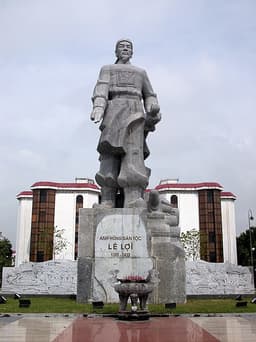
Le Loi
Emperor · Medieval
68.2Total
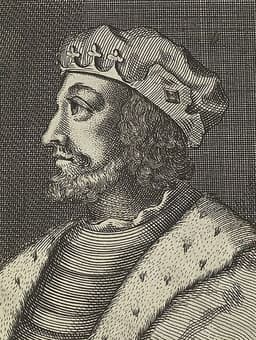
Malcolm III Canmore
Emperor · Medieval
58.7Total
Basic Information
Born
1385
1031
Died
1433
1093
Era
Medieval
Medieval
Nationality
Vietnam
Scotland
Occupation
Emperor
Emperor
Civilization
Eastern
Western
Score Comparison
Military (10%)
74.7
45.0
Political (20%)
60.0
68.0
Influence (20%)
68.0
57.2
Legacy (20%)
68.0
54.0
Leadership (15%)
72.0
68.0
Strategy (15%)
69.1
60.0
TOTAL
68.2
58.7
Le Loi — Complete Timeline
1418 AD
Lam Son Uprising BeginsWar
Le Loi launched the Lam Son uprising against Ming Chinese occupation of Dai Viet. He gathered a small force in the Lam Son region of Thanh Hoa province, beginning a decade-long guerrilla war.
Ming OccupationVietnamese IndependenceGuerrilla War
Impact: national
1426 AD
Siege of Dong QuanWar◆ Major
Le Loi's forces besieged the Ming-held citadel of Dong Quan (Hanoi). The siege cut off Ming supply lines and forced the Chinese to negotiate, leading to the eventual withdrawal of Ming forces.
SiegeMing OccupationDai Viet
Impact: national
1427 AD
Battle of Chi Lang PassWar◆ Major
Le Loi's forces ambushed and defeated a large Ming relief army at Chi Lang Pass. This decisive victory forced the Ming court to recognize Dai Viet's independence and withdraw its remaining troops.
BattleMing OccupationIndependence
Impact: regional
1428 AD
Founding of the Later Le DynastyPolitical Action
Le Loi ascended the throne as Emperor Le Thai To, founding the Later Le dynasty. He established a new capital at Dong Kinh (Hanoi) and implemented policies to rebuild the war-torn country.
Later Le DynastyVietnamese HistoryReconstruction
Impact: regionalconstructive
Malcolm III Canmore — Complete Timeline
1057 AD
Battle of LumphananWar
Malcolm Canmore killed Macbeth at the Battle of Lumphanan, ending Macbeth's reign. Malcolm then claimed the Scottish throne, though he faced opposition from Macbeth's stepson Lulach, whom he killed in 1058 to secure his position.
BattleSuccessionMacbeth
Impact: national
1070 AD
Invasion of England (1070s)War◆ Major
Malcolm launched a series of raids into northern England, exploiting the instability after the Norman Conquest. He invaded Northumbria in 1070 and again in 1079, but was forced to submit to William the Conqueror at the Treaty of Abernethy in 1072, becoming a vassal.
InvasionNorthumbriaNorman Conquest
Impact: regional
Marriage to Margaret of WessexPolitical Action◆ Major
Malcolm married Margaret, an Anglo-Saxon princess who had fled to Scotland after the Norman Conquest. The marriage strengthened ties with the English church and nobility, and Margaret later became a saint. It also introduced English cultural and religious influences to the Scottish court.
MarriageAnglo-SaxonReligion
Impact: regionalconstructive
1093 AD
Battle of AlnwickWar◆ Major
Malcolm invaded England again and was killed at the Battle of Alnwick in Northumberland, along with his eldest son Edward. His death led to a succession crisis in Scotland, as his brother Donald III seized the throne, beginning a period of instability.
BattleDeathSuccession Crisis
Impact: nationaltragic
Expert Analysis
Origins
Le Loi was born in 1385 in the Lam Son region of Thanh Hoa province, Dai Viet (modern Vietnam). His family were local aristocrats with a tradition of military service. Little is known of his early education, but he was deeply influenced by Confucian ideals and the desire to restore Vietnamese independence after the Ming Chinese occupation began in 1407. He was not initially a high-ranking official but a landowner who organized resistance from his base.
Malcolm III Canmore, born around 1031, was the son of King Duncan I of Scotland. After Duncan's murder by Macbeth in 1040, Malcolm fled to England, spending years in exile at the court of Edward the Confessor. This experience shaped his political outlook, exposing him to Anglo-Saxon governance and military tactics. He returned to Scotland to claim his throne.
Rise to Power
Le Loi's rise began in 1418 when he launched the Lam Son Uprising with a small band of followers in the mountainous region of Thanh Hoa. Initially, his forces were weak, but he employed guerrilla tactics, avoiding pitched battles and relying on local support. A turning point came in 1426 when his general Nguyen Trai devised a strategy to besiege Dong Quan (Hanoi), cutting off Ming supply lines. The decisive Battle of Chi Lang Pass in 1427 saw his forces ambush a Ming relief army, killing the commander and forcing the Ming court to negotiate. By 1428, Le Loi had expelled the Chinese and founded the Later Le dynasty, ascending the throne as Emperor Le Thai To.
Malcolm III's rise to power was more direct. In 1054, with English support, he defeated Macbeth at the Battle of Dunsinane, but Macbeth survived. The final victory came at the Battle of Lumphanan in 1057, where Malcolm killed Macbeth. He then faced opposition from Macbeth's stepson Lulach, whom he defeated and killed in 1058. Malcolm's claim was secured, but his reign was marked by ongoing conflicts with Norse and Scottish rivals.
Leadership & Governance
Le Loi's leadership was characterized by strategic patience and reliance on capable advisors like Nguyen Trai. He implemented Confucian reforms, restoring the civil service examination system and centralizing administration. He established a new capital at Dong Kinh (Hanoi) and redistributed land to peasants, earning him popular support. His military score of 74.7 reflects his ability to win against a larger enemy through superior strategy and morale.
Malcolm III's leadership was more aggressive and expansionist. He consolidated royal power by suppressing rebellions and integrating Norse territories. He married Margaret of Wessex in 1070, an Anglo-Saxon princess who introduced English customs and reformed the Scottish Church. Malcolm's political score of 68.0 shows his skill in diplomacy, but his repeated invasions of England (1070, 1091, 1093) were costly and ultimately fatal. His leadership style was direct, relying on personal valor rather than strategic subtlety.
Triumph & Tragedy
Le Loi's greatest triumph was the expulsion of the Ming Chinese, a feat that restored Vietnamese independence and founded a dynasty that lasted over 350 years. His success at Chi Lang Pass is considered a masterpiece of ambush tactics. However, his tragedy lies in his early death in 1433, just five years after taking the throne, leaving a young heir and a regency that struggled to maintain stability. His reforms were incomplete, and later dynastic conflicts weakened the state.
Malcolm III's triumph was establishing the Canmore dynasty, which ruled Scotland for two centuries. He expanded Scottish territory and strengthened ties with England through his marriage. His tragedy was his death at the Battle of Alnwick in 1093, invading England for the third time. He and his eldest son Edward were killed, triggering a succession crisis. His aggressive policies left Scotland vulnerable to Norman influence.
Character & Destiny
Le Loi was patient and calculating, willing to wait years for the right moment to strike. He delegated authority to talented generals and administrators, showing humility and pragmatism. His destiny was to liberate his country, but his early death prevented him from fully consolidating his achievements. Historians praise his strategic vision but note his reliance on Nguyen Trai's counsel.
Malcolm III was bold and ambitious, but also impetuous. His repeated invasions of England suggest a lack of strategic restraint. He was a capable warrior but not a great diplomat, as his death in a poorly planned campaign shows. His character, shaped by exile and a desire to reclaim his birthright, drove him to take risks that ultimately cost him his life.
Legacy
Le Loi's legacy is profound in Vietnam. He is revered as a national hero who liberated the country from foreign rule. The Later Le dynasty he founded became one of Vietnam's most enduring, shaping its political culture. His military tactics, particularly guerrilla warfare, influenced later Vietnamese resistance movements. In terms of impact, Le Loi's influence score of 68.0 reflects his lasting national significance.
Malcolm III's legacy is more complex. He established the Canmore line, but his death led to a period of instability. His marriage to Margaret of Wessex brought English cultural influence, which eventually led to the Anglicization of the Scottish court. However, his military failures and aggressive policies are often criticized. His legacy score of 54.0 indicates a moderate but not transformative impact.
Conclusion
Le Loi had a greater impact than Malcolm III. With a total score of 68.2 versus Malcolm's 58.7, the 9.5-point gap is significant. Le Loi's military achievement—expelling a major imperial power—was a strategic masterpiece that changed the course of Vietnamese history. Malcolm III, while important for founding a dynasty, failed to secure his own kingdom from external threats and died in a failed invasion. Le Loi's legacy as a liberator and state-builder surpasses Malcolm's as a warrior-king who overreached. Thus, Le Loi stands as the more consequential figure.
Rankings
🥇
Le LoiLeader
Mil: 74.7Pol: 60.0Inf: 68.0
68.2
🥈
Malcolm III Canmore
Mil: 45.0Pol: 68.0Inf: 57.2
58.7
+9.5 behind
How This Comparison Works
Algorithm
Each figure is scored on 6 dimensions (0—100 scale) based on structured historical data: Military (10%), Political (20%), Influence (20%), Legacy (20%), Leadership (15%), Strategy (15%). The weighted total produces the final ranking.
Data Sources
Scores are computed from structured sub-indicators in the database. Scale factors adjust for era (Ancient ×0.85, Modern ×1.0) and civilization size (Eastern ×1.05, Other ×0.80) to account for differences in population and military scale.
Maximum 3 Figures
Comparisons are limited to 2—3 figures to ensure readability and statistical meaningfulness.
Error Margins
±5 points per dimension — Sub-scores are derived from historical records with inherent uncertainty. Two figures within 5 points on a dimension should be considered roughly equivalent in that area.
Total Score Accuracy
±3 points overall — The weighted combination of 6 dimensions produces a total score with approximately ±3 points of uncertainty. Differences of less than 3 points are not statistically significant— the figures are effectively tied.
Known Limitations
- Historical records are incomplete and uneven across civilizations
- Figures from oral-tradition societies may be underrepresented
- Occupation labels can misclassify multi-role figures
- Scores measure capability and impact, not moral character
- Quantitative scoring is a comparison tool, not absolute truth
Capability Radar
Military (10%) — Battles & Warfare
Battles
75
45
Win Rate
80
50
Expansion
65
55
Political (20%) — Governance & Reform
Reform
70
55
Diplomacy
75
60
Economy
65
50
Influence (20%) — Cultural & Global Reach
Cultural
80
45
Global
55
30
Legacy (20%) — Historical Impact
Historical
85
55
Longevity
75
60
Leadership (15%) — Power & Stability
Tenure
60
70
Stability
70
55
Strategy (15%) — Tactics & Innovation
Strategy
82
45
Tactics
78
40
Reform
70
30
Similar Comparisons
Comments & Discussion
No comments yet. Be the first to share your thoughts!