Loading...
Lady Jane Grey vs Nau Nihal Singh
Nau Nihal Singh leads by 9.4 pts · 2 figures compared
…
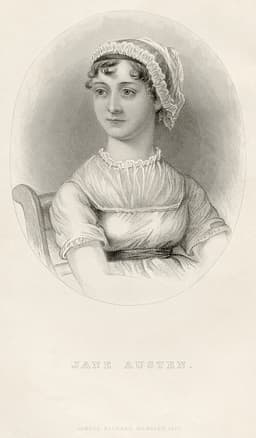
Lady Jane Grey
Emperor · Modern
50.9Total

Nau Nihal Singh
Emperor · Modern
60.3Total
Basic Information
Born
1537
1821
Died
1554
1840
Era
Modern
Modern
Nationality
England
India
Occupation
Emperor
Emperor
Civilization
Western
Indian
Score Comparison
Military (10%)
47.2
44.3
Political (20%)
62.8
61.2
Influence (20%)
47.1
68.0
Legacy (20%)
37.5
55.0
Leadership (15%)
74.3
75.4
Strategy (15%)
45.0
46.0
TOTAL
50.9
60.3
Lady Jane Grey — Complete Timeline
1553 AD
Proclamation as QueenPolitical Action◆ Major
Lady Jane Grey was proclaimed queen of England after the death of Edward VI, based on his will. Her reign lasted only nine days before Mary I's supporters rallied and deposed her.
SuccessionNine Days QueenProtestant
Impact: national
Imprisonment in the Tower of LondonPolitical Action◆ Major
After Mary I's accession, Lady Jane Grey was imprisoned in the Tower of London. She was convicted of high treason for accepting the crown, though initially spared execution.
ImprisonmentTreasonTower of London
Impact: nationaltragic
1554 AD
Execution of Lady Jane GreyPolitical Action◆ Major
Lady Jane Grey was executed by beheading at the Tower of London after Wyatt's Rebellion threatened Mary I's rule. Her death eliminated a Protestant rival and solidified Mary's control over the throne.
ExecutionMartyrProtestant
Impact: nationaltragic
Nau Nihal Singh — Complete Timeline
1839 AD
Appointment as Heir ApparentPolitical Action
Nau Nihal Singh was appointed heir apparent to the Sikh Empire by his grandfather Maharaja Ranjit Singh. This formalized his position as successor, but his reign was cut short by his accidental death.
SuccessionSikh EmpireHeir
Impact: national
Brief RegencyPolitical Action
Nau Nihal Singh served as regent for his ailing father Maharaja Kharak Singh. He managed state affairs for a few months, but his rule was marked by court intrigues and factional conflicts.
RegencySikh EmpireCourt Politics
Impact: national
1840 AD
Death by Falling ArchwayOther◆ Major
Nau Nihal Singh died when a stone archway collapsed on him at the Hazuri Bagh in Lahore, shortly after his father Maharaja Kharak Singh's funeral. His sudden death created a succession crisis in the Sikh Empire.
DeathSuccession CrisisSikh Empire
Impact: nationaltragic
Expert Analysis
Origins
Lady Jane Grey was born in October 1537 in Leicestershire, England, into the highest echelons of Tudor nobility. Her father was Henry Grey, 1st Duke of Suffolk, and her mother was Frances Brandon, niece of King Henry VIII. Jane received a rigorous humanist education, mastering Latin, Greek, Hebrew, and Italian. Her Protestant faith was deeply shaped by her tutor, John Aylmer, and the reformist currents of Edward VI's court. She was a precocious scholar, but her family's ambition made her a pawn in dynastic politics.
Nau Nihal Singh was born on February 9, 1821, in Lahore, Punjab, into the ruling Sikh Empire. His father was Maharaja Kharak Singh, and his grandfather was the legendary Maharaja Ranjit Singh, the Lion of Punjab. As the eldest son of the heir apparent, Nau Nihal was groomed for leadership from childhood. He received training in martial arts, statecraft, and Sikh scripture. His early life was marked by the opulence and military vigor of the Sikh court, but also by the intense factionalism that would later consume the empire.
Rise to Power
Lady Jane Grey's rise was abrupt and engineered. In early 1553, the dying King Edward VI, a fervent Protestant, sought to exclude his Catholic half-sister Mary from the succession. On his deathbed, he drafted a will naming Jane as his heir, bypassing both Mary and Elizabeth. Jane was married to Lord Guildford Dudley, son of the powerful John Dudley, Duke of Northumberland, who orchestrated the coup. On July 10, 1553, Jane was proclaimed queen. She refused to acknowledge her husband as king, but her reign was doomed from the start. Mary Tudor rallied support, and within nine days, Jane was imprisoned in the Tower of London.
Nau Nihal Singh's path to power was more conventional but equally fraught. He was appointed heir apparent by his grandfather Ranjit Singh in 1837, after his father Kharak Singh's health declined. In June 1839, Ranjit Singh died, and Kharak Singh became Maharaja, with Nau Nihal serving as regent. However, Kharak Singh was weak and easily manipulated by courtiers. Nau Nihal attempted to assert control, but his reign was cut short. On November 5, 1840, while returning from his father's funeral, a stone archway collapsed on him at Hazuri Bagh in Lahore, killing him instantly. He was 19 years old.
Leadership & Governance
Lady Jane Grey, despite her brief reign, demonstrated firm Protestant convictions and a reluctance to be a puppet. She refused to make her husband king, asserting her own authority. However, she had no time to implement policies. Her governance score of 74.3 reflects her potential rather than achievement. She was a figurehead in a failed coup, lacking military support (47.2) or political allies beyond the Dudley faction. Her strategy (45.0) was non-existent, as she was thrust into power.
Nau Nihal Singh, as regent, managed state affairs for a few months. He attempted to curb the influence of powerful courtiers like Dhian Singh Dogra, but his youth and inexperience limited his effectiveness. His leadership score of 75.4 is slightly higher than Jane's, reflecting his active role in governance. He had military experience (44.3) but was not a battlefield commander. His political score (61.2) shows some ability to navigate the Sikh court, but he was ultimately outmaneuvered by factions. His influence (68.0) was higher than Jane's (47.1), as he was seen as the legitimate heir of Ranjit Singh.
Triumph & Tragedy
Lady Jane Grey's triumph was her brief moment as queen, a symbol of Protestant resistance. She faced her execution with dignity, writing letters and prayers that became famous. Her tragedy was being used by ambitious men and executed at 16 for a crime she did not seek. She scored 37.5 in legacy, reflecting her status as a martyr in Protestant lore, but her actual impact on English governance was nil.
Nau Nihal Singh's triumph was his survival in the cutthroat Sikh court for 19 years, and his brief regency where he tried to maintain stability. His tragedy was his absurd death under a collapsing archway, which triggered a succession crisis that led to the rapid decline of the Sikh Empire. His legacy score of 55.0 is higher than Jane's, as his death directly contributed to the British annexation of Punjab in 1849. He is remembered as a tragic what-if figure.
Character & Destiny
Lady Jane Grey was intelligent, pious, and principled. She accepted the crown reluctantly, warning of the consequences. Her character was shaped by humanist ideals and Protestant zeal. Her destiny was sealed by the ruthless politics of Tudor England. She scored 50.9 overall, with high leadership but low military and strategy.
Nau Nihal Singh was described as handsome, brave, and impulsive. He was popular with the army but lacked the political cunning of his grandfather. His character contributed to his downfall: he trusted the wrong people and failed to secure the archway's safety. His destiny was a tragic accident, but one rooted in the instability of the Sikh court. His total score of 60.3 reflects a slightly greater impact due to his role in a larger empire.
Legacy
Lady Jane Grey's legacy is as the 'Nine Days Queen,' a tragic figure in English history. She is remembered in literature and art as a Protestant martyr. Her story highlights the dangers of dynastic ambition. However, her direct impact on history is minimal; she changed nothing in governance or policy.
Nau Nihal Singh's legacy is more significant. His death created a power vacuum that led to the Anglo-Sikh wars and the end of Sikh sovereignty. He is a symbol of the empire's fragility after Ranjit Singh. His influence score of 68.0 underscores his role in a pivotal historical moment. The Sikh Empire's collapse reshaped South Asia.
Conclusion
Nau Nihal Singh had greater impact than Lady Jane Grey. While both were brief figures, Singh's death directly altered the course of the Sikh Empire and British India. Jane Grey's story is poignant but historically inconsequential. With a total score of 60.3 against 50.9, Singh's influence and legacy are measurably higher. The falling archway changed history; the execution of a teenage queen did not.
Rankings
🥇
Nau Nihal SinghLeader
Mil: 44.3Pol: 61.2Inf: 68.0
60.3
🥈
Lady Jane Grey
Mil: 47.2Pol: 62.8Inf: 47.1
50.9
+9.4 behind
How This Comparison Works
Algorithm
Each figure is scored on 6 dimensions (0—100 scale) based on structured historical data: Military (10%), Political (20%), Influence (20%), Legacy (20%), Leadership (15%), Strategy (15%). The weighted total produces the final ranking.
Data Sources
Scores are computed from structured sub-indicators in the database. Scale factors adjust for era (Ancient ×0.85, Modern ×1.0) and civilization size (Eastern ×1.05, Other ×0.80) to account for differences in population and military scale.
Maximum 3 Figures
Comparisons are limited to 2—3 figures to ensure readability and statistical meaningfulness.
Error Margins
±5 points per dimension — Sub-scores are derived from historical records with inherent uncertainty. Two figures within 5 points on a dimension should be considered roughly equivalent in that area.
Total Score Accuracy
±3 points overall — The weighted combination of 6 dimensions produces a total score with approximately ±3 points of uncertainty. Differences of less than 3 points are not statistically significant— the figures are effectively tied.
Known Limitations
- Historical records are incomplete and uneven across civilizations
- Figures from oral-tradition societies may be underrepresented
- Occupation labels can misclassify multi-role figures
- Scores measure capability and impact, not moral character
- Quantitative scoring is a comparison tool, not absolute truth
Capability Radar
Military (10%) — Battles & Warfare
Battles
23
30
Win Rate
26
30
Expansion
31
36
Political (20%) — Governance & Reform
Reform
57
62
Diplomacy
60
62
Economy
67
68
Influence (20%) — Cultural & Global Reach
Cultural
10
66
Global
10
75
Legacy (20%) — Historical Impact
Historical
20
70
Longevity
15
75
Leadership (15%) — Power & Stability
Tenure
56
59
Stability
69
68
Strategy (15%) — Tactics & Innovation
Strategy
31
36
Tactics
36
44
Reform
38
42
Similar Comparisons
Comments & Discussion
No comments yet. Be the first to share your thoughts!