Loading...
George VI vs Lady Jane Grey
George VI leads by 5.4 pts · 2 figures compared
…

George VI
Emperor · Modern
56.3Total
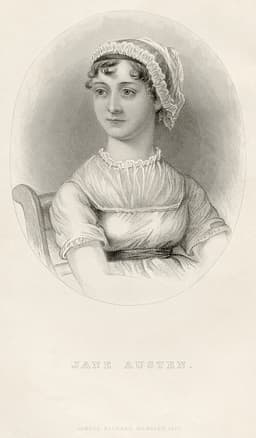
Lady Jane Grey
Emperor · Modern
50.9Total
Basic Information
Born
1895
1537
Died
1952
1554
Era
Modern
Modern
Nationality
United Kingdom
England
Occupation
Emperor
Emperor
Civilization
Western
Western
Score Comparison
Military (10%)
10.0
47.2
Political (20%)
72.0
62.8
Influence (20%)
56.7
47.1
Legacy (20%)
54.0
37.5
Leadership (15%)
72.0
74.3
Strategy (15%)
60.0
45.0
TOTAL
56.3
50.9
George VI — Complete Timeline
1936 AD
Accession to the ThronePolitical Action
George VI became king on December 11, 1936, following the abdication of his brother Edward VIII. He was crowned on May 12, 1937. His reign began under the shadow of constitutional crisis and the looming threat of war in Europe.
CoronationMonarchySuccession
Impact: national
1939 AD
King's Speech BroadcastCultural◆ Major
George VI delivered a radio broadcast to the British Empire on September 3, 1939, announcing the declaration of war against Germany. His speech, delivered despite a stammer, became a symbol of national resolve and unity during World War II.
World War IIBroadcastNational Unity
Impact: global
1940 AD
Remained in London During BlitzPolitical Action◆ Major
George VI and Queen Elizabeth refused to leave London or send their children to safety during the Blitz. They remained at Buckingham Palace, which was bombed on September 13, 1940. Their decision to stay boosted public morale and symbolized shared sacrifice.
World War IIBlitzRoyal Family
Impact: nationalconstructive
1944 AD
Visited Battlefronts in EuropeWar
George VI visited Allied troops in Normandy, France, on June 16, 1944, just ten days after D-Day. He also toured other battlefronts in North Africa and Italy during the war, becoming the first British monarch to visit active combat zones since George II.
World War IIRoyal VisitMilitary
Impact: regionalconstructive
1947 AD
End of British Raj in IndiaPolitical Action◆ Major
George VI relinquished the title of Emperor of India on June 22, 1948, following Indian independence on August 15, 1947. This marked the formal end of British imperial rule in India and the transformation of the monarchy's role in the Commonwealth.
DecolonizationIndiaCommonwealth
Impact: global
Lady Jane Grey — Complete Timeline
1553 AD
Proclamation as QueenPolitical Action◆ Major
Lady Jane Grey was proclaimed queen of England after the death of Edward VI, based on his will. Her reign lasted only nine days before Mary I's supporters rallied and deposed her.
SuccessionNine Days QueenProtestant
Impact: national
Imprisonment in the Tower of LondonPolitical Action◆ Major
After Mary I's accession, Lady Jane Grey was imprisoned in the Tower of London. She was convicted of high treason for accepting the crown, though initially spared execution.
ImprisonmentTreasonTower of London
Impact: nationaltragic
1554 AD
Execution of Lady Jane GreyPolitical Action◆ Major
Lady Jane Grey was executed by beheading at the Tower of London after Wyatt's Rebellion threatened Mary I's rule. Her death eliminated a Protestant rival and solidified Mary's control over the throne.
ExecutionMartyrProtestant
Impact: nationaltragic
Expert Analysis
Origins
George VI (born Albert Frederick Arthur George on December 14, 1895) was the second son of King George V and Queen Mary. He was never expected to become king, as his elder brother Edward was the heir. He attended naval college as a youth and served in the Royal Navy during World War I. His early life was marked by a stammer, which he struggled to overcome with the help of speech therapist Lionel Logue. In 1923, he married Lady Elizabeth Bowes-Lyon, who became his steadfast partner.
Lady Jane Grey (born October 1537) was the great-granddaughter of Henry VII, making her a cousin to Edward VI. She was raised as a devout Protestant and given a humanist education, studying Latin, Greek, and Hebrew. Her parents, Henry Grey, Duke of Suffolk, and Frances Brandon, pushed her into the political spotlight. At age 16, she was married to Lord Guildford Dudley as part of a scheme by John Dudley, Duke of Northumberland, to secure Protestant succession.
Rise to Power
George VI's rise was accidental. On January 20, 1936, his father died, and Edward VIII ascended. But Edward's desire to marry Wallis Simpson, a twice-divorced American, led to a constitutional crisis. Edward abdicated on December 11, 1936, and George, as next in line, became king. He was crowned on May 12, 1937. His accession was sudden and unwelcome; he later wrote, "I never wanted this to happen." He had no preparation for kingship, yet he accepted the burden.
Lady Jane Grey's rise was engineered. On July 6, 1553, the dying Edward VI, under Northumberland's influence, signed a "Device for the Succession" naming Jane as his heir, bypassing his Catholic half-sisters Mary and Elizabeth. After Edward's death on July 10, Jane was proclaimed queen. However, popular support quickly swung to Mary, who raised an army. Jane's reign lasted only nine days, ending on July 19, when she was imprisoned in the Tower of London.
Leadership & Governance
George VI's leadership was defined by his role during World War II. He refused to leave London during the Blitz, staying at Buckingham Palace—which was bombed nine times. He visited bomb sites, factories, and troops, boosting morale. His radio broadcasts, especially the 1939 speech declaring war, were delivered with effort due to his stammer, but his perseverance inspired the nation. Politically, he was a constitutional monarch, working closely with Prime Ministers Winston Churchill and Clement Attlee, and supporting the war effort without overstepping boundaries.
Lady Jane Grey had no opportunity to govern. During her nine-day reign, she issued no laws or policies. She was essentially a figurehead for Northumberland. Her only notable act was refusing to allow her husband Guildford to be crowned king, showing a degree of personal resolve. Her governance score of 74.3 reflects potential rather than achievement, as she was intelligent and principled, but lacked any real power.
Triumph & Tragedy
George VI's greatest triumph was leading Britain through its darkest hour. His steady presence and symbolic leadership helped unify the country. He also oversaw the transition from empire to Commonwealth, accepting the loss of the title Emperor of India in 1948 with grace. His tragedy was the strain of kingship on his health; he suffered from lung cancer and died at age 56 on February 6, 1952. His heavy smoking and stress contributed to his early death.
Lady Jane Grey's triumph was her steadfast Protestant faith and refusal to convert to Catholicism even under threat of death. Her tragedy was her execution at age 16 on February 12, 1554, after Wyatt's Rebellion led Mary I to view her as a threat. She was beheaded in the Tower of London, a pawn in a political game she never sought. Her death was a brutal end to a promising life.
Character & Destiny
George VI was shy, dutiful, and determined. He overcame his stammer through sheer will, a testament to his character. His sense of duty drove him to accept the throne despite his reluctance. Historians note his warmth and dedication to family. His destiny was shaped by his brother's abdication and the war, but he rose to the occasion.
Lady Jane Grey was scholarly, pious, and passive. She was described as gentle and learned, but she lacked political ambition. Her destiny was sealed by her family's ambition and the religious turmoil of the time. She accepted the crown reluctantly, reportedly fainting when first told of her accession. Her character made her a victim rather than a ruler.
Legacy
George VI's legacy is as the wartime king. He symbolizes British resilience and constitutional monarchy. His daughter Elizabeth II succeeded him and reigned for 70 years, building on his example. His story was popularized in the 2010 film "The King's Speech." In terms of scores, he scored 72.0 in political and 54.0 in legacy, reflecting his solid but not transformative impact.
Lady Jane Grey's legacy is as a tragic martyr. She is remembered as the "Nine Days Queen," a symbol of innocence caught in power struggles. Her story has been romanticized in art and literature. She scored 37.5 in legacy, reflecting her lack of lasting influence on governance, but her cultural impact endures. Her military score of 47.2 is artificial as she never commanded troops.
Conclusion
George VI had a greater impact on history. His leadership during WWII was crucial, and his reign strengthened the British monarchy. Lady Jane Grey, despite her intelligence and courage, was a pawn whose brief reign had no real effect on policy or the nation. George VI's total score of 56.3 versus Jane's 50.9 reflects his more substantial contribution. While Jane's story is compelling, George VI's actions shaped the modern world. Therefore, George VI is the more significant historical figure.
Rankings
🥇
George VILeader
Mil: 10.0Pol: 72.0Inf: 56.7
56.3
🥈
Lady Jane Grey
Mil: 47.2Pol: 62.8Inf: 47.1
50.9
+5.4 behind
How This Comparison Works
Algorithm
Each figure is scored on 6 dimensions (0—100 scale) based on structured historical data: Military (10%), Political (20%), Influence (20%), Legacy (20%), Leadership (15%), Strategy (15%). The weighted total produces the final ranking.
Data Sources
Scores are computed from structured sub-indicators in the database. Scale factors adjust for era (Ancient ×0.85, Modern ×1.0) and civilization size (Eastern ×1.05, Other ×0.80) to account for differences in population and military scale.
Maximum 3 Figures
Comparisons are limited to 2—3 figures to ensure readability and statistical meaningfulness.
Error Margins
±5 points per dimension — Sub-scores are derived from historical records with inherent uncertainty. Two figures within 5 points on a dimension should be considered roughly equivalent in that area.
Total Score Accuracy
±3 points overall — The weighted combination of 6 dimensions produces a total score with approximately ±3 points of uncertainty. Differences of less than 3 points are not statistically significant— the figures are effectively tied.
Known Limitations
- Historical records are incomplete and uneven across civilizations
- Figures from oral-tradition societies may be underrepresented
- Occupation labels can misclassify multi-role figures
- Scores measure capability and impact, not moral character
- Quantitative scoring is a comparison tool, not absolute truth
Capability Radar
Military (10%) — Battles & Warfare
Battles
38
23
Win Rate
38
26
Expansion
44
31
Political (20%) — Governance & Reform
Reform
55
57
Diplomacy
70
60
Economy
50
67
Influence (20%) — Cultural & Global Reach
Cultural
55
10
Global
60
10
Legacy (20%) — Historical Impact
Historical
65
20
Longevity
50
15
Leadership (15%) — Power & Stability
Tenure
60
56
Stability
65
69
Strategy (15%) — Tactics & Innovation
Strategy
44
31
Tactics
51
36
Reform
49
38
Similar Comparisons
Comments & Discussion
No comments yet. Be the first to share your thoughts!