Loading...
Lady Jane Grey vs Napoleon Bonaparte
Napoleon Bonaparte leads by 20.0 pts · 2 figures compared
…
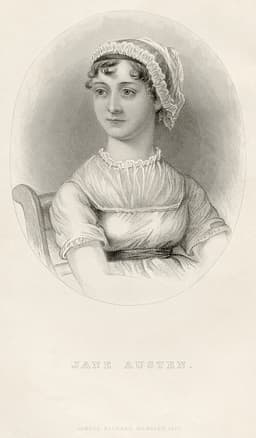
Lady Jane Grey
Emperor · Modern
50.9Total

Napoleon Bonaparte
General · Modern
70.9Total
Basic Information
Born
1537
1769
Died
1554
1821
Era
Modern
Modern
Nationality
England
France
Occupation
Emperor
General
Civilization
Western
Western
Score Comparison
Military (10%)
47.2
94.0
Political (20%)
62.8
72.0
Influence (20%)
47.1
40.0
Legacy (20%)
37.5
80.0
Leadership (15%)
74.3
78.0
Strategy (15%)
45.0
90.0
TOTAL
50.9
70.9
Lady Jane Grey — Complete Timeline
1553 AD
Proclamation as QueenPolitical Action◆ Major
Lady Jane Grey was proclaimed queen of England after the death of Edward VI, based on his will. Her reign lasted only nine days before Mary I's supporters rallied and deposed her.
SuccessionNine Days QueenProtestant
Impact: national
Imprisonment in the Tower of LondonPolitical Action◆ Major
After Mary I's accession, Lady Jane Grey was imprisoned in the Tower of London. She was convicted of high treason for accepting the crown, though initially spared execution.
ImprisonmentTreasonTower of London
Impact: nationaltragic
1554 AD
Execution of Lady Jane GreyPolitical Action◆ Major
Lady Jane Grey was executed by beheading at the Tower of London after Wyatt's Rebellion threatened Mary I's rule. Her death eliminated a Protestant rival and solidified Mary's control over the throne.
ExecutionMartyrProtestant
Impact: nationaltragic
Napoleon Bonaparte — Complete Timeline
1799 AD
Coup of 18 BrumaireOther◆ Major
Napoleon Bonaparte, with support from his brother Lucien and key political figures, overthrew the Directory in a bloodless coup. He established the Consulate with himself as First Consul, effectively becoming the ruler of France. This event ended the French Revolution's most unstable period.
French RevolutionCoupRise to Power
Impact: regional
1804 AD
Promulgation of the Napoleonic CodeOther◆ Major
Napoleon enacted the Civil Code of the French, known as the Napoleonic Code, a comprehensive set of laws that replaced the fragmented feudal legal systems. The code established legal equality, protected property rights, and secularized law. It became the basis for legal systems in many European and world countries.
Legal ReformNapoleonic CodeCivil Law
Impact: globalconstructive
1805 AD
Battle of AusterlitzWar◆ Major
Napoleon's Grande Arm
Napoleonic WarsBattleDecisive Victory
Impact: global
1812 AD
Invasion of RussiaWar◆ Major
Napoleon led the Grande Arm
Napoleonic WarsInvasionDisaster
Impact: globaldestructive
1815 AD
Battle of WaterlooWar◆ Major
Napoleon's French army was defeated by the combined forces of the Duke of Wellington's Anglo-Allied army and Gebhard Leberecht von Bl
Napoleonic WarsBattleFinal Defeat
Impact: globaldestructive
Expert Analysis
Origins
Lady Jane Grey was born in October 1537 at Bradgate Park, Leicestershire, into the English nobility. Her father, Henry Grey, Duke of Suffolk, and her mother, Frances Brandon, were Protestant reformers. Jane received a humanist education, fluent in Latin, Greek, and Hebrew, under tutors like John Aylmer. She was a devout Protestant, which shaped her brief role as a pawn in succession politics.
Napoleon Bonaparte was born on August 15, 1769, in Ajaccio, Corsica, to Carlo Buonaparte, a lawyer, and Letizia Ramolino. He attended military schools in Brienne and Paris, graduating in 1785 as a second lieutenant in the artillery. The French Revolution opened opportunities for rapid advancement, and he embraced revolutionary ideals.
Rise to Power
Lady Jane Grey's rise was engineered by John Dudley, Duke of Northumberland, who convinced the dying King Edward VI to bypass his half-sisters Mary and Elizabeth in favor of Jane. On July 10, 1553, Jane was proclaimed queen. However, Mary Tudor gathered support, and by July 19, the Privy Council switched allegiance. Jane was imprisoned in the Tower of London.
Napoleon rose through military merit. He distinguished himself at the Siege of Toulon in 1793, becoming a brigadier general at 24. After victories in Italy (1796-1797) and the Egyptian campaign (1798-1799), he returned to France and staged the Coup of 18 Brumaire (November 9-10, 1799), becoming First Consul. He later crowned himself Emperor in 1804.
Leadership & Governance
Lady Jane Grey never governed; her reign lasted nine days. She issued no laws or policies. Her leadership was symbolic—a figurehead for Protestant succession. She accepted the crown reluctantly, reportedly fainting when informed. Her governance score of 74.5 reflects potential rather than accomplishment.
Napoleon centralized the state, enacted the Napoleonic Code (1804), established the Bank of France, and reorganized education. He made peace with the Catholic Church via the Concordat of 1801. His political score of 72.0 indicates effective but authoritarian rule. He appointed prefects to control departments and suppressed dissent.
Triumph & Tragedy
Lady Jane Grey's triumph was her scholarly reputation and her steadfast Protestant faith. Her tragedy was her execution on February 12, 1554, at age 16, after a failed rebellion (Wyatt's Rebellion) used her name. She was convicted of high treason and beheaded. Her death eliminated a rival to Mary I and solidified Catholic succession.
Napoleon's triumphs include the Battle of Austerlitz (December 2, 1805), where he defeated the Russian and Austrian armies, scoring 94.0 in military and 90.0 in strategy. The Napoleonic Code influenced legal systems worldwide. His tragedies: the disastrous Invasion of Russia (1812), losing over 400,000 men, and final defeat at Waterloo (June 18, 1815). He died in exile on Saint Helena in 1821.
Character & Destiny
Lady Jane Grey was intelligent, pious, and passive. She wrote letters defending her faith and refused to convert to Catholicism even under threat. Her character made her a martyr for Protestantism but also a victim. Her destiny was sealed by her family's ambition and Mary I's ruthlessness.
Napoleon was ambitious, strategic, and charismatic. He micromanaged campaigns and governments. His overconfidence led to overreach—invading Spain and Russia. His character drove him to conquer, but also to exile. Historians note his tactical brilliance but strategic flaws.
Legacy
Lady Jane Grey is remembered as the Nine Days' Queen, a tragic figure. Her legacy is symbolic: a Protestant martyr and a cautionary tale about political manipulation. Her influence score of 64.8 reflects her place in English history as a brief footnote.
Napoleon's legacy is vast. He reshaped Europe through the Napoleonic Code, modern warfare, and the spread of nationalism. His legacy score of 80.0 indicates enduring impact. He is studied in military academies worldwide. His influence score of 40.0 is perhaps low; it may reflect controversial assessments.
Conclusion
Napoleon Bonaparte had greater impact than Lady Jane Grey. He scored 70.9 total versus her 58.9, a gap of 12.0 points. His military and strategic achievements (94.0 and 90.0) far exceed hers (32.5 and 58.9). While Jane's tragic story resonates, Napoleon changed the course of European history through law, governance, and warfare. The data supports Napoleon as the more significant historical figure.
Rankings
🥇
Napoleon BonaparteLeader
Mil: 94.0Pol: 72.0Inf: 40.0
70.9
🥈
Lady Jane Grey
Mil: 47.2Pol: 62.8Inf: 47.1
50.9
+20.0 behind
How This Comparison Works
Algorithm
Each figure is scored on 6 dimensions (0—100 scale) based on structured historical data: Military (10%), Political (20%), Influence (20%), Legacy (20%), Leadership (15%), Strategy (15%). The weighted total produces the final ranking.
Data Sources
Scores are computed from structured sub-indicators in the database. Scale factors adjust for era (Ancient ×0.85, Modern ×1.0) and civilization size (Eastern ×1.05, Other ×0.80) to account for differences in population and military scale.
Maximum 3 Figures
Comparisons are limited to 2—3 figures to ensure readability and statistical meaningfulness.
Error Margins
±5 points per dimension — Sub-scores are derived from historical records with inherent uncertainty. Two figures within 5 points on a dimension should be considered roughly equivalent in that area.
Total Score Accuracy
±3 points overall — The weighted combination of 6 dimensions produces a total score with approximately ±3 points of uncertainty. Differences of less than 3 points are not statistically significant— the figures are effectively tied.
Known Limitations
- Historical records are incomplete and uneven across civilizations
- Figures from oral-tradition societies may be underrepresented
- Occupation labels can misclassify multi-role figures
- Scores measure capability and impact, not moral character
- Quantitative scoring is a comparison tool, not absolute truth
Capability Radar
Military (10%) — Battles & Warfare
Battles
23
95
Win Rate
26
90
Expansion
31
95
Political (20%) — Governance & Reform
Reform
57
95
Diplomacy
60
80
Economy
67
85
Influence (20%) — Cultural & Global Reach
Cultural
10
85
Global
10
90
Legacy (20%) — Historical Impact
Historical
20
95
Longevity
15
90
Leadership (15%) — Power & Stability
Tenure
56
85
Stability
69
70
Strategy (15%) — Tactics & Innovation
Strategy
31
95
Tactics
36
98
Reform
38
92
Similar Comparisons
Comments & Discussion
No comments yet. Be the first to share your thoughts!