Loading...
Lady Jane Grey vs Mohammad Zahir Shah
Lady Jane Grey leads by 6.6 pts · 2 figures compared
…
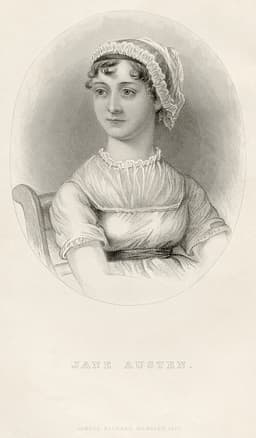
Lady Jane Grey
Emperor · Modern
50.9Total

Mohammad Zahir Shah
Emperor · Modern
44.3Total
Basic Information
Born
1537
1914
Died
1554
2007
Era
Modern
Modern
Nationality
England
Afghanistan
Occupation
Emperor
Emperor
Civilization
Western
Middle Eastern
Score Comparison
Military (10%)
47.2
11.3
Political (20%)
62.8
54.7
Influence (20%)
47.1
49.4
Legacy (20%)
37.5
39.2
Leadership (15%)
74.3
65.7
Strategy (15%)
45.0
29.4
TOTAL
50.9
44.3
Lady Jane Grey — Complete Timeline
1553 AD
Proclamation as QueenPolitical Action◆ Major
Lady Jane Grey was proclaimed queen of England after the death of Edward VI, based on his will. Her reign lasted only nine days before Mary I's supporters rallied and deposed her.
SuccessionNine Days QueenProtestant
Impact: national
Imprisonment in the Tower of LondonPolitical Action◆ Major
After Mary I's accession, Lady Jane Grey was imprisoned in the Tower of London. She was convicted of high treason for accepting the crown, though initially spared execution.
ImprisonmentTreasonTower of London
Impact: nationaltragic
1554 AD
Execution of Lady Jane GreyPolitical Action◆ Major
Lady Jane Grey was executed by beheading at the Tower of London after Wyatt's Rebellion threatened Mary I's rule. Her death eliminated a Protestant rival and solidified Mary's control over the throne.
ExecutionMartyrProtestant
Impact: nationaltragic
Mohammad Zahir Shah — Complete Timeline
1933 AD
Accession to the Throne (1933)Political Action◆ Major
Mohammad Zahir Shah became King of Afghanistan at age 19 after the assassination of his father, Nadir Shah. His reign lasted 40 years, making him one of the longest-serving monarchs in Afghan history. He initially ruled under the guidance of his uncles.
MonarchySuccessionLong Reign
Impact: national
1964 AD
Constitutional Monarchy (1964)Reform◆ Major
Zahir Shah promulgated a new constitution in 1964, transforming Afghanistan into a constitutional monarchy. The constitution established a bicameral parliament, guaranteed civil liberties, and allowed for political parties. This period, known as the 'New Democracy,' saw a flourishing of political activity.
ConstitutionDemocracyReform
Impact: nationalprogressive
1973 AD
Overthrow by Daoud Khan (1973)Political Action◆ Major
While undergoing medical treatment in Italy, Zahir Shah was overthrown in a coup by his cousin Mohammed Daoud Khan on July 17, 1973. He abdicated and remained in exile in Rome for nearly 30 years, ending the Afghan monarchy.
CoupExileEnd of Monarchy
Impact: nationaltragic
2002 AD
Return to Afghanistan (2002)Political Action◆ Major
After the fall of the Taliban, Zahir Shah returned to Afghanistan in April 2002 as a private citizen. He was welcomed by the new government but declined to reclaim the throne, instead supporting the political process. He died in 2007 in Kabul.
Return from ExilePost-TalibanReconciliation
Impact: nationalconstructive
Expert Analysis
Origins
Lady Jane Grey was born in October 1537 at Bradgate Park, Leicestershire, into the English nobility. Her father was Henry Grey, 1st Duke of Suffolk, and her mother was Lady Frances Brandon, niece of Henry VIII. Jane received a humanist education, excelling in Latin, Greek, and Hebrew. Her parents pushed her into a political marriage to Guildford Dudley, son of the powerful Duke of Northumberland.
Mohammad Zahir Shah was born on October 15, 1914, in Kabul, Afghanistan, into the Musahiban Barakzai dynasty. His father was Mohammad Nadir Shah, who became king in 1929 after a civil war. Zahir Shah was educated at the French-language Lycée Esteqlal in Kabul and later at the University of Kabul. He also studied at the Infantry School in France, preparing him for military leadership, though his military score of 11.3 reflects limited personal command.
Rise to Power
Lady Jane Grey's rise was engineered by John Dudley, Duke of Northumberland, who controlled the dying Edward VI. Edward, a fervent Protestant, excluded his Catholic half-sisters Mary and Elizabeth from the succession in favor of Jane, his Protestant cousin. On July 6, 1553, Edward died; Jane was proclaimed queen on July 10. Her claim was weak, and support quickly evaporated. Mary I gathered forces, and Jane's reign ended on July 19, 1553—just nine days.
Zahir Shah became king on November 8, 1933, at age 19, after his father Nadir Shah was assassinated. He initially relied on his uncles to govern, but gradually asserted control. His reign stabilized Afghanistan after a period of turmoil. In 1964, he introduced a constitutional monarchy, holding elections and allowing political parties, earning a political score of 54.7.
Leadership & Governance
Jane Grey never truly governed. Her nine-day reign was paralyzed by lack of support from the nobility and the people. She was a figurehead for Northumberland's machinations. Her leadership score of 74.3 reflects theoretical potential but not actual practice. She refused to make her husband king, showing some independence, but was unable to rally troops or negotiate.
Zahir Shah led Afghanistan for 40 years, promoting modernization and neutrality. His 1964 constitution established a bicameral parliament, free press, and women's rights. However, his reforms were slow, and corruption persisted. He maintained neutrality in the Cold War, accepting aid from both the US and USSR. His leadership score of 65.7 indicates a moderate, reformist approach, but he lacked the force to implement changes fully.
Triumph & Tragedy
Jane's triumph was her intellectual achievement and her dignified comportment during her imprisonment and execution. She wrote letters and debated theology, leaving a legacy of Protestant martyrdom. Her tragedy was her exploitation by ambitious men and her brutal execution at age 16 on February 12, 1554, after Wyatt's Rebellion gave Mary a pretext to eliminate her.
Zahir Shah's triumph was his peaceful reign and the 1964 constitution, which was the most progressive in Afghan history. He also avoided major wars and kept Afghanistan stable. His tragedy was his overthrow in 1973 while abroad, leading to decades of conflict. He returned in 2002 as a private citizen, unable to restore the monarchy. His legacy score of 39.2 reflects the fragility of his achievements.
Character & Destiny
Jane Grey was highly intelligent, devoutly Protestant, and principled. She accepted the crown reluctantly, aware of the danger. Her character—passive yet stubborn—led her to refuse to convert to Catholicism, sealing her fate. Her destiny was shaped by the religious conflicts of Tudor England.
Zahir Shah was cautious, diplomatic, and consensus-seeking. He preferred gradual reform over confrontation. His character allowed him to survive 40 years on the throne but also made him vulnerable to a coup. His destiny was to be the last king of Afghanistan, a symbol of a lost era of stability.
Legacy
Jane Grey became a Protestant martyr and a symbol of innocence betrayed. Her story is told in countless books, paintings, and films. Her death helped cement Mary I's reputation as "Bloody Mary." Her influence score of 47.1 reflects her symbolic rather than political impact.
Zahir Shah's legacy is mixed. He is remembered as a benevolent but weak ruler. His 1964 constitution is a historical benchmark, but his inability to enforce reforms allowed extremism to grow. His return in 2002 briefly symbolized hope for peace, but he died in 2007 without restoring the monarchy. His influence score of 49.4 is slightly higher than Jane's, reflecting his longer reign and continued relevance.
Conclusion
Lady Jane Grey had a total score of 50.9, while Mohammad Zahir Shah scored 44.3—a gap of 6.6 points. Jane's higher scores in leadership (74.3 vs 65.7) and strategy (45.0 vs 29.4) reflect her potential, while Zahir Shah's longevity gave him higher influence (49.4 vs 47.1) and legacy (39.2 vs 37.5). However, Jane's impact on English history—as a martyr for Protestantism and a tragic figure—is more enduring than Zahir Shah's, whose reforms were largely undone. Jane Grey, despite her brief reign, had a greater proportional impact on her nation's historical narrative. Therefore, Lady Jane Grey is the more significant historical figure.
Rankings
🥇
Lady Jane GreyLeader
Mil: 47.2Pol: 62.8Inf: 47.1
50.9
🥈
Mohammad Zahir Shah
Mil: 11.3Pol: 54.7Inf: 49.4
44.3
+6.6 behind
How This Comparison Works
Algorithm
Each figure is scored on 6 dimensions (0—100 scale) based on structured historical data: Military (10%), Political (20%), Influence (20%), Legacy (20%), Leadership (15%), Strategy (15%). The weighted total produces the final ranking.
Data Sources
Scores are computed from structured sub-indicators in the database. Scale factors adjust for era (Ancient ×0.85, Modern ×1.0) and civilization size (Eastern ×1.05, Other ×0.80) to account for differences in population and military scale.
Maximum 3 Figures
Comparisons are limited to 2—3 figures to ensure readability and statistical meaningfulness.
Error Margins
±5 points per dimension — Sub-scores are derived from historical records with inherent uncertainty. Two figures within 5 points on a dimension should be considered roughly equivalent in that area.
Total Score Accuracy
±3 points overall — The weighted combination of 6 dimensions produces a total score with approximately ±3 points of uncertainty. Differences of less than 3 points are not statistically significant— the figures are effectively tied.
Known Limitations
- Historical records are incomplete and uneven across civilizations
- Figures from oral-tradition societies may be underrepresented
- Occupation labels can misclassify multi-role figures
- Scores measure capability and impact, not moral character
- Quantitative scoring is a comparison tool, not absolute truth
Capability Radar
Military (10%) — Battles & Warfare
Battles
23
8
Win Rate
26
7
Expansion
31
11
Political (20%) — Governance & Reform
Reform
57
35
Diplomacy
60
45
Economy
67
30
Influence (20%) — Cultural & Global Reach
Cultural
10
20
Global
10
15
Legacy (20%) — Historical Impact
Historical
20
25
Longevity
15
20
Leadership (15%) — Power & Stability
Tenure
56
40
Stability
69
25
Strategy (15%) — Tactics & Innovation
Strategy
31
14
Tactics
36
17
Reform
38
18
Similar Comparisons
Comments & Discussion
No comments yet. Be the first to share your thoughts!