Loading...
Edward III of England vs Kulottunga Chola I
Kulottunga Chola I leads by 2.8 pts · 2 figures compared
…
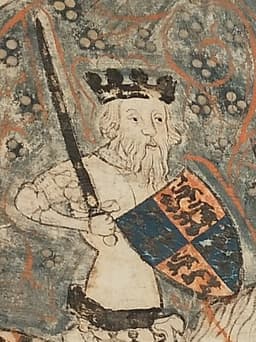
Edward III of England
Emperor · Medieval
60.9Total
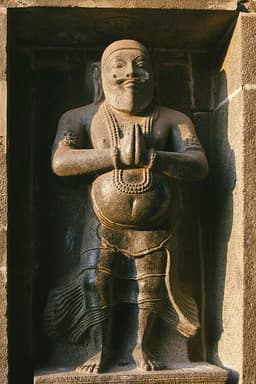
Kulottunga Chola I
Emperor · Medieval
63.7Total
Basic Information
Born
1312
1025
Died
1377
1122
Era
Medieval
Medieval
Nationality
England
India
Occupation
Emperor
Emperor
Civilization
Western
Indian
Score Comparison
Military (10%)
72.0
77.2
Political (20%)
55.0
70.0
Influence (20%)
65.0
56.7
Legacy (20%)
40.0
52.0
Leadership (15%)
79.8
78.0
Strategy (15%)
72.0
65.9
TOTAL
60.9
63.7
Edward III of England — Complete Timeline
1337 AD
Start of the Hundred Years' WarWar
Edward III declared himself King of France, challenging Philip VI's claim. This began the Hundred Years' War, a prolonged conflict over the French throne and English territories in France.
WarFranceSuccession
Impact: global
1346 AD
Battle of CrécyWar◆ Major
Edward III's English army defeated a larger French force at the Battle of Cr
BattleLongbowFrance
Impact: regional
Siege of CalaisWar◆ Major
Edward III besieged the French port of Calais for nearly a year. The city surrendered, and Edward took control, making it an English stronghold for over two centuries.
SiegeCalaisFrance
Impact: regional
1356 AD
Battle of PoitiersWar◆ Major
Edward III's son, the Black Prince, defeated and captured King John II of France at the Battle of Poitiers. This victory led to the Treaty of Br
BattleCapture of KingTreaty
Impact: regional
1360 AD
Treaty of BrétignyPolitical Action◆ Major
Edward III signed the Treaty of Br
TreatyPeaceTerritorial Gains
Impact: regionalconstructive
Kulottunga Chola I — Complete Timeline
1070 AD
United the Chola and Chalukya dynasties through marriagePolitical Action◆ Major
Kulottunga Chola I, born as Rajendra Chalukya, ascended the Chola throne after his maternal uncle's death. He was the son of a Chalukya prince and a Chola princess, merging the two royal lines and ending the conflict between the dynasties.
Dynastic UnionChola-Chalukya
Impact: regionalconstructive
1075 AD
Conquered the Kalinga regionWar◆ Major
Kulottunga I led a military campaign into Kalinga (present-day Odisha), defeating the local rulers and incorporating the region into the Chola Empire. This expanded Chola influence along the eastern coast of India.
Kalinga WarTerritorial Expansion
Impact: regional
1077 AD
Established diplomatic relations with the Song Dynasty of ChinaPolitical Action◆ Major
Kulottunga I sent an embassy to the court of the Song Emperor Shenzong in China. The mission included gifts and trade proposals, strengthening maritime trade links between the Chola Empire and East Asia.
DiplomacyChina Trade
Impact: globalconstructive
1080 AD
Reformed the Chola administrative systemReform
Kulottunga I reorganized the Chola bureaucracy, introducing new revenue assessments and land surveys. He also standardized weights and measures across the empire, improving tax collection and economic efficiency.
AdministrationTax Reform
Impact: nationalconstructive
1090 AD
Lost control of the Vengi region to the Western ChalukyasWar
Kulottunga I's forces failed to hold the Vengi region (coastal Andhra) against the Western Chalukya king Vikramaditya VI. This loss reduced Chola territory and marked a setback in his later reign.
Territorial LossWestern Chalukya
Impact: regionaldestructive
Expert Analysis
Origins
Edward III was born in 1312 at Windsor Castle, son of King Edward II and Isabella of France. His early life was overshadowed by his father's weak rule and eventual deposition in 1327, when Edward III ascended the throne at age 14. He received knightly training and was influenced by the chivalric culture of the time.
Kulottunga Chola I, born Rajendra Chalukya around 1025, was the son of a Chalukya prince and a Chola princess. He grew up in the Chalukya court but was deeply connected to the Chola dynasty through his mother. His dual heritage positioned him to unite two powerful dynasties.
Rise to Power
Edward III's early reign was dominated by his mother and her lover Roger Mortimer. In 1330, at age 18, he staged a coup, executing Mortimer and imprisoning his mother. He then asserted his authority, building alliances with Flanders and the Holy Roman Empire. In 1337, he declared himself King of France, sparking the Hundred Years' War.
Kulottunga Chola I rose to power through a combination of inheritance and marriage. When his maternal uncle, the Chola emperor, died without a direct heir, Kulottunga claimed the throne in 1070. He had already been ruling the Chalukya kingdom of Vengi, and his accession united the Chola and Chalukya lines. He faced initial opposition but consolidated control through diplomatic marriages and military campaigns.
Leadership & Governance
Edward III was a hands-on military leader, often commanding armies in person. He fostered a culture of chivalry, founding the Order of the Garter in 1348. His governance relied on Parliament, which he summoned frequently to fund wars. He introduced the wool tax and expanded trade, but his financial demands strained the economy.
Kulottunga Chola I was an administrative reformer. He reorganized the bureaucracy, introduced new revenue assessments, and standardized weights and measures. He also promoted maritime trade, sending embassies to China and Southeast Asia. His rule saw a flourishing of literature and temple construction, but he faced challenges in maintaining control over distant provinces.
Triumph & Tragedy
Edward III's greatest triumph was the Battle of Crécy (1346), where his longbowmen decisively defeated a larger French army. The subsequent Siege of Calais (1346-1347) secured a key port. The Treaty of Brétigny (1360) gave England extensive territories in France. However, his later years saw military setbacks and the resurgence of French power under Charles V. He also lost control of his son, the Black Prince, who died before him. Edward III died in 1377, his achievements undone by successors.
Kulottunga Chola I's triumphs included conquering Kalinga (c. 1090) and establishing diplomatic ties with Song China. His administrative reforms strengthened the Chola state. However, he lost the Vengi region to the Western Chalukyas, a significant territorial loss. He also faced rebellions in Sri Lanka, undermining Chola influence there. His later reign saw a decline in central authority.
Character & Destiny
Edward III was ambitious and charismatic, driven by a claim to the French throne. He was a skilled diplomat and military strategist, but his later years revealed a lack of foresight in managing succession. His reliance on his sons created factional strife. Historians note his score of 79.8 in leadership, reflecting his ability to inspire, but his political score of 55.0 indicates flaws in governance.
Kulottunga Chola I was pragmatic and diplomatic, focused on unification and stability. He preferred negotiation over war, but his military campaigns showed determination. His political score of 70.0 and military score of 77.2 reflect a balanced approach. However, his inability to hold Vengi suggests strategic weaknesses. His legacy score of 52.0 indicates limited long-term impact.
Legacy
Edward III's legacy is intertwined with the Hundred Years' War, which reshaped European warfare and nationalism. His use of the longbow and infantry tactics influenced military strategy. The Order of the Garter remains a prestigious honor. However, his territorial gains were lost, and his reign contributed to the later Wars of the Roses. His overall score of 60.9 reflects mixed achievements.
Kulottunga Chola I's legacy includes the consolidation of Chola power and administrative reforms. His maritime diplomacy boosted trade, but the Chola empire declined after his death. He is remembered as a unifier, but his reign did not produce lasting institutions. His total score of 63.7 is slightly higher than Edward III's.
Conclusion
Kulottunga Chola I edges out Edward III with a total score of 63.7 to 60.9. While Edward III had a dramatic impact on European history, his gains were temporary. Kulottunga's unification of dynasties and administrative reforms were more enduring, even if his empire also declined. Therefore, Kulottunga Chola I had a greater overall impact.
Rankings
🥇
Kulottunga Chola ILeader
Mil: 77.2Pol: 70.0Inf: 56.7
63.7
🥈
Edward III of England
Mil: 72.0Pol: 55.0Inf: 65.0
60.9
+2.8 behind
How This Comparison Works
Algorithm
Each figure is scored on 6 dimensions (0—100 scale) based on structured historical data: Military (10%), Political (20%), Influence (20%), Legacy (20%), Leadership (15%), Strategy (15%). The weighted total produces the final ranking.
Data Sources
Scores are computed from structured sub-indicators in the database. Scale factors adjust for era (Ancient ×0.85, Modern ×1.0) and civilization size (Eastern ×1.05, Other ×0.80) to account for differences in population and military scale.
Maximum 3 Figures
Comparisons are limited to 2—3 figures to ensure readability and statistical meaningfulness.
Error Margins
±5 points per dimension — Sub-scores are derived from historical records with inherent uncertainty. Two figures within 5 points on a dimension should be considered roughly equivalent in that area.
Total Score Accuracy
±3 points overall — The weighted combination of 6 dimensions produces a total score with approximately ±3 points of uncertainty. Differences of less than 3 points are not statistically significant— the figures are effectively tied.
Known Limitations
- Historical records are incomplete and uneven across civilizations
- Figures from oral-tradition societies may be underrepresented
- Occupation labels can misclassify multi-role figures
- Scores measure capability and impact, not moral character
- Quantitative scoring is a comparison tool, not absolute truth
Capability Radar
Military (10%) — Battles & Warfare
Battles
85
75
Win Rate
80
80
Expansion
85
82
Political (20%) — Governance & Reform
Reform
70
72
Diplomacy
75
80
Economy
70
78
Influence (20%) — Cultural & Global Reach
Cultural
70
70
Global
70
55
Legacy (20%) — Historical Impact
Historical
80
72
Longevity
75
60
Leadership (15%) — Power & Stability
Tenure
85
85
Stability
65
75
Strategy (15%) — Tactics & Innovation
Strategy
90
78
Tactics
85
70
Reform
75
65
Similar Comparisons
Comments & Discussion
No comments yet. Be the first to share your thoughts!