Loading...
Emir of Katsina vs Qianlong Emperor
Qianlong Emperor leads by 19.3 pts · 2 figures compared
…
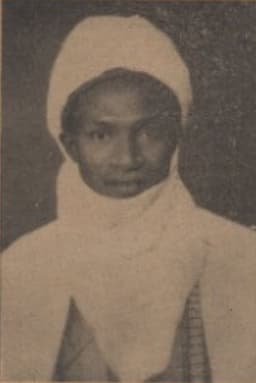
Emir of Katsina
Emperor · Modern
46.9Total

Qianlong Emperor
Emperor · Modern
66.2Total
Basic Information
Born
1800
1711
Died
1860
1799
Era
Modern
Modern
Nationality
Nigeria
China
Occupation
Emperor
Emperor
Civilization
Other
Eastern
Score Comparison
Military (10%)
50.0
85.0
Political (20%)
40.8
72.0
Influence (20%)
51.8
65.0
Legacy (20%)
40.8
55.0
Leadership (15%)
64.0
72.0
Strategy (15%)
30.3
61.2
TOTAL
46.9
66.2
Emir of Katsina — Complete Timeline
1820 AD
Coronation as Emir of KatsinaPolitical Action◆ Major
The Emir became the ruler of Katsina, a historic Hausa city-state within the Sokoto Caliphate. His reign focused on maintaining Katsina's cultural identity while integrating into the caliphate's Islamic framework.
Katsina EmirateCoronationHausa
Impact: regional
1835 AD
Defended Katsina Against Bornu RaidsWar◆ Major
The Emir led Katsina's defense against military incursions from the Bornu Empire to the east. The conflicts were part of the broader rivalry between the Sokoto Caliphate and Bornu, with Katsina serving as a frontier buffer.
Bornu ConflictDefenseFrontier War
Impact: regionaldestructive
1840 AD
Promoted Islamic ScholarshipCultural
The Emir patronized Islamic scholars and established Quranic schools in Katsina. This fostered a tradition of learning that produced notable jurists and theologians, reinforcing Katsina's reputation as a center of Islamic education.
Islamic ScholarshipEducationKatsina
Impact: regionalconstructive
Qianlong Emperor — Complete Timeline
1755 AD
Ten Great CampaignsWar◆ Major
Qianlong launched a series of military campaigns to expand and secure the Qing empire. These included conquests in Xinjiang, Mongolia, Tibet, and Burma. The campaigns doubled the empire's size but drained the treasury and caused heavy casualties.
Military ExpansionQing EmpireConquest
Impact: global
Conquest of the Dzungar KhanateWar◆ Major
Qianlong's forces destroyed the Dzungar Khanate in Central Asia, incorporating Xinjiang into the Qing empire. The campaign involved the massacre of many Dzungar people. This victory eliminated a long-standing rival and secured the western frontier.
XinjiangGenocideQing Expansion
Impact: regionaldestructive
1773 AD
Compilation of the Siku QuanshuCultural◆ Major
Qianlong ordered the compilation of the Siku Quanshu, a massive collection of Chinese literature. Over 3,000 scholars worked for a decade, producing 36,000 volumes. It preserved thousands of texts but also involved censorship of works critical of the Qing.
LiteratureCensorshipCultural Project
Impact: globalconstructive
1793 AD
Macartney EmbassyPolitical Action◆ Major
Qianlong received a British diplomatic mission led by Lord Macartney. The British sought trade concessions, but Qianlong rejected them, stating China had no need for foreign goods. This event highlighted the Qing's isolationist policy and growing technological gap.
DiplomacyTradeIsolationism
Impact: global
1796 AD
Suppression of the White Lotus RebellionWar◆ Major
In his final years, Qianlong's forces struggled to suppress the White Lotus Rebellion, a popular uprising fueled by corruption and poverty. The rebellion lasted until 1804, exposing the decline of the Qing military and administration.
RebellionQing DeclineCorruption
Impact: nationaldestructive
Expert Analysis
Origins
**Emir of Katsina:** The Emir of Katsina, whose reign began in the late 18th century, was a traditional Hausa-Fulani ruler of the city-state of Katsina, part of the Sokoto Caliphate in what is now northern Nigeria. Born into the ruling Fulani aristocracy, he inherited a position steeped in Islamic scholarship and military defense. His early life was shaped by the religious and political reforms of Usman dan Fodio, which had established the Sokoto Caliphate as a center of Islamic governance. The Emir received education in Islamic law and administration, preparing him for leadership in a region marked by constant rivalry with neighboring states like the Bornu Empire.
**Qianlong Emperor:** Born Aisin Gioro Hongli in 1711, Qianlong was the sixth emperor of the Qing dynasty. He was the favorite grandson of the Kangxi Emperor and received a rigorous education in Confucian classics, military strategy, and Manchu traditions. His father, the Yongzheng Emperor, selected him as successor due to his intelligence and competence. Qianlong ascended the throne in 1735 at age 24, inheriting a stable and prosperous empire that had already expanded under his predecessors.
Rise to Power
**Emir of Katsina:** The Emir's rise was through hereditary succession within the Fulani ruling class. Katsina was a key emirate within the Sokoto Caliphate, and the Emir's authority derived from both religious legitimacy and military capability. His coronation marked the continuation of the Caliphate's influence in the region. He consolidated power by maintaining alliances with other emirs and managing the delicate balance between the Hausa population and the Fulani ruling elite.
**Qianlong Emperor:** Qianlong's rise was smooth due to his father's clear designation. He began ruling immediately upon Yongzheng's death in 1735. His early reign focused on consolidating power, curbing corruption, and continuing the military campaigns that would define his era. By the 1750s, he had launched the Ten Great Campaigns, which expanded Qing territory to its largest extent.
Leadership & Governance
**Emir of Katsina:** The Emir's leadership was characterized by a blend of Islamic piety and pragmatic governance. He promoted Islamic scholarship, establishing Quranic schools that produced notable jurists. His governance relied on traditional councils and the integration of local customs with Sharia law. Militarily, he defended Katsina against Bornu raids, but his military score of 50.0 reflects limited strategic expansion compared to his counterpart.
**Qianlong Emperor:** Qianlong ruled with an iron hand, centralizing power and micromanaging administration. He personally oversaw the compilation of the Siku Quanshu, a massive encyclopedia of Chinese literature, which employed over 3,000 scholars and produced 36,000 volumes. His political score of 72.0 reflects effective governance, but his leadership style was autocratic. He rejected the Macartney Embassy in 1793, refusing British trade concessions, which demonstrated his view of China as self-sufficient and superior.
Triumph & Tragedy
**Emir of Katsina:** His greatest success was preserving Katsina's independence and cultural identity amid regional conflicts. He fostered a tradition of learning that endured for generations. However, his failure to expand territory or significantly influence the broader Caliphate limited his impact. His legacy score of 40.8 reflects a localized rather than transformative rule.
**Qianlong Emperor:** Qianlong's triumphs include the Ten Great Campaigns, which secured Xinjiang, Mongolia, and Tibet, expanding the Qing empire to 13 million square kilometers. The Siku Quanshu preserved Chinese classics. However, his conquest of the Dzungar Khanate involved massacres that killed an estimated 80% of the Dzungar population, a genocidal tragedy. In his later years, the White Lotus Rebellion (1796–1804) exposed corruption and mismanagement, costing the empire dearly. His military score of 85.0 is high, but his legacy is tarnished by these excesses.
Character & Destiny
**Emir of Katsina:** The Emir was a cautious, religiously devout leader who prioritized stability and cultural preservation. His decisions were shaped by the need to balance internal factions and external threats. His strategy score of 30.3 indicates a reactive rather than proactive approach. He died with his emirate intact but without significant expansion.
**Qianlong Emperor:** Qianlong was confident, ambitious, and micromanaging. He saw himself as the "Son of Heaven" and believed in Chinese superiority. His character drove him to expand relentlessly, but his arrogance led to missed opportunities, like the Macartney mission, and neglect of domestic issues. His strategy score of 61.2 reflects effective military planning but poor long-term governance.
Legacy
**Emir of Katsina:** The Emir is remembered as a patron of Islamic learning and a defender of Katsina. His contributions to education influenced later generations, but his political and military impact was limited to a small region. Today, Katsina remains a center of Islamic scholarship in Nigeria, partly due to his efforts.
**Qianlong Emperor:** Qianlong's legacy is immense. He oversaw the peak of the Qing dynasty, with territorial expansion that shaped modern China's borders. The Siku Quanshu remains a monumental cultural achievement. However, his reign also sowed seeds of decline: corruption, population pressure, and rebellion. He scored 55.0 in legacy, reflecting both achievement and failure.
Conclusion
While the Emir of Katsina was a competent regional ruler who preserved his culture, Qianlong Emperor had far greater impact. Qianlong's military conquests (85.0 vs 50.0), political control (72.0 vs 40.8), and influence (65.0 vs 51.8) dwarf those of the Emir. The Emir's total score of 46.9 is significantly lower than Qianlong's 66.2, a gap of 19.3 points. Qianlong's actions reshaped Asia, while the Emir's influence remained local. Therefore, Qianlong Emperor had greater historical impact.
Rankings
🥇
Qianlong EmperorLeader
Mil: 85.0Pol: 72.0Inf: 65.0
66.2
🥈
Emir of Katsina
Mil: 50.0Pol: 40.8Inf: 51.8
46.9
+19.3 behind
How This Comparison Works
Algorithm
Each figure is scored on 6 dimensions (0—100 scale) based on structured historical data: Military (10%), Political (20%), Influence (20%), Legacy (20%), Leadership (15%), Strategy (15%). The weighted total produces the final ranking.
Data Sources
Scores are computed from structured sub-indicators in the database. Scale factors adjust for era (Ancient ×0.85, Modern ×1.0) and civilization size (Eastern ×1.05, Other ×0.80) to account for differences in population and military scale.
Maximum 3 Figures
Comparisons are limited to 2—3 figures to ensure readability and statistical meaningfulness.
Error Margins
±5 points per dimension — Sub-scores are derived from historical records with inherent uncertainty. Two figures within 5 points on a dimension should be considered roughly equivalent in that area.
Total Score Accuracy
±3 points overall — The weighted combination of 6 dimensions produces a total score with approximately ±3 points of uncertainty. Differences of less than 3 points are not statistically significant— the figures are effectively tied.
Known Limitations
- Historical records are incomplete and uneven across civilizations
- Figures from oral-tradition societies may be underrepresented
- Occupation labels can misclassify multi-role figures
- Scores measure capability and impact, not moral character
- Quantitative scoring is a comparison tool, not absolute truth
Capability Radar
Military (10%) — Battles & Warfare
Battles
20
85
Win Rate
20
80
Expansion
20
90
Political (20%) — Governance & Reform
Reform
30
70
Diplomacy
35
75
Economy
30
80
Influence (20%) — Cultural & Global Reach
Cultural
30
85
Global
20
70
Legacy (20%) — Historical Impact
Historical
30
80
Longevity
25
75
Leadership (15%) — Power & Stability
Tenure
40
95
Stability
35
85
Strategy (15%) — Tactics & Innovation
Strategy
20
85
Tactics
20
75
Reform
15
60
Similar Comparisons
Comments & Discussion
No comments yet. Be the first to share your thoughts!