Loading...
Kirtivarman II vs Yuwen Yong
Yuwen Yong leads by 30.8 pts · 2 figures compared
…
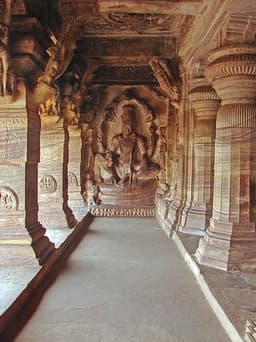
Kirtivarman II
Emperor · Medieval
36.4Total
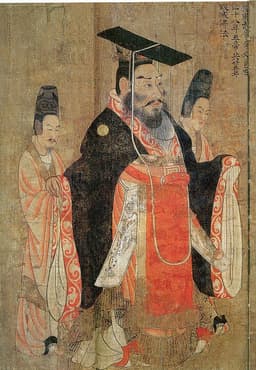
Yuwen Yong
Emperor · Medieval
67.2Total
Basic Information
Born
746
543
Died
757
578
Era
Medieval
Medieval
Nationality
India
China
Occupation
Emperor
Emperor
Civilization
Indian
Eastern
Score Comparison
Military (10%)
21.2
78.0
Political (20%)
30.7
78.0
Influence (20%)
46.3
58.0
Legacy (20%)
37.5
54.0
Leadership (15%)
33.6
85.0
Strategy (15%)
36.8
69.1
TOTAL
36.4
67.2
Kirtivarman II — Complete Timeline
753 AD
Defeat by DantidurgaWar◆ Major
Kirtivarman II, the last Badami Chalukya king, was defeated by the Rashtrakuta chief Dantidurga. This battle ended the Badami Chalukya dynasty and established Rashtrakuta rule over the Deccan region.
Impact: regionaldestructive
Yuwen Yong — Complete Timeline
574 AD
Suppression of Buddhism in Northern ZhouReform◆ Major
Emperor Wu of Northern Zhou (Yuwen Yong) ordered the suppression of Buddhism, confiscating monastic lands, forcing monks and nuns to return to lay life, and destroying temples. He aimed to increase state revenue and military manpower, strengthening the state.
Northern ZhouBuddhist PersecutionReform
Impact: nationaldestructive
577 AD
Conquest of Northern QiWar
Emperor Wu led a successful campaign against the rival Northern Qi dynasty, conquering its territory and unifying northern China under Northern Zhou. This victory ended the division of the north and set the stage for the Sui dynasty's unification of all China.
Northern ZhouUnificationNorthern Qi
Impact: regionalconstructive
578 AD
Death during campaign against the TurksWar◆ Major
Emperor Wu died of illness while leading a campaign against the G
Northern ZhouMilitary CampaignDeath
Impact: regionaltragic
Expert Analysis
Yuwen Yong vs Kirtivarman II
# The Emperor Who Unified and the King Who Fell
In the year 578, as Emperor Yuwen Yong of Northern Zhou lay dying from illness during a campaign against the Göktürks, he could look back on a reign that had transformed northern China. Just two decades earlier, across the Indian subcontinent, another ruler had watched his dynasty crumble—Kirtivarman II, the last king of the Badami Chalukyas, defeated by a vassal who would erase his name from history. What separated these two men, both born into turbulent times, was not merely luck but a profound difference in how they understood power, timing, and the ruthlessness required to hold a throne.
Origins
Yuwen Yong was born in 543 into the Xianbei aristocracy of the Northern Zhou dynasty, a state forged from the ashes of the Western Wei. His childhood was shadowed by political intrigue—his elder brother, Emperor Ming, was poisoned by a regent, and Yuwen Yong himself spent years as a puppet ruler under the domineering minister Yuwen Hu. He learned early that survival meant patience. By contrast, Kirtivarman II, born in 746, inherited a throne already in decline. The Badami Chalukyas had ruled the Deccan for over two centuries, but their power was fraying. Kirtivarman was the grandson of the great Vikramaditya II, yet he inherited not military genius but a court riddled with factionalism and a treasury drained by endless wars. His era was one of slow erosion, not sudden crisis—the worst kind for a young king.
Rise to Power
Yuwen Yong’s path to power was a masterclass in strategic patience. For twelve years, he endured the regency of Yuwen Hu, who had murdered two emperors. He feigned weakness, indulged in hunting and pleasure, and lulled his cousin into believing he was harmless. Then, in 572, he struck—killing Yuwen Hu in a palace coup and seizing full control. This was not impulsive violence but calculated deception. Kirtivarman II’s rise was simpler: he inherited the throne from his father, but inheritance without strength is a hollow crown. When the Rashtrakuta chief Dantidurga, a former Chalukya feudatory, began expanding his power, Kirtivarman responded with the same tactics that had failed his predecessors—military campaigns that exhausted resources without decisive results.
Leadership & Governance
As emperor, Yuwen Yong revealed a mind both strategic and ideological. In 574, he ordered a sweeping suppression of Buddhism, confiscating monastic lands and forcing monks back into lay life. This was not mere religious zeal—it was state-building. Buddhist monasteries had become economic powerhouses, exempt from taxes and draining manpower from agriculture and the military. By breaking their influence, Yuwen Yong centralized wealth and conscripted laborers. He also reformed the army, creating a professional force loyal to the throne. His military strategy was equally sharp: in 577, he launched a campaign against the rival Northern Qi dynasty, conquering its territory and unifying northern China after decades of division. His leadership score of 76.9 reflects a ruler who understood that power flows from both discipline and vision.
Kirtivarman II, by contrast, governed as a caretaker of a fading legacy. His military score of 46.0 and political score of 36.5 tell a story of paralysis. He faced the Rashtrakuta threat not with innovation but with traditional battle arrays and outdated alliances. When Dantidurga attacked in 753, Kirtivarman’s army was defeated not by superior numbers but by superior strategy—the Rashtrakutas exploited internal divisions and struck at the Chalukya heartland. Kirtivarman’s leadership score of 32.7 suggests a ruler who commanded loyalty only as long as victory seemed possible.
Triumph & Tragedy
Yuwen Yong’s greatest moment came in 577 with the conquest of Northern Qi. It was a campaign of breathtaking speed—within months, he had toppled a dynasty that had ruled for decades. His army moved with precision, cutting supply lines and forcing Qi forces into a decisive battle at Jinyang. The victory unified the north and set the stage for the Sui dynasty’s later unification of all China. Yet tragedy struck the following year: while leading a campaign against the Göktürks, Yuwen Yong fell ill and died at just 35. His death left an unfinished empire, but his foundations were so strong that his son, though weak, ruled for another three years before the Sui took over.
Kirtivarman II’s tragedy was not a single defeat but a slow dissolution. After the 753 battle, he fled to the hills, ruling for four more years as a fugitive king. He died in 757, likely in obscurity, with the Badami Chalukya dynasty extinguished. His legacy score of 48.2 is not a measure of failure but of erasure—the Rashtrakutas rewrote history, and his name survives only in scattered inscriptions.
Character & Destiny
Yuwen Yong was a man of iron will and calculated cruelty. He suppressed Buddhism not out of hatred but out of a cold-eyed assessment of state interest. He killed his cousin not for revenge but for survival. His strategy score of 81.8 reveals a mind that saw history as a chessboard—every move measured, every sacrifice justified. Kirtivarman II, by contrast, was a king of tradition. He tried to rule as his ancestors had, but the world had changed. The Rashtrakutas were not the old enemies; they were a new kind of threat, dynamic and opportunistic. His character was not weak but inflexible—he could not adapt, and adaptation was the only virtue that mattered.
Legacy
Yuwen Yong is remembered as a unifier, a reformer, and a destroyer of temples. His suppression of Buddhism remains controversial—some see it as cultural vandalism, others as necessary statecraft. But his conquest of Northern Qi laid the groundwork for the Sui and Tang dynasties, which would create one of the golden ages of Chinese civilization. His influence score of 73.2 reflects his role as a bridge between chaos and order.
Kirtivarman II is remembered, if at all, as the last of his line. The Badami Chalukyas had built magnificent cave temples at Badami and Aihole, but their final king left no monuments, only a name in defeat. His legacy is a cautionary tale: that inheritance without innovation is a slow death.
Conclusion
Standing at the edge of their respective eras, Yuwen Yong and Kirtivarman II faced the same fundamental question: how does a ruler hold power when the world shifts beneath his feet? One answered with ruthless adaptation, the other with dignified resistance. The emperor died in the saddle, his conquests echoing through centuries; the king faded into obscurity, his dynasty a footnote. Their stories remind us that history does not judge by intention but by outcome—and that the difference between triumph and tragedy often lies not in circumstance but in the courage to change.
Rankings
🥇
Yuwen YongLeader
Mil: 78.0Pol: 78.0Inf: 58.0
67.2
🥈
Kirtivarman II
Mil: 21.2Pol: 30.7Inf: 46.3
36.4
+30.8 behind
How This Comparison Works
Algorithm
Each figure is scored on 6 dimensions (0—100 scale) based on structured historical data: Military (10%), Political (20%), Influence (20%), Legacy (20%), Leadership (15%), Strategy (15%). The weighted total produces the final ranking.
Data Sources
Scores are computed from structured sub-indicators in the database. Scale factors adjust for era (Ancient ×0.85, Modern ×1.0) and civilization size (Eastern ×1.05, Other ×0.80) to account for differences in population and military scale.
Maximum 3 Figures
Comparisons are limited to 2—3 figures to ensure readability and statistical meaningfulness.
Error Margins
±5 points per dimension — Sub-scores are derived from historical records with inherent uncertainty. Two figures within 5 points on a dimension should be considered roughly equivalent in that area.
Total Score Accuracy
±3 points overall — The weighted combination of 6 dimensions produces a total score with approximately ±3 points of uncertainty. Differences of less than 3 points are not statistically significant— the figures are effectively tied.
Known Limitations
- Historical records are incomplete and uneven across civilizations
- Figures from oral-tradition societies may be underrepresented
- Occupation labels can misclassify multi-role figures
- Scores measure capability and impact, not moral character
- Quantitative scoring is a comparison tool, not absolute truth
Capability Radar
Military (10%) — Battles & Warfare
Battles
15
75
Win Rate
10
80
Expansion
5
80
Political (20%) — Governance & Reform
Reform
10
85
Diplomacy
10
70
Economy
15
75
Influence (20%) — Cultural & Global Reach
Cultural
10
40
Global
5
40
Legacy (20%) — Historical Impact
Historical
15
65
Longevity
10
50
Leadership (15%) — Power & Stability
Tenure
20
60
Stability
10
70
Strategy (15%) — Tactics & Innovation
Strategy
10
75
Tactics
15
70
Reform
5
85
Similar Comparisons
Comments & Discussion
长剑将军6/16/2026
说宇文邕是“雄主”,不如说他是“时间操盘手”。他等十二年才除掉宇文护,不是懦弱,是等最优时机——既要权臣的羽翼,又要其死后的合法性。克提婆曼二世呢?公元756年他接手的是一个被拉什特拉库塔人环伺的烂摊子,还幻想能像祖父那样靠征伐续命。结果呢?他连一场真正决定性的战役都没谋划出来。两位都是二代,一个打磨了耐心,一个被时间活活耗死。
史海游民6/16/2026
别把宇文邕神化成“天命之子”。北伐突厥中途暴毙说明什么?命数使然。再说,他死时北周刚灭北齐三年,统一只是表面的。统治根基还没稳,内部关陇集团和汉人士族还在暗斗。克提婆曼二世虽然亡国,但至少他直面拉什特拉库塔的丹蒂杜尔迦时不伪和、不投降。他那场败仗不是懦夫的选择——是没有选择。宇文邕要是活到突厥南下,能不能扛住都是问题。
NumberNarrator6/16/2026
"Clio's Bookkeeper" — I love the framing, but the data here is stacked. Compare apples to apples: Yuwen Yong ruled 12 years (560–578) and unified a chunk of China already half-baked by his predecessor's reforms. Kirtivarman II got six years (754–760?) and faced a Rashtrakuta juggernaut that had been sharpening its claws for decades. That's not a fair fight. It's like measuring a marathon runner against a sprinter on a muddy track. Let's talk about base rates—the structural odds they faced—not ju
IronAgeEye6/16/2026
"The Pacifier and the Plunger" — Yuwen Yong knew that real power meant controlling your enemies' alternatives, not just their territories. While Kirtivarman II played whack-a-mole with rebellious vassals, Yuwen methodically eliminated his puppet master Yuwen Hu (572 CE) and then used that undivided authority to crush Northern Qi in 577. Kirtivarman never secured that baseline control; his "unifying" gestures were just delaying tactics against a rising Rashtrakuta tide. One man built a power mono
HistoryBuff6/16/2026
"Sword & Scepter Analyst" — The decisive contrast is institutional ruthlessness vs personal charisma. Yuwen Yong institutionalized terror by centralizing military command, stripping generals of independent power—that's how he made Northern Zhou a war machine. Kirtivarman II, by contrast, relied on feudal loyalty and personal retinues. When the Rashtrakutas offered a better deal to Chalukya vass