Loading...
King Wuling of Zhao vs Seleucus I Nicator
Seleucus I Nicator leads by 5.9 pts · 2 figures compared
…
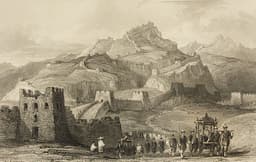
King Wuling of Zhao
Emperor · Ancient
60.6Total
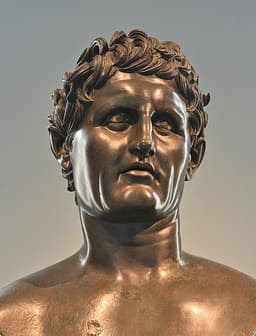
Seleucus I Nicator
Emperor · Ancient
66.5Total
Basic Information
Born
-340
-358
Died
-295
-281
Era
Ancient
Ancient
Nationality
China
Seleucid Empire
Occupation
Emperor
Emperor
Civilization
Eastern
Western
Score Comparison
Military (10%)
67.3
78.5
Political (20%)
65.0
72.0
Influence (20%)
55.0
62.0
Legacy (20%)
52.0
55.0
Leadership (15%)
66.0
78.0
Strategy (15%)
75.0
69.1
TOTAL
60.6
66.5
King Wuling of Zhao — Complete Timeline
307 BC
Introduced cavalry and Hu clothing reformsReform
King Wuling of Zhao ordered his army to adopt the clothing and archery techniques of the nomadic Hu (Xiongnu) peoples, including trousers and horseback archery. This military reform created a highly mobile cavalry force that gave Zhao a tactical advantage over rival states.
Military ReformCavalryCultural Change
Impact: regionalconstructive
299 BC
Abdicated in favor of his sonPolitical Action◆ Major
King Wuling abdicated the throne to his son, King Huiwen, but retained power as 'Lord Father' (Zhufu). This unusual arrangement was intended to allow him to focus on military campaigns, but it created a power struggle within the royal family.
AbdicationPower StruggleSuccession
Impact: national
296 BC
Conquered the Zhongshan stateWar◆ Major
King Wuling led a prolonged campaign to conquer the Zhongshan state, a non-Chinese kingdom located within Zhao's borders. The annexation of Zhongshan expanded Zhao's territory and population, strengthening its position among the Warring States.
ConquestTerritorial ExpansionZhongshan
Impact: regional
295 BC
Starved to death in the Shaqiu PalacePolitical Action◆ Major
During a succession conflict between his sons, King Wuling was trapped in the Shaqiu Palace by rebels loyal to his grandson. He was denied food and water for three months, eventually starving to death. His death ended Zhao's period of expansion.
DeathSuccession CrisisTragedy
Impact: nationaltragic
Seleucus I Nicator — Complete Timeline
312 BC
Foundation of the Seleucid EmpirePolitical Action◆ Major
After the death of Alexander, Seleucus established control over Babylon and the eastern satrapies. He founded the Seleucid Empire, which stretched from Anatolia to India, and adopted the title of king. This marked the beginning of the Hellenistic period in the East.
DiadochiEmpireHellenistic
Impact: globalconstructive
301 BC
Battle of IpsusWar
Seleucus I Nicator fought against Antigonus I Monophthalmus at Ipsus. The allied forces of Seleucus, Lysimachus, and Cassander defeated Antigonus, who was killed. This battle solidified the division of Alexander's empire, with Seleucus gaining control of Syria and Mesopotamia.
DiadochiBattleSeleucid Empire
Impact: regionaldestructive
300 BC
Founding of AntiochCultural◆ Major
Seleucus I founded the city of Antioch on the Orontes River, which became the capital of the Seleucid Empire. The city grew into a major center of Hellenistic culture, trade, and politics, rivaling Alexandria in importance.
Seleucid EmpireCity FoundationHellenistic
Impact: regionalconstructive
281 BC
Assassination by Ptolemy CeraunusPolitical Action◆ Major
Seleucus I was assassinated by Ptolemy Ceraunus, a son of Ptolemy I, while campaigning in Thrace. His death ended the last major Diadochi conflict and left the Seleucid Empire to his son Antiochus I, who faced challenges from within and without.
DiadochiAssassinationSeleucid Empire
Impact: regionaltragic
Expert Analysis
Origins
King Wuling of Zhao (born 340 BCE) was a ruler of the Zhao state during the Warring States period in China. He inherited a kingdom plagued by internal divisions and external threats from nomadic Hu tribes and neighboring states. His early life was shaped by the need to strengthen Zhao's military and centralize authority. In contrast, Seleucus I Nicator (born c. 358 BCE) was a Macedonian nobleman who served as a general under Alexander the Great. After Alexander's death in 323 BCE, Seleucus became a key figure in the Wars of the Diadochi, vying for control of the fragmented empire. His background as a military commander in Alexander's campaigns gave him experience in managing multi-ethnic armies and vast territories.
Rise to Power
King Wuling ascended to the Zhao throne in 325 BCE at a young age. His early reign focused on consolidating power and fending off attacks from the Xiongnu confederation. The turning point came around 307 BCE when he implemented the "Hu clothing and cavalry reforms," ordering his troops to adopt nomadic trousers and horseback archery. This innovation allowed Zhao to field a highly mobile cavalry force, which he used to conquer the Zhongshan state (296 BCE) and expand Zhao's territory. Seleucus I, after Alexander's death, initially served as satrap of Babylon under Perdiccas. He fled to Egypt after Perdiccas's murder but returned in 312 BCE to reclaim Babylon, defeating Antigonus's forces. His victory at the Battle of Ipsus (301 BCE) against Antigonus I Monophthalmus solidified his control over Syria and Anatolia, leading to the foundation of the Seleucid Empire.
Leadership & Governance
King Wuling's leadership was characterized by radical military reform and strategic centralization. He forced his nobles to adopt nomadic clothing and archery, overcoming cultural resistance. He also abdicated in 299 BCE to his son, King Huiwen, while retaining power as "Lord Father," a move intended to smooth succession but ultimately causing instability. His governance focused on military expansion rather than administrative innovation. Seleucus I, by contrast, was a master administrator. He founded numerous cities, including Antioch (300 BCE), which became a hub of Hellenistic culture. He implemented a system of satrapies and promoted syncretism between Greek and local cultures. His leadership scored 78.0 in leadership, higher than Wuling's 66.0, reflecting his ability to manage a vast, diverse empire.
Triumph & Tragedy
King Wuling's greatest triumph was the conquest of Zhongshan and the transformation of Zhao's military, which scored 67.3 in military capabilities. However, his tragedy came from his abdication arrangement. After his son's death, a succession crisis erupted, and Wuling was trapped in Shaqiu Palace by rebels loyal to his grandson. He starved to death in 295 BCE, a grim end for a reformer. Seleucus I's triumph was the foundation of the Seleucid Empire, which stretched from Anatolia to India, and his victory at Ipsus. His military score of 78.5 reflects his success in the Diadochi wars. Yet his tragedy was his assassination in 281 BCE by Ptolemy Ceraunus, a claimant to the Macedonian throne, just as he was poised to reunify Alexander's empire. Both leaders died at the hands of rivals, but Seleucus's death cut short his final campaign.
Character & Destiny
King Wuling was a pragmatic reformer, willing to adopt foreign customs for military advantage. His decision to abdicate but retain power showed a desire for stability, but it backfired due to poor succession planning. Historical assessments note his strategic vision (score 75.0) but criticize his political naivete (political score 65.0). Seleucus I was a patient and calculating strategist, known for his ability to forge alliances and build cities. His political score of 72.0 reflects his diplomatic skill, but his ambition to reunite Alexander's empire led to his assassination. Both were shaped by their environments: Wuling by the fragmented Warring States, Seleucus by the chaos after Alexander.
Legacy
King Wuling's reforms had a lasting impact on Chinese military tactics, as cavalry became central to warfare. However, his legacy in China is mixed; he is remembered as a reformer but also as a victim of his own political miscalculation. His influence score is 55.0, lower than Seleucus's 62.0. Seleucus I founded a dynasty that ruled for over two centuries, spreading Hellenistic culture across the Near East. His city foundations, especially Antioch, endured as major centers. The Seleucid Empire's legacy includes the blending of Greek and Eastern traditions, influencing later empires like the Parthians and Romans. Seleucus's total score of 66.5 surpasses Wuling's 60.6, reflecting broader and longer-lasting impact.
Conclusion
While King Wuling of Zhao was a innovative military reformer whose cavalry tactics transformed Chinese warfare, his impact was confined to a single state and cut short by his tragic death. Seleucus I Nicator, with a higher total score of 66.5 against Wuling's 60.6, had a greater impact by founding a major empire that shaped the Hellenistic world for centuries. His military (78.5 vs 67.3), political (72.0 vs 65.0), and leadership (78.0 vs 66.0) scores all exceed Wuling's. Therefore, Seleucus I Nicator is the more significant historical figure.
Rankings
🥇
Seleucus I NicatorLeader
Mil: 78.5Pol: 72.0Inf: 62.0
66.5
🥈
King Wuling of Zhao
Mil: 67.3Pol: 65.0Inf: 55.0
60.6
+5.9 behind
How This Comparison Works
Algorithm
Each figure is scored on 6 dimensions (0—100 scale) based on structured historical data: Military (10%), Political (20%), Influence (20%), Legacy (20%), Leadership (15%), Strategy (15%). The weighted total produces the final ranking.
Data Sources
Scores are computed from structured sub-indicators in the database. Scale factors adjust for era (Ancient ×0.85, Modern ×1.0) and civilization size (Eastern ×1.05, Other ×0.80) to account for differences in population and military scale.
Maximum 3 Figures
Comparisons are limited to 2—3 figures to ensure readability and statistical meaningfulness.
Error Margins
±5 points per dimension — Sub-scores are derived from historical records with inherent uncertainty. Two figures within 5 points on a dimension should be considered roughly equivalent in that area.
Total Score Accuracy
±3 points overall — The weighted combination of 6 dimensions produces a total score with approximately ±3 points of uncertainty. Differences of less than 3 points are not statistically significant— the figures are effectively tied.
Known Limitations
- Historical records are incomplete and uneven across civilizations
- Figures from oral-tradition societies may be underrepresented
- Occupation labels can misclassify multi-role figures
- Scores measure capability and impact, not moral character
- Quantitative scoring is a comparison tool, not absolute truth
Capability Radar
Military (10%) — Battles & Warfare
Battles
65
85
Win Rate
70
80
Expansion
70
90
Political (20%) — Governance & Reform
Reform
85
75
Diplomacy
70
80
Economy
65
70
Influence (20%) — Cultural & Global Reach
Cultural
75
60
Global
60
70
Legacy (20%) — Historical Impact
Historical
80
80
Longevity
70
75
Leadership (15%) — Power & Stability
Tenure
75
80
Stability
60
65
Strategy (15%) — Tactics & Innovation
Strategy
75
85
Tactics
80
75
Reform
90
70
Similar Comparisons
Comments & Discussion
No comments yet. Be the first to share your thoughts!