Loading...
Seleucus I Nicator vs Thutmose III
Seleucus I Nicator leads by 2.0 pts · 2 figures compared
…
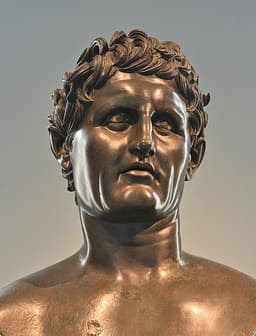
Seleucus I Nicator
Emperor · Ancient
66.5Total

Thutmose III
Emperor · Ancient
64.5Total
Basic Information
Born
-358
-1481
Died
-281
-1425
Era
Ancient
Ancient
Nationality
Seleucid Empire
Egypt
Occupation
Emperor
Emperor
Civilization
Western
Middle Eastern
Score Comparison
Military (10%)
78.5
86.0
Political (20%)
72.0
58.1
Influence (20%)
62.0
68.0
Legacy (20%)
55.0
40.0
Leadership (15%)
78.0
81.0
Strategy (15%)
69.1
80.1
TOTAL
66.5
64.5
Seleucus I Nicator — Complete Timeline
312 BC
Foundation of the Seleucid EmpirePolitical Action◆ Major
After the death of Alexander, Seleucus established control over Babylon and the eastern satrapies. He founded the Seleucid Empire, which stretched from Anatolia to India, and adopted the title of king. This marked the beginning of the Hellenistic period in the East.
DiadochiEmpireHellenistic
Impact: globalconstructive
301 BC
Battle of IpsusWar
Seleucus I Nicator fought against Antigonus I Monophthalmus at Ipsus. The allied forces of Seleucus, Lysimachus, and Cassander defeated Antigonus, who was killed. This battle solidified the division of Alexander's empire, with Seleucus gaining control of Syria and Mesopotamia.
DiadochiBattleSeleucid Empire
Impact: regionaldestructive
300 BC
Founding of AntiochCultural◆ Major
Seleucus I founded the city of Antioch on the Orontes River, which became the capital of the Seleucid Empire. The city grew into a major center of Hellenistic culture, trade, and politics, rivaling Alexandria in importance.
Seleucid EmpireCity FoundationHellenistic
Impact: regionalconstructive
281 BC
Assassination by Ptolemy CeraunusPolitical Action◆ Major
Seleucus I was assassinated by Ptolemy Ceraunus, a son of Ptolemy I, while campaigning in Thrace. His death ended the last major Diadochi conflict and left the Seleucid Empire to his son Antiochus I, who faced challenges from within and without.
DiadochiAssassinationSeleucid Empire
Impact: regionaltragic
Thutmose III — Complete Timeline
1457 BC
Battle of MegiddoWar
Thutmose III led his army through the Aruna Pass to surprise a Canaanite coalition at Megiddo. The Egyptian victory secured control over Syria-Palestine and marked the first recorded battle in history with a detailed tactical account.
Military CampaignCanaanSiege
Impact: regional
1456 BC
Campaigns in Syria and MitanniWar◆ Major
Thutmose III conducted a series of annual campaigns into Syria, capturing cities such as Kadesh and Carchemish. He crossed the Euphrates River into Mitanni territory, extending Egyptian influence to its greatest geographical extent.
Imperial ExpansionMitanniEuphrates
Impact: regional
1450 BC
Construction of the Festival Hall at KarnakCultural◆ Major
Thutmose III built the Akh-menu, or Festival Hall, at the Karnak temple complex in Thebes. The hall featured reliefs depicting his military campaigns and served as a center for the Heb-sed festival, reinforcing his divine kingship.
ArchitectureKarnakReligious Center
Impact: nationalconstructive
1445 BC
Obelisk Erection at KarnakCultural
Thutmose III erected two large obelisks at the Karnak temple, one of which now stands in Istanbul. The obelisks commemorated his military victories and were inscribed with texts praising his achievements as a warrior pharaoh.
MonumentObeliskCommemoration
Impact: nationalconstructive
1440 BC
Suppression of the Rebellion in NubiaWar
Thutmose III led a campaign into Nubia to crush a rebellion against Egyptian rule. The victory secured the southern border and ensured continued access to gold mines and trade routes in the region.
NubiaRebellionGold Trade
Impact: regional
Expert Analysis
Origins
Seleucus I Nicator was born around 358 BC in Macedonia, likely in the region of Europos. He was the son of Antiochus, a general under Philip II, which gave him early exposure to military life. Little is known of his youth, but he joined Alexander the Great's campaigns and distinguished himself as a commander of the elite infantry unit, the Silver Shields. His formative experiences came in the crucible of Alexander's conquests, where he learned warfare and administration.
Thutmose III was born in 1481 BC into the 18th Dynasty of Egypt. He was the son of Thutmose II and a secondary wife, Iset. Upon his father's death, he became pharaoh as a child, but his stepmother Hatshepsut served as regent and later co-ruler. For the first 22 years of his reign, Thutmose III was overshadowed by Hatshepsut, who assumed many royal prerogatives. During this time, he received military training and likely participated in campaigns in Nubia and Syria, preparing him for his later role.
Rise to Power
Seleucus rose to prominence after Alexander's death in 323 BC. In the Wars of the Diadochi, he initially served as a satrap of Babylon under the regent Perdiccas. When Perdiccas was assassinated in 321 BC, Seleucus consolidated his control over Babylon. However, in 316 BC, Antigonus Monophthalmus forced him to flee to Egypt. There, Seleucus allied with Ptolemy I and participated in the coalition against Antigonus. His return to Babylon in 312 BC marked the beginning of the Seleucid era. The turning point came at the Battle of Ipsus in 301 BC, where Seleucus's war elephants, obtained from Chandragupta Maurya in exchange for territories, helped defeat Antigonus. This victory secured his rule over Syria and Asia Minor.
Thutmose III's rise was gradual. After Hatshepsut's death in 1458 BC, he became sole pharaoh. He immediately began a series of campaigns to reassert Egyptian control over Syria-Palestine, which had been weakened during Hatshepsut's peaceful reign. His first major campaign was against a Canaanite coalition at Megiddo in 1457 BC. Thutmose III took the risky Aruna Pass, surprising the enemy and achieving a decisive victory. This battle established his reputation as a military leader and set the stage for his subsequent conquests.
Leadership & Governance
Seleucus I governed a vast, multi-ethnic empire stretching from Anatolia to India. He adopted a policy of Hellenization, founding dozens of cities (including Antioch, Seleucia, and Apamea) that served as administrative and cultural centers. He promoted Greek colonists but also respected local traditions, allowing some native elites to retain power. His governance was pragmatic: he maintained a strong army, including war elephants, and used a network of satraps to control provinces. However, his empire lacked cohesion, as many regions had strong local identities. His leadership score of 78.0 reflects his effectiveness in holding together a diverse realm.
Thutmose III ruled Egypt with a centralized bureaucracy. He delegated authority to viziers and high priests, but he personally led his armies on campaigns. He was an administrator who oversaw extensive building projects, including the Festival Hall at Karnak and numerous obelisks. He also reformed the Egyptian military, creating a professional standing army with specialized units. His governance score of 58.1 is lower than Seleucus's 72.0, partly because Egyptian pharaohs were more autocratic and less reliant on administrative innovation.
Triumph & Tragedy
Seleucus's greatest triumph was founding the Seleucid Empire, which lasted for over two centuries and spread Greek culture across the Near East. He also successfully integrated war elephants into his army, a key factor in his victories. His tragedy came in 281 BC: after defeating Lysimachus at Corupedium and reuniting much of Alexander's empire, he was assassinated by Ptolemy Ceraunus near Lysimachia. This sudden death prevented him from consolidating his gains and led to the fragmentation of his empire.
Thutmose III's greatest success was his military expansion. He conducted at least 17 campaigns into Syria and Mitanni, crossing the Euphrates and extending Egyptian influence to its greatest extent. He also suppressed rebellions in Nubia, securing the southern border. His tragedy is less personal; his legacy was overshadowed by his stepmother Hatshepsut's long reign. Additionally, his empire began to decline after his death, as successors lacked his military prowess.
Character & Destiny
Seleucus was known as "Nicator" (Victor) and was described as diplomatic and patient. He forged alliances easily, as seen in his cooperation with Ptolemy and Lysimachus against Antigonus. His willingness to exchange territory for war elephants with Chandragupta Maurya showed pragmatism. However, his trust in Ptolemy Ceraunus proved fatal, as the latter betrayed him. His character, while shrewd, could not prevent the envy of rivals.
Thutmose III was a bold and decisive commander. His choice of the Aruna Pass at Megiddo demonstrated tactical genius. He was also proud of his achievements, as shown by his extensive records on temple walls. His long co-regency with Hatshepsut may have instilled patience, but once in power, he was relentless in his campaigns. Historical assessments often call him the "Napoleon of Egypt" due to his military acumen.
Legacy
Seleucus's legacy is the Seleucid Empire, which became a major Hellenistic state. His founding of Antioch turned it into a cultural hub. The Seleucid dynasty continued until 63 BC, influencing the region's politics and culture. However, his empire was unstable and eventually fell to the Romans and Parthians. His military score of 78.5 and strategy score of 69.1 are overshadowed by his political score of 72.0, which highlights his state-building.
Thutmose III's legacy is his military expansion, which brought Egypt to its greatest territorial extent. His campaigns were recorded in detail, providing valuable historical records. The Festival Hall and obelisks at Karnak stand as monuments. However, his empire did not last; within a century, Egyptian power waned. His military score of 86.0 and strategy score of 80.1 are high, but his influence score of 68.0 and legacy score of 40.0 reflect the ephemeral nature of his conquests.
Conclusion
Thutmose III was the superior military commander, with a military score of 86.0 versus Seleucus's 78.5, and a strategy score of 80.1 versus 69.1. However, Seleucus had a higher total score of 66.5 compared to Thutmose's 64.5. This is because Seleucus's political and legacy scores (72.0 and 55.0) outrank Thutmose's (58.1 and 40.0). While Thutmose III conquered more territory and achieved tactical brilliance, his empire contracted after his death. Seleucus founded a dynasty that lasted centuries and spread Hellenistic civilization. Therefore, Seleucus I Nicator had a greater long-term impact, as his empire shaped the Near East for generations, while Thutmose III's conquests, though impressive, did not endure.
Rankings
🥇
Seleucus I NicatorLeader
Mil: 78.5Pol: 72.0Inf: 62.0
66.5
🥈
Thutmose III
Mil: 86.0Pol: 58.1Inf: 68.0
64.5
+2.0 behind
How This Comparison Works
Algorithm
Each figure is scored on 6 dimensions (0—100 scale) based on structured historical data: Military (10%), Political (20%), Influence (20%), Legacy (20%), Leadership (15%), Strategy (15%). The weighted total produces the final ranking.
Data Sources
Scores are computed from structured sub-indicators in the database. Scale factors adjust for era (Ancient ×0.85, Modern ×1.0) and civilization size (Eastern ×1.05, Other ×0.80) to account for differences in population and military scale.
Maximum 3 Figures
Comparisons are limited to 2—3 figures to ensure readability and statistical meaningfulness.
Error Margins
±5 points per dimension — Sub-scores are derived from historical records with inherent uncertainty. Two figures within 5 points on a dimension should be considered roughly equivalent in that area.
Total Score Accuracy
±3 points overall — The weighted combination of 6 dimensions produces a total score with approximately ±3 points of uncertainty. Differences of less than 3 points are not statistically significant— the figures are effectively tied.
Known Limitations
- Historical records are incomplete and uneven across civilizations
- Figures from oral-tradition societies may be underrepresented
- Occupation labels can misclassify multi-role figures
- Scores measure capability and impact, not moral character
- Quantitative scoring is a comparison tool, not absolute truth
Capability Radar
Military (10%) — Battles & Warfare
Battles
85
95
Win Rate
80
98
Expansion
90
95
Political (20%) — Governance & Reform
Reform
75
80
Diplomacy
80
85
Economy
70
82
Influence (20%) — Cultural & Global Reach
Cultural
60
75
Global
70
70
Legacy (20%) — Historical Impact
Historical
80
85
Longevity
75
80
Leadership (15%) — Power & Stability
Tenure
80
88
Stability
65
85
Strategy (15%) — Tactics & Innovation
Strategy
85
95
Tactics
75
92
Reform
70
85
Similar Comparisons
Comments & Discussion
No comments yet. Be the first to share your thoughts!