Loading...
King Taejo of Goryeo vs Yuwen Yong
King Taejo of Goryeo leads by 2.9 pts · 2 figures compared
…
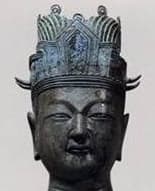
King Taejo of Goryeo
Emperor · Medieval
70.1Total
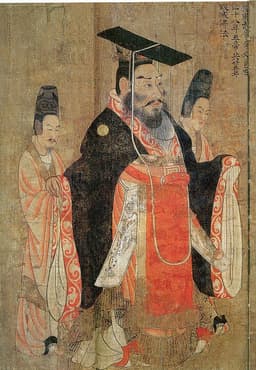
Yuwen Yong
Emperor · Medieval
67.2Total
Basic Information
Born
877
543
Died
943
578
Era
Medieval
Medieval
Nationality
Korea
China
Occupation
Emperor
Emperor
Civilization
Eastern
Eastern
Score Comparison
Military (10%)
78.0
78.0
Political (20%)
72.0
78.0
Influence (20%)
65.0
58.0
Legacy (20%)
65.0
54.0
Leadership (15%)
82.0
85.0
Strategy (15%)
67.2
69.1
TOTAL
70.1
67.2
King Taejo of Goryeo — Complete Timeline
918 AD
Founded the Goryeo DynastyPolitical Action
Wang Geon (Taejo) overthrew the Later Goguryeo state and established the Goryeo dynasty, with its capital at Songak (Kaesong). This marked the beginning of a new era in Korean history.
Dynasty FoundingGoryeoKorea
Impact: regionalconstructive
920 AD
Adopted a Policy of Marrying Local ElitesPolitical Action◆ Major
Taejo married women from powerful local clans to secure their loyalty and integrate regional powers into the Goryeo state. This policy helped stabilize the new dynasty.
Marriage PolicyGoryeoUnification
Impact: regionalconstructive
936 AD
Unified the Later Three KingdomsWar
Taejo completed the unification of the Later Three Kingdoms (Later Goguryeo, Later Baekje, and Silla) under Goryeo rule. This ended the period of division and established a unified Korean state.
UnificationLater Three KingdomsGoryeo
Impact: regionalconstructive
943 AD
Implemented Ten InjunctionsPolitical Action◆ Major
Taejo issued the Ten Injunctions, a set of political guidelines for his successors. These stressed the importance of Buddhism, diplomacy with China, and avoiding internal conflict.
GovernanceGoryeoPolicy
Impact: regionalconstructive
Yuwen Yong — Complete Timeline
574 AD
Suppression of Buddhism in Northern ZhouReform◆ Major
Emperor Wu of Northern Zhou (Yuwen Yong) ordered the suppression of Buddhism, confiscating monastic lands, forcing monks and nuns to return to lay life, and destroying temples. He aimed to increase state revenue and military manpower, strengthening the state.
Northern ZhouBuddhist PersecutionReform
Impact: nationaldestructive
577 AD
Conquest of Northern QiWar
Emperor Wu led a successful campaign against the rival Northern Qi dynasty, conquering its territory and unifying northern China under Northern Zhou. This victory ended the division of the north and set the stage for the Sui dynasty's unification of all China.
Northern ZhouUnificationNorthern Qi
Impact: regionalconstructive
578 AD
Death during campaign against the TurksWar◆ Major
Emperor Wu died of illness while leading a campaign against the G
Northern ZhouMilitary CampaignDeath
Impact: regionaltragic
Expert Analysis
Yuwen Yong vs King Taejo of Goryeo
# The Conqueror and the Builder
In the year 574, two men stood at the crossroads of East Asian history, though they never met. In the northern plains of China, Emperor Yuwen Yong of Northern Zhou ordered the destruction of thousands of Buddhist temples, sending monks and nuns into the fields as laborers. Half a world away in Korea, King Taejo of Goryeo was weaving a different kind of tapestry—one of marriage alliances and Buddhist patronage, building a dynasty that would last nearly five centuries. Both men sought unity, but their paths diverged like rivers flowing from the same mountain.
Origins
Yuwen Yong was born in 543 into a world of chaos. The Northern Wei dynasty had fractured, and his Xianbei warrior clan seized power in the northwest. He grew up in the shadow of his ruthless cousin Yuwen Hu, who ruled as regent and murdered two emperors before Yuwen Yong took the throne in 560. His childhood was a crucible of violence and political intrigue, where trust was a luxury and survival demanded cold calculation.
King Taejo, born Wang Geon in 877, came from a different world. His father was a maritime merchant and local lord on the Korean peninsula, where the once-glorious Silla dynasty was crumbling. The Later Three Kingdoms—Later Goguryeo, Later Baekje, and Silla—were locked in a brutal struggle. But unlike Yuwen Yong’s world of court assassinations, Taejo’s Korea was a land of shifting alliances where merchants and monks held as much power as generals.
Rise to Power
Yuwen Yong’s path to power was a slow, patient poison. For twelve years, he endured his cousin’s regency, playing the role of a weak, pliable emperor while secretly building loyalties. In 572, he struck—ambushing Yuwen Hu in the palace and killing him with a single blow from a jade tablet. It was a moment of cold precision, not righteous fury. He had learned that power came not from strength alone, but from knowing when to hide it.
Taejo’s rise was more straightforward but no less dramatic. In 918, he served as a general under Gung Ye, the paranoid founder of Later Goguryeo. When Gung Ye’s cruelty alienated his own court, his generals turned to Wang Geon. Unlike Yuwen Yong’s bloody coup, Taejo’s takeover was nearly bloodless—his men simply declared him king, and Gung Ye was killed by his own soldiers. Taejo had earned loyalty through competence, not fear.
Leadership & Governance
Here the two men reveal their deepest contrasts. Yuwen Yong governed through iron control. His suppression of Buddhism in 574 was not religious fanaticism but statecraft—monasteries had grown wealthy and powerful, competing with the throne for land and labor. He seized their wealth to fund his armies and forced monks back into taxable life. It was efficient, brutal, and left no room for compromise.
Taejo took the opposite approach. He married his daughters to local lords across the peninsula, weaving a web of kinship that bound regional powers to his throne. He patronized Buddhism, building temples and sponsoring monks, seeing religion not as a rival but as a pillar of legitimacy. His Ten Injunctions, issued in 943, urged his successors to maintain Buddhist rites and treat local elites with respect. Where Yuwen Yong cut away what he saw as rot, Taejo grafted new branches onto old trees.
Their military strategies reflected this divide. Yuwen Yong’s conquest of Northern Qi in 577 was a masterpiece of speed and deception—he feigned weakness, then struck with overwhelming force, capturing the enemy capital in weeks. Taejo’s unification of the Later Three Kingdoms, completed in 936, was slower, relying on diplomacy and gradual absorption. He offered generous terms to defeated kings, integrating them into his court rather than destroying them.
Triumph & Tragedy
Yuwen Yong’s greatest triumph was also his cruelest irony. By 577, he had unified northern China, a feat that eluded his predecessors for decades. His armies were poised to conquer the south, potentially reuniting all of China under his rule. But in 578, while campaigning against the Göktürks, he fell ill and died at just thirty-five. His empire crumbled within years, his son an incompetent drunkard who lost everything to a usurper.
Taejo’s tragedy was gentler. He died in 943 at sixty-six, having founded a dynasty that would last until 1392. But his Ten Injunctions revealed his anxieties—he feared his successors would forget the delicate balance of power he had built. His warnings proved prescient; later Goryeo kings would struggle with the very local elites Taejo had empowered.
Character & Destiny
Yuwen Yong was a man of winter. Cold, calculating, and efficient, he saw the world as a problem to be solved through force and order. His suppression of Buddhism was not cruelty but logic—monasteries were obstacles to centralization. His early death was the cruelest twist, suggesting that history rewards not the most brilliant but the most durable.
Taejo was a man of autumn. He understood harvest and patience, the slow ripening of alliances and the value of roots. His willingness to marry his daughters to local lords, to honor Buddhist monks, to write down his wisdom for posterity—these were the acts of a builder, not a conqueror. He knew that empires built on fear collapse; those built on kinship endure.
Legacy
Yuwen Yong is remembered as a footnote in Chinese history, a brilliant emperor whose work was undone by his own success. His Buddhist persecution earned him condemnation from later historians, and his dynasty vanished within decades. Yet his unification of the north paved the way for the Sui and Tang dynasties that followed—his conquests were the foundation stones of China’s golden age.
Taejo’s legacy is carved into Korea’s very name. “Goryeo” became the root of “Korea,” and his dynasty gave the peninsula its first true unification. His Ten Injunctions guided kings for centuries, and his policy of marrying local elites created a stable aristocracy that outlived the dynasty itself. He is remembered not as a conqueror but as a father of his nation.
Conclusion
Two men, two paths, two legacies. Yuwen Yong conquered in a decade what Taejo built over a lifetime. One died in the saddle, his empire dying with him; the other died in his bed, his dynasty outlasting his bones by four hundred years. Their stories remind us that history judges not by speed but by endurance, not by brilliance but by what survives. In the end, the builder outlasts the conqueror—not because he is wiser, but because he understands that power, like a tree, must grow roots before it can reach the sky.
Rankings
🥇
King Taejo of GoryeoLeader
Mil: 78.0Pol: 72.0Inf: 65.0
70.1
🥈
Yuwen Yong
Mil: 78.0Pol: 78.0Inf: 58.0
67.2
+2.9 behind
How This Comparison Works
Algorithm
Each figure is scored on 6 dimensions (0—100 scale) based on structured historical data: Military (10%), Political (20%), Influence (20%), Legacy (20%), Leadership (15%), Strategy (15%). The weighted total produces the final ranking.
Data Sources
Scores are computed from structured sub-indicators in the database. Scale factors adjust for era (Ancient ×0.85, Modern ×1.0) and civilization size (Eastern ×1.05, Other ×0.80) to account for differences in population and military scale.
Maximum 3 Figures
Comparisons are limited to 2—3 figures to ensure readability and statistical meaningfulness.
Error Margins
±5 points per dimension — Sub-scores are derived from historical records with inherent uncertainty. Two figures within 5 points on a dimension should be considered roughly equivalent in that area.
Total Score Accuracy
±3 points overall — The weighted combination of 6 dimensions produces a total score with approximately ±3 points of uncertainty. Differences of less than 3 points are not statistically significant— the figures are effectively tied.
Known Limitations
- Historical records are incomplete and uneven across civilizations
- Figures from oral-tradition societies may be underrepresented
- Occupation labels can misclassify multi-role figures
- Scores measure capability and impact, not moral character
- Quantitative scoring is a comparison tool, not absolute truth
Capability Radar
Military (10%) — Battles & Warfare
Battles
75
75
Win Rate
80
80
Expansion
80
80
Political (20%) — Governance & Reform
Reform
80
85
Diplomacy
75
70
Economy
70
75
Influence (20%) — Cultural & Global Reach
Cultural
70
40
Global
60
40
Legacy (20%) — Historical Impact
Historical
80
65
Longevity
75
50
Leadership (15%) — Power & Stability
Tenure
85
60
Stability
75
70
Strategy (15%) — Tactics & Innovation
Strategy
85
75
Tactics
70
70
Reform
65
85
Similar Comparisons
Comments & Discussion
YuwenFanBoy6/16/2026
Yuwen Yong was the ultimate pragmatist - he didn't hate Buddhism, he hated how temples hoarded wealth tax-free while his troops starved. Shutting down 40,000 temples and forcing monks back to work was genius economics, not religious persecution. Meanwhile Taejo played nice with Buddhists to win legitimacy. Give me the guy who actually solved problems over the one who just kicked them down the road. History remembers results, not intentions.|
数据侦探6/16/2026
别被表面数据骗了。北周灭佛确实没收了大量寺院土地,但史书记载这些田地很多又赏赐给了新贵族,农民根本没分到多少。高丽太祖的"豪族融合"听起来好听,实际上就是不断妥协,30多个地方豪族势力反而比新罗末期更大了。两个都是换汤不换药,非要分高下我觉得是五十步笑百步。|
ClassicsScholar6/16/2026
What fascinates me is how both rulers weaponized cosmology differently. Yuwen Yong attacked Buddhism to revive Confucian statecraft and Daoist legitimacy - he literally performed the 'suburban sacrifice' ritual to the Zhou ancestors. Taejo, however, crafted a synthesis where Buddhist merit and geomantic feng shui justified his rule, even naming his capital 'Kaesong' meaning 'opening of pine trees' for auspiciousness. Same goal of unity, radically different philosophical toolkits.|
历史杂学家6/16/2026
说句冒犯的话,把宇文邕和王建放一起比本身就是关公战秦琼。宇文邕面对的是北方胡汉冲突的烂摊子,灭佛是砸烂旧秩序重建社会;王建面对的是半岛豪族林立,只能靠联姻分蛋糕。一个是铁锤一个是浆糊,硬要比强弱,宇文邕的北周统一北方用了五年,王建统一后三国花了十七年,谁更高效一目了然。不过寿命差太多,宇文邕36岁驾崩,王建活了68岁,活得久才是真赢家。|
RevisionistHeat6/16/2026
吹王建"以德服人"的省省吧。他接纳新罗敬顺王是漂亮,但那是投降换来的体面。看看他怎么对付后百济的甄萱——趁人家内乱才偷袭成功,还公开羞辱降将。再说他和豪族联姻,九个皇后全是政治交易,活脱脱一个"政治正确"版慕容垂。宇文邕至少敢公开叫板佛教特权,王建呢?两面讨好当和事佬,这种"包容"不过是贪生怕死的遮羞布。|