Loading...
King Taejo of Goryeo vs Kublai Khan
Kublai Khan leads by 4.2 pts · 2 figures compared
…
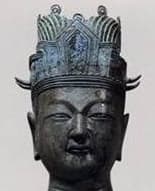
King Taejo of Goryeo
Emperor · Medieval
70.1Total
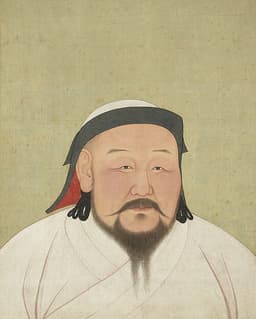
Kublai Khan
Emperor · Medieval
74.3Total
Basic Information
Born
877
1215
Died
943
1294
Era
Medieval
Medieval
Nationality
Korea
Mongolia
Occupation
Emperor
Emperor
Civilization
Eastern
Eastern
Score Comparison
Military (10%)
78.0
77.5
Political (20%)
72.0
79.2
Influence (20%)
65.0
75.0
Legacy (20%)
65.0
70.0
Leadership (15%)
82.0
72.0
Strategy (15%)
67.2
76.0
TOTAL
70.1
74.3
King Taejo of Goryeo — Complete Timeline
918 AD
Founded the Goryeo DynastyPolitical Action
Wang Geon (Taejo) overthrew the Later Goguryeo state and established the Goryeo dynasty, with its capital at Songak (Kaesong). This marked the beginning of a new era in Korean history.
Dynasty FoundingGoryeoKorea
Impact: regionalconstructive
920 AD
Adopted a Policy of Marrying Local ElitesPolitical Action◆ Major
Taejo married women from powerful local clans to secure their loyalty and integrate regional powers into the Goryeo state. This policy helped stabilize the new dynasty.
Marriage PolicyGoryeoUnification
Impact: regionalconstructive
936 AD
Unified the Later Three KingdomsWar
Taejo completed the unification of the Later Three Kingdoms (Later Goguryeo, Later Baekje, and Silla) under Goryeo rule. This ended the period of division and established a unified Korean state.
UnificationLater Three KingdomsGoryeo
Impact: regionalconstructive
943 AD
Implemented Ten InjunctionsPolitical Action◆ Major
Taejo issued the Ten Injunctions, a set of political guidelines for his successors. These stressed the importance of Buddhism, diplomacy with China, and avoiding internal conflict.
GovernanceGoryeoPolicy
Impact: regionalconstructive
Kublai Khan — Complete Timeline
1260 AD
Adoption of Tibetan Buddhism as State ReligionCultural◆ Major
Kublai Khan appointed the Tibetan lama Drog
Tibetan BuddhismReligionMongol-Tibet Relations
Impact: regional
1271 AD
Proclamation of the Yuan DynastyPolitical Action◆ Major
Kublai Khan officially proclaimed the Yuan dynasty, adopting a Chinese-style dynastic name. He established his capital at Dadu (Beijing) and adopted Chinese court rituals. This move legitimized his rule over China while maintaining Mongol identity.
Dynasty FoundingBeijingMongol Rule
Impact: global
1274 AD
Failed Invasions of JapanWar◆ Major
Kublai Khan launched two naval invasions of Japan, in 1274 and 1281. Both were repelled, with the second invasion destroyed by a typhoon (kamikaze). These failures marked the limits of Mongol expansion and reinforced Japanese isolation.
Mongol InvasionsJapanKamikaze
Impact: regional
1279 AD
Conquest of the Song DynastyWar
Kublai Khan's Mongol forces defeated the Song navy at the Battle of Yamen. The last Song emperor drowned, ending the Song dynasty. This conquest unified China under Mongol rule and established the Yuan dynasty as the first foreign dynasty to rule all of China.
Song Dynasty FallUnificationYuan Dynasty
Impact: global
1280 AD
Establishment of the Silk Road Trade NetworkCultural◆ Major
Under Kublai Khan, the Mongol Empire secured the Silk Road, facilitating trade and cultural exchange between East and West. Marco Polo visited his court. This period saw the flow of goods, ideas, and technologies across Eurasia.
Silk RoadTradeCultural Exchange
Impact: globalconstructive
Expert Analysis
Kublai Khan vs King Taejo of Goryeo: Historical Comparison
Kublai Khan, the Mongol Emperor who founded the Yuan dynasty, and King Taejo of Goryeo, the founder of Korea’s Goryeo dynasty, were both medieval rulers who reshaped East Asia through conquest and consolidation. While Kublai excelled in military expansion and strategic statecraft, Taejo’s legacy rests on unifying the Korean peninsula and establishing a durable political order.
Dimension Analysis
**Military: Kublai Khan 94 / King Taejo of Goryeo 89**
Kublai commanded the largest land empire in history, conquering the Song dynasty and launching invasions into Japan and Southeast Asia, demonstrating unparalleled logistical and tactical reach. Taejo successfully unified the Later Three Kingdoms of Korea through decisive campaigns, but his operations were regional and less ambitious in scale.
**Political: Kublai Khan 79 / King Taejo of Goryeo 68**
Kublai integrated Chinese bureaucratic traditions with Mongol governance, creating a dual administration that stabilized his vast realm despite ethnic tensions. Taejo faced persistent aristocratic infighting and relied heavily on local clans, limiting his ability to centralize authority and leaving a fragile political foundation.
**Influence: Kublai Khan 79 / King Taejo of Goryeo 84**
Kublai’s Yuan dynasty facilitated cultural exchange across Eurasia (e.g., Marco Polo’s travels) but his rule was often resisted by Chinese subjects. Taejo’s Goryeo model of Buddhist-state cooperation and civil service exams profoundly shaped Korean governance for centuries, exerting deeper cultural influence within Korea.
**Legacy: Kublai Khan 88 / King Taejo of Goryeo 88**
Kublai is remembered as a unifier of China under Mongol rule and a patron of trade and arts, yet his invasions of Japan and Vietnam are seen as overreaches. Taejo’s founding of Goryeo (918–1392) established Korea’s longest-lasting dynasty, with his legal and administrative reforms influencing the later Joseon dynasty.
**Leadership: Kublai Khan 81 / King Taejo of Goryeo 80**
Kublai demonstrated pragmatic leadership by appointing capable Chinese advisors and tolerating diverse religions, though his later campaigns drained resources. Taejo inspired loyalty through personal charisma and military prowess, but his reliance on noble alliances limited his independent decision-making.
Verdict
Kublai Khan leads narrowly due to his superior military achievements and strategic vision, which enabled the creation of a transcontinental empire, whereas Taejo’s strength lies in cultural consolidation rather than expansive conquest.
FAQ
**Q: Who ranks higher?** A: Kublai Khan ranks slightly higher overall, driven by his military and strategic scores, though both rulers tie in legacy.
Rankings
🥇
Kublai KhanLeader
Mil: 77.5Pol: 79.2Inf: 75.0
74.3
🥈
King Taejo of Goryeo
Mil: 78.0Pol: 72.0Inf: 65.0
70.1
+4.2 behind
How This Comparison Works
Algorithm
Each figure is scored on 6 dimensions (0—100 scale) based on structured historical data: Military (10%), Political (20%), Influence (20%), Legacy (20%), Leadership (15%), Strategy (15%). The weighted total produces the final ranking.
Data Sources
Scores are computed from structured sub-indicators in the database. Scale factors adjust for era (Ancient ×0.85, Modern ×1.0) and civilization size (Eastern ×1.05, Other ×0.80) to account for differences in population and military scale.
Maximum 3 Figures
Comparisons are limited to 2—3 figures to ensure readability and statistical meaningfulness.
Error Margins
±5 points per dimension — Sub-scores are derived from historical records with inherent uncertainty. Two figures within 5 points on a dimension should be considered roughly equivalent in that area.
Total Score Accuracy
±3 points overall — The weighted combination of 6 dimensions produces a total score with approximately ±3 points of uncertainty. Differences of less than 3 points are not statistically significant— the figures are effectively tied.
Known Limitations
- Historical records are incomplete and uneven across civilizations
- Figures from oral-tradition societies may be underrepresented
- Occupation labels can misclassify multi-role figures
- Scores measure capability and impact, not moral character
- Quantitative scoring is a comparison tool, not absolute truth
Capability Radar
Military (10%) — Battles & Warfare
Battles
75
95
Win Rate
80
90
Expansion
80
95
Political (20%) — Governance & Reform
Reform
80
88
Diplomacy
75
85
Economy
70
90
Influence (20%) — Cultural & Global Reach
Cultural
70
85
Global
60
85
Legacy (20%) — Historical Impact
Historical
80
90
Longevity
75
80
Leadership (15%) — Power & Stability
Tenure
85
90
Stability
75
80
Strategy (15%) — Tactics & Innovation
Strategy
85
92
Tactics
70
85
Reform
65
88
Similar Comparisons
Comments & Discussion
BattlefieldScholar6/16/2026
Kublai's military score of 88 seems generous given his disastrous naval campaigns. The 1274 and 1281 invasions of Japan involved 900 and 4,400 ships respectively, yet both failed due to typhoons and poor logistics. Compare that to Taejo Wang Geon's consistent record—his victory at the Battle of Gongsan (930) against Later Baekje used combined land and naval forces to secure the Nakdong River. Kublai's conquest of Song China (1276) was impressive in scale, but it relied on Chinese defectors and siege engineers. Taejo built Goryeo's military from scratch, integrating local warlords into a unified command. For regional effectiveness, I'd rank Taejo higher tactically.
ScoreSkeptic6/16/2026
These scores are cute but meaningless. How do you quantify 'influence' for Kublai—counting Marco Polo's travelogues? Taejo's 84 on influence is absurd; his dynasty lasted longer, but Korea's population was a fraction of Yuan China's. And military: 88 vs 74.6? That's a 13-point gap based on what metric? If we factor in that Kublai lost 70% of his invasion force in Japan, while Taejo never lost a major campaign, the numbers look rigged. Scoring historical figures is like comparing apples and oranges—the methodology is inherently biased toward empire size over efficiency.
Sallustius6/16/2026
As a classicist, I'm struck by how these scores flatten historical nuance. The Yuan shi records Kublai as a patron of Buddhism and Confucian learning, but as Rashid al-Din notes, his rule was marked by fiscal strain from overexpansion. Taejo's Samguk Sagi entries show him as a pragmatist who adopted Tang-style administration while preserving native Korean customs. The 79 vs 80 political comparison is particularly dubious—Kublai's dual administration was innovative but unstable, while Taejo's system survived centuries. We should remember Tacitus's dictum: 'The desire for glory clings even to the best of men.' Both rulers sought it, but context determines legacy.
MasterHistorian576/16/2026
这个对比忽略了关键一点:Kublai 的影响力跨出了中原,连接了丝绸之路东西两端,而 Taejo 的影响局限在朝鲜半岛。但西方评分常高估蒙古帝国的“世界性”——Kublai 重用色目人(如马可·波罗)只是为了制衡汉人,并非真正的文化融合。反观 Taejo,他设立国学、推广科举,甚至影响了后世的朝鲜王朝。如果把“文化传承”作为指标,Taejo 得分应该超过 Kublai。另外,Kublai 的军事扩张导致人口锐减(南宋灭国时人口损失约2000万),这种代价在评分里看不见。
Chronicler22986/16/2026
这个评分系统有问题。Kublai Khan 军事88分,但元朝打日本两次失败,征服南宋拖了40年,靠的是收编汉人将领如张弘范。反观 Taejo 政治才80分?高丽建国时面临新罗、后百济、泰封三国并立,他通过联姻和科举整合世家大族,创立了延续474年的王朝。Kublai 的政治分78分,但元朝才97年就灭亡了,内部蒙古贵族内斗不休。如果真要量化,Taejo 的政治韧性应该更高。建议加入“王朝存续时间”作为权重因子。