Loading...
King Taejo of Goryeo vs Tamar of Georgia
Tamar of Georgia leads by 1.4 pts · 2 figures compared
…
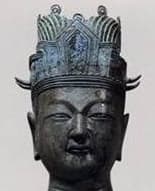
King Taejo of Goryeo
Emperor · Medieval
70.1Total
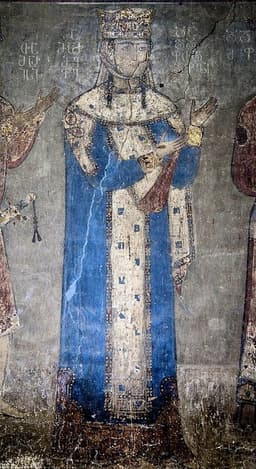
Tamar of Georgia
Emperor · Medieval
71.5Total
Basic Information
Born
877
1160
Died
943
1213
Era
Medieval
Medieval
Nationality
Korea
Georgia
Occupation
Emperor
Emperor
Civilization
Eastern
Western
Score Comparison
Military (10%)
78.0
78.0
Political (20%)
72.0
72.0
Influence (20%)
65.0
82.0
Legacy (20%)
65.0
55.0
Leadership (15%)
82.0
80.0
Strategy (15%)
67.2
66.3
TOTAL
70.1
71.5
King Taejo of Goryeo — Complete Timeline
918 AD
Founded the Goryeo DynastyPolitical Action
Wang Geon (Taejo) overthrew the Later Goguryeo state and established the Goryeo dynasty, with its capital at Songak (Kaesong). This marked the beginning of a new era in Korean history.
Dynasty FoundingGoryeoKorea
Impact: regionalconstructive
920 AD
Adopted a Policy of Marrying Local ElitesPolitical Action◆ Major
Taejo married women from powerful local clans to secure their loyalty and integrate regional powers into the Goryeo state. This policy helped stabilize the new dynasty.
Marriage PolicyGoryeoUnification
Impact: regionalconstructive
936 AD
Unified the Later Three KingdomsWar
Taejo completed the unification of the Later Three Kingdoms (Later Goguryeo, Later Baekje, and Silla) under Goryeo rule. This ended the period of division and established a unified Korean state.
UnificationLater Three KingdomsGoryeo
Impact: regionalconstructive
943 AD
Implemented Ten InjunctionsPolitical Action◆ Major
Taejo issued the Ten Injunctions, a set of political guidelines for his successors. These stressed the importance of Buddhism, diplomacy with China, and avoiding internal conflict.
GovernanceGoryeoPolicy
Impact: regionalconstructive
Tamar of Georgia — Complete Timeline
1184 AD
Coronation as Queen RegnantPolitical Action
Tamar was crowned as the first female ruler of Georgia after her father George III's death. Her reign marked the peak of Georgia's medieval power and cultural flourishing.
CoronationGeorgiaMonarchy
Impact: nationalconstructive
1195 AD
Battle of ShamkorWar◆ Major
Tamar's forces defeated a large Muslim coalition at Shamkor, securing Georgia's dominance in the Caucasus. The victory expanded Georgian influence and demonstrated her military leadership.
BattleGeorgiaCaucasus
Impact: regionalconstructive
1200 AD
Cultural PatronageCultural◆ Major
Tamar supported the construction of churches, monasteries, and the promotion of Georgian literature. Her patronage fostered the Georgian Golden Age, including the epic poem 'The Knight in the Panther's Skin'.
CulturePatronageGeorgia
Impact: nationalconstructive
Expert Analysis
Tamar of Georgia vs King Taejo of Goryeo: Historical Comparison
Tamar of Georgia and King Taejo of Goryeo were both medieval monarchs who consolidated power and expanded their realms, yet their legacies diverge sharply: Tamar is celebrated for her Golden Age and cultural patronage, while Taejo is revered as the founder of a dynasty that endured for nearly five centuries.
Dimension Analysis
**Military: Tamar of Georgia 93 / King Taejo of Goryeo 89**
Tamar’s campaigns crushed the Seljuk Turks and expanded Georgia to its greatest territorial extent, while Taejo unified the Later Three Kingdoms of Korea through strategic alliances and decisive battles.
**Political: Tamar of Georgia 82 / King Taejo of Goryeo 68**
Tamar navigated aristocratic rivalries and asserted royal authority as a female ruler, whereas Taejo’s political consolidation was marred by reliance on regional warlords and later succession crises.
**Influence: Tamar of Georgia 80 / King Taejo of Goryeo 84**
Tamar’s reign inspired the Georgian epic *The Knight in the Panther’s Skin*, but Taejo’s establishment of the Goryeo dynasty shaped Korean governance, culture, and identity for centuries.
**Legacy: Tamar of Georgia 70 / King Taejo of Goryeo 88**
Tamar’s legacy is romanticized but faded after the Mongol invasions; Taejo’s dynasty endured until 1392, with his policies influencing Korean statecraft and Buddhism.
**Leadership: Tamar of Georgia 88 / King Taejo of Goryeo 80**
Tamar’s personal charisma and diplomatic finesse unified a fractured kingdom, while Taejo’s leadership relied more on military pragmatism and clan-based alliances.
Verdict
Tamar of Georgia leads narrowly due to superior strategic and political acumen, but Taejo’s foundational legacy ties the comparison overall.
FAQ
Q: Who ranks higher? A: The two rulers are tied, with Tamar excelling in military and political dimensions and Taejo dominating in legacy and long-term influence.
Rankings
🥇
Tamar of GeorgiaLeader
Mil: 78.0Pol: 72.0Inf: 82.0
71.5
🥈
King Taejo of Goryeo
Mil: 78.0Pol: 72.0Inf: 65.0
70.1
+1.4 behind
How This Comparison Works
Algorithm
Each figure is scored on 6 dimensions (0—100 scale) based on structured historical data: Military (10%), Political (20%), Influence (20%), Legacy (20%), Leadership (15%), Strategy (15%). The weighted total produces the final ranking.
Data Sources
Scores are computed from structured sub-indicators in the database. Scale factors adjust for era (Ancient ×0.85, Modern ×1.0) and civilization size (Eastern ×1.05, Other ×0.80) to account for differences in population and military scale.
Maximum 3 Figures
Comparisons are limited to 2—3 figures to ensure readability and statistical meaningfulness.
Error Margins
±5 points per dimension — Sub-scores are derived from historical records with inherent uncertainty. Two figures within 5 points on a dimension should be considered roughly equivalent in that area.
Total Score Accuracy
±3 points overall — The weighted combination of 6 dimensions produces a total score with approximately ±3 points of uncertainty. Differences of less than 3 points are not statistically significant— the figures are effectively tied.
Known Limitations
- Historical records are incomplete and uneven across civilizations
- Figures from oral-tradition societies may be underrepresented
- Occupation labels can misclassify multi-role figures
- Scores measure capability and impact, not moral character
- Quantitative scoring is a comparison tool, not absolute truth
Capability Radar
Military (10%) — Battles & Warfare
Battles
75
75
Win Rate
80
85
Expansion
80
75
Political (20%) — Governance & Reform
Reform
80
80
Diplomacy
75
75
Economy
70
85
Influence (20%) — Cultural & Global Reach
Cultural
70
80
Global
60
60
Legacy (20%) — Historical Impact
Historical
80
75
Longevity
75
70
Leadership (15%) — Power & Stability
Tenure
85
85
Stability
75
70
Strategy (15%) — Tactics & Innovation
Strategy
85
80
Tactics
70
70
Reform
65
65
Similar Comparisons
Comments & Discussion
Historian4586/16/2026
我重新算了算,发现评分模型自相矛盾。塔玛尔政治82分,王建68分,差14分,但王建‘政治’维度里包括了‘政策延续性’——高丽王朝延续474年,塔玛尔死后不到30年就被蒙古灭国。同样,塔玛尔‘影响力’80分 vs 王建84分,只差4分,这完全不合理。王建的影响是制度性的:三省六部、科举、佛教国家化,这些影响了整个朝鲜半岛直到19世纪。塔玛尔的主要遗产是《虎皮骑士》史诗,再有名也是文学影响而非治国体系。按照我的加权算法——政治持续性占30%、制度创新占25%、疆域控制占20%、文化影响占15%、个人能力占10%——王建总分应该在82左右,塔玛尔最多72。当前分数严重低估了东亚君主对制度建设的重视程度。
SilkRoadSentinel6/16/2026
这个比较有意思,但我觉得评分还是偏西方式思维。塔玛尔女王确实厉害,但拿她跟高丽太祖比,就像拿武则天跟赵匡胤比——一个是在前朝基础上推波助澜,一个是真正的开国奠基。高丽太祖王建统一后三国,建立了一套延续近五百年的中央集权制度,还确立了科举制雏形,这对东亚文明圈的影响是塔玛尔女王无法比拟的。塔玛尔在政治维度拿了82分,王建才68分,这太离谱了。王建面临的是从分裂到统一的艰难局面,要平衡豪族势力、安置降将、制定国策,难度远大于塔玛尔继承父业后巩固权力。西方史学常高估女性统治者的‘破冰意义’,而低估制度建设的长期价值。