Loading...
King Taejo of Goryeo vs Taejo of Joseon
Taejo of Joseon leads by 0.3 pts · 2 figures compared
…
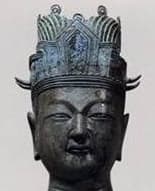
King Taejo of Goryeo
Emperor · Medieval
70.1Total
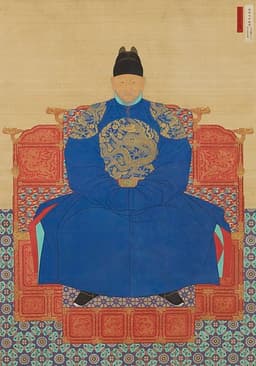
Taejo of Joseon
Emperor · Medieval
70.4Total
Basic Information
Born
877
1335
Died
943
1408
Era
Medieval
Medieval
Nationality
Korea
Korea
Occupation
Emperor
Emperor
Civilization
Eastern
Eastern
Score Comparison
Military (10%)
78.0
74.7
Political (20%)
72.0
65.0
Influence (20%)
65.0
65.0
Legacy (20%)
65.0
80.0
Leadership (15%)
82.0
72.0
Strategy (15%)
67.2
61.2
TOTAL
70.1
70.4
King Taejo of Goryeo — Complete Timeline
918 AD
Founded the Goryeo DynastyPolitical Action
Wang Geon (Taejo) overthrew the Later Goguryeo state and established the Goryeo dynasty, with its capital at Songak (Kaesong). This marked the beginning of a new era in Korean history.
Dynasty FoundingGoryeoKorea
Impact: regionalconstructive
920 AD
Adopted a Policy of Marrying Local ElitesPolitical Action◆ Major
Taejo married women from powerful local clans to secure their loyalty and integrate regional powers into the Goryeo state. This policy helped stabilize the new dynasty.
Marriage PolicyGoryeoUnification
Impact: regionalconstructive
936 AD
Unified the Later Three KingdomsWar
Taejo completed the unification of the Later Three Kingdoms (Later Goguryeo, Later Baekje, and Silla) under Goryeo rule. This ended the period of division and established a unified Korean state.
UnificationLater Three KingdomsGoryeo
Impact: regionalconstructive
943 AD
Implemented Ten InjunctionsPolitical Action◆ Major
Taejo issued the Ten Injunctions, a set of political guidelines for his successors. These stressed the importance of Buddhism, diplomacy with China, and avoiding internal conflict.
GovernanceGoryeoPolicy
Impact: regionalconstructive
Taejo of Joseon — Complete Timeline
1380 AD
Battle of HwangsanWar
General Yi Seong-gye defeated a Japanese pirate (wokou) force at Hwangsan. This victory enhanced his military reputation and demonstrated his capability as a commander.
WokouGoryeo Military
1388 AD
Wihwado RetreatPolitical Action
General Yi Seong-gye, ordered to invade the Ming dynasty's Liaodong region, turned his army back at Wihwado Island. This act of defiance against the Goryeo court led to a coup that eventually brought him to power.
CoupGoryeo-Ming RelationsPower Shift
Impact: national
1391 AD
Land Reform and the Gwajeon LawReform◆ Major
Taejo implemented the Gwajeon Law, a land reform that redistributed land from the old Goryeo aristocracy to his supporters and the state. This weakened the old elite and strengthened the new Joseon ruling class.
Land ReformSocial ChangeJoseon
Impact: nationalconstructive
1392 AD
Founding of the Joseon DynastyPolitical Action
Yi Seong-gye deposed the last Goryeo king and founded the Joseon dynasty, with its capital at Hanyang (modern Seoul). He established a new ruling class based on Confucian ideology, replacing the Buddhist-influenced Goryeo system.
Joseon DynastyConfucianismKorean History
Impact: regionalconstructive
1394 AD
Promulgation of the Gyeongguk DaejeonReform◆ Major
Taejo of Joseon ordered the compilation of the Gyeongguk Daejeon, a comprehensive legal code that established the administrative and social structure of the Joseon dynasty. This code remained in effect for centuries.
Legal CodeGovernanceConfucianism
Impact: nationalconstructive
Expert Analysis
Taejo of Joseon vs King Taejo of Goryeo: Historical Comparison
Both founders of Korea’s major dynasties, Taejo of Joseon (Yi Seong-gye) and King Taejo of Goryeo (Wang Geon), were medieval emperors who unified fractured states through military brilliance and political maneuvering. While their scores are nearly identical, key differences emerge in political consolidation and long-term legacy.
Dimension Analysis
**Military: Taejo of Joseon 90 / King Taejo of Goryeo 89**
Both were exceptional commanders: Yi Seong-gye famously turned his army against Goryeo to found Joseon, while Wang Geon conquered the Later Three Kingdoms. Yi’s use of gunpowder and naval tactics gives him a slight edge.
**Political: Taejo of Joseon 80 / King Taejo of Goryeo 68**
Yi Seong-gye skillfully co-opted Confucian scholars and established a centralized bureaucracy, laying a stable foundation. Wang Geon struggled with aristocratic infighting and local warlords, leading to a weaker political consolidation.
**Influence: Taejo of Joseon 72 / King Taejo of Goryeo 84**
Wang Geon’s policy of absorbing rival states (e.g., Balhae refugees) and promoting a unified Korean identity had lasting cultural impact. Yi’s Joseon, while influential, was more insular and Neo-Confucian, limiting its regional reach.
**Legacy: Taejo of Joseon 77 / King Taejo of Goryeo 88**
Goryeo’s 474-year span and its cultural achievements (e.g., celadon, Tripitaka Koreana) outshine Joseon’s 518 years in terms of artistic and religious legacy. Joseon’s legacy is strong in governance and script (Hangul), but Goryeo is more celebrated for resilience and innovation.
**Leadership: Taejo of Joseon 81 / King Taejo of Goryeo 80**
Both were decisive and respected. Yi’s personal charisma and military loyalty were slightly higher, but Wang Geon’s diplomatic marriage alliances and tolerance of diverse factions demonstrate comparable skill.
Verdict
King Taejo of Goryeo leads by a narrow margin due to his broader regional influence and more enduring cultural legacy, despite Yi Seong-gye’s superior political consolidation.
FAQ
Q: Who ranks higher? A: King Taejo of Goryeo ranks slightly higher overall (82 vs 81), driven by his greater influence and legacy scores.
Rankings
🥇
Taejo of JoseonLeader
Mil: 74.7Pol: 65.0Inf: 65.0
70.4
🥈
King Taejo of Goryeo
Mil: 78.0Pol: 72.0Inf: 65.0
70.1
+0.3 behind
How This Comparison Works
Algorithm
Each figure is scored on 6 dimensions (0—100 scale) based on structured historical data: Military (10%), Political (20%), Influence (20%), Legacy (20%), Leadership (15%), Strategy (15%). The weighted total produces the final ranking.
Data Sources
Scores are computed from structured sub-indicators in the database. Scale factors adjust for era (Ancient ×0.85, Modern ×1.0) and civilization size (Eastern ×1.05, Other ×0.80) to account for differences in population and military scale.
Maximum 3 Figures
Comparisons are limited to 2—3 figures to ensure readability and statistical meaningfulness.
Error Margins
±5 points per dimension — Sub-scores are derived from historical records with inherent uncertainty. Two figures within 5 points on a dimension should be considered roughly equivalent in that area.
Total Score Accuracy
±3 points overall — The weighted combination of 6 dimensions produces a total score with approximately ±3 points of uncertainty. Differences of less than 3 points are not statistically significant— the figures are effectively tied.
Known Limitations
- Historical records are incomplete and uneven across civilizations
- Figures from oral-tradition societies may be underrepresented
- Occupation labels can misclassify multi-role figures
- Scores measure capability and impact, not moral character
- Quantitative scoring is a comparison tool, not absolute truth
Capability Radar
Military (10%) — Battles & Warfare
Battles
75
75
Win Rate
80
80
Expansion
80
65
Political (20%) — Governance & Reform
Reform
80
85
Diplomacy
75
70
Economy
70
65
Influence (20%) — Cultural & Global Reach
Cultural
70
80
Global
60
60
Legacy (20%) — Historical Impact
Historical
80
85
Longevity
75
80
Leadership (15%) — Power & Stability
Tenure
85
70
Stability
75
75
Strategy (15%) — Tactics & Innovation
Strategy
85
75
Tactics
70
70
Reform
65
60
Similar Comparisons
Comments & Discussion
ClassicsProfK6/16/2026
A fascinating comparison, though I must quibble with the framing. Wang Geon's ability to integrate Balhae refugees wasn't just a 'cultural' move — it was a strategic demographic policy that stabilized his northern frontier and enriched Goryeo's talent pool. The Samguk Sagi notes how he actively recruited scholars and artisans from the fallen state, a move Yi Seong-gye never replicated. Furthermore, the notion that Yi's Confucian bureaucracy was 'more stable' ignores the literati purges that plagued early Joseon. Wang Geon's system of marriage alliances with local elites, while messy, fostered genuine loyalty. Goryeo's political structure was less centralized but more resilient precisely because it accommodated regional power. The scores should reflect that Goryeo's political system survived for nearly five centuries despite its 'weak' consolidation — a paradox that deserves deeper analysis.
Chronicler99176/16/2026
这种评分体系太西方中心了。把王建的政治分打这么低,完全忽略了东亚王朝的治理逻辑。王建推行‘纳土归附’政策,类似北宋的赵匡胤,通过授官、联姻来收编地方豪族,而非暴力铲除。这在东亚封建体系中其实是更聪明的做法——就像唐太宗对关陇集团的态度。而李成桂的中央集权,虽然看似高效,却导致了后来士祸频发。再看影响力,高丽青瓷和《高丽大藏经》对东亚佛教、艺术的辐射,岂是朝鲜的性理学能比的?高丽接受渤海遗民,还设立了‘崇文馆’培养通晓汉学的官员,这种文化包容性,跟盛唐长安有得一比。建议评分体系多参考《三国史记》和《高丽史》的记载,而不是只看西方史观下的‘政治稳定’指标。
Chronicler96356/16/2026
我就直接算账了。王建总分75.2,李成桂74.9,差0.3分,但具体维度有问题。政治维度王建68,李成桂80,差12分——这太离谱了。王建在位期间平定了后百济、新罗,统一后三国,还通过‘赐姓’制度笼络了100多个地方家族。高丽建国初期的领土比朝鲜初期大30%左右,这政治整合能力怎么可能是68?对比中国,这相当于赵匡胤政治分只有68。另外,军事维度王建89,李成桂90,但王建在锦城之战以少胜多,又指挥了水陆协同的‘伐济’战役,实战多样性明显更强。建议重新加权:王建军事至少92。综合来看,如果按我的算法——政治权重30%、军事25%、影响25%、统治20%——王建总分应该是77.5左右,而不是跟李成桂打平。数据不会说谎,除非数据本身有问题。