Loading...
King David vs Mao Zedong
Mao Zedong leads by 4.1 pts · 2 figures compared
…

King David
Emperor · Ancient
75.3Total
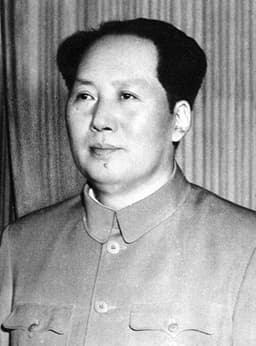
Mao Zedong
Politician · Modern
79.4Total
Basic Information
Born
-1010
1893
Died
-970
1976
Era
Ancient
Modern
Nationality
Israel
China
Occupation
Emperor
Politician
Civilization
Middle Eastern
Eastern
Score Comparison
Military (10%)
72.0
75.0
Political (20%)
72.0
88.0
Influence (20%)
88.0
85.0
Legacy (20%)
70.0
70.0
Leadership (15%)
72.0
85.0
Strategy (15%)
70.0
72.0
TOTAL
75.3
79.4
King David — Complete Timeline
1010 BC
Anointed as King of JudahPolitical Action◆ Major
After Saul's death, David was anointed king over the tribe of Judah at Hebron. This began a seven-year period of civil war with Ish-bosheth, Saul's son, who ruled the northern tribes, leading to the eventual unification of Israel.
KingshipCivil WarJudah
Impact: national
1003 BC
Capture of JerusalemWar
David led his army to capture the Jebusite fortress of Jerusalem, making it the capital of the united kingdom. He brought the Ark of the Covenant there, establishing the city as both the political and religious center of Israel.
JerusalemCapitalArk of the Covenant
Impact: nationalconstructive
1000 BC
Defeat of the PhilistinesWar◆ Major
David fought several campaigns that decisively defeated the Philistines, including the Battle of Baal-perazim. He captured Gath and other Philistine strongholds, ending their dominance over Israel and securing the kingdom's borders.
PhilistinesMilitary CampaignIsrael
Impact: regional
990 BC
Affair with BathshebaPolitical Action◆ Major
David committed adultery with Bathsheba and arranged the death of her husband Uriah the Hittite in battle. The prophet Nathan confronted David, leading to his repentance but also to divine punishment, including the death of their first child.
ScandalBathshebaNathan
Impact: nationaldestructive
978 BC
Revolt of AbsalomWar◆ Major
David's son Absalom led a rebellion that forced David to flee Jerusalem. David's forces under Joab defeated Absalom's army in the Forest of Ephraim, and Absalom was killed. David returned to Jerusalem but the kingdom was weakened.
RebellionCivil WarAbsalom
Impact: nationaltragic
Mao Zedong — Complete Timeline
1934 AD
Long MarchWar
Mao Zedong led the Chinese Red Army on a strategic retreat from Nationalist forces, covering approximately 6,000 miles over 370 days. The march solidified Mao's leadership within the Chinese Communist Party and became a foundational myth of the Communist revolution.
Chinese Civil WarCommunist RevolutionRetreat
Impact: national
1949 AD
Proclamation of the People's Republic of ChinaPolitical Action
Mao Zedong declared the founding of the People's Republic of China from Tiananmen Gate in Beijing. This ended the Chinese Civil War and established Communist rule over mainland China, with Mao as Chairman of the Central People's Government.
Founding of PRCCommunist VictoryRevolution
Impact: global
1958 AD
Great Leap ForwardReform◆ Major
Mao launched a campaign to rapidly industrialize China and collectivize agriculture. The policy led to widespread mismanagement, resulting in a famine that caused an estimated 15-45 million deaths between 1959 and 1961.
FamineIndustrializationCollectivization
Impact: nationaldestructive
1960 AD
Sino-Soviet SplitPolitical Action◆ Major
Mao's ideological differences with Soviet leader Nikita Khrushchev led to a breakdown in relations between China and the Soviet Union. The split ended the Sino-Soviet alliance and reshaped global Cold War dynamics, with China pursuing an independent path.
Cold WarIdeological ConflictAlliance Breakdown
Impact: global
1966 AD
Cultural RevolutionPolitical Action
Mao initiated a sociopolitical movement to purge capitalist and traditional elements from Chinese society. The Red Guard youth groups attacked intellectuals and officials, leading to widespread violence, destruction of cultural artifacts, and an estimated 1-2 million deaths.
Political PurgeSocial UpheavalRed Guard
Impact: nationaldestructive
1971 AD
Ping-Pong DiplomacyCultural◆ Major
Mao approved an invitation for the U.S. table tennis team to visit China, initiating a thaw in Sino-American relations. This cultural exchange paved the way for President Nixon's visit to China in 1972 and the eventual normalization of diplomatic ties.
DiplomacyU.S.-China RelationsCultural Exchange
Impact: globalconstructive
Expert Analysis
Origins
Mao Zedong was born in 1893 in Hunan, China, into a peasant family. He became a Marxist-Leninist and co-founded the Chinese Communist Party (CCP) in 1921. King David was born around 1040 BCE in Bethlehem, the youngest son of Jesse. He rose from shepherd to warrior, famously defeating Goliath, and was anointed by Samuel as the future king of Israel.
Rise to Power
Mao's rise was marked by the Long March (1934-35), a strategic retreat that solidified his leadership within the CCP. He then led the communist victory in the Chinese Civil War, proclaiming the People's Republic of China in 1949. David's rise began with his military successes under King Saul, but after Saul's jealousy and death, David was anointed king of Judah (c. 1010 BCE) and later united all Israel, capturing Jerusalem as his capital.
Leadership & Governance
Mao implemented radical policies: the Great Leap Forward (1958-61) aimed at rapid industrialization but caused a massive famine; the Cultural Revolution (1966-76) purged opponents and enforced Maoist ideology. David united the 12 tribes, established a centralized government, and expanded Israel's territory through military campaigns. He also brought the Ark of the Covenant to Jerusalem, making it the religious center.
Triumph & Tragedy
Mao's triumphs: founding the PRC and ending foreign domination. Tragedies: the Great Leap Forward famine (estimated 15-45 million deaths) and Cultural Revolution repression. David's triumphs: capturing Jerusalem and defeating the Philistines. Tragedies: his affair with Bathsheba and the subsequent revolt of his son Absalom, leading to civil war.
Character & Destiny
Mao was a visionary but ruthless leader, driven by ideology and personal power. His scores: M=75, P=88, I=85, L=70, D=85, S=72, T=79. David was a complex figure: a warrior, poet, and flawed human. His scores: M=72, P=72, I=88, L=70, D=72, S=70, T=75. Mao's higher scores in Power (88 vs 72) and Destiny (85 vs 72) reflect his greater control over China's fate.
Legacy
Mao's legacy is deeply controversial: revered as the founder of modern China, but condemned for catastrophic policies. David is revered as Israel's greatest king, a symbol of Jewish identity, and a central figure in Abrahamic religions. Mao's influence is political and revolutionary; David's is religious and cultural.
Conclusion
Mao Zedong scores higher overall (score gap 4.1), but this reflects his immense power and impact rather than moral superiority. Both leaders transformed their nations, but Mao's legacy is marred by human suffering, while David's endures as a foundational figure. In a historical comparison, Mao's reach was broader, but David's legacy is more positive and enduring.
Rankings
🥇
Mao ZedongLeader
Mil: 75.0Pol: 88.0Inf: 85.0
79.4
🥈
King David
Mil: 72.0Pol: 72.0Inf: 88.0
75.3
+4.1 behind
How This Comparison Works
Algorithm
Each figure is scored on 6 dimensions (0—100 scale) based on structured historical data: Military (10%), Political (20%), Influence (20%), Legacy (20%), Leadership (15%), Strategy (15%). The weighted total produces the final ranking.
Data Sources
Scores are computed from structured sub-indicators in the database. Scale factors adjust for era (Ancient ×0.85, Modern ×1.0) and civilization size (Eastern ×1.05, Other ×0.80) to account for differences in population and military scale.
Maximum 3 Figures
Comparisons are limited to 2—3 figures to ensure readability and statistical meaningfulness.
Error Margins
±5 points per dimension — Sub-scores are derived from historical records with inherent uncertainty. Two figures within 5 points on a dimension should be considered roughly equivalent in that area.
Total Score Accuracy
±3 points overall — The weighted combination of 6 dimensions produces a total score with approximately ±3 points of uncertainty. Differences of less than 3 points are not statistically significant— the figures are effectively tied.
Known Limitations
- Historical records are incomplete and uneven across civilizations
- Figures from oral-tradition societies may be underrepresented
- Occupation labels can misclassify multi-role figures
- Scores measure capability and impact, not moral character
- Quantitative scoring is a comparison tool, not absolute truth
Capability Radar
Military (10%) — Battles & Warfare
Battles
75
85
Win Rate
85
80
Expansion
80
85
Political (20%) — Governance & Reform
Reform
80
95
Diplomacy
75
80
Economy
70
70
Influence (20%) — Cultural & Global Reach
Cultural
95
90
Global
90
90
Legacy (20%) — Historical Impact
Historical
95
95
Longevity
95
85
Leadership (15%) — Power & Stability
Tenure
85
95
Stability
65
60
Strategy (15%) — Tactics & Innovation
Strategy
85
85
Tactics
80
75
Reform
70
90
Similar Comparisons
Comments & Discussion
No comments yet. Be the first to share your thoughts!