Loading...
Fu Jian vs Mao Zedong
Mao Zedong leads by 15.0 pts · 2 figures compared
…
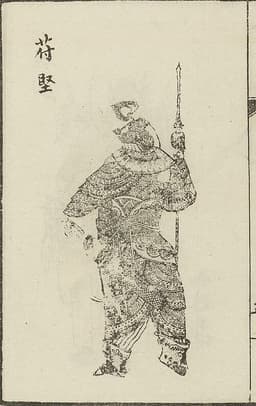
Fu Jian
Emperor · Ancient
64.4Total
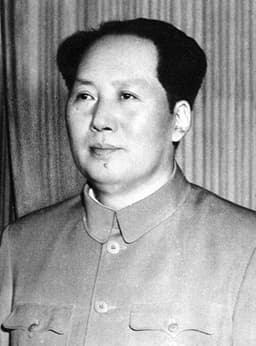
Mao Zedong
Politician · Modern
79.4Total
Basic Information
Born
338
1893
Died
385
1976
Era
Ancient
Modern
Nationality
China
China
Occupation
Emperor
Politician
Civilization
Eastern
Eastern
Score Comparison
Military (10%)
78.0
75.0
Political (20%)
72.0
88.0
Influence (20%)
59.0
85.0
Legacy (20%)
50.0
70.0
Leadership (15%)
85.0
85.0
Strategy (15%)
58.0
72.0
TOTAL
64.4
79.4
Fu Jian — Complete Timeline
370 AD
Conquest of Former YanWar◆ Major
Fu Jian's Former Qin forces conquered the Former Yan state, annexing its territory in northern China. This victory significantly expanded Former Qin's power and territory, bringing Fu Jian closer to unifying the north.
ConquestExpansion
Impact: regionalconstructive
376 AD
Conquest of Former LiangWar◆ Major
Fu Jian's forces conquered the Former Liang state in the northwest, incorporating its territory into Former Qin. This further consolidated his control over northern China.
ConquestExpansion
Impact: regionalconstructive
Conquest of DaiWar
Fu Jian's army conquered the Dai state, a Xianbei confederation in the north. This eliminated a rival and extended Former Qin's influence into the steppe region.
ConquestExpansion
Impact: regionalconstructive
379 AD
Capture of XiangyangWar
Fu Jian's forces captured the strategic city of Xiangyang from the Eastern Jin dynasty. This victory gave Former Qin a foothold south of the Huai River, setting the stage for the invasion that led to the Battle of Fei River.
ConquestCampaign
Impact: regionalconstructive
383 AD
Battle of Fei RiverWar
Fu Jian led a massive Former Qin army against the Eastern Jin dynasty at the Fei River. The Jin forces defeated the Qin army, causing a catastrophic rout. This defeat shattered Fu Jian's unification efforts and led to the collapse of Former Qin.
BattleUnificationDefeat
Impact: regionaltragic
Mao Zedong — Complete Timeline
1934 AD
Long MarchWar
Mao Zedong led the Chinese Red Army on a strategic retreat from Nationalist forces, covering approximately 6,000 miles over 370 days. The march solidified Mao's leadership within the Chinese Communist Party and became a foundational myth of the Communist revolution.
Chinese Civil WarCommunist RevolutionRetreat
Impact: national
1949 AD
Proclamation of the People's Republic of ChinaPolitical Action
Mao Zedong declared the founding of the People's Republic of China from Tiananmen Gate in Beijing. This ended the Chinese Civil War and established Communist rule over mainland China, with Mao as Chairman of the Central People's Government.
Founding of PRCCommunist VictoryRevolution
Impact: global
1958 AD
Great Leap ForwardReform◆ Major
Mao launched a campaign to rapidly industrialize China and collectivize agriculture. The policy led to widespread mismanagement, resulting in a famine that caused an estimated 15-45 million deaths between 1959 and 1961.
FamineIndustrializationCollectivization
Impact: nationaldestructive
1960 AD
Sino-Soviet SplitPolitical Action◆ Major
Mao's ideological differences with Soviet leader Nikita Khrushchev led to a breakdown in relations between China and the Soviet Union. The split ended the Sino-Soviet alliance and reshaped global Cold War dynamics, with China pursuing an independent path.
Cold WarIdeological ConflictAlliance Breakdown
Impact: global
1966 AD
Cultural RevolutionPolitical Action
Mao initiated a sociopolitical movement to purge capitalist and traditional elements from Chinese society. The Red Guard youth groups attacked intellectuals and officials, leading to widespread violence, destruction of cultural artifacts, and an estimated 1-2 million deaths.
Political PurgeSocial UpheavalRed Guard
Impact: nationaldestructive
1971 AD
Ping-Pong DiplomacyCultural◆ Major
Mao approved an invitation for the U.S. table tennis team to visit China, initiating a thaw in Sino-American relations. This cultural exchange paved the way for President Nixon's visit to China in 1972 and the eventual normalization of diplomatic ties.
DiplomacyU.S.-China RelationsCultural Exchange
Impact: globalconstructive
Expert Analysis
Mao Zedong vs Fu Jian
# Two Emperors, One River: The Rise and Fall of Fu Jian and Mao Zedong
On a late autumn day in 383, a man who commanded the largest army the world had ever seen stood on the northern bank of the Fei River, watching his forces disintegrate into chaos. Sixteen centuries later, on October 1, 1949, another man stood atop Tiananmen Gate in Beijing and declared a new China to the world. Fu Jian and Mao Zedong—two titans separated by millennia, yet bound by the same impossible ambition: to unite a fractured China under one rule. One nearly succeeded, then lost everything. The other succeeded, but at a cost that still echoes through history.
Origins
Fu Jian was born in 338 into the Di people, a semi-nomadic tribe of the northwestern frontier. His great-uncle had founded the Former Qin dynasty amid the chaos of the Sixteen Kingdoms period, when northern China had splintered into a patchwork of warring states. Fu Jian grew up in a world where loyalty was measured in blood and territory changed hands with the seasons. He was educated by a Han Chinese tutor, absorbing Confucian classics while never forgetting the horseman's craft. His era demanded brutality for survival, but his heart yearned for something more—the dream of a unified China under a single emperor.
Mao Zedong entered the world in 1893, in the twilight of the Qing dynasty, when China was being carved up by foreign powers like a feast for vultures. Born to a prosperous peasant family in Hunan province, Mao grew up reading the Romance of the Three Kingdoms and the Water Margin—tales of rebels and heroes who reshaped dynasties. He watched his country humiliated by the Opium Wars, the Boxer Rebellion, and the unequal treaties that stripped China of its sovereignty. Where Fu Jian inherited a fractured kingdom, Mao inherited a broken civilization.
Rise to Power
Fu Jian's path was direct and violent. At age nineteen, he seized the throne of Former Qin through a coup, executing his tyrannical cousin. Within a decade, he had transformed his small state into a superpower. In 370, his armies conquered Former Yan, annexing its vast territories in a single campaign. Six years later, he swallowed Former Liang and the Dai confederation, expanding his domain from the Yellow River to the Gobi Desert. By 379, when his forces captured the strategic city of Xiangyang from the Eastern Jin dynasty, Fu Jian ruled nearly all of northern China. His rise was a masterclass in military efficiency—each conquest fed the next.
Mao's ascent was a marathon of survival. In 1934, after the Nationalist encirclement campaigns nearly destroyed the Chinese Communist Party, Mao led the Red Army on the Long March—a 6,000-mile retreat through some of China's most forbidding terrain. He emerged not merely alive, but transformed. The Long March became his founding myth, the crucible that forged his authority. Where Fu Jian conquered with cavalry and siege engines, Mao conquered with ideology and endurance. He understood that power in modern China flowed through the hearts of peasants, not the walls of cities.
Leadership & Governance
Fu Jian governed with a magnanimity rare for his age. He appointed conquered nobles to high positions, adopted Han Chinese bureaucratic practices, and promoted religious tolerance. He built canals, distributed land, and reduced taxes. His court was a melting pot of Di, Xianbei, Qiang, and Han advisers. But his generosity masked a fatal flaw: he could not imagine betrayal from those he had spared. When his generals warned him that his conquered subjects remained loyal only to their own tribes, Fu Jian dismissed them as paranoid.
Mao's governance was the opposite—ruthless, systematic, and transformative. The Great Leap Forward of 1958 was meant to industrialize China overnight, collectivizing agriculture and forcing peasants into backyard steel furnaces. It resulted in one of the deadliest famines in human history. The Cultural Revolution, launched in 1966, purged intellectuals, bureaucrats, and anyone suspected of capitalist sympathies, unleashing the Red Guards to terrorize the nation. Yet Mao also achieved what Fu Jian never could: he unified China under a single party, broke the power of foreign concessions, and made China a nuclear power. His political score of 82.0 reflects this cold calculus—he built a state that endured, whatever the human cost.
Triumph & Tragedy
Fu Jian's greatest triumph was also his greatest tragedy. In 383, he assembled a colossal army—contemporary sources claim 870,000 men, though modern historians estimate 300,000—to crush the Eastern Jin dynasty and complete the unification of China. At the Fei River, his forces faced a Jin army of perhaps 80,000. Fu Jian ordered his troops to withdraw slightly to allow the Jin to cross and fight. The retreat turned into a rout. Panic spread like wildfire. His army disintegrated, and with it, his empire. Within two years, Former Qin had collapsed, and Fu Jian was killed by his own former general.
Mao's triumph was the Proclamation of the People's Republic of China on October 1, 1949. He had won the Chinese Civil War, driven the Nationalists to Taiwan, and stood as the master of a unified China for the first time in a century. His tragedy was the legacy of his policies: the Great Leap Forward's famine, the Cultural Revolution's terror, the Sino-Soviet Split of 1960 that isolated China from its only major ally. Mao died in 1976, leaving a nation that was strong but traumatized.
Character & Destiny
Fu Jian was a man of faith in human nature—a fatal optimism in an age of treachery. He believed that if he treated his enemies well, they would become loyal subjects. He was wrong. The Fei River defeat was not a military failure but a psychological one: his army, a coalition of conquered tribes, had no loyalty to him. When the moment came, they fled. His character—generous, trusting, idealistic—was unsuited for the brutal realities of the Sixteen Kingdoms.
Mao was a man of iron realism. He trusted no one completely, purged rivals without hesitation, and viewed history as a dialectical struggle of class forces. He once said, "Political power grows out of the barrel of a gun." His character was forged in the Long March, hardened by war, and calcified by absolute power. He died surrounded by sycophants, isolated from the very people he had liberated. His destiny was to be both father and tyrant of modern China.
Legacy
Fu Jian is remembered as a cautionary tale—a brilliant conqueror undone by a single battle. His name appears in Chinese histories as a warning against hubris. The Fei River became synonymous with overconfidence. His scores—Military 66.2, Political 72.0, Leadership 75.1—reflect a man who was competent but not exceptional, undone by a moment of strategic folly.
Mao's legacy is vast and contested. His political score of 82.0 and leadership score of 80.6 place him among the century's most consequential rulers. He is revered as the father of the nation, his portrait still hanging on Tiananmen Gate. Yet his policies caused the deaths of tens of millions. The Great Leap Forward and Cultural Revolution are studied as warnings about ideological extremism. Mao reshaped China forever, but the cost of his vision remains a subject of bitter debate.
Conclusion
Both men stood at the head of rivers—Fu Jian at the Fei, Mao at the Yangtze—and both sought to cross them into a unified China. Fu Jian tried to cross with an army of strangers and failed. Mao crossed with an army of believers and succeeded, but the crossing left a trail of blood. Their stories ask a question that has no comfortable answer: Is it better to fail nobly, or to succeed terribly? Perhaps the truest measure of a leader is not whether they unite a country, but what kind of country they leave behind. Fu Jian left a memory of what might have been. Mao left a nation transformed, scarred, and enduring. History, as always, is the final judge.
Rankings
🥇
Mao ZedongLeader
Mil: 75.0Pol: 88.0Inf: 85.0
79.4
🥈
Fu Jian
Mil: 78.0Pol: 72.0Inf: 59.0
64.4
+15.0 behind
How This Comparison Works
Algorithm
Each figure is scored on 6 dimensions (0—100 scale) based on structured historical data: Military (10%), Political (20%), Influence (20%), Legacy (20%), Leadership (15%), Strategy (15%). The weighted total produces the final ranking.
Data Sources
Scores are computed from structured sub-indicators in the database. Scale factors adjust for era (Ancient ×0.85, Modern ×1.0) and civilization size (Eastern ×1.05, Other ×0.80) to account for differences in population and military scale.
Maximum 3 Figures
Comparisons are limited to 2—3 figures to ensure readability and statistical meaningfulness.
Error Margins
±5 points per dimension — Sub-scores are derived from historical records with inherent uncertainty. Two figures within 5 points on a dimension should be considered roughly equivalent in that area.
Total Score Accuracy
±3 points overall — The weighted combination of 6 dimensions produces a total score with approximately ±3 points of uncertainty. Differences of less than 3 points are not statistically significant— the figures are effectively tied.
Known Limitations
- Historical records are incomplete and uneven across civilizations
- Figures from oral-tradition societies may be underrepresented
- Occupation labels can misclassify multi-role figures
- Scores measure capability and impact, not moral character
- Quantitative scoring is a comparison tool, not absolute truth
Capability Radar
Military (10%) — Battles & Warfare
Battles
75
85
Win Rate
70
80
Expansion
80
85
Political (20%) — Governance & Reform
Reform
70
95
Diplomacy
60
80
Economy
65
70
Influence (20%) — Cultural & Global Reach
Cultural
50
90
Global
45
90
Legacy (20%) — Historical Impact
Historical
60
95
Longevity
40
85
Leadership (15%) — Power & Stability
Tenure
65
95
Stability
55
60
Strategy (15%) — Tactics & Innovation
Strategy
70
85
Tactics
65
75
Reform
60
90
Similar Comparisons
Comments & Discussion
史海钩沉者6/16/2026
拿苻坚跟毛主席比,纯属外行硬凑历史CP。苻坚淝水之战前号称百万大军,结果风声鹤唳就崩了,说明他根本没有稳固的后方和官僚体系。而毛主席在延安时期就搞了整风运动和三三制,把党、军队和人民拧成一股绳。苻坚的失败是必然的,他的统一梦建立在军事侥幸上,毛主席的成功则建立在土改、群众路线和坚强的组织能力上。根本不是一个量级。
The Generalissimo6/16/2026
What this comparison gets right is the tragic tension in both men's ambitions. Fu Jian actually did hold together a multi-ethnic empire for a while—he incorporated Xianbei, Qiang, and Han elites into his government, which was unprecedented for his time. Mao similarly tried to forge a unified Chinese identity out of regional warlords and foreign encroachment. The difference? Fu Jian's coalition was too fragile; Mao's was forged through a generation of civil war. Fu Jian's tragedy was premature tr
北朝幽灵6/16/2026
你们这些现代人都被教科书洗脑了。苻坚在370年代横扫北方时,他实行的"胡汉分治"和"劝课农桑"政策,比北魏孝文帝改革还早几十年。他要是早生两百年,可能就是另一个秦始皇。毛主席也伟大,但不能因为苻坚失败了就当他不存在。苻坚的悲剧在于他太信任投降的慕容家族,而毛主席的厉害之处恰恰是知道什么时候该信任、什么时候该清洗。历史不是成败论英雄,苻坚那套治理思路放在当时已经是超前版本了。
Skeptical Swordsman6/16/2026
Let's pump the brakes on the Mao worship here. The comparison actually works because both leaders faced the same structural problem: China's tendency to fragment without overwhelming central force. Fu Jian's Former Qin collapsed because he couldn't institutionalize his conquests beyond personal loyalty. Mao's regime? It lasted, sure, but at what cost? The Great Leap Forward alone killed more people than all the wars of the Sixteen Kingdoms combined. If
Chronicler94666/16/2026
The comparison between a failed 4th-century warlord and the founder of modern China is absurd on its face. Fu Jian had zero administrative reforms to his name—his Former Qin state was basically just tribal cavalry with a Confucian paint job. Mao implemented land reform, industrialized a pre-modern country, and held it together through decades of existential threats. Fu Jian lost everything at Fei River because he couldn't integrate his conquests. Mao broke the Kuomintang, fought the U.S. to a st