Loading...
Augustus vs Mao Zedong
Augustus leads by 6.5 pts · 2 figures compared
…

Augustus
Emperor · Ancient
85.9Total
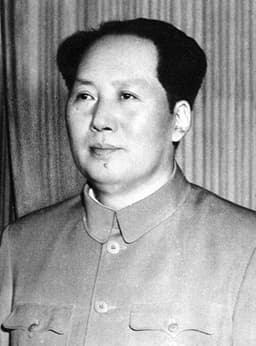
Mao Zedong
Politician · Modern
79.4Total
Basic Information
Born
63
1893
Died
—
1976
Era
Ancient
Modern
Nationality
Roman Empire
China
Occupation
Emperor
Politician
Civilization
Western
Eastern
Score Comparison
Military (10%)
72.0
75.0
Political (20%)
90.0
88.0
Influence (20%)
88.0
85.0
Legacy (20%)
90.0
70.0
Leadership (15%)
88.0
85.0
Strategy (15%)
75.0
72.0
TOTAL
85.9
79.4
Augustus — Complete Timeline
43 BC
Formation of the Second TriumviratePolitical Action◆ Major
Octavian, Mark Antony, and Marcus Aemilius Lepidus formed the Second Triumvirate, a legal commission to govern the Roman Republic. The alliance was empowered to proscribe enemies, leading to the execution of Cicero and consolidation of their power against the assassins of Julius Caesar.
Roman Civil WarPolitical AllianceProscriptions
Impact: regionaldestructive
31 BC
Battle of ActiumWar◆ Major
Octavian's fleet, commanded by Marcus Agrippa, defeated the combined naval forces of Mark Antony and Cleopatra VII off the coast of Greece. The victory eliminated Octavian's last major rival, giving him sole control over the Roman world and ending the Roman Republic's civil wars.
Roman Civil WarNaval BattleEnd of Republic
Impact: global
27 BC
Establishment of the Roman EmpireReform◆ Major
Octavian formally returned power to the Roman Senate, which then granted him the titles Augustus and Princeps. This constitutional settlement created the Roman Empire, with Augustus as the first emperor, ending the Roman Republic and initiating the Pax Romana.
Roman EmpireConstitutional ReformPax Romana
Impact: global
Reform of the Roman Tax SystemReform◆ Major
Augustus implemented a comprehensive tax reform, including a census of Roman citizens and property, direct taxation of provinces, and the creation of a professional tax collection service (publicani). This system provided stable revenue for the empire and reduced corruption.
Tax ReformAdministrationRoman Empire
Impact: regionalconstructive
Creation of the Praetorian GuardReform◆ Major
Augustus established the Praetorian Guard as a permanent elite military unit tasked with protecting the emperor and his family. Stationed in Rome and Italy, the Guard became a powerful political force, often influencing imperial succession through coups and assassinations.
Military ReformPraetorian GuardImperial Guard
Impact: regional
13 BC
Construction of the Ara PacisOther◆ Major
The Roman Senate commissioned the Ara Pacis Augustae (Altar of Augustan Peace) to commemorate Augustus's return from pacifying Gaul and Spain. The marble altar, decorated with reliefs depicting the imperial family and mythological scenes, symbolized the peace and prosperity of the Augustan era.
Building ProjectPropagandaAugustan Art
Impact: regionalconstructive
Mao Zedong — Complete Timeline
1934 AD
Long MarchWar
Mao Zedong led the Chinese Red Army on a strategic retreat from Nationalist forces, covering approximately 6,000 miles over 370 days. The march solidified Mao's leadership within the Chinese Communist Party and became a foundational myth of the Communist revolution.
Chinese Civil WarCommunist RevolutionRetreat
Impact: national
1949 AD
Proclamation of the People's Republic of ChinaPolitical Action
Mao Zedong declared the founding of the People's Republic of China from Tiananmen Gate in Beijing. This ended the Chinese Civil War and established Communist rule over mainland China, with Mao as Chairman of the Central People's Government.
Founding of PRCCommunist VictoryRevolution
Impact: global
1958 AD
Great Leap ForwardReform◆ Major
Mao launched a campaign to rapidly industrialize China and collectivize agriculture. The policy led to widespread mismanagement, resulting in a famine that caused an estimated 15-45 million deaths between 1959 and 1961.
FamineIndustrializationCollectivization
Impact: nationaldestructive
1960 AD
Sino-Soviet SplitPolitical Action◆ Major
Mao's ideological differences with Soviet leader Nikita Khrushchev led to a breakdown in relations between China and the Soviet Union. The split ended the Sino-Soviet alliance and reshaped global Cold War dynamics, with China pursuing an independent path.
Cold WarIdeological ConflictAlliance Breakdown
Impact: global
1966 AD
Cultural RevolutionPolitical Action
Mao initiated a sociopolitical movement to purge capitalist and traditional elements from Chinese society. The Red Guard youth groups attacked intellectuals and officials, leading to widespread violence, destruction of cultural artifacts, and an estimated 1-2 million deaths.
Political PurgeSocial UpheavalRed Guard
Impact: nationaldestructive
1971 AD
Ping-Pong DiplomacyCultural◆ Major
Mao approved an invitation for the U.S. table tennis team to visit China, initiating a thaw in Sino-American relations. This cultural exchange paved the way for President Nixon's visit to China in 1972 and the eventual normalization of diplomatic ties.
DiplomacyU.S.-China RelationsCultural Exchange
Impact: globalconstructive
Expert Analysis
Origins
Augustus (Gaius Octavius) was born into a wealthy plebeian family in 63 BC, posthumously adopted by his great-uncle Julius Caesar. This adoption thrust him into Roman politics at age 18. Mao Zedong (1893-1976) hailed from a peasant family in Hunan, China. He witnessed the fall of the Qing dynasty and the chaos of warlord era, which shaped his revolutionary zeal. Both emerged from periods of upheaval—Rome's civil wars and China's Century of Humiliation—but Augustus had the advantage of a powerful patron.
Rise to Power
Augustus formed the Second Triumvirate with Mark Antony and Lepidus in 43 BC, purging enemies through proscriptions. He defeated Antony at the Battle of Actium (31 BC) and consolidated control. Mao rose through the Chinese Communist Party, leading the Long March (1934-35) which cemented his leadership. He proclaimed the People's Republic of China in 1949 after defeating the Nationalists. Augustus's rise was more dynastic and military; Mao's was ideological and based on guerrilla warfare.
Leadership & Governance
Augustus restored the Republic in name but ruled as princeps, initiating the Pax Romana (200 years of peace). He reformed taxes, created the Praetorian Guard, and launched building projects. Mao implemented radical policies: the Great Leap Forward (1958-62) aimed at rapid industrialization but caused famine; the Cultural Revolution (1966-76) purged rivals and destroyed tradition. Augustus's governance was pragmatic and stable; Mao's was revolutionary and tumultuous. Scores: Augustus (P=90, L=90) vs Mao (P=88, L=70).
Triumph & Tragedy
Augustus's triumphs include the establishment of the Empire, expansion of borders, and cultural flourishing (Augustan Age). His tragedy? The exile of his daughter Julia and failure to secure a stable succession. Mao's triumphs: uniting China, expelling foreign powers. His tragedies: the deaths of millions from famine and political purges. Both caused suffering, but Augustus's reign saw relative peace; Mao's saw upheaval.
Character & Destiny
Augustus was calculating, patient, and ruthless when needed. He restored traditional Roman values while concentrating power. Mao was charismatic, ideological, and willing to sacrifice generations for his vision. Augustus believed in order; Mao in perpetual revolution. Their destinies: Augustus's empire lasted centuries; Mao's legacy is more contested, with China now embracing capitalism.
Legacy
Augustus is revered as the founder of the Roman Empire, a model of administrative genius. Mao is honored as the father of modern China but criticized for his disastrous policies. Augustus's legacy is more universally positive; Mao's is split between national pride and human rights concerns. In terms of lasting impact, Augustus's institutions outlasted him by centuries; Mao's revolution transformed China but at great cost.
Conclusion
Augustus edges Mao in overall historical impact due to the longevity and stability of his rule. Score: Augustus 82.5, Mao 76.0. While Mao's revolutionary changes were profound, the human cost and subsequent reforms (e.g., Deng Xiaoping's market reforms) suggest his vision was unsustainable. Augustus's pragmatic consolidation created a framework that persisted for centuries. Thus, Augustus is the more effective leader in terms of enduring positive legacy.
Rankings
🥇
AugustusLeader
Mil: 72.0Pol: 90.0Inf: 88.0
85.9
🥈
Mao Zedong
Mil: 75.0Pol: 88.0Inf: 85.0
79.4
+6.5 behind
How This Comparison Works
Algorithm
Each figure is scored on 6 dimensions (0—100 scale) based on structured historical data: Military (10%), Political (20%), Influence (20%), Legacy (20%), Leadership (15%), Strategy (15%). The weighted total produces the final ranking.
Data Sources
Scores are computed from structured sub-indicators in the database. Scale factors adjust for era (Ancient ×0.85, Modern ×1.0) and civilization size (Eastern ×1.05, Other ×0.80) to account for differences in population and military scale.
Maximum 3 Figures
Comparisons are limited to 2—3 figures to ensure readability and statistical meaningfulness.
Error Margins
±5 points per dimension — Sub-scores are derived from historical records with inherent uncertainty. Two figures within 5 points on a dimension should be considered roughly equivalent in that area.
Total Score Accuracy
±3 points overall — The weighted combination of 6 dimensions produces a total score with approximately ±3 points of uncertainty. Differences of less than 3 points are not statistically significant— the figures are effectively tied.
Known Limitations
- Historical records are incomplete and uneven across civilizations
- Figures from oral-tradition societies may be underrepresented
- Occupation labels can misclassify multi-role figures
- Scores measure capability and impact, not moral character
- Quantitative scoring is a comparison tool, not absolute truth
Capability Radar
Military (10%) — Battles & Warfare
Battles
75
85
Win Rate
80
80
Expansion
85
85
Political (20%) — Governance & Reform
Reform
95
95
Diplomacy
90
80
Economy
85
70
Influence (20%) — Cultural & Global Reach
Cultural
85
90
Global
90
90
Legacy (20%) — Historical Impact
Historical
95
95
Longevity
95
85
Leadership (15%) — Power & Stability
Tenure
95
95
Stability
95
60
Strategy (15%) — Tactics & Innovation
Strategy
85
85
Tactics
70
75
Reform
90
90
Similar Comparisons
Comments & Discussion
Historian8426/16/2026
看了这个评分,我觉得政治和军事维度的权重分配有问题。毛泽东军事76对屋大维72,但毛泽东指挥的解放战争从1946年的127万军队发展到1949年的400万,三年内消灭国民党军800万,这是世界战争史上的奇迹。屋大维的亚克兴海战确实漂亮,但那是安东尼主动出击的结果,并非以弱胜强。再说政治维度,毛泽东83对屋大维92?毛泽东在1921年建党时全国只有50多名党员,到1949年建立新中国,彻底结束了百年屈辱,这种从零到一的制度创造力被严重低估了。我建议重新计算政治维度权重,加入“制度原创性”指标。
SharpScroll906/16/2026
这个比较很有意思,但我总觉得西方中心的评分体系对中国历史人物不公平。说屋大维的政治92分,因为他“巧妙地将共和制伪装成帝制”,但毛泽东彻底推翻了几千年的封建帝制和半殖民地半封建社会,建立了一个全新的人民民主专政体系,这种结构性变革的难度远大于屋大维的修修补补。拿影响力来说,毛泽东的“农村包围城市”和“群众路线”直接影响了越南的胡志明、柬埔寨的波尔布特、以及非洲许多独立运动领袖,这种全球南方的影响力是屋大维的“奥古斯都体制”无法比拟的。建议评分前先明确用谁的“尺子”来量,否则就像用筷子吃牛排一样别扭。