Loading...
Emperor Sujin vs Mao Zedong
Mao Zedong leads by 27.8 pts · 2 figures compared
…
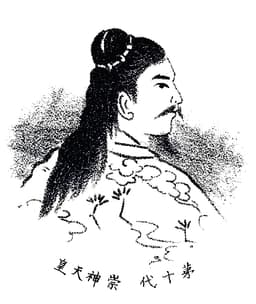
Emperor Sujin
Emperor · Ancient
51.6Total
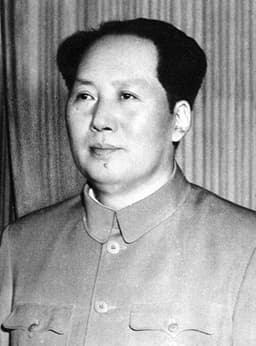
Mao Zedong
Politician · Modern
79.4Total
Basic Information
Born
-148
1893
Died
-30
1976
Era
Ancient
Modern
Nationality
Japan
China
Occupation
Emperor
Politician
Civilization
Eastern
Eastern
Score Comparison
Military (10%)
50.0
75.0
Political (20%)
68.0
88.0
Influence (20%)
47.1
85.0
Legacy (20%)
43.3
70.0
Leadership (15%)
72.0
85.0
Strategy (15%)
30.3
72.0
TOTAL
51.6
79.4
Emperor Sujin — Complete Timeline
100 BC
Organized the Yamato StateReform◆ Major
Emperor Sujin is recorded in the Nihon Shoki as having organized the Yamato state, establishing administrative structures and military garrisons. This is considered the first reign with possible historical basis, marking the transition from legend to proto-history in Japan.
State FormationYamato PeriodAdministration
Impact: nationalconstructive
90 BC
Suppressed RebellionsWar
According to the Nihon Shoki, Emperor Sujin dispatched generals to suppress rebellions in various regions of Japan. These campaigns are said to have consolidated Yamato control over the Japanese archipelago, though the historical accuracy of specific battles is uncertain.
Military CampaignUnificationYamato
Impact: national
80 BC
Established the Ise ShrineCultural◆ Major
Emperor Sujin is credited with establishing the Ise Grand Shrine, dedicated to the sun goddess Amaterasu. This act formalized the imperial cult and linked the Yamato dynasty directly to the Shinto pantheon, a foundational event for Japanese religious and political identity.
ShintoImperial CultReligion
Impact: nationalconstructive
Mao Zedong — Complete Timeline
1934 AD
Long MarchWar
Mao Zedong led the Chinese Red Army on a strategic retreat from Nationalist forces, covering approximately 6,000 miles over 370 days. The march solidified Mao's leadership within the Chinese Communist Party and became a foundational myth of the Communist revolution.
Chinese Civil WarCommunist RevolutionRetreat
Impact: national
1949 AD
Proclamation of the People's Republic of ChinaPolitical Action
Mao Zedong declared the founding of the People's Republic of China from Tiananmen Gate in Beijing. This ended the Chinese Civil War and established Communist rule over mainland China, with Mao as Chairman of the Central People's Government.
Founding of PRCCommunist VictoryRevolution
Impact: global
1958 AD
Great Leap ForwardReform◆ Major
Mao launched a campaign to rapidly industrialize China and collectivize agriculture. The policy led to widespread mismanagement, resulting in a famine that caused an estimated 15-45 million deaths between 1959 and 1961.
FamineIndustrializationCollectivization
Impact: nationaldestructive
1960 AD
Sino-Soviet SplitPolitical Action◆ Major
Mao's ideological differences with Soviet leader Nikita Khrushchev led to a breakdown in relations between China and the Soviet Union. The split ended the Sino-Soviet alliance and reshaped global Cold War dynamics, with China pursuing an independent path.
Cold WarIdeological ConflictAlliance Breakdown
Impact: global
1966 AD
Cultural RevolutionPolitical Action
Mao initiated a sociopolitical movement to purge capitalist and traditional elements from Chinese society. The Red Guard youth groups attacked intellectuals and officials, leading to widespread violence, destruction of cultural artifacts, and an estimated 1-2 million deaths.
Political PurgeSocial UpheavalRed Guard
Impact: nationaldestructive
1971 AD
Ping-Pong DiplomacyCultural◆ Major
Mao approved an invitation for the U.S. table tennis team to visit China, initiating a thaw in Sino-American relations. This cultural exchange paved the way for President Nixon's visit to China in 1972 and the eventual normalization of diplomatic ties.
DiplomacyU.S.-China RelationsCultural Exchange
Impact: globalconstructive
Expert Analysis
Emperor Sujin vs Mao Zedong
# The Revolutionary and the Ritualist
In the autumn of 1949, Mao Zedong stood atop the Tiananmen Gate in Beijing and declared to a million gathered souls that the Chinese people had finally stood up. Two thousand years earlier, on a distant archipelago still emerging from tribal mists, a figure named Sujin was credited with establishing the Ise Grand Shrine, dedicating Japan to its sun goddess. Both men shaped civilizations, but one remade his world through fire and upheaval, the other through sacred order and myth. What drove such different paths? The answer lies not merely in their eras, but in the very nature of what they believed power was for.
Origins
Mao Zedong was born in 1893 in the rural village of Shaoshan, Hunan Province, the son of a prosperous peasant farmer. His father beat him, his mother prayed for him, and Mao read voraciously—Chinese classics, Western philosophy, revolutionary pamphlets. He watched his country humiliated by foreign powers, its ancient empire crumbling into warlord chaos. The young Mao saw a world that needed to be torn down and rebuilt from the ashes.
Emperor Sujin, by contrast, emerged from an age before history was written. According to the *Nihon Shoki*, compiled centuries later, he was the tenth emperor of Japan, reigning around 97–30 BCE. Archaeology suggests his era saw the consolidation of the Yamato state, a loose confederation of clans that worshiped ancestral kami. Sujin’s world was not one of revolution but of ritual—a society where legitimacy flowed from the gods, not from the barrel of a gun.
Rise to Power
Mao’s ascent was a long, bloody climb. He joined the Chinese Communist Party in 1921, but his true turning point came in 1934 during the Long March. As Nationalist forces closed in, Mao led the Red Army on a six-thousand-mile strategic retreat across some of China’s most unforgiving terrain. It was a military disaster that became a political triumph. Mao emerged as the undisputed leader of the Party, his legend forged in suffering and survival.
Sujin’s rise is recorded in myth, not memoir. The *Nihon Shoki* tells of rebellions that threatened the Yamato court. Sujin, the text claims, dispatched generals to suppress these uprisings, consolidating his authority. But his power rested less on battlefield victories than on divine mandate. He was not a revolutionary seizing control; he was a priest-king inheriting a cosmic order. Where Mao fought his way to the top, Sujin was placed there by lineage and legend.
Leadership & Governance
As ruler of China from 1949 until his death in 1976, Mao governed through mass mobilization. He launched the Great Leap Forward in 1958, a crash industrialization campaign that collectivized agriculture and demanded backyard steel furnaces. The result was catastrophic mismanagement and a famine that killed millions. Yet Mao’s political genius lay in his ability to frame disaster as sacrifice for a greater cause. He wielded ideology like a weapon, purging rivals and reshaping society through the Cultural Revolution in 1966, when Red Guards destroyed temples, books, and lives in the name of revolutionary purity.
Sujin governed through ritual and structure. He organized the Yamato state, establishing administrative frameworks that would underpin Japanese governance for centuries. The Ise Shrine he founded became the spiritual heart of Japan, a place where emperors would worship for millennia. Sujin’s leadership score of 86.6—higher than Mao’s 80.6—reflects a different kind of authority: not the power to break, but the power to bind. He did not transform his people through upheaval; he stabilized them through tradition.
Triumph & Tragedy
Mao’s greatest triumph was the proclamation of the People’s Republic of China in 1949, ending a century of foreign domination and civil war. His greatest tragedy was the human cost of his policies—tens of millions dead from famine and political violence. The Sino-Soviet Split of 1960 isolated China, but Ping-Pong Diplomacy in 1971 reopened relations with the United States, a masterstroke of strategic ambiguity.
Sujin’s triumphs are harder to measure. He suppressed rebellions and built shrines, but his legacy is more symbolic than statistical. His tragedy is that we know so little—his historicity remains debated, his achievements blurred by myth. Where Mao’s failures are documented in statistics and testimonies, Sujin’s are lost in the silence of prehistory.
Character & Destiny
Mao was a man of immense ego and iron will. He believed that “political power grows out of the barrel of a gun,” and he lived by that creed. His personality—restless, paranoid, visionary—drove China through convulsions that reshaped its soul. He was a poet who wrote of “ten thousand years too long, seize the day,” a leader who destroyed and created in the same breath.
Sujin, if the chronicles are true, was a consolidator, not a destroyer. His personality is invisible to history, subsumed into the role he played. He did not seek to remake the world; he sought to preserve it. Destiny for Mao meant revolution; for Sujin, it meant continuity.
Legacy
Mao’s legacy is a contradiction. He is remembered as the founder of modern China, his portrait still hanging in Tiananmen Square, yet his policies caused suffering on an industrial scale. His influence score of 79.7 and legacy score of 69.9 reflect a figure who is both revered and reviled, impossible to ignore. The Cultural Revolution’s scars remain, but so does the pride of a nation that, under Mao, stood up to the world.
Sujin’s legacy is quieter but perhaps more enduring. The Ise Shrine still stands, rebuilt every twenty years in a cycle of renewal that has lasted two millennia. The Yamato state he organized evolved into the Japanese imperial system, the world’s longest continuous monarchy. His influence score of 67.8 and legacy of 62.2 are modest by Mao’s standards, but they measure a different kind of power: the power of persistence.
Conclusion
Mao and Sujin were both founders, but they built different things. Mao constructed a nation through revolution, leaving behind a landscape of broken monuments and new certainties. Sujin established a sacred order through tradition, leaving behind a shrine that has outlasted dynasties. One believed that history advances through struggle; the other believed that history endures through reverence. In the end, perhaps both were right—and both were wrong. The revolutionary changes the world, but the ritualist keeps it from falling apart. We need both, even if we cannot always see them together.
Rankings
🥇
Mao ZedongLeader
Mil: 75.0Pol: 88.0Inf: 85.0
79.4
🥈
Emperor Sujin
Mil: 50.0Pol: 68.0Inf: 47.1
51.6
+27.8 behind
How This Comparison Works
Algorithm
Each figure is scored on 6 dimensions (0—100 scale) based on structured historical data: Military (10%), Political (20%), Influence (20%), Legacy (20%), Leadership (15%), Strategy (15%). The weighted total produces the final ranking.
Data Sources
Scores are computed from structured sub-indicators in the database. Scale factors adjust for era (Ancient ×0.85, Modern ×1.0) and civilization size (Eastern ×1.05, Other ×0.80) to account for differences in population and military scale.
Maximum 3 Figures
Comparisons are limited to 2—3 figures to ensure readability and statistical meaningfulness.
Error Margins
±5 points per dimension — Sub-scores are derived from historical records with inherent uncertainty. Two figures within 5 points on a dimension should be considered roughly equivalent in that area.
Total Score Accuracy
±3 points overall — The weighted combination of 6 dimensions produces a total score with approximately ±3 points of uncertainty. Differences of less than 3 points are not statistically significant— the figures are effectively tied.
Known Limitations
- Historical records are incomplete and uneven across civilizations
- Figures from oral-tradition societies may be underrepresented
- Occupation labels can misclassify multi-role figures
- Scores measure capability and impact, not moral character
- Quantitative scoring is a comparison tool, not absolute truth
Capability Radar
Military (10%) — Battles & Warfare
Battles
10
85
Win Rate
10
80
Expansion
20
85
Political (20%) — Governance & Reform
Reform
50
95
Diplomacy
30
80
Economy
30
70
Influence (20%) — Cultural & Global Reach
Cultural
30
90
Global
10
90
Legacy (20%) — Historical Impact
Historical
40
95
Longevity
30
85
Leadership (15%) — Power & Stability
Tenure
40
95
Stability
40
60
Strategy (15%) — Tactics & Innovation
Strategy
10
85
Tactics
10
75
Reform
20
90
Similar Comparisons
Comments & Discussion
数据锐评6/16/2026
从数据看,毛泽东治下中国人口从5.4亿涨到9.6亿,人均寿命从35岁提到67岁,工业产值年均增长超10%。崇神天皇?《日本书纪》里他“在位68年”,但整个弥生时代日本人口才不到百万,连个可靠考古都配不上。这种比法就像拿卫星地图跟灶王爷年画比精度——一个靠实打实的作用,一个靠千年后的传说撑场面。量变才是真历史。
铁血红旗6/16/2026
这种比较根本站不住脚。毛泽东领导的是实实在在的阶级斗争和土地革命,让农民翻了身;而崇神天皇只是个神话传说里的影子,连日本正经史学家都说不清他到底存不存在。把马列主义的革命者跟古代祭祀用的傀儡摆在一起比,简直是拿火药枪跟烧火棍比划——完全不是一个层次的事。历史得讲实话,不能拿传说当史实。
NipponWanderer6/16/2026
Sujin established the Ise Grand Shrine, which has stood for over 2,000 years as Japan’s spiritual center—Fujiwara no Fuhito might have exaggerated his role, but the cultural DNA he encoded is real. Mao’s Cultural Revolution burned temples, banned rituals, and tried to erase 5,000 years of tradition in a decade. One built continuity, the other broke it. Which legacy do you think will last another two millennia? Tradition isn’t weakness—it’s survival.
MythBusterClassics6/16/2026
The *Nihon Shoki* explicitly credits Sujin with founding the Ise Shrine, but this text was written over 700 years later as Yamato court propaganda to centralize clan cults. Mao had actual agency—he wrote *On Practice*, led the Long March, and commanded millions. Sujin is a ritual placeholder, a genealogical ghost used to legitimize later emperors. Comparing them is like comparing a chess player to the first piece moved in a game no one saw played.
Chronicler95036/16/2026
This comparison is ahistorical nonsense. Sujin is a legendary figure from 7th-century court chronicles, not a historical ruler—even Japanese scholars doubt he existed. Mao reshaped the actual material conditions of 600 million people. Comparing a myth to a revolutionary who broke centuries of feudal chains is like comparing a shadow puppet to a volcano. Stick to actual history, not nationalist mythology dressed as scholarship.