Loading...
Khosrow I Anushirvan vs Philip II of Macedon
Philip II of Macedon leads by 5.7 pts · 2 figures compared
…
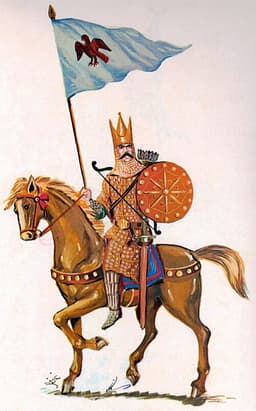
Khosrow I Anushirvan
Emperor · Ancient
68.2Total
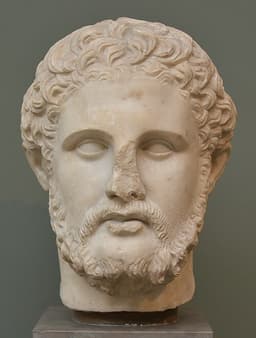
Philip II of Macedon
Emperor · Ancient
73.9Total
Basic Information
Born
-501
-382
Died
—
-336
Era
Ancient
Ancient
Nationality
Sasanian Empire
Macedon
Occupation
Emperor
Emperor
Civilization
Middle Eastern
Western
Score Comparison
Military (10%)
72.0
65.0
Political (20%)
72.0
76.0
Influence (20%)
82.0
75.0
Legacy (20%)
40.0
70.0
Leadership (15%)
78.0
78.0
Strategy (15%)
80.0
80.3
TOTAL
68.2
73.9
Khosrow I Anushirvan — Complete Timeline
531 AD
Reign as the greatest Sasanian rulerPolitical Action
Khosrow I Anushirvan ascended the throne and began a reign that would be remembered as the golden age of the Sasanian Empire. He implemented sweeping reforms in administration, military, and taxation, earning the epithet 'the Just'.
ReignGolden AgeSasanian Empire
Impact: globalconstructive
532 AD
Peace treaty with the Byzantine Empire (Eternal Peace)Political Action◆ Major
Khosrow I negotiated the 'Eternal Peace' with the Byzantine Emperor Justinian I, ending the Iberian War. The treaty required the Sasanians to return occupied territories in exchange for a large gold payment, securing a temporary truce.
TreatyByzantine EmpireDiplomacy
Impact: global
540 AD
Invasion of Syria and sack of AntiochWar◆ Major
Taking advantage of Justinian's focus on the West, Khosrow I invaded Byzantine Syria. He captured and sacked the great city of Antioch, deporting its inhabitants to a new city near Ctesiphon, demonstrating Sasanian military power.
InvasionSack of AntiochByzantine-Sasanian Wars
Impact: regionaldestructive
Reforms of the army and tax systemReform◆ Major
Khosrow I reorganized the Sasanian military, creating a standing army of heavily armored cavalry (aswaran) and improving logistics. He also reformed the tax system, introducing a fixed land tax and a poll tax, which increased state revenue.
Military ReformTax ReformAdministration
Impact: nationalconstructive
541 AD
Foundation of the city of Weh Antiok KhosrowCultural
Khosrow I founded a new city near Ctesiphon, named Weh Antiok Khosrow ('Better than Antioch, Khosrow built this'), to house the deported population of Antioch. The city became a center for trade and culture.
City FoundationUrban PlanningDeportation
constructive
Philip II of Macedon — Complete Timeline
359 BC
Reforms of the Macedonian ArmyReform◆ Major
Philip II reorganized the Macedonian army, introducing the sarissa (long pike) and the phalanx formation. He also improved cavalry tactics and logistics, creating a professional, disciplined force that was superior to Greek hoplite armies.
MacedonMilitary ReformPhalanx
Impact: regionalconstructive
338 BC
Battle of ChaeroneaWar
Philip II led the Macedonian army to a decisive victory over the combined forces of Athens and Thebes at Chaeronea. The battle ended Greek independence and established Macedonian hegemony over Greece. Philip's son Alexander commanded the cavalry on the left wing.
MacedonGreeceBattle
Impact: regionaldestructive
337 BC
Formation of the League of CorinthPolitical Action◆ Major
Philip II established the League of Corinth, a federation of Greek states under Macedonian leadership. The league declared war on Persia and appointed Philip as its commander-in-chief, laying the groundwork for Alexander's later invasion.
MacedonGreeceAlliance
Impact: regionalconstructive
336 BC
Assassination at AegaePolitical Action◆ Major
Philip II was assassinated by his bodyguard Pausanias at the wedding of his daughter Cleopatra in Aegae. The motive remains unclear, but his death led to the immediate succession of his son Alexander the Great, who continued his plans for the Persian invasion.
MacedonAssassinationSuccession
Impact: regionaltragic
Expert Analysis
Origins
Khosrow I Anushirvan (born c. 501 AD) was a prince of the Sasanian dynasty, the son of King Kavadh I. He grew up in the turbulent late 5th century, witnessing his father's struggles with the Mazdakite religious movement and internal revolts. His education emphasized Zoroastrian theology, statecraft, and military arts, preparing him for rule in a period of imperial crisis. Philip II of Macedon (born 382 BC) was the youngest son of King Amyntas III. He spent his youth as a hostage in Thebes, where he studied under Epaminondas, learning the latest military tactics and Greek politics. This experience shaped his later reforms and ambition to unify Greece under Macedonian hegemony.
Rise to Power
Khosrow I ascended the throne in 531 AD after his father's death, but not without controversy. He had to suppress the Mazdakite uprising and eliminate rivals, including his brothers. Key allies included the powerful noble families, whom he carefully balanced. His turning point came with the successful negotiation of the 'Eternal Peace' with Byzantium in 532 AD, securing his northern frontier. Philip II became king in 359 BC after Macedonia's near-collapse. He quickly defeated rival claimants and pacified the northern tribes. His turning point was the Battle of Chaeronea in 338 BC, where he crushed the combined Greek forces, ending their independence. He then formed the League of Corinth in 337 BC, positioning himself as hegemon of Greece.
Leadership & Governance
Khosrow I implemented sweeping administrative and military reforms. He reorganized the tax system, introducing a fixed land tax and a poll tax, which increased revenue and reduced corruption. He created a standing army of heavily armored cavalry (aswaran) and improved fortifications. His governance emphasized justice, earning him the title 'Anushirvan' (Immortal Soul). He also founded the city of Weh Antiok Khosrow to settle deported populations. Philip II transformed Macedonia from a weak state into the dominant power in Greece. He reformed the army by introducing the sarissa (long pike) and the phalanx formation, and improved cavalry tactics. Politically, he united the Greek city-states through the League of Corinth, imposing Macedonian control while allowing local autonomy. His governance was pragmatic, using marriage alliances and bribes as well as force.
Triumph & Tragedy
Khosrow I's greatest triumph was the sack of Antioch in 540 AD, which brought immense wealth and prestige. He also expanded the empire eastward against the Hephthalites and secured the Caucasus. However, his 'Eternal Peace' with Byzantium collapsed, leading to prolonged wars. His later campaigns in Syria and Armenia were inconclusive, and the empire faced resource strain. Philip II's greatest triumph was the unification of Greece and the planning of the invasion of Persia, which would be executed by his son Alexander. His tragedy was his assassination in 336 BC at the wedding of his daughter, likely due to personal vendettas or political intrigue. He never saw his grand plan realized, and his death plunged Macedonia into a succession crisis.
Character & Destiny
Khosrow I was known for his sagacity, justice, and cultural patronage. He supported the translation of Greek and Indian texts, and his court became a center of learning. His character shaped a stable, prosperous reign, but his cautiousness sometimes limited aggression. Philip II was ambitious, strategic, and ruthless. He used diplomacy, warfare, and marriage to achieve his goals. His character drove Macedonia's rapid rise, but his personal relationships (multiple wives and feuds) created enemies who ultimately ended his life. Historical assessments often view Philip as the architect and Alexander as the builder; without Philip's foundations, Alexander's conquests would have been impossible.
Legacy
Khosrow I's legacy is mixed: his reforms strengthened the Sasanian state, and his cultural patronage influenced Persian civilization. However, his empire collapsed within a century of his death due to internal decay. His scores reflect this: Military 72.0, Political 72.0, Influence 82.0, Legacy 40.0. Philip II's legacy is monumental: he created the Macedonian military machine and the political framework that enabled Alexander's conquests. The League of Corinth influenced later hegemonic leagues. His military reforms set the standard for Hellenistic armies. His scores: Military 65.0, Political 76.0, Influence 75.0, Legacy 70.0. The overall score gap of 5.7 points in Philip's favor reflects his more transformative impact on world history.
Conclusion
While Khosrow I was a capable ruler who stabilized and reformed the Sasanian Empire, his impact was largely regional and temporary. Philip II, by contrast, fundamentally altered the course of Western and Asian history. His unification of Greece and military innovations created the conditions for the Hellenistic era and the spread of Greek culture across the Near East. Philip's legacy score of 70.0 versus Khosrow's 40.0 underscores this disparity. Therefore, Philip II of Macedon had a greater and more enduring impact on history.
Rankings
🥇
Philip II of MacedonLeader
Mil: 65.0Pol: 76.0Inf: 75.0
73.9
🥈
Khosrow I Anushirvan
Mil: 72.0Pol: 72.0Inf: 82.0
68.2
+5.7 behind
How This Comparison Works
Algorithm
Each figure is scored on 6 dimensions (0—100 scale) based on structured historical data: Military (10%), Political (20%), Influence (20%), Legacy (20%), Leadership (15%), Strategy (15%). The weighted total produces the final ranking.
Data Sources
Scores are computed from structured sub-indicators in the database. Scale factors adjust for era (Ancient ×0.85, Modern ×1.0) and civilization size (Eastern ×1.05, Other ×0.80) to account for differences in population and military scale.
Maximum 3 Figures
Comparisons are limited to 2—3 figures to ensure readability and statistical meaningfulness.
Error Margins
±5 points per dimension — Sub-scores are derived from historical records with inherent uncertainty. Two figures within 5 points on a dimension should be considered roughly equivalent in that area.
Total Score Accuracy
±3 points overall — The weighted combination of 6 dimensions produces a total score with approximately ±3 points of uncertainty. Differences of less than 3 points are not statistically significant— the figures are effectively tied.
Known Limitations
- Historical records are incomplete and uneven across civilizations
- Figures from oral-tradition societies may be underrepresented
- Occupation labels can misclassify multi-role figures
- Scores measure capability and impact, not moral character
- Quantitative scoring is a comparison tool, not absolute truth
Capability Radar
Military (10%) — Battles & Warfare
Battles
85
85
Win Rate
80
90
Expansion
75
85
Political (20%) — Governance & Reform
Reform
95
90
Diplomacy
85
92
Economy
95
80
Influence (20%) — Cultural & Global Reach
Cultural
85
80
Global
75
80
Legacy (20%) — Historical Impact
Historical
85
85
Longevity
80
85
Leadership (15%) — Power & Stability
Tenure
90
75
Stability
90
70
Strategy (15%) — Tactics & Innovation
Strategy
90
92
Tactics
85
88
Reform
95
95
Similar Comparisons
Comments & Discussion
No comments yet. Be the first to share your thoughts!