Loading...
Philip II of Macedon vs Qin Shi Huang
Qin Shi Huang leads by 11.3 pts · 2 figures compared
…
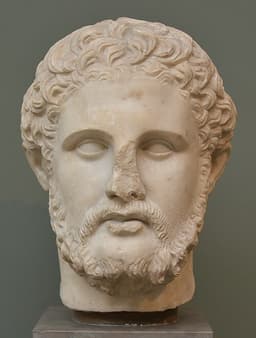
Philip II of Macedon
Emperor · Ancient
73.9Total
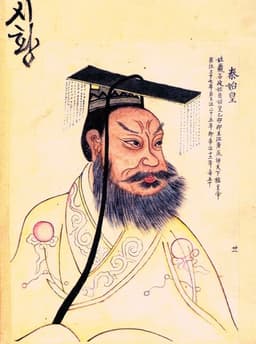
Qin Shi Huang
Emperor · Ancient
85.2Total
Basic Information
Born
-382
-259
Died
-336
-210
Era
Ancient
Ancient
Nationality
Macedon
China
Occupation
Emperor
Emperor
Civilization
Western
Eastern
Score Comparison
Military (10%)
65.0
80.0
Political (20%)
76.0
90.0
Influence (20%)
75.0
85.0
Legacy (20%)
70.0
90.0
Leadership (15%)
78.0
78.0
Strategy (15%)
80.3
82.0
TOTAL
73.9
85.2
Philip II of Macedon — Complete Timeline
359 BC
Reforms of the Macedonian ArmyReform◆ Major
Philip II reorganized the Macedonian army, introducing the sarissa (long pike) and the phalanx formation. He also improved cavalry tactics and logistics, creating a professional, disciplined force that was superior to Greek hoplite armies.
MacedonMilitary ReformPhalanx
Impact: regionalconstructive
338 BC
Battle of ChaeroneaWar
Philip II led the Macedonian army to a decisive victory over the combined forces of Athens and Thebes at Chaeronea. The battle ended Greek independence and established Macedonian hegemony over Greece. Philip's son Alexander commanded the cavalry on the left wing.
MacedonGreeceBattle
Impact: regionaldestructive
337 BC
Formation of the League of CorinthPolitical Action◆ Major
Philip II established the League of Corinth, a federation of Greek states under Macedonian leadership. The league declared war on Persia and appointed Philip as its commander-in-chief, laying the groundwork for Alexander's later invasion.
MacedonGreeceAlliance
Impact: regionalconstructive
336 BC
Assassination at AegaePolitical Action◆ Major
Philip II was assassinated by his bodyguard Pausanias at the wedding of his daughter Cleopatra in Aegae. The motive remains unclear, but his death led to the immediate succession of his son Alexander the Great, who continued his plans for the Persian invasion.
MacedonAssassinationSuccession
Impact: regionaltragic
Qin Shi Huang — Complete Timeline
246 BC
Construction of the Mausoleum and Terracotta ArmyOther◆ Major
Qin Shi Huang commissioned a vast mausoleum complex near Xi'an, guarded by thousands of life-sized terracotta soldiers, horses, and chariots. The project employed hundreds of thousands of workers and reflected his obsession with immortality and imperial power.
Impact: global
230 BC
Conquest of the Six Warring StatesWar
From 230 to 221 BCE, Ying Zheng led the Qin state in a series of campaigns that conquered the Han, Zhao, Wei, Chu, Yan, and Qi states. This unified China under a single ruler for the first time, ending the Warring States period.
Impact: global
221 BC
Standardization of Writing, Currency, and MeasurementsReform◆ Major
Qin Shi Huang ordered the standardization of Chinese script, currency, and weights and measures across the unified empire. This facilitated administration, trade, and cultural integration, laying a foundation for future dynasties.
Impact: globalconstructive
Proclamation of the Qin DynastyPolitical Action
After conquering the last independent state, Ying Zheng declared himself Shi Huangdi (First Emperor), founding the Qin Dynasty. He adopted a new title to signify his supreme authority and initiated centralized imperial rule.
Impact: global
214 BC
Initiation of the Great Wall ConstructionOther◆ Major
Qin Shi Huang ordered the connection and extension of existing northern fortifications to create a unified defensive wall against nomadic Xiongnu raids. This project involved massive conscripted labor and became the precursor to the later Great Wall.
Impact: regional
213 BC
Burning of Books and Burying of ScholarsPolitical Action◆ Major
On the advice of Li Si, Qin Shi Huang ordered the burning of historical records and philosophical texts not aligned with Legalist doctrine. He also had 460 Confucian scholars buried alive to suppress dissent and consolidate ideological control.
Impact: nationaldestructive
Expert Analysis
philip-ii-of-macedon-vs-qin-shi-huang
# The Two Faces of Unity
On a spring morning in 336 BC, Philip II of Macedon entered the theater at Aegae, his daughter’s wedding celebration already underway. He was at the zenith of his power—Greece lay prostrate, the Persian expedition was planned, and his son Alexander stood ready at his side. Moments later, he lay dead, stabbed by his own bodyguard. Across the world, a century and a quarter later, another emperor would die under circumstances far less dramatic but equally mysterious: Qin Shi Huang, the First Emperor of China, succumbed to illness—or perhaps poison—while on a tour of his realm, his body hidden in a cart of fish to mask the stench of decay until his successor could secure the throne. Two unifiers, two violent ends, but the worlds they built could not have been more different. Why did one man’s empire shatter within a generation, while the other’s blueprint endured for two millennia?
Origins
Philip II was born in 382 BC into a kingdom teetering on the edge of irrelevance. Macedon was a rough, semi-Hellenic frontier state, looked down upon by the polished city-states of the south. He spent his youth as a hostage in Thebes, where he studied Greek warfare and politics under Epaminondas, the era’s greatest general. This experience taught him both the strengths and the fatal divisions of the Greek world.
Qin Shi Huang, born Ying Zheng in 259 BC, entered a world of endless war. The Warring States period had torn China apart for centuries, and Qin, the westernmost state, was a harsh, militaristic society shaped by Legalist philosophy—a doctrine that valued order and state power above all else. His father was a king, but his mother was a concubine, and his early years were shadowed by court intrigue and the threat of assassination.
Rise to Power
Philip seized the Macedonian throne in 359 BC after his brother’s death left the kingdom in chaos. He was twenty-three, and his enemies—Illyrians, Thracians, and rival Greek states—smelled weakness. He did not wait. Within two years, he had reformed the army, marrying the sarissa phalanx to elite cavalry in a combination that would dominate battlefields for decades. He fought, bribed, and married his way to hegemony, but he never claimed to be more than a king among Greeks.
Ying Zheng’s path was different. He became king of Qin at thirteen, but real power lay with his regent, Lü Buwei, and later with the eunuch Lao Ai. When Ying Zheng finally took control at twenty-two, he moved with terrifying speed: he crushed Lao Ai, exiled Lü Buwei, and then turned his gaze outward. From 230 to 221 BC, his armies rolled over the six rival states one by one—Han, Zhao, Wei, Chu, Yan, and finally Qi. When it was done, he did not call himself king. He called himself *Shi Huangdi*—the First Emperor—inventing a title that meant he had no equal on earth.
Leadership & Governance
Here the two men diverged most sharply. Philip was a pragmatist. After crushing Athens and Thebes at Chaeronea in 338 BC, he did not burn their cities or enslave their people. He founded the League of Corinth, a federation that allowed Greek states to govern themselves while recognizing Macedonian leadership. He respected local traditions, married a Thessalian princess and an Illyrian one to bind his conquests, and planned to integrate Greeks and Macedonians into a joint invasion of Persia. His rule was about alliance, not annihilation.
Qin Shi Huang thought in absolutes. He abolished the feudal system entirely, dividing China into thirty-six commanderies governed by appointed officials. He standardized writing, currency, and axle widths so that his carts could roll along the same roads from the Yellow River to the Yangtze. He ordered the burning of all books not useful to the state—history, poetry, philosophy—and buried 460 scholars alive for criticizing his rule. The Great Wall, begun in 214 BC, was not a defense against barbarians alone; it was a wall of control, marking the boundary of his perfect, uniform world.
Triumph & Tragedy
Philip’s greatest moment was the Battle of Chaeronea, where he crushed the hoplite armies of Greece with his revolutionary combined-arms tactics. His tragedy was that he never saw his grand plan fulfilled. The League of Corinth held, but the unity was fragile, dependent on his personal authority. When he fell to an assassin’s dagger in 336 BC, his son Alexander inherited an army and a dream—but the structure Philip built was already cracking.
Qin Shi Huang’s triumph was absolute: he created a unified China where none had existed. His tragedy was that he could not trust it. He spent his final years obsessed with immortality, swallowing mercury pills prescribed by alchemists, building a vast mausoleum guarded by the Terracotta Army—a silent host for the afterlife. When he died in 210 BC, his empire collapsed into civil war within three years. The Qin Dynasty lasted only fifteen years after unification.
Character & Destiny
Philip was a gambler who understood limits. He knew when to fight and when to negotiate, when to punish and when to pardon. He was ruthless—he blinded his stepbrothers and killed rivals—but he never confused power with divinity. Qin Shi Huang saw no limits at all. He believed that his will could reshape the world, and he was right—but only for a moment. His paranoia, his obsession with control, and his refusal to delegate destroyed the very system he built.
One man built a foundation that his son could use. The other built a monument that could only stand if he himself stood guard.
Legacy
Philip II is remembered as the father of Alexander the Great, which is both true and profoundly unfair. He created the army, the strategy, and the political framework that made Alexander’s conquests possible. Without Philip, there would be no Hellenistic Age, no Alexandria, no fusion of East and West. But the son’s brilliance eclipsed the father’s craft.
Qin Shi Huang’s legacy is the opposite. His dynasty failed, but his blueprint survived. Every Chinese emperor who followed—Han, Tang, Ming, Qing—ruled over a unified state with standardized writing, a centralized bureaucracy, and a single legal code. He was a tyrant whose tyranny created the very idea of China.
Conclusion
Stand at the Terracotta Army today, and you face thousands of silent soldiers, each face unique, each waiting for a command that will never come. Stand at the ruins of Aegae, and you see a theater where a king died before his work was done. Both men tried to forge unity out of chaos. Philip succeeded by persuasion and Philip failed by assassination. Qin succeeded by force and Qin failed by excess. Their stories remind us that unity is not a state but a process—and that the measure of a unifier is not how much he crushes, but how much he builds that outlasts him.
Rankings
🥇
Qin Shi HuangLeader
Mil: 80.0Pol: 90.0Inf: 85.0
85.2
🥈
Philip II of Macedon
Mil: 65.0Pol: 76.0Inf: 75.0
73.9
+11.3 behind
How This Comparison Works
Algorithm
Each figure is scored on 6 dimensions (0—100 scale) based on structured historical data: Military (10%), Political (20%), Influence (20%), Legacy (20%), Leadership (15%), Strategy (15%). The weighted total produces the final ranking.
Data Sources
Scores are computed from structured sub-indicators in the database. Scale factors adjust for era (Ancient ×0.85, Modern ×1.0) and civilization size (Eastern ×1.05, Other ×0.80) to account for differences in population and military scale.
Maximum 3 Figures
Comparisons are limited to 2—3 figures to ensure readability and statistical meaningfulness.
Error Margins
±5 points per dimension — Sub-scores are derived from historical records with inherent uncertainty. Two figures within 5 points on a dimension should be considered roughly equivalent in that area.
Total Score Accuracy
±3 points overall — The weighted combination of 6 dimensions produces a total score with approximately ±3 points of uncertainty. Differences of less than 3 points are not statistically significant— the figures are effectively tied.
Known Limitations
- Historical records are incomplete and uneven across civilizations
- Figures from oral-tradition societies may be underrepresented
- Occupation labels can misclassify multi-role figures
- Scores measure capability and impact, not moral character
- Quantitative scoring is a comparison tool, not absolute truth
Capability Radar
Military (10%) — Battles & Warfare
Battles
85
85
Win Rate
90
90
Expansion
85
90
Political (20%) — Governance & Reform
Reform
90
95
Diplomacy
92
75
Economy
80
90
Influence (20%) — Cultural & Global Reach
Cultural
80
95
Global
80
85
Legacy (20%) — Historical Impact
Historical
85
95
Longevity
85
95
Leadership (15%) — Power & Stability
Tenure
75
70
Stability
70
65
Strategy (15%) — Tactics & Innovation
Strategy
92
85
Tactics
88
80
Reform
95
95
Similar Comparisons
Comments & Discussion
SpearPhalanx6/17/2026
Philip II didn’t just conquer Greece—he engineered a new kind of warfare. The sarissa phalanx and combined-arms tactics were a revolution, turning Macedon from a backwater into a superpower in two decades. Qin Shi Huang’s unification relied on ruthless bureaucracy and mass mobilization, not tactical genius. Philip’s empire shattered because Alexander overextended it; Qin’s survived because he standardized writing and measurements. Philip wins on battlefield innovation, but Qin wins on lasting in
数据铁匠6/17/2026
说数据?Philip II合并希腊城邦时,人口不到200万,而秦朝统一时管理着约3000万人。Qin的标准化—度量衡、文字、车轮间距—是冷冰冰的数据工程。Philip留给亚历山大的是精锐部队和欠下的债务;Qin留给后世的是一套可以复制的行政系统。Philip的帝国像烟花:绚烂十年,灰飞烟灭。Qin的蓝图是混凝土:中国历代王朝都在用它打地基。别跟我提什么战术才华,看看谁的账本更持久。
PaideiaPlato6/17/2026
The comparison misses the ideological chasm. Philip, educated by Epaminondas in Thebes, aimed for a hegemon of autonomous Greek poleis under Macedonian leadership—a pluralistic, league-based system. Qin Shi Huang, steeped in Legalism, enforced a unified, autocratic state with standardized thought and punishments. Philip’s assassination was a personal tragedy; Qin’s death was systemic—his empire relied entirely on his singular will. One built a coalition, the other a machine. That’s why the machi
影武者6/17/2026
你以为Qin的帝国真那么牢固?他的“统一”是用焚书坑儒和严刑峻法换来的表面繁荣。Philip至少知道收买人心——他让被征服的希腊城邦保留自治权,只要求骑兵和忠诚。Qin呢?他活埋儒家学者,把书烧成灰。结果秦朝二世而亡,老百姓直接反了。Philip的王国在亚历山大手下还撑了十几年。帝国不是靠标准化活下来的,是靠民心。Qin是个一流的暴君,三流的政治家。
CominternOfThought6/17/2026
The real lesson? Qin Shi Huang created the first standardized systemic state, while Philip built a personal monarchy. Philip’s rule was aristocratic, informal, and dependent on his charisma—Alexander could inherit it but not sustain it. Qin’s rule was bureaucratic, written, and unchanging—his ministers executed policies regardless of the emperor’s presence. That’s why China’s “first emperor” gave the world a