Loading...
K. Kamaraj vs Napoleon Bonaparte
Napoleon Bonaparte leads by 9.7 pts · 2 figures compared
…
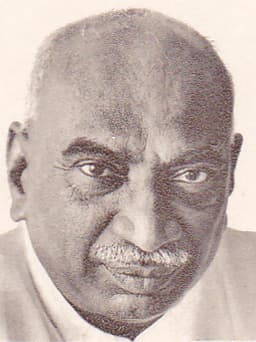
K. Kamaraj
Politician · Modern
61.2Total

Napoleon Bonaparte
General · Modern
70.9Total
Basic Information
Born
1903
1769
Died
1975
1821
Era
Modern
Modern
Nationality
India
France
Occupation
Politician
General
Civilization
Indian
Western
Score Comparison
Military (10%)
29.5
94.0
Political (20%)
72.0
72.0
Influence (20%)
61.0
40.0
Legacy (20%)
58.0
80.0
Leadership (15%)
78.0
78.0
Strategy (15%)
60.0
90.0
TOTAL
61.2
70.9
K. Kamaraj — Complete Timeline
1954 AD
Served as Chief Minister of Madras StatePolitical Action◆ Major
Kamaraj became Chief Minister of Madras State, serving from 1954 to 1963. His tenure focused on education expansion, including the introduction of free and compulsory education, and the construction of major irrigation projects.
Chief MinisterEducationDevelopment
Impact: regionalconstructive
1963 AD
Elected as Congress PresidentPolitical Action◆ Major
Kamaraj was elected President of the Indian National Congress, a position he held until 1967. He used his influence to shape party strategy and leadership, earning the title 'Kingmaker' for his role in selecting prime ministers.
Congress PresidentKingmakerLeadership
Impact: nationalconstructive
1964 AD
Orchestrated the Selection of Lal Bahadur Shastri as Prime MinisterPolitical Action◆ Major
After Nehru's death, Kamaraj played a pivotal role in securing the selection of Lal Bahadur Shastri as Prime Minister, bypassing more senior leaders. This demonstrated his influence as a key power broker within the Congress party.
Prime Minister SelectionKingmakerCongress
Impact: nationalconstructive
1966 AD
Facilitated Indira Gandhi's Rise to Prime MinisterPolitical Action◆ Major
Following Shastri's sudden death, Kamaraj again used his influence to support Indira Gandhi's candidacy for Prime Minister, helping her defeat Morarji Desai. This decision shaped Indian politics for decades.
Prime Minister SelectionIndira GandhiKingmaker
Impact: nationalconstructive
1967 AD
Resigned as Congress President after the 1967 ElectionsPolitical Action
After the Congress party's poor performance in the 1967 general elections, Kamaraj resigned as Congress President, taking responsibility for the setback. This marked the decline of the 'Syndicate' faction's dominance.
Resignation1967 ElectionsCongress
Impact: national
Napoleon Bonaparte — Complete Timeline
1799 AD
Coup of 18 BrumaireOther◆ Major
Napoleon Bonaparte, with support from his brother Lucien and key political figures, overthrew the Directory in a bloodless coup. He established the Consulate with himself as First Consul, effectively becoming the ruler of France. This event ended the French Revolution's most unstable period.
French RevolutionCoupRise to Power
Impact: regional
1804 AD
Promulgation of the Napoleonic CodeOther◆ Major
Napoleon enacted the Civil Code of the French, known as the Napoleonic Code, a comprehensive set of laws that replaced the fragmented feudal legal systems. The code established legal equality, protected property rights, and secularized law. It became the basis for legal systems in many European and world countries.
Legal ReformNapoleonic CodeCivil Law
Impact: globalconstructive
1805 AD
Battle of AusterlitzWar◆ Major
Napoleon's Grande Arm
Napoleonic WarsBattleDecisive Victory
Impact: global
1812 AD
Invasion of RussiaWar◆ Major
Napoleon led the Grande Arm
Napoleonic WarsInvasionDisaster
Impact: globaldestructive
1815 AD
Battle of WaterlooWar◆ Major
Napoleon's French army was defeated by the combined forces of the Duke of Wellington's Anglo-Allied army and Gebhard Leberecht von Bl
Napoleonic WarsBattleFinal Defeat
Impact: globaldestructive
Expert Analysis
k-kamaraj-vs-napoleon-bonaparte
# The Emperor and the Kingmaker
In the winter of 1815, Napoleon Bonaparte stood on the deck of a British warship, watching the coast of France disappear into the Atlantic mist. He was forty-five years old, a prisoner bound for Saint Helena, his empire in ruins. Half a world away and a century later, in 1964, K. Kamaraj sat in a modest room in New Delhi, calmly orchestrating the selection of India’s next prime minister. One man had conquered Europe; the other had never commanded an army. Yet both shaped history with an authority that transcended their formal titles. What separates a conqueror from a kingmaker? And why does one end in exile while the other dies in honor?
Origins
Napoleon was born in 1769 on Corsica, an island that had just become French. His family was minor nobility, but their world was one of Mediterranean poverty and pride. He spoke Italian before French, and his early letters seethed with resentment against the French who had annexed his homeland. This outsider’s hunger drove him: he would conquer France, then Europe, to prove himself worthy.
Kamaraj was born in 1903 in a small town in Tamil Nadu, India, into a humble trading family. His father died when he was six; his mother sold jewelry to pay for his schooling. He dropped out at twelve to work in his uncle’s shop. But he was drawn to the nationalist movement, and at sixteen he joined the Indian National Congress. Where Napoleon sharpened his ambition on the whetstone of exile, Kamaraj honed his patience in the slow, grinding work of village organizing.
Rise to Power
Napoleon’s ascent was a cannonade. At twenty-four, he crushed a royalist rebellion in Paris with a “whiff of grapeshot.” At twenty-seven, he led a ragged army into Italy and won six battles in a month. By thirty, he was First Consul of France. His path was military genius married to ruthless ambition—he seized power in the 1799 coup of 18 Brumaire because he could, and because France was desperate for order.
Kamaraj’s rise was glacial by comparison. He spent decades in the independence movement, enduring arrests and imprisonment. In 1954, at age fifty-one, he became Chief Minister of Madras State. His power came not from conquest but from consensus: he was the man everyone trusted. He built schools, expanded free education, and fed children through midday meal programs. His administrative score of 83.1 in leadership—higher than Napoleon’s 80.0—reflected a different kind of command, one based on service rather than fear.
Leadership & Governance
Napoleon ruled through the Napoleonic Code, a legal framework that swept away feudal privileges and established meritocracy. He centralized the state, built roads, and reformed education. But he also crowned himself emperor, suppressed dissent, and plunged Europe into fifteen years of war. His political score of 75.0 reflects a genius for organization undermined by an insatiable need for personal glory.
Kamaraj governed through humility. As Congress president from 1964 to 1967, he wielded immense power without holding the highest office. After Nehru’s death in 1964, he orchestrated the selection of Lal Bahadur Shastri as prime minister, bypassing more ambitious rivals. When Shastri died suddenly in 1966, he did it again, elevating Indira Gandhi. His strategy score of 58.7 seems modest, but it measures a different art: the quiet geometry of political chess, not the thunder of battle.
Triumph & Tragedy
Napoleon’s greatest moment was Austerlitz in 1805, where he destroyed a Russo-Austrian army with a feigned retreat that remains a textbook maneuver. His tragedy was the 1812 invasion of Russia—600,000 men marched east; fewer than 100,000 returned. He was exiled to Elba in 1814, escaped, ruled for a Hundred Days, and fell forever at Waterloo in 1815. His military score of 94.0 marks a commander without peer, but his strategy score of 93.0 could not compensate for the overreach of his ambition.
Kamaraj’s triumph was the Kamaraj Plan of 1963, when he persuaded senior Congress leaders to resign their ministerial posts and work for the party’s revival. It was a masterstroke of selfless politics that strengthened the party and elevated him to national kingmaker. His tragedy came in 1967, when the Congress party lost badly in elections. He resigned as president, taking responsibility. Unlike Napoleon, who blamed everyone but himself, Kamaraj accepted defeat with a dignity that earned him lasting respect.
Character & Destiny
Napoleon was driven by what the French call *gloire*—a burning need for fame that made him restless, brilliant, and ultimately self-destructive. “Impossible,” he once said, “is a word to be found only in the dictionary of fools.” He believed he could impose his will on reality itself. Destiny was something he seized.
Kamaraj believed in service. He never married, owned no property, and lived simply. When asked why he did not become prime minister himself, he replied: “I am content to be the kingmaker.” His influence score of 72.2 and legacy score of 66.9 are lower than Napoleon’s 82.0 and 78.0, but they measure a quieter kind of power—the power to shape without dominating.
Legacy
Napoleon’s legacy is written in stone and blood: the Napoleonic Code still underpins European law; his conquests reshaped national boundaries; his name became synonymous with ambition. But he died alone on a remote island, his empire scattered.
Kamaraj is remembered in India as a man who built institutions, not monuments. The Kamaraj Memorial in Chennai honors his educational reforms. He is called “the Gandhi of the South” for his simplicity. He died in 1975, mourned by millions who had never seen him in uniform.
Conclusion
Two men, two worlds. Napoleon conquered Europe with armies; Kamaraj conquered India with consensus. One burned across history like a comet, leaving a trail of light and ruin. The other worked like a mason, laying stones others would walk on. Their scores—Napoleon’s total 82.4 against Kamaraj’s 69.1—measure different kinds of greatness. The emperor changed the map; the kingmaker changed the lives of children who learned to read because of his schools. Which is more lasting? Perhaps the answer lies in a question Kamaraj might have asked: is it better to be remembered for the battles you won, or for the leaders you helped rise, who then served the people?
Rankings
🥇
Napoleon BonaparteLeader
Mil: 94.0Pol: 72.0Inf: 40.0
70.9
🥈
K. Kamaraj
Mil: 29.5Pol: 72.0Inf: 61.0
61.2
+9.7 behind
How This Comparison Works
Algorithm
Each figure is scored on 6 dimensions (0—100 scale) based on structured historical data: Military (10%), Political (20%), Influence (20%), Legacy (20%), Leadership (15%), Strategy (15%). The weighted total produces the final ranking.
Data Sources
Scores are computed from structured sub-indicators in the database. Scale factors adjust for era (Ancient ×0.85, Modern ×1.0) and civilization size (Eastern ×1.05, Other ×0.80) to account for differences in population and military scale.
Maximum 3 Figures
Comparisons are limited to 2—3 figures to ensure readability and statistical meaningfulness.
Error Margins
±5 points per dimension — Sub-scores are derived from historical records with inherent uncertainty. Two figures within 5 points on a dimension should be considered roughly equivalent in that area.
Total Score Accuracy
±3 points overall — The weighted combination of 6 dimensions produces a total score with approximately ±3 points of uncertainty. Differences of less than 3 points are not statistically significant— the figures are effectively tied.
Known Limitations
- Historical records are incomplete and uneven across civilizations
- Figures from oral-tradition societies may be underrepresented
- Occupation labels can misclassify multi-role figures
- Scores measure capability and impact, not moral character
- Quantitative scoring is a comparison tool, not absolute truth
Capability Radar
Military (10%) — Battles & Warfare
Battles
43
95
Win Rate
49
90
Expansion
51
95
Political (20%) — Governance & Reform
Reform
75
95
Diplomacy
80
80
Economy
70
85
Influence (20%) — Cultural & Global Reach
Cultural
50
85
Global
45
90
Legacy (20%) — Historical Impact
Historical
60
95
Longevity
55
90
Leadership (15%) — Power & Stability
Tenure
70
85
Stability
75
70
Strategy (15%) — Tactics & Innovation
Strategy
50
95
Tactics
55
98
Reform
58
92
Similar Comparisons
Comments & Discussion
LEGIONNAIRE_LEX6/17/2026
Napoleon’s Corsican chip on the shoulder is romanticized, but his real gift was mangling logistics. Sure, he rewrote Europe’s map—Austria’s Karl Mack got crushed at Ulm in 1805. But Kamaraj? He built a party machine that picked PMs without firing a shot. Napoleon’s Hundred Days were a flamboyant flop; Kamaraj’s tactics kept Congress’s tent intact for decades. One left a trail of bodies; the other left a nation. I’d rather be a kingmaker without an exile island.
数据斗士6/17/2026
拿数据说话:拿破仑巅峰期控9000万人,5年内损失50万士兵在俄国,复辟百日就翻车。卡马拉吉呢?1964年他连部长都不是,但凭多年基层经营,力推夏斯特里上台,保住了印度国大党的统治直到70年代。拿破仑是赌徒式扩张,卡马拉吉是精算师式维稳——一个烧钱烧命,一个攒筹码攒民心。数据上,卡马拉吉的“权力收益率”高多了。