Loading...
Juscelino Kubitschek vs Lord Irwin
Juscelino Kubitschek leads by 6.5 pts · 2 figures compared
…
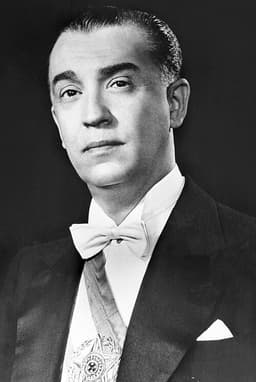
Juscelino Kubitschek
Politician · Modern
56.3Total

Lord Irwin
Politician · Modern
49.8Total
Basic Information
Born
1902
1881
Died
1976
1959
Era
Modern
Modern
Nationality
Brazil
United Kingdom
Occupation
Politician
Politician
Civilization
Western
Western
Score Comparison
Military (10%)
50.0
48.9
Political (20%)
62.7
45.1
Influence (20%)
55.0
51.8
Legacy (20%)
52.0
45.0
Leadership (15%)
72.0
65.7
Strategy (15%)
43.9
41.3
TOTAL
56.3
49.8
Juscelino Kubitschek — Complete Timeline
1955 AD
Elected President of BrazilPolitical Action◆ Major
Juscelino Kubitschek was elected president of Brazil in 1955 as the candidate of the Social Democratic Party (PSD) and the Brazilian Labor Party (PTB). He assumed office on January 31, 1956, with a mandate for rapid development.
Brazilian PresidencyElectionDevelopment
Impact: nationalconstructive
1956 AD
Launched the 'Fifty Years in Five' Development PlanReform
Kubitschek launched the Plano de Metas (Goals Plan) in 1956, a comprehensive development program aiming to achieve fifty years of progress in five years. The plan focused on energy, transportation, industry, and agriculture, driving rapid economic growth.
Economic DevelopmentPlano de MetasBrazil
Impact: nationalconstructive
Expanded the Brazilian Automotive IndustryReform◆ Major
Kubitschek's government attracted foreign automakers such as Volkswagen, Ford, and General Motors to establish factories in Brazil. This policy created a domestic automotive industry, generating jobs and reducing imports.
IndustrializationAutomotiveBrazil
Impact: nationalconstructive
1959 AD
Faced the 1959 Military Revolt of AragarçasWar
In December 1959, a group of military officers led by Colonel Jo
Military RevoltPolitical InstabilityBrazil
Impact: nationaldestructive
1960 AD
Founded BrasíliaCultural
Kubitschek oversaw the construction of Bras
Urban PlanningBrasíliaModernization
Impact: nationalconstructive
Lord Irwin — Complete Timeline
1926 AD
Appointment as Viceroy of IndiaPolitical Action◆ Major
Irwin was appointed Viceroy of India, a period marked by rising Indian nationalism and the Simon Commission boycott. His tenure is noted for his attempts at conciliation with Indian leaders, including Gandhi.
British IndiaViceroyNationalism
Impact: regional
1929 AD
Irwin DeclarationPolitical Action◆ Major
Irwin issued a declaration stating that the natural outcome of India's constitutional progress was dominion status. This statement, made without British government approval, raised nationalist hopes but was later diluted, causing disappointment.
British IndiaDominion StatusConstitutional Reform
Impact: regional
1930 AD
Round Table ConferencesPolitical Action◆ Major
Irwin supported the convening of the First Round Table Conference in London to discuss Indian constitutional reforms. The conference included Indian representatives but was boycotted by the Indian National Congress, limiting its effectiveness.
British IndiaConstitutional ReformRound Table
Impact: regional
1931 AD
Gandhi-Irwin PactPolitical Action
Irwin negotiated the Gandhi-Irwin Pact with Mahatma Gandhi, ending the Civil Disobedience Movement. The agreement included the release of political prisoners and allowed Indians to make salt for personal use, but fell short of full independence demands.
British IndiaGandhiNegotiation
Impact: regionalconstructive
Expert Analysis
Origins
Juscelino Kubitschek de Oliveira was born on September 12, 1902, in Diamantina, Minas Gerais, Brazil. His father died when he was young, and he was raised by his mother, a schoolteacher. He studied medicine at the Federal University of Minas Gerais, graduating in 1927, and later specialized in urology in Paris. His early career as a doctor and his involvement in local politics shaped his pragmatic and ambitious outlook.
Edward Frederick Lindley Wood, 1st Baron Irwin (later 3rd Viscount Halifax), was born on April 16, 1881, in Powderham Castle, Devon, England. He was the son of the 2nd Viscount Halifax and was educated at Eton and Christ Church, Oxford. He served in the British Army during World War I and entered politics as a Conservative MP in 1910. His aristocratic background and religious piety influenced his conciliatory approach.
Rise to Power
Kubitschek entered politics in the 1930s, serving as mayor of Belo Horizonte from 1940 to 1945, where he initiated major urban projects. He was elected to the federal Chamber of Deputies in 1945 and became governor of Minas Gerais in 1951. His successful administration, focusing on energy and transportation, propelled him to the presidency in 1955 with 35.7% of the vote, backed by a coalition of the Social Democratic Party and the Brazilian Labor Party.
Irwin rose through the Conservative ranks, serving as President of the Board of Education and Minister of Agriculture. In 1925, he was appointed Viceroy of India, a position he held from 1926 to 1931. His appointment came during a period of increasing Indian nationalism, following the non-cooperation movement and the Simon Commission boycott.
Leadership & Governance
Kubitschek's leadership was defined by his "Fifty Years in Five" plan (Plano de Metas), launched in 1956. He targeted 30 goals across energy, transportation, industry, and agriculture. His government attracted foreign automakers like Volkswagen and Ford, boosting Brazil's industrial base. His most ambitious project was the construction of Brasília, a new capital in the interior, completed in 41 months and inaugurated on April 21, 1960. This project cost $1.2 billion (in 1960 dollars) but spurred economic growth and integration. However, his spending led to inflation, which rose from 13.8% in 1956 to 39.5% in 1960.
Irwin's governance in India was marked by attempts at conciliation. In 1929, he issued the Irwin Declaration, stating that dominion status was the natural outcome of India's constitutional progress. This surprised both British officials and Indian leaders. He convened the First Round Table Conference in London in 1930-1931, but it was boycotted by the Indian National Congress. His most significant act was the Gandhi-Irwin Pact of March 1931, which ended the Civil Disobedience Movement. The pact included the release of political prisoners and permission for Indians to make salt for personal use. However, it did not address major demands like complete independence.
Triumph & Tragedy
Kubitschek's greatest triumph was the construction of Brasília, which unified the country and symbolized modernization. His economic policies led to rapid industrial growth, with an average GDP growth of 7% per year between 1956 and 1961. However, his legacy is tarnished by the subsequent military coup in 1964, which partly blamed his economic mismanagement. Inflation and foreign debt escalated, and his government faced a military revolt in 1959 (Aragarças Revolt), which was suppressed.
Irwin's triumph was the Gandhi-Irwin Pact, which temporarily de-escalated tensions and allowed Indian participation in the Round Table Conference. However, the pact was criticized by hardliners in both Britain and India. The conference failed to produce a constitutional settlement, and civil disobedience resumed in 1932. Irwin's tenure saw the death of over 100 protesters in the Peshawar massacre (1930) and the arrest of thousands. His conciliatory approach was ultimately insufficient to stem the rising tide of nationalism.
Character & Destiny
Kubitschek was an optimistic, energetic leader with a vision of modernity. He was known for his charisma and ability to inspire. His decision to build Brasília was driven by a belief in progress and national integration, but critics argue it was a costly vanity project. His political strategy score is 62.7, reflecting his ability to build coalitions, but his military score of 50.0 indicates his reliance on civilian support.
Irwin was a devout Anglo-Catholic with a moralistic approach to politics. He genuinely sought a peaceful resolution in India, but his actions were constrained by British imperial interests. His leadership score of 65.7 reflects his diplomatic skills, but his strategic score of 41.3 shows a lack of long-term planning. His character was shaped by a sense of duty and a belief in gradual reform.
Legacy
Kubitschek's legacy is visible in Brazil's modern infrastructure and the development of its interior. Brasília is a UNESCO World Heritage site and remains the capital. His development plan laid the foundation for Brazil's industrial growth. However, his economic policies contributed to the conditions that led to the 1964 coup. He is remembered as a president who achieved rapid progress but at a cost. His total score is 56.3, with influence at 55.0 and legacy at 52.0.
Irwin's legacy is more ambiguous. The Gandhi-Irwin Pact is seen as a temporary truce rather than a lasting solution. His declaration on dominion status was a precursor to later reforms, but it did not prevent the eventual partition of India. He is remembered as a viceroy who attempted dialogue but was unable to stem the nationalist tide. His total score of 49.8 reflects his limited impact: political 45.1, influence 51.8, legacy 45.0.
Conclusion
Juscelino Kubitschek had a greater impact than Lord Irwin. Kubitschek's concrete achievements—building a new capital, industrializing Brazil, and achieving 7% annual growth—transformed his nation. Irwin's diplomacy, while notable, failed to alter the trajectory of Indian independence. Kubitschek's total score of 56.3 versus Irwin's 49.8 reflects this difference. Kubitschek's vision and execution left a permanent mark on Brazil, whereas Irwin's efforts were a footnote in the larger story of decolonization. The data supports Kubitschek as the more consequential figure.
Rankings
🥇
Juscelino KubitschekLeader
Mil: 50.0Pol: 62.7Inf: 55.0
56.3
🥈
Lord Irwin
Mil: 48.9Pol: 45.1Inf: 51.8
49.8
+6.5 behind
How This Comparison Works
Algorithm
Each figure is scored on 6 dimensions (0—100 scale) based on structured historical data: Military (10%), Political (20%), Influence (20%), Legacy (20%), Leadership (15%), Strategy (15%). The weighted total produces the final ranking.
Data Sources
Scores are computed from structured sub-indicators in the database. Scale factors adjust for era (Ancient ×0.85, Modern ×1.0) and civilization size (Eastern ×1.05, Other ×0.80) to account for differences in population and military scale.
Maximum 3 Figures
Comparisons are limited to 2—3 figures to ensure readability and statistical meaningfulness.
Error Margins
±5 points per dimension — Sub-scores are derived from historical records with inherent uncertainty. Two figures within 5 points on a dimension should be considered roughly equivalent in that area.
Total Score Accuracy
±3 points overall — The weighted combination of 6 dimensions produces a total score with approximately ±3 points of uncertainty. Differences of less than 3 points are not statistically significant— the figures are effectively tied.
Known Limitations
- Historical records are incomplete and uneven across civilizations
- Figures from oral-tradition societies may be underrepresented
- Occupation labels can misclassify multi-role figures
- Scores measure capability and impact, not moral character
- Quantitative scoring is a comparison tool, not absolute truth
Capability Radar
Military (10%) — Battles & Warfare
Battles
27
29
Win Rate
35
34
Expansion
32
35
Political (20%) — Governance & Reform
Reform
85
30
Diplomacy
70
60
Economy
80
20
Influence (20%) — Cultural & Global Reach
Cultural
65
10
Global
55
30
Legacy (20%) — Historical Impact
Historical
70
40
Longevity
60
20
Leadership (15%) — Power & Stability
Tenure
65
40
Stability
60
25
Strategy (15%) — Tactics & Innovation
Strategy
40
37
Tactics
42
39
Reform
46
43
Similar Comparisons
Comments & Discussion
No comments yet. Be the first to share your thoughts!