Loading...
John Curtin vs Juscelino Kubitschek
John Curtin leads by 3.5 pts · 2 figures compared
…

John Curtin
Politician · Modern
59.8Total
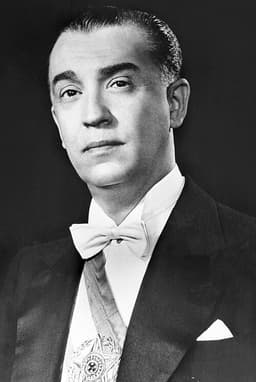
Juscelino Kubitschek
Politician · Modern
56.3Total
Basic Information
Born
1885
1902
Died
1945
1976
Era
Modern
Modern
Nationality
Australia
Brazil
Occupation
Politician
Politician
Civilization
Western
Western
Score Comparison
Military (10%)
49.2
50.0
Political (20%)
78.0
62.7
Influence (20%)
56.7
55.0
Legacy (20%)
52.0
52.0
Leadership (15%)
78.0
72.0
Strategy (15%)
42.9
43.9
TOTAL
59.8
56.3
John Curtin — Complete Timeline
1941 AD
Became Prime Minister of AustraliaPolitical Action◆ Major
John Curtin became Prime Minister of Australia on October 7, 1941, leading a Labor government. He took office during World War II, just weeks before the Japanese attack on Pearl Harbor, which brought the war to the Pacific.
Prime MinisterWorld War IILabor
Impact: national
Turned to the United States for Military SupportPolitical Action
In December 1941, following the fall of Singapore, Curtin issued a historic statement declaring Australia's reliance on the United States for defense, shifting from traditional dependence on Britain. This led to a close alliance with the US and the arrival of General Douglas MacArthur.
AllianceUnited StatesWorld War II
Impact: globalconstructive
1942 AD
Introduced Conscription for Home DefencePolitical Action◆ Major
Curtin's government introduced conscription for military service in the South-West Pacific area in 1942, extending the previous limit to include territories under Australian control. This was a controversial move within the Labor Party, which had opposed overseas conscription.
ConscriptionWorld War IILabor Policy
Impact: national
1945 AD
Died in OfficePolitical Action◆ Major
John Curtin died in office on July 5, 1945, from a heart condition, just weeks before the end of World War II. He was widely mourned and is regarded as one of Australia's greatest prime ministers for his wartime leadership.
Death in OfficeWorld War IILegacy
Impact: nationaltragic
Juscelino Kubitschek — Complete Timeline
1955 AD
Elected President of BrazilPolitical Action◆ Major
Juscelino Kubitschek was elected president of Brazil in 1955 as the candidate of the Social Democratic Party (PSD) and the Brazilian Labor Party (PTB). He assumed office on January 31, 1956, with a mandate for rapid development.
Brazilian PresidencyElectionDevelopment
Impact: nationalconstructive
1956 AD
Launched the 'Fifty Years in Five' Development PlanReform
Kubitschek launched the Plano de Metas (Goals Plan) in 1956, a comprehensive development program aiming to achieve fifty years of progress in five years. The plan focused on energy, transportation, industry, and agriculture, driving rapid economic growth.
Economic DevelopmentPlano de MetasBrazil
Impact: nationalconstructive
Expanded the Brazilian Automotive IndustryReform◆ Major
Kubitschek's government attracted foreign automakers such as Volkswagen, Ford, and General Motors to establish factories in Brazil. This policy created a domestic automotive industry, generating jobs and reducing imports.
IndustrializationAutomotiveBrazil
Impact: nationalconstructive
1959 AD
Faced the 1959 Military Revolt of AragarçasWar
In December 1959, a group of military officers led by Colonel Jo
Military RevoltPolitical InstabilityBrazil
Impact: nationaldestructive
1960 AD
Founded BrasíliaCultural
Kubitschek oversaw the construction of Bras
Urban PlanningBrasíliaModernization
Impact: nationalconstructive
Expert Analysis
Origins
John Curtin was born on January 8, 1885, in Creswick, Victoria, Australia, into a working-class Irish Catholic family. His father was a police officer, and Curtin left school at 14 to work. He became involved in the labor movement and the Australian Labor Party (ALP), editing a socialist newspaper. He was a pacifist and opposed conscription in World War I, which shaped his early political career.
Juscelino Kubitschek de Oliveira was born on September 12, 1902, in Diamantina, Minas Gerais, Brazil. Orphaned at a young age, he was raised by his mother, a schoolteacher. He studied medicine at the Federal University of Minas Gerais, becoming a physician. His early career included public health work and entering politics as a state deputy in 1934.
Rise to Power
Curtin entered federal parliament in 1928 but lost his seat in 1931. He returned in 1934 and became ALP leader in 1935. His rise was marked by internal party divisions and his opposition to conscription. He became Prime Minister on October 7, 1941, after the collapse of the Menzies government, leading a minority Labor government. His leadership was immediately tested by the Pacific War.
Kubitschek served as mayor of Belo Horizonte from 1940 to 1945, where he modernized the city. He was elected governor of Minas Gerais in 1951, implementing a development program. In 1955, he ran for president under the Social Democratic Party (PSD) and Brazilian Labor Party (PTB) coalition, winning with 36% of the vote. His presidency began on January 31, 1956.
Leadership & Governance
Curtin's leadership was defined by World War II. He centralized control of the war effort, mobilizing the economy and introducing conscription for home defense in 1942. His most decisive act was turning to the United States for military support after the fall of Singapore in December 1941, issuing a historic statement that Australia looked to America 'free of any pangs as to our traditional links with the United Kingdom.' He worked closely with General Douglas MacArthur, making him Supreme Commander of the South-West Pacific. Curtin's government expanded social welfare and maintained national unity.
Kubitschek's governance was driven by his 'Fifty Years in Five' (Plano de Metas) development plan, launched in 1956. The plan targeted energy, transportation, food, basic industries, and education. His signature achievement was building Brasília, a new capital in the interior, inaugurated on April 21, 1960. He attracted foreign automakers like Volkswagen, Ford, and General Motors, boosting industrialization. However, his policies led to high inflation and external debt. He faced a military revolt in 1959 (Aragarças revolt), which he suppressed.
Triumph & Tragedy
Curtin's greatest success was leading Australia through the darkest days of WWII. Under his leadership, Australian forces halted the Japanese advance in Papua New Guinea (Kokoda Track campaign). He secured a strong alliance with the United States, shifting Australia's strategic orientation. His tragedy was his personal health; he died in office on July 5, 1945, from a heart condition, weeks before the war ended. He also faced criticism for his handling of the economy and post-war planning.
Kubitschek's triumph was the construction of Brasília, a modern architectural marvel, and the rapid industrialization of Brazil. His 'Fifty Years in Five' plan achieved high growth rates (7% annually). However, his policies caused rampant inflation (over 30% by 1960) and fiscal deficits. His political tragedy was that after leaving office, he was stripped of his political rights by the military regime in 1964 and died in a car accident in 1976, though his legacy later revived.
Character & Destiny
Curtin was a shy, introspective man who struggled with alcoholism and depression. Yet he possessed steely resolve and moral clarity. His pacifist past made his wartime leadership surprising; he pragmatically accepted conscription and close cooperation with the US. His character shaped his destiny: his honest, unpretentious style inspired trust and national unity. He is often ranked among Australia's greatest prime ministers (scoring 78.0 in political leadership).
Kubitschek was an optimist, energetic and visionary. He was a skilled conciliator, able to build coalitions across parties. His belief in developmentalism drove his ambitious projects. However, his optimism sometimes ignored economic realities, leading to imbalances. His character—charismatic and determined—allowed him to push through monumental projects, but also left him vulnerable to criticism from conservatives and the military.
Legacy
Curtin's legacy is profound in Australia. He redefined Australian foreign policy, moving from dependence on Britain to an alliance with the United States. His leadership during WWII is credited with saving Australia from invasion. The Curtin government's social policies laid the groundwork for post-war reconstruction. He is commemorated in statues, a university, and a federal electorate. His influence score is 56.7, reflecting enduring impact on national identity.
Kubitschek's legacy is visible in Brazil's modern infrastructure and industrialization. Brasília is a UNESCO World Heritage site and a symbol of Brazilian progress. His development model influenced subsequent governments. However, the economic problems he left contributed to the 1964 coup. He is remembered as the 'President who built Brasília.' His legacy score is 52.0, with mixed assessments due to inflation and debt.
Conclusion
Comparing Curtin and Kubitschek reveals two leaders who faced different crises: one a war, the other underdevelopment. Curtin's total score of 59.8 edges out Kubitschek's 56.3, but more importantly, his impact on Australia's survival and strategic reorientation was existential. Kubitschek transformed Brazil's physical landscape and economy, but his policies also sowed seeds of instability. Curtin's leadership during a time of existential threat arguably required greater resolve and had more immediate consequences. While Kubitschek's achievements are monumental, Curtin's role in securing Australia's security and forging a new alliance gives him a slightly greater historical impact. Therefore, John Curtin is the more influential figure.
Rankings
🥇
John CurtinLeader
Mil: 49.2Pol: 78.0Inf: 56.7
59.8
🥈
Juscelino Kubitschek
Mil: 50.0Pol: 62.7Inf: 55.0
56.3
+3.5 behind
How This Comparison Works
Algorithm
Each figure is scored on 6 dimensions (0—100 scale) based on structured historical data: Military (10%), Political (20%), Influence (20%), Legacy (20%), Leadership (15%), Strategy (15%). The weighted total produces the final ranking.
Data Sources
Scores are computed from structured sub-indicators in the database. Scale factors adjust for era (Ancient ×0.85, Modern ×1.0) and civilization size (Eastern ×1.05, Other ×0.80) to account for differences in population and military scale.
Maximum 3 Figures
Comparisons are limited to 2—3 figures to ensure readability and statistical meaningfulness.
Error Margins
±5 points per dimension — Sub-scores are derived from historical records with inherent uncertainty. Two figures within 5 points on a dimension should be considered roughly equivalent in that area.
Total Score Accuracy
±3 points overall — The weighted combination of 6 dimensions produces a total score with approximately ±3 points of uncertainty. Differences of less than 3 points are not statistically significant— the figures are effectively tied.
Known Limitations
- Historical records are incomplete and uneven across civilizations
- Figures from oral-tradition societies may be underrepresented
- Occupation labels can misclassify multi-role figures
- Scores measure capability and impact, not moral character
- Quantitative scoring is a comparison tool, not absolute truth
Capability Radar
Military (10%) — Battles & Warfare
Battles
29
27
Win Rate
32
35
Expansion
35
32
Political (20%) — Governance & Reform
Reform
70
85
Diplomacy
85
70
Economy
60
80
Influence (20%) — Cultural & Global Reach
Cultural
50
65
Global
65
55
Legacy (20%) — Historical Impact
Historical
70
70
Longevity
55
60
Leadership (15%) — Power & Stability
Tenure
65
65
Stability
75
60
Strategy (15%) — Tactics & Innovation
Strategy
37
40
Tactics
43
42
Reform
44
46
Similar Comparisons
Comments & Discussion
No comments yet. Be the first to share your thoughts!