Loading...
Lord Irwin vs Souphanouvong
Souphanouvong leads by 4.2 pts · 2 figures compared
…

Lord Irwin
Politician · Modern
49.8Total
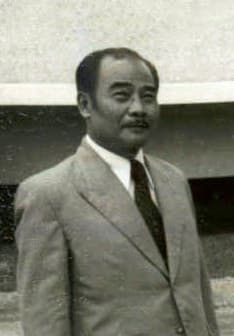
Souphanouvong
Politician · Modern
54.0Total
Basic Information
Born
1881
1909
Died
1959
1995
Era
Modern
Modern
Nationality
United Kingdom
Laos
Occupation
Politician
Politician
Civilization
Western
Eastern
Score Comparison
Military (10%)
48.9
36.6
Political (20%)
45.1
68.0
Influence (20%)
51.8
55.7
Legacy (20%)
45.0
44.2
Leadership (15%)
65.7
65.0
Strategy (15%)
41.3
54.1
TOTAL
49.8
54.0
Lord Irwin — Complete Timeline
1926 AD
Appointment as Viceroy of IndiaPolitical Action◆ Major
Irwin was appointed Viceroy of India, a period marked by rising Indian nationalism and the Simon Commission boycott. His tenure is noted for his attempts at conciliation with Indian leaders, including Gandhi.
British IndiaViceroyNationalism
Impact: regional
1929 AD
Irwin DeclarationPolitical Action◆ Major
Irwin issued a declaration stating that the natural outcome of India's constitutional progress was dominion status. This statement, made without British government approval, raised nationalist hopes but was later diluted, causing disappointment.
British IndiaDominion StatusConstitutional Reform
Impact: regional
1930 AD
Round Table ConferencesPolitical Action◆ Major
Irwin supported the convening of the First Round Table Conference in London to discuss Indian constitutional reforms. The conference included Indian representatives but was boycotted by the Indian National Congress, limiting its effectiveness.
British IndiaConstitutional ReformRound Table
Impact: regional
1931 AD
Gandhi-Irwin PactPolitical Action
Irwin negotiated the Gandhi-Irwin Pact with Mahatma Gandhi, ending the Civil Disobedience Movement. The agreement included the release of political prisoners and allowed Indians to make salt for personal use, but fell short of full independence demands.
British IndiaGandhiNegotiation
Impact: regionalconstructive
Souphanouvong — Complete Timeline
1950 AD
Led the Pathet LaoPolitical Action◆ Major
Souphanouvong became the leader of the Pathet Lao, the communist revolutionary movement in Laos. He organized armed resistance against the French colonial forces and later the Royal Lao Government, with support from North Vietnam and the Soviet Union.
RevolutionLaosCommunism
Impact: regional
1973 AD
Signed the Vientiane AgreementPolitical Action◆ Major
Souphanouvong signed the Vientiane Agreement, a ceasefire that ended the Laotian Civil War. The agreement established a coalition government between the Pathet Lao and the Royal Lao Government, but it ultimately paved the way for the communist takeover in 1975.
Peace AgreementLaosCivil War
Impact: national
1975 AD
Became President of LaosPolitical Action
Souphanouvong was appointed the first President of the Lao People's Democratic Republic after the communist Pathet Lao seized power. His presidency marked the end of the Laotian Civil War and the establishment of a one-party socialist state.
LeadershipLaosCommunist Revolution
Impact: national
1991 AD
Resigned as PresidentPolitical Action◆ Major
Souphanouvong resigned as President of Laos due to poor health. His resignation marked the end of his active political role, but he remained a symbolic figure in the Lao communist movement until his death in 1995.
ResignationLaosLeadership
Impact: national
Expert Analysis
Origins
**Lord Irwin** (born 1881 as Edward Wood) was the son of a British aristocrat, educated at Oxford. He entered politics as a Conservative MP, serving in various government roles before being appointed Viceroy of India in 1926. His background was steeped in imperial administration and the Anglican faith, which shaped his cautious approach to Indian reform.
**Souphanouvong** (born 1909) was the youngest son of the Laotian royal family. He studied engineering in France, where he was exposed to communist ideas. Upon returning to Laos, he joined the anti-colonial movement, becoming a key figure in the Pathet Lao. His royal lineage gave him the nickname "Red Prince," blending aristocratic origins with revolutionary zeal.
Rise to Power
Irwin's rise was through the British political system. His appointment as Viceroy came at a time of intense Indian nationalism. The Simon Commission boycott (1928) and the Civil Disobedience Movement (1930) defined his tenure. His key turning point was the Gandhi-Irwin Pact (1931), where he negotiated with Mahatma Gandhi, ending the civil disobedience campaign. This agreement boosted his reputation as a conciliator but drew criticism from hardliners.
Souphanouvong's rise was through armed struggle. He led the Pathet Lao, a communist insurgency against French colonial rule and later the Royal Lao government. His political score of 68.0 reflects his ability to unite diverse factions. The Vientiane Agreement (1973) ended the Laotian Civil War, installing a coalition government. In 1975, he became the first President of the Lao People's Democratic Republic, marking the communist victory.
Leadership & Governance
Irwin's leadership style was diplomatic and cautious. He sought to balance Indian demands with British imperial interests. His Irwin Declaration (1929) promised dominion status for India, a significant concession. He supported the Round Table Conferences, bringing Indian leaders to London for talks. However, his approach was criticized as too slow by nationalists and too liberal by conservatives. His leadership score of 65.7 indicates moderate effectiveness.
Souphanouvong's governance was revolutionary. As President, he oversaw the consolidation of communist rule, collectivization, and alignment with Vietnam. His political score of 68.0 reflects his skill in navigating Cold War pressures. However, his regime faced economic challenges and internal dissent. His leadership score of 65.0 is comparable to Irwin's, but in very different contexts.
Triumph & Tragedy
Irwin's greatest success was the Gandhi-Irwin Pact, which temporarily de-escalated conflict and showcased his negotiating ability. His greatest failure was the inability to prevent the resumption of civil disobedience after the pact collapsed. His legacy score of 45.0 reflects limited long-term impact.
Souphanouvong's triumph was leading the Pathet Lao to victory, ending the monarchy and establishing a communist state. His tragedy was the subsequent authoritarian rule, economic stagnation, and his eventual resignation due to health issues. His legacy score of 44.2 is similarly modest.
Character & Destiny
Irwin was pragmatic, religious, and conciliatory. His character shaped his willingness to negotiate with Gandhi, but also his inability to satisfy either side. His destiny was to be a transitional figure in India's path to independence.
Souphanouvong was idealistic, resilient, and politically astute. His royal background gave him legitimacy, while his communist ideology drove his actions. His destiny was to be a founding father of a new state, but one that struggled with its revolutionary promises.
Legacy
Irwin's legacy is tied to the Gandhi-Irwin Pact and his role in constitutional discussions. He is remembered as a viceroy who attempted reform but was constrained by empire. His influence score of 51.8 is moderate.
Souphanouvong's legacy is as the "Red Prince" who helped create a communist Laos. He is honored in official narratives but his economic policies are often criticized. His influence score of 55.7 is slightly higher.
Conclusion
Souphanouvong had a greater impact on his nation's history, leading a revolution that permanently changed Laos. Irwin's impact was significant but temporary, as India's independence proceeded with or without his efforts. Souphanouvong's political score of 68.0, combined with his role in founding a new state, edges out Irwin's more cautious legacy. The total score gap of 4.2 points in Souphanouvong's favor reflects this difference in transformative impact.
Rankings
🥇
SouphanouvongLeader
Mil: 36.6Pol: 68.0Inf: 55.7
54.0
🥈
Lord Irwin
Mil: 48.9Pol: 45.1Inf: 51.8
49.8
+4.2 behind
How This Comparison Works
Algorithm
Each figure is scored on 6 dimensions (0—100 scale) based on structured historical data: Military (10%), Political (20%), Influence (20%), Legacy (20%), Leadership (15%), Strategy (15%). The weighted total produces the final ranking.
Data Sources
Scores are computed from structured sub-indicators in the database. Scale factors adjust for era (Ancient ×0.85, Modern ×1.0) and civilization size (Eastern ×1.05, Other ×0.80) to account for differences in population and military scale.
Maximum 3 Figures
Comparisons are limited to 2—3 figures to ensure readability and statistical meaningfulness.
Error Margins
±5 points per dimension — Sub-scores are derived from historical records with inherent uncertainty. Two figures within 5 points on a dimension should be considered roughly equivalent in that area.
Total Score Accuracy
±3 points overall — The weighted combination of 6 dimensions produces a total score with approximately ±3 points of uncertainty. Differences of less than 3 points are not statistically significant— the figures are effectively tied.
Known Limitations
- Historical records are incomplete and uneven across civilizations
- Figures from oral-tradition societies may be underrepresented
- Occupation labels can misclassify multi-role figures
- Scores measure capability and impact, not moral character
- Quantitative scoring is a comparison tool, not absolute truth
Capability Radar
Military (10%) — Battles & Warfare
Battles
29
15
Win Rate
34
10
Expansion
35
10
Political (20%) — Governance & Reform
Reform
30
55
Diplomacy
60
65
Economy
20
30
Influence (20%) — Cultural & Global Reach
Cultural
10
40
Global
30
35
Legacy (20%) — Historical Impact
Historical
40
45
Longevity
20
30
Leadership (15%) — Power & Stability
Tenure
40
60
Stability
25
20
Strategy (15%) — Tactics & Innovation
Strategy
37
25
Tactics
39
20
Reform
43
10
Similar Comparisons
Comments & Discussion
No comments yet. Be the first to share your thoughts!