Loading...
Charles Njonjo vs Juscelino Kubitschek
Juscelino Kubitschek leads by 3.3 pts · 2 figures compared
…

Charles Njonjo
Politician · Modern
53.0Total
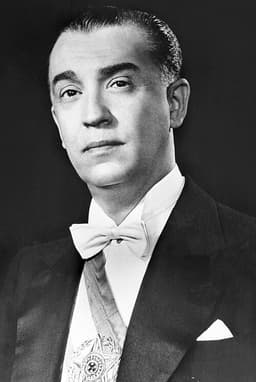
Juscelino Kubitschek
Politician · Modern
56.3Total
Basic Information
Born
1920
1902
Died
—
1976
Era
Modern
Modern
Nationality
Kenya
Brazil
Occupation
Politician
Politician
Civilization
Other
Western
Score Comparison
Military (10%)
43.3
50.0
Political (20%)
68.0
62.7
Influence (20%)
51.8
55.0
Legacy (20%)
45.0
52.0
Leadership (15%)
66.0
72.0
Strategy (15%)
43.9
43.9
TOTAL
53.0
56.3
Charles Njonjo — Complete Timeline
1963 AD
Attorney General of KenyaPolitical Action◆ Major
Charles Njonjo served as the first Attorney General of independent Kenya from 1963 to 1979. He played a key role in drafting Kenya's constitution and legal framework, establishing the judiciary and legal institutions of the new nation.
Attorney GeneralKenyaLegal Framework
Impact: nationalconstructive
1970 AD
Duke of KabeteshireCultural
Njonjo was informally known as the 'Duke of Kabeteshire' due to his aristocratic demeanor and influence. This nickname reflected his powerful position in Kenyan politics and his close association with President Jomo Kenyatta.
NicknameKenyaPolitical Influence
Impact: national
1982 AD
Involvement in the 1982 coup attemptPolitical Action◆ Major
Njonjo was accused of involvement in the 1982 coup attempt against President Moi. Although he denied the charges, the allegations led to his political downfall and a commission of inquiry that cleared him but damaged his reputation.
Coup AttemptKenyaPolitical Crisis
Impact: nationaldestructive
1983 AD
Resignation from governmentPolitical Action◆ Major
Njonjo resigned as Attorney General in 1979 and later served as Minister for Constitutional Affairs. In 1983, he was forced to resign from the government after being implicated in a plot to overthrow President Daniel arap Moi, though he was later pardoned.
ResignationKenyaPolitical Scandal
Impact: nationaldestructive
Juscelino Kubitschek — Complete Timeline
1955 AD
Elected President of BrazilPolitical Action◆ Major
Juscelino Kubitschek was elected president of Brazil in 1955 as the candidate of the Social Democratic Party (PSD) and the Brazilian Labor Party (PTB). He assumed office on January 31, 1956, with a mandate for rapid development.
Brazilian PresidencyElectionDevelopment
Impact: nationalconstructive
1956 AD
Launched the 'Fifty Years in Five' Development PlanReform
Kubitschek launched the Plano de Metas (Goals Plan) in 1956, a comprehensive development program aiming to achieve fifty years of progress in five years. The plan focused on energy, transportation, industry, and agriculture, driving rapid economic growth.
Economic DevelopmentPlano de MetasBrazil
Impact: nationalconstructive
Expanded the Brazilian Automotive IndustryReform◆ Major
Kubitschek's government attracted foreign automakers such as Volkswagen, Ford, and General Motors to establish factories in Brazil. This policy created a domestic automotive industry, generating jobs and reducing imports.
IndustrializationAutomotiveBrazil
Impact: nationalconstructive
1959 AD
Faced the 1959 Military Revolt of AragarçasWar
In December 1959, a group of military officers led by Colonel Jo
Military RevoltPolitical InstabilityBrazil
Impact: nationaldestructive
1960 AD
Founded BrasíliaCultural
Kubitschek oversaw the construction of Bras
Urban PlanningBrasíliaModernization
Impact: nationalconstructive
Expert Analysis
Origins
Charles Njonjo was born in 1920 in Kenya, then part of the British East Africa Protectorate. He belonged to the Kikuyu ethnic group, though his family had ties to the colonial administration. Njonjo studied law in the UK, attending the University of London and later being called to the bar at Gray's Inn. His background was one of privilege and access to colonial education, which shaped his later role as a legal architect.
Juscelino Kubitschek de Oliveira was born in 1902 in Diamantina, Minas Gerais, Brazil. Orphaned early, he was raised by his mother, a schoolteacher. He studied medicine at the Federal University of Minas Gerais, becoming a physician. His entry into politics was through the Social Democratic Party (PSD). Kubitschek's humble origins contrasted with Njonjo's elite path.
Rise to Power
Njonjo rose to prominence as a legal expert in colonial Kenya. He was appointed Attorney General in 1963, the first to hold the post in independent Kenya. His key turning point was drafting the new constitution, which established the framework for Kenyan governance. He worked closely with Jomo Kenyatta, the first president, and became a powerful figure in the administration.
Kubitschek's rise began as mayor of Belo Horizonte, where he gained a reputation for efficiency. He was elected governor of Minas Gerais in 1950, where he implemented infrastructure projects. In 1955, he was elected president of Brazil, winning with 35.7% of the vote. His campaign promised development and modernization, which resonated with a nation eager for progress.
Leadership & Governance
Njonjo's leadership style was bureaucratic and legalistic. He focused on building institutions, particularly the judiciary and the Attorney General's office. He was known for his meticulous attention to detail and his role in shaping Kenya's legal system. However, his governance was also marked by a perceived arrogance, earning him the nickname 'Duke of Kabeteshire.' He served as Attorney General until 1979, then as Minister for Constitutional Affairs until 1983.
Kubitschek was a visionary leader who prioritized economic development. His signature policy was the 'Plano de Metas' (Goals Plan), which targeted energy, transportation, industry, and food production. He famously aimed to achieve 'fifty years in five.' His governance was hands-on and ambitious, exemplified by the construction of Brasília, which was built in just 41 months. He also attracted foreign automakers like Volkswagen and Ford, boosting industrial growth. However, his spending led to inflation and fiscal deficits.
Triumph & Tragedy
Njonjo's greatest success was his role in drafting Kenya's constitution and establishing its legal framework. He scored 68.0 in political influence, reflecting his power behind the scenes. However, his tragedy came in 1983 when he was forced to resign after being accused of involvement in the 1982 coup attempt against President Daniel arap Moi. Although he denied the charges, his political career ended in disgrace. His legacy score of 45.0 reflects this downfall.
Kubitschek's triumph was the construction of Brasília, a modern capital that transformed Brazil's interior. His leadership score of 72.0 highlights his ability to drive massive projects. He also expanded the automotive industry and built highways. However, his economic policies led to high inflation and debt. His tragedy was that his successor, Jânio Quadros, resigned, leading to a military coup in 1964. Kubitschek was stripped of his political rights and died in a car accident in 1976, under suspicious circumstances.
Character & Destiny
Njonjo was known for his aristocratic demeanor and legal precision. He was a loyalist to Kenyatta but clashed with Moi. His character—aloof and powerful—made him enemies. His downfall was precipitated by his perceived ambition and the shifting political landscape. He scored 43.9 in strategy, indicating that his political maneuvers were not always effective.
Kubitschek was charismatic and optimistic, with a 'can-do' attitude. His character drove him to undertake bold projects, but his lack of fiscal restraint contributed to economic instability. He scored 43.9 in strategy as well, suggesting that his visionary approach sometimes lacked tactical caution. His destiny was to be a symbol of development, but his policies also planted seeds for future crises.
Legacy
Njonjo's legacy is mixed. He is remembered as a key founder of Kenya's legal system, but his later political fall overshadows his achievements. His influence score of 51.8 indicates moderate impact. In Kenya, he is a controversial figure, with some viewing him as a patriot and others as a power broker.
Kubitschek's legacy is more enduring. Brasília is a UNESCO World Heritage site, and his development policies laid the foundation for Brazil's industrialization. His total score of 56.3 reflects his higher overall impact. He is celebrated as a visionary who modernized Brazil, despite the economic costs. His name is synonymous with progress in Brazilian history.
Conclusion
Juscelino Kubitschek had greater impact than Charles Njonjo. While Njonjo helped establish Kenya's legal framework, his influence was limited to a single country and was marred by political scandal. Kubitschek transformed Brazil's geography and economy, creating a new capital and industrial base that endure today. His leadership score of 72.0 versus Njonjo's 66.0, and his total score of 56.3 versus 53.0, support this conclusion. Kubitschek's vision and execution changed the course of a nation, whereas Njonjo's contributions were more institutional and less visible. History judges Kubitschek as a builder of modern Brazil, while Njonjo remains a footnote in Kenya's political drama.
Rankings
🥇
Juscelino KubitschekLeader
Mil: 50.0Pol: 62.7Inf: 55.0
56.3
🥈
Charles Njonjo
Mil: 43.3Pol: 68.0Inf: 51.8
53.0
+3.3 behind
How This Comparison Works
Algorithm
Each figure is scored on 6 dimensions (0—100 scale) based on structured historical data: Military (10%), Political (20%), Influence (20%), Legacy (20%), Leadership (15%), Strategy (15%). The weighted total produces the final ranking.
Data Sources
Scores are computed from structured sub-indicators in the database. Scale factors adjust for era (Ancient ×0.85, Modern ×1.0) and civilization size (Eastern ×1.05, Other ×0.80) to account for differences in population and military scale.
Maximum 3 Figures
Comparisons are limited to 2—3 figures to ensure readability and statistical meaningfulness.
Error Margins
±5 points per dimension — Sub-scores are derived from historical records with inherent uncertainty. Two figures within 5 points on a dimension should be considered roughly equivalent in that area.
Total Score Accuracy
±3 points overall — The weighted combination of 6 dimensions produces a total score with approximately ±3 points of uncertainty. Differences of less than 3 points are not statistically significant— the figures are effectively tied.
Known Limitations
- Historical records are incomplete and uneven across civilizations
- Figures from oral-tradition societies may be underrepresented
- Occupation labels can misclassify multi-role figures
- Scores measure capability and impact, not moral character
- Quantitative scoring is a comparison tool, not absolute truth
Capability Radar
Military (10%) — Battles & Warfare
Battles
22
27
Win Rate
25
35
Expansion
27
32
Political (20%) — Governance & Reform
Reform
55
85
Diplomacy
60
70
Economy
50
80
Influence (20%) — Cultural & Global Reach
Cultural
30
65
Global
20
55
Legacy (20%) — Historical Impact
Historical
40
70
Longevity
30
60
Leadership (15%) — Power & Stability
Tenure
60
65
Stability
55
60
Strategy (15%) — Tactics & Innovation
Strategy
28
40
Tactics
31
42
Reform
38
46
Similar Comparisons
Comments & Discussion
No comments yet. Be the first to share your thoughts!