Loading...
Jung Bahadur Rana vs Yitzhak Rabin
Yitzhak Rabin leads by 5.0 pts · 2 figures compared
…
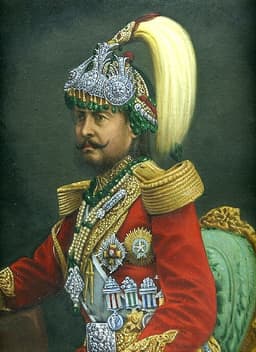
Jung Bahadur Rana
General · Modern
61.4Total
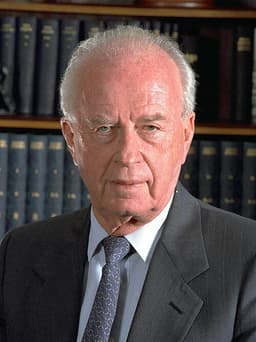
Yitzhak Rabin
General · Modern
66.4Total
Basic Information
Born
1817
1922
Died
1877
—
Era
Modern
Modern
Nationality
Nepal
Israel
Occupation
General
General
Civilization
Indian
Middle Eastern
Score Comparison
Military (10%)
55.0
61.7
Political (20%)
72.0
82.0
Influence (20%)
56.7
68.0
Legacy (20%)
55.0
55.0
Leadership (15%)
78.0
78.0
Strategy (15%)
55.0
55.0
TOTAL
61.4
66.4
Jung Bahadur Rana — Complete Timeline
1846 AD
Kot MassacrePolitical Action
Jung Bahadur Runa orchestrated the Kot Massacre in Kathmandu, where dozens of nobles and courtiers were killed. This event eliminated his political rivals and allowed him to seize effective control of the Nepalese government, establishing the hereditary Rana prime ministership.
CoupMassacreRana Dynasty
Impact: nationaldestructive
Establishment of Rana DynastyPolitical Action◆ Major
Following the Kot Massacre, Jung Bahadur Rana appointed himself prime minister and commander-in-chief. He made the position hereditary, founding the Rana dynasty that ruled Nepal for over a century, reducing the Shah monarchs to figureheads.
DynastyGovernmentNepal
Impact: national
1850 AD
Visit to EuropeCultural
Jung Bahadur Rana traveled to Britain and France, becoming the first South Asian ruler to visit Europe. He observed Western military and industrial technology, which influenced his modernization efforts in Nepal, including army reforms.
DiplomacyModernizationTravel
Impact: nationalconstructive
1856 AD
Nepal-Tibet War and Treaty of ThapathaliWar◆ Major
Jung Bahadur Rana led a Nepalese military campaign into Tibet. The conflict ended with the Treaty of Thapathali, which secured Nepalese territorial claims and established a tributary relationship with Tibet, enhancing Nepal's regional influence.
WarTreatyTibet
Impact: regional
Yitzhak Rabin — Complete Timeline
1967 AD
Chief of Staff during the Six-Day WarWar
As Chief of Staff of the Israel Defense Forces, Rabin commanded the Israeli military during the Six-Day War against Egypt, Jordan, and Syria. Israel captured the Sinai Peninsula, Gaza Strip, West Bank, East Jerusalem, and Golan Heights, reshaping the region.
Six-Day WarTerritorial ExpansionMilitary Victory
Impact: global
1993 AD
Signing of the Oslo AccordsPolitical Action
As prime minister, Rabin signed the Oslo Accords with PLO Chairman Yasser Arafat on the White House lawn. The agreement established the Palestinian Authority and set a framework for Palestinian self-governance in the West Bank and Gaza Strip.
Peace ProcessPalestiniansOslo
Impact: globalconstructive
1995 AD
Assassination at Peace RallyPolitical Action
Rabin was assassinated by Israeli extremist Yigal Amir after a peace rally in Tel Aviv. The assassination shocked Israel and the world, derailing the Oslo peace process and leading to a period of political instability.
AssassinationPeace ProcessPolitical Violence
Impact: globaltragic
Expert Analysis
Yitzhak Rabin vs Jung Bahadur Rana
# The Assassin’s Shadow and the General’s Throne
On a balmy November evening in 1995, Yitzhak Rabin stood on a stage in Tel Aviv, singing a song of peace with a crowd of 100,000 Israelis. Moments later, three bullets fired by a fellow Jew would cut him down. Half a world away and a century earlier, in the blood-soaked courtyard of Kathmandu’s Kot Palace in 1846, Jung Bahadur Rana watched as the bodies of dozens of nobles piled up around him—and then calmly walked into the royal chambers to claim power. Both men were generals who reshaped their nations. One died for peace; the other built a dynasty that lasted 104 years. What made the difference?
Origins
Yitzhak Rabin was born in Jerusalem in 1922, the son of socialist Zionist immigrants from Eastern Europe. He grew up on a kibbutz, where collective farming and ideological fervor shaped his worldview. His generation was forged in the crucible of the Holocaust and the 1948 War of Independence—a generation that believed survival demanded strength, but also that strength could be a tool for something beyond conquest.
Jung Bahadur Rana entered the world in 1817 in Kathmandu, into the aristocratic Kunwar family, which served the Shah dynasty. Nepal was a feudal kingdom wedged between British India and Qing China, a place where court intrigue was as deadly as any battlefield. His father was a military officer; his mother came from the powerful Thapa clan. From childhood, Jung Bahadur learned that politics in Nepal was a game of knives—and that the price of losing was death.
Rise to Power
Rabin’s ascent was professional and institutional. He joined the Haganah, the Jewish paramilitary force, at age 19, and rose through the ranks based on competence. By 1964, at 42, he became Chief of Staff of the Israel Defense Forces. His defining moment came in June 1967, when he commanded the Six-Day War—a stunning preemptive strike that crushed Egypt, Jordan, and Syria in six days. The victory made him a national hero, but it also left Israel in control of territories that would become a moral and political burden.
Jung Bahadur’s rise was the stuff of a Shakespearean tragedy. In 1846, Nepal’s court was riven by factional feuds between the queen mother, the Thapas, and the Pandes. Sensing opportunity, Jung Bahadur orchestrated the Kot Massacre: he lured the leading nobles to the palace armory, then had his troops open fire. Over 30 men died in the chaos. When the dust settled, he emerged as prime minister and commander-in-chief, making the post hereditary. He had not won a war; he had won a coup.
Leadership & Governance
Rabin governed as a pragmatist. As prime minister in the 1970s and again in the 1990s, he prioritized security but was willing to take risks for peace. He authorized the 1976 Entebbe raid, crushed the First Intifada, but then shocked the world by shaking hands with Yasser Arafat in 1993. The Oslo Accords were his gamble: an attempt to trade land for peace, to end the occupation that was corroding Israel’s soul. His military background gave him credibility with the security establishment, but his political wisdom was what enabled the deal.
Jung Bahadur ruled as an autocrat. He centralized power, abolished the traditional noble councils, and installed his brothers and sons in every key post. He was no mere despot, however. In 1850, he became the first South Asian ruler to visit Britain and France, studying their military technology and administrative systems. He returned to modernize Nepal’s army, build roads, and reform the tax system. In 1856, he led a campaign into Tibet, securing trade rights and tribute through the Treaty of Thapathali. His rule was stable, but it was a stability built on fear.
Triumph & Tragedy
Rabin’s greatest triumph was the Oslo Accords—a moment when an old warrior seemed to become a peacemaker. His greatest tragedy was that the peace never took root. The assassination on November 4, 1995, by Yigal Amir, a right-wing extremist who opposed the accords, was not just a personal tragedy but a national one. It shattered Israel’s faith in its own unity and set back the peace process for decades.
Jung Bahadur’s triumph was the Kot Massacre itself—the brutal efficiency with which he eliminated his enemies and seized power. His tragedy was that his dynasty, for all its longevity, became a parasitic oligarchy that impoverished Nepal. The Ranas ruled until 1951, but they never built institutions that could outlast them. When the dynasty fell, Nepal collapsed into chaos.
Character & Destiny
Rabin was introverted, taciturn, and deeply analytical. His famous saying—“You don’t make peace with friends; you make it with very unsavory enemies”—reveals a man who saw peace not as a romantic ideal but as a strategic necessity. His personality drove him to take risks that other politicians would not, but also left him isolated from the very people he sought to lead.
Jung Bahadur was cunning, ruthless, and supremely self-confident. He once said, “The king is the head, but I am the neck that turns it.” His personality was shaped by a world where trust was a liability and power was the only currency. He built a system that rewarded loyalty and crushed dissent, but it also ensured that no successor would ever have his vision or his nerve.
Legacy
Rabin is remembered as a martyr for peace. His image adorns Israeli stamps and school textbooks; the square where he was assassinated is a pilgrimage site. Yet his legacy is contested: some see him as a visionary, others as a naive leader who gave away too much. The Oslo Accords remain unfulfilled, and the region is no closer to peace today than in 1995.
Jung Bahadur’s legacy is more ambiguous. In Nepal, he is both a nation-builder and a tyrant. He preserved Nepal’s independence during the British Raj, modernized its army, and established a stable government. But he also institutionalized nepotism and autocracy. The Rana dynasty left behind no democratic traditions, only a hunger for power that would take decades to overcome.
Conclusion
Two generals, two paths. Rabin rose through merit, governed through compromise, and died for a peace that never came. Jung Bahadur rose through murder, governed through fear, and built a dynasty that lasted a century. The difference is not in their military skill—both were competent commanders—but in their vision of what power was for. Rabin saw power as a burden to be used for reconciliation; Jung Bahadur saw it as a prize to be hoarded. One left a legacy of hope, the other of order. In the end, the question each man leaves us is not whether they succeeded, but what their success cost—and whether it was worth the price.
Rankings
🥇
Yitzhak RabinLeader
Mil: 61.7Pol: 82.0Inf: 68.0
66.4
🥈
Jung Bahadur Rana
Mil: 55.0Pol: 72.0Inf: 56.7
61.4
+5.0 behind
How This Comparison Works
Algorithm
Each figure is scored on 6 dimensions (0—100 scale) based on structured historical data: Military (10%), Political (20%), Influence (20%), Legacy (20%), Leadership (15%), Strategy (15%). The weighted total produces the final ranking.
Data Sources
Scores are computed from structured sub-indicators in the database. Scale factors adjust for era (Ancient ×0.85, Modern ×1.0) and civilization size (Eastern ×1.05, Other ×0.80) to account for differences in population and military scale.
Maximum 3 Figures
Comparisons are limited to 2—3 figures to ensure readability and statistical meaningfulness.
Error Margins
±5 points per dimension — Sub-scores are derived from historical records with inherent uncertainty. Two figures within 5 points on a dimension should be considered roughly equivalent in that area.
Total Score Accuracy
±3 points overall — The weighted combination of 6 dimensions produces a total score with approximately ±3 points of uncertainty. Differences of less than 3 points are not statistically significant— the figures are effectively tied.
Known Limitations
- Historical records are incomplete and uneven across civilizations
- Figures from oral-tradition societies may be underrepresented
- Occupation labels can misclassify multi-role figures
- Scores measure capability and impact, not moral character
- Quantitative scoring is a comparison tool, not absolute truth
Capability Radar
Military (10%) — Battles & Warfare
Battles
45
65
Win Rate
50
70
Expansion
40
50
Political (20%) — Governance & Reform
Reform
75
65
Diplomacy
70
85
Economy
65
60
Influence (20%) — Cultural & Global Reach
Cultural
55
55
Global
40
70
Legacy (20%) — Historical Impact
Historical
65
75
Longevity
60
60
Leadership (15%) — Power & Stability
Tenure
80
70
Stability
60
40
Strategy (15%) — Tactics & Innovation
Strategy
60
75
Tactics
55
60
Reform
70
55
Similar Comparisons
Comments & Discussion
No comments yet. Be the first to share your thoughts!