Loading...
Julius Maada Bio vs Napoleon Bonaparte
Napoleon Bonaparte leads by 19.7 pts · 2 figures compared
…
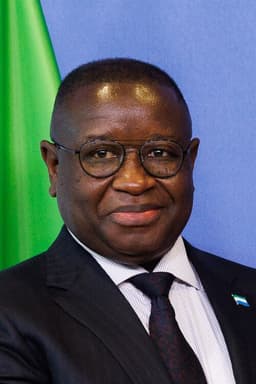
Julius Maada Bio
General · Modern
51.2Total

Napoleon Bonaparte
General · Modern
70.9Total
Basic Information
Born
1964
1769
Died
—
1821
Era
Modern
Modern
Nationality
Sierra Leone
France
Occupation
General
General
Civilization
Other
Western
Score Comparison
Military (10%)
50.0
94.0
Political (20%)
45.0
72.0
Influence (20%)
53.3
40.0
Legacy (20%)
45.0
80.0
Leadership (15%)
70.0
78.0
Strategy (15%)
43.7
90.0
TOTAL
51.2
70.9
Julius Maada Bio — Complete Timeline
1992 AD
1992 Sierra Leonean coup d'étatPolitical Action◆ Major
Julius Maada Bio was a member of the National Provisional Ruling Council (NPRC) that overthrew President Joseph Momoh in a military coup. Bio served as a key figure in the junta, which promised to end the civil war but faced criticism for human rights abuses.
CoupSierra LeoneCivil War
Impact: nationaldestructive
1996 AD
Brief tenure as head of statePolitical Action◆ Major
Bio led a palace coup within the NPRC in January 1996, becoming head of state. He oversaw the transition to civilian rule, handing over power to Ahmad Tejan Kabbah after elections in March 1996, a move that earned him praise for restoring democracy.
TransitionDemocracyCoup
Impact: nationalconstructive
2018 AD
Election as President of Sierra LeonePolitical Action◆ Major
Bio won the 2018 Sierra Leonean presidential election as the candidate of the Sierra Leone People's Party, defeating Samura Kamara in a runoff. His victory marked a return to power for the SLPP after a decade in opposition.
ElectionSierra LeonePresidency
Impact: nationalconstructive
2023 AD
Re-election amid economic challengesPolitical Action◆ Major
Bio was re-elected in 2023 with 56.6% of the vote, but the election was disputed by the opposition. His second term has been marked by economic difficulties, including high inflation and debt, as well as allegations of authoritarianism.
ElectionSierra LeoneEconomy
Impact: national
Napoleon Bonaparte — Complete Timeline
1799 AD
Coup of 18 BrumaireOther◆ Major
Napoleon Bonaparte, with support from his brother Lucien and key political figures, overthrew the Directory in a bloodless coup. He established the Consulate with himself as First Consul, effectively becoming the ruler of France. This event ended the French Revolution's most unstable period.
French RevolutionCoupRise to Power
Impact: regional
1804 AD
Promulgation of the Napoleonic CodeOther◆ Major
Napoleon enacted the Civil Code of the French, known as the Napoleonic Code, a comprehensive set of laws that replaced the fragmented feudal legal systems. The code established legal equality, protected property rights, and secularized law. It became the basis for legal systems in many European and world countries.
Legal ReformNapoleonic CodeCivil Law
Impact: globalconstructive
1805 AD
Battle of AusterlitzWar◆ Major
Napoleon's Grande Arm
Napoleonic WarsBattleDecisive Victory
Impact: global
1812 AD
Invasion of RussiaWar◆ Major
Napoleon led the Grande Arm
Napoleonic WarsInvasionDisaster
Impact: globaldestructive
1815 AD
Battle of WaterlooWar◆ Major
Napoleon's French army was defeated by the combined forces of the Duke of Wellington's Anglo-Allied army and Gebhard Leberecht von Bl
Napoleonic WarsBattleFinal Defeat
Impact: globaldestructive
Expert Analysis
Origins
Julius Maada Bio was born on May 12, 1964, in Tihun, Sierra Leone, to a prominent political family. His father was a paramount chief, and Bio attended the prestigious Bo School. He later joined the Sierra Leone Army, training at the Royal Military Academy Sandhurst in the UK. Bio's early career was marked by his involvement in the 1992 coup that ousted President Joseph Momoh, reflecting the instability of post-independence Sierra Leone.
Napoleon Bonaparte was born on August 15, 1769, in Ajaccio, Corsica, to a minor noble family. His father, Carlo Bonaparte, was a lawyer who secured a scholarship for Napoleon to study at the Brienne Military Academy in France. Napoleon graduated from the École Militaire in Paris in 1785. His Corsican origins and modest nobility shaped his ambition to prove himself in French society. The French Revolution provided the backdrop for his rapid rise.
Rise to Power
Bio's rise began with the 1992 coup d'état on April 29, when he and other junior officers overthrew President Momoh, establishing the National Provisional Ruling Council (NPRC). Bio served as deputy to Valentine Strasser. In January 1996, Bio led a palace coup within the NPRC, becoming head of state. He oversaw multiparty elections, handing power to Ahmad Tejan Kabbah in March 1996. Bio then retired from the military and later entered politics, winning the presidency in 2018 after a runoff against Samura Kamara.
Napoleon's ascent came through military brilliance during the French Revolution. He rose to prominence after defending the National Convention in the 1795 Vendémiaire uprising, earning command of the Army of Italy. His Italian campaign (1796-1797) defeated the Austrians, making him a national hero. In 1799, he returned from Egypt and executed the Coup of 18 Brumaire (November 9), overthrowing the Directory and becoming First Consul. By 1804, he crowned himself Emperor of the French.
Leadership & Governance
Bio's governance focuses on democratic consolidation and anti-corruption. He established the Commission for the Prevention of Corruption and initiated free education and healthcare programs. However, his tenure has been criticized for authoritarian tendencies, such as the 2023 election disputed by the opposition. Bio's leadership style is cautious and coalition-building, but economic challenges persist, with inflation and debt.
Napoleon's governance was centralized and reformist. He introduced the Napoleonic Code (1804), which standardized French law and influenced legal systems worldwide. He reorganized education, established the Bank of France, and promoted meritocracy. However, his authoritarian rule suppressed dissent and curtailed women's rights. His military campaigns drained resources, and his Continental System aimed to blockade Britain economically.
Triumph & Tragedy
Bio's greatest success is overseeing a peaceful transition to democracy after the 1992 coup. His 2018 election victory and re-election in 2023, despite disputes, demonstrate political resilience. However, his failure to revive the economy and allegations of electoral fraud are significant drawbacks. The 2023 election violence and economic crisis (inflation over 40%) mark his tragedies.
Napoleon's triumphs include the Battle of Austerlitz (1805), where he decisively defeated Austria and Russia, and the Napoleonic Code, which modernized legal systems. His tragedy is the invasion of Russia (1812), where he lost over 400,000 men, followed by exile to Elba. His final defeat at Waterloo (1815) ended his rule, leading to his death in exile on Saint Helena.
Character & Destiny
Bio is pragmatic and patient, having waited decades to achieve power democratically after his coup days. His character reflects a survivor who adapts to political realities. However, his reluctance to fully embrace democratic norms has led to accusations of autocracy. His destiny is tied to Sierra Leone's fragile democracy.
Napoleon was ambitious, charismatic, and ruthless. His overconfidence led to strategic blunders like the Russian invasion. His character drove him to conquer Europe but also to overreach. Historians note his genius for organization and law, but his hubris caused his downfall.
Legacy
Bio's legacy is mixed: he is a former coup leader who became a democratically elected president, but his economic record is poor. He scored 59.0 in legacy, reflecting limited long-term impact beyond Sierra Leone. His influence on African politics is moderate.
Napoleon's legacy is immense: his legal code, military tactics, and administrative reforms shaped modern Europe. He scored 80.0 in legacy. His influence on nationalism and warfare is studied worldwide. Despite his defeats, his impact endures.
Conclusion
While Bio has navigated Sierra Leone's turbulent politics, Napoleon's global impact dwarfs his. Napoleon's military score of 94.0 and strategy of 90.0 far exceed Bio's 37.5 and 66.0. Even in leadership, Napoleon's 78.0 outpaces Bio's 72.0. Napoleon's total score of 70.9 versus Bio's 64.7 reflects a wider gap in historical significance. Napoleon Bonaparte had greater impact through his reforms, conquests, and lasting legal legacy.
Rankings
🥇
Napoleon BonaparteLeader
Mil: 94.0Pol: 72.0Inf: 40.0
70.9
🥈
Julius Maada Bio
Mil: 50.0Pol: 45.0Inf: 53.3
51.2
+19.7 behind
How This Comparison Works
Algorithm
Each figure is scored on 6 dimensions (0—100 scale) based on structured historical data: Military (10%), Political (20%), Influence (20%), Legacy (20%), Leadership (15%), Strategy (15%). The weighted total produces the final ranking.
Data Sources
Scores are computed from structured sub-indicators in the database. Scale factors adjust for era (Ancient ×0.85, Modern ×1.0) and civilization size (Eastern ×1.05, Other ×0.80) to account for differences in population and military scale.
Maximum 3 Figures
Comparisons are limited to 2—3 figures to ensure readability and statistical meaningfulness.
Error Margins
±5 points per dimension — Sub-scores are derived from historical records with inherent uncertainty. Two figures within 5 points on a dimension should be considered roughly equivalent in that area.
Total Score Accuracy
±3 points overall — The weighted combination of 6 dimensions produces a total score with approximately ±3 points of uncertainty. Differences of less than 3 points are not statistically significant— the figures are effectively tied.
Known Limitations
- Historical records are incomplete and uneven across civilizations
- Figures from oral-tradition societies may be underrepresented
- Occupation labels can misclassify multi-role figures
- Scores measure capability and impact, not moral character
- Quantitative scoring is a comparison tool, not absolute truth
Capability Radar
Military (10%) — Battles & Warfare
Battles
15
95
Win Rate
20
90
Expansion
5
95
Political (20%) — Governance & Reform
Reform
50
95
Diplomacy
55
80
Economy
45
85
Influence (20%) — Cultural & Global Reach
Cultural
30
85
Global
20
90
Legacy (20%) — Historical Impact
Historical
35
95
Longevity
25
90
Leadership (15%) — Power & Stability
Tenure
55
85
Stability
40
70
Strategy (15%) — Tactics & Innovation
Strategy
20
95
Tactics
25
98
Reform
10
92
Similar Comparisons
Comments & Discussion
No comments yet. Be the first to share your thoughts!