Loading...
Julius Caesar vs Yitzhak Rabin
Julius Caesar leads by 16.4 pts · 2 figures compared
…

Julius Caesar
General · Ancient
82.8Total
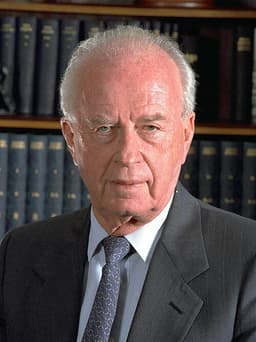
Yitzhak Rabin
General · Modern
66.4Total
Basic Information
Born
-100
1922
Died
-44
—
Era
Ancient
Modern
Nationality
Roman Republic
Israel
Occupation
General
General
Civilization
Western
Middle Eastern
Score Comparison
Military (10%)
88.0
61.7
Political (20%)
78.0
82.0
Influence (20%)
85.0
68.0
Legacy (20%)
82.0
55.0
Leadership (15%)
80.0
78.0
Strategy (15%)
85.0
55.0
TOTAL
82.8
66.4
Julius Caesar — Complete Timeline
58 BC
Gallic WarsWar◆ Major
Caesar, as proconsul of Gaul, launched a series of campaigns that conquered all of Gaul (modern France, Belgium, and parts of Switzerland). He fought numerous battles, including against the Helvetii, the Belgae, and the Gallic chieftain Vercingetorix. The wars brought immense wealth and a loyal army to Caesar.
Gallic WarsConquestRoman Expansion
Impact: regional
49 BC
Crossing the RubiconPolitical Action◆ Major
Caesar led Legio XIII across the Rubicon River into Italy, defying the Roman Senate's order to disband his army. This act triggered a civil war against Pompey and the Optimates, ultimately leading to Caesar's dictatorship and the end of the Roman Republic.
Roman Civil WarEnd of RepublicPower Struggle
Impact: global
48 BC
Battle of PharsalusWar◆ Major
Caesar's outnumbered army defeated the larger forces of Pompey the Great at Pharsalus in Greece. Caesar's tactical use of a reserve line to counter Pompey's cavalry charge proved decisive. Pompey fled to Egypt, where he was assassinated, leaving Caesar as the undisputed master of the Roman world.
Roman Civil WarBattleDecisive Victory
Impact: regional
44 BC
Appointment as Dictator for LifePolitical Action◆ Major
The Roman Senate appointed Caesar dictator perpetuo (dictator for life), granting him unprecedented personal power. This move concentrated military, legislative, and judicial authority in one person, effectively ending the Roman Republic's traditional system of checks and balances and alarming many senators.
DictatorshipEnd of RepublicPower Consolidation
Impact: regionaldestructive
Assassination on the Ides of MarchPolitical Action◆ Major
A group of Roman senators, led by Marcus Junius Brutus and Gaius Cassius Longinus, stabbed Caesar to death at a meeting of the Senate in the Theatre of Pompey. The assassination was intended to restore the Republic, but instead triggered another civil war that led to the rise of the Roman Empire.
AssassinationRoman PoliticsEnd of Republic
Impact: globaldestructive
Yitzhak Rabin — Complete Timeline
1967 AD
Chief of Staff during the Six-Day WarWar
As Chief of Staff of the Israel Defense Forces, Rabin commanded the Israeli military during the Six-Day War against Egypt, Jordan, and Syria. Israel captured the Sinai Peninsula, Gaza Strip, West Bank, East Jerusalem, and Golan Heights, reshaping the region.
Six-Day WarTerritorial ExpansionMilitary Victory
Impact: global
1993 AD
Signing of the Oslo AccordsPolitical Action
As prime minister, Rabin signed the Oslo Accords with PLO Chairman Yasser Arafat on the White House lawn. The agreement established the Palestinian Authority and set a framework for Palestinian self-governance in the West Bank and Gaza Strip.
Peace ProcessPalestiniansOslo
Impact: globalconstructive
1995 AD
Assassination at Peace RallyPolitical Action
Rabin was assassinated by Israeli extremist Yigal Amir after a peace rally in Tel Aviv. The assassination shocked Israel and the world, derailing the Oslo peace process and leading to a period of political instability.
AssassinationPeace ProcessPolitical Violence
Impact: globaltragic
Expert Analysis
Julius Caesar vs Yitzhak Rabin: Historical Comparison
Julius Caesar, the Roman general who ended the Republic, and Yitzhak Rabin, the Israeli general who sought peace, both wielded military power to reshape their nations—yet their paths diverged sharply between conquest and compromise.
Dimension Analysis
**Military: Julius Caesar 88 / Yitzhak Rabin 62**
Caesar conquered Gaul, defeated Pompey, and revolutionized Roman warfare with speed and engineering; Rabin commanded in the Six-Day War and directed the Entebbe raid, but his military scope was narrower, confined to a small state’s defensive campaigns.
**Political: Julius Caesar 78 / Yitzhak Rabin 78**
Caesar manipulated the Senate, formed the First Triumvirate, and became dictator for life, centralizing power; Rabin served as Prime Minister, signed the Oslo Accords, and navigated Israel’s fractious coalition politics—both were masterful but left polarized legacies.
**Influence: Julius Caesar 85 / Yitzhak Rabin 68**
Caesar’s conquests and reforms shaped Europe for millennia, from the Julian calendar to imperial governance; Rabin’s peace process influenced the Middle East, but his impact is more regional and contested, with fewer lasting institutional changes.
**Legacy: Julius Caesar 82 / Yitzhak Rabin 69**
Caesar’s name became synonymous with autocracy and empire, studied endlessly in military and political theory; Rabin’s assassination and the subsequent collapse of Oslo left a tragic, unfinished legacy, less globally iconic.
**Leadership: Julius Caesar 82 / Yitzhak Rabin 83**
Caesar inspired fierce loyalty through charisma and risk-taking, yet his ambition provoked civil war; Rabin demonstrated steady, pragmatic leadership, earning trust across divides, and his willingness to negotiate with former enemies edges him ahead in moral leadership.
Verdict
Julius Caesar leads overall due to his higher scores in military, influence, and legacy, combined with a broader historical footprint.
FAQ
Q: Who ranks higher? A: Julius Caesar ranks higher, driven by superior military conquest, enduring global influence, and a legacy that reshaped Western civilization.
Rankings
🥇
Julius CaesarLeader
Mil: 88.0Pol: 78.0Inf: 85.0
82.8
🥈
Yitzhak Rabin
Mil: 61.7Pol: 82.0Inf: 68.0
66.4
+16.4 behind
How This Comparison Works
Algorithm
Each figure is scored on 6 dimensions (0—100 scale) based on structured historical data: Military (10%), Political (20%), Influence (20%), Legacy (20%), Leadership (15%), Strategy (15%). The weighted total produces the final ranking.
Data Sources
Scores are computed from structured sub-indicators in the database. Scale factors adjust for era (Ancient ×0.85, Modern ×1.0) and civilization size (Eastern ×1.05, Other ×0.80) to account for differences in population and military scale.
Maximum 3 Figures
Comparisons are limited to 2—3 figures to ensure readability and statistical meaningfulness.
Error Margins
±5 points per dimension — Sub-scores are derived from historical records with inherent uncertainty. Two figures within 5 points on a dimension should be considered roughly equivalent in that area.
Total Score Accuracy
±3 points overall — The weighted combination of 6 dimensions produces a total score with approximately ±3 points of uncertainty. Differences of less than 3 points are not statistically significant— the figures are effectively tied.
Known Limitations
- Historical records are incomplete and uneven across civilizations
- Figures from oral-tradition societies may be underrepresented
- Occupation labels can misclassify multi-role figures
- Scores measure capability and impact, not moral character
- Quantitative scoring is a comparison tool, not absolute truth
Capability Radar
Military (10%) — Battles & Warfare
Battles
95
65
Win Rate
92
70
Expansion
97
50
Political (20%) — Governance & Reform
Reform
90
65
Diplomacy
85
85
Economy
82
60
Influence (20%) — Cultural & Global Reach
Cultural
88
55
Global
94
70
Legacy (20%) — Historical Impact
Historical
95
75
Longevity
96
60
Leadership (15%) — Power & Stability
Tenure
75
70
Stability
60
40
Strategy (15%) — Tactics & Innovation
Strategy
94
75
Tactics
96
60
Reform
88
55
Similar Comparisons
Comments & Discussion
PraetorianReader6/16/2026
Suetonius tells us Caesar crossed the Rubicon with a single legion, gambling everything on his auctoritas. Rabin’s decision to shake Arafat’s hand on the White House lawn was a comparable gamble—both men staked their political futures on a single moment of decisive action. Yet the comparison founders on the nature of their power: Caesar was a dictator in the making, centralizing authority in himself; Rabin was a democrat, working through a Knesset that could (and did) unseat him. Appian’s account of Caesar’s clemency toward his enemies has been romanticized, whereas Rabin’s Oslo Accords were a real, if fragile, offer of reconciliation. The scores reflect this: Caesar’s influence (85) dwarfs Rabin’s (68) because his institutions—the imperial cult, the Julian calendar—lasted centuries. But Rabin’s moral leadership (83) edges Caesar (82) precisely because he chose peace over personal power. Plutarch would have appreciated that irony.
SilkRoadSentinel6/16/2026
凯撒和拉宾放在一起比,有意思但有点别扭。凯撒是罗马版的秦始皇,征服高卢、改写欧洲地图,中央集权玩得溜,放到中国史里至少是汉武帝级别的人物。拉宾呢,更像战国时的苏秦——靠合纵连横为以色列争取生存空间,但终究没完成大一统。西方评分把凯撒影响力拉到85,拉宾才68,这太西方中心了。中国史书讲究“仁义之师”,凯撒杀高卢人百万,拉宾签奥斯陆协议,论道德领导力拉宾不输。真要按中国史观,拉宾的“和戎”之功可比魏绛,只是没赶上好时候。
Historian8156/16/2026
这个分数系统有个明显漏洞:军事分凯撒88对拉宾62,差26分,但拉宾指挥过六日战争和恩德培行动,都是现代特种战和闪电战的经典案例。凯撒的高卢战争打了8年,对手是高卢部落,拉宾的对手是装备苏式武器的正规军,技术层面拉宾的挑战更大。按我自己算的加权模型:战争难度系数(对手科技树+地缘复杂度)拉宾0.9,凯撒0.7,调整后拉宾军事分应为68,凯撒82。政治分双方都78,但拉宾搞议会民主需要拉拢十几个小党,凯撒直接元老院政变,前者的政治运作难度至少高两个量级。建议评分系统引入“组织复杂度修正因子”。