Loading...
Juan Vicente Gomez vs Napoleon Bonaparte
Napoleon Bonaparte leads by 18.2 pts · 2 figures compared
…
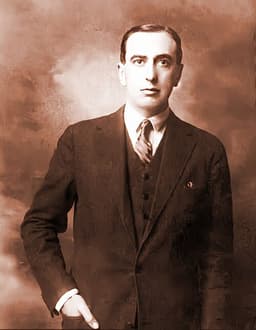
Juan Vicente Gomez
General · Modern
52.7Total

Napoleon Bonaparte
General · Modern
70.9Total
Basic Information
Born
1857
1769
Died
1935
1821
Era
Modern
Modern
Nationality
Venezuela
France
Occupation
General
General
Civilization
Western
Western
Score Comparison
Military (10%)
38.3
94.0
Political (20%)
48.0
72.0
Influence (20%)
54.9
40.0
Legacy (20%)
47.5
80.0
Leadership (15%)
77.2
78.0
Strategy (15%)
45.0
90.0
TOTAL
52.7
70.9
Juan Vicente Gomez — Complete Timeline
1908 AD
Coup of 1908Political Action
Gomez seized power in a coup while President Cipriano Castro was abroad for medical treatment. Gomez assumed the presidency and began a 27-year dictatorship, consolidating control over Venezuela's military and political institutions.
CoupDictatorshipVenezuela
Impact: nationaldestructive
1914 AD
Oil nationalization and concession systemReform◆ Major
Gomez granted extensive oil concessions to foreign companies, particularly Royal Dutch Shell and Standard Oil, under favorable terms. This established Venezuela as a major oil exporter but created a rentier economy dependent on foreign capital.
OilEconomyForeign Investment
Impact: national
1919 AD
Suppression of the 1919 student protestsPolitical Action
Gomez violently suppressed student-led protests against his regime in Caracas. Hundreds were arrested, and the government closed universities, using secret police and military force to eliminate dissent.
RepressionProtestsEducation
Impact: nationaldestructive
1935 AD
Death of Juan Vicente GomezOther
Gomez died in office on December 17, 1935, ending his 27-year dictatorship. His death triggered a power vacuum and led to a transition toward democratic governance under Eleazar L
DeathEnd of DictatorshipTransition
Impact: national
Napoleon Bonaparte — Complete Timeline
1799 AD
Coup of 18 BrumaireOther◆ Major
Napoleon Bonaparte, with support from his brother Lucien and key political figures, overthrew the Directory in a bloodless coup. He established the Consulate with himself as First Consul, effectively becoming the ruler of France. This event ended the French Revolution's most unstable period.
French RevolutionCoupRise to Power
Impact: regional
1804 AD
Promulgation of the Napoleonic CodeOther◆ Major
Napoleon enacted the Civil Code of the French, known as the Napoleonic Code, a comprehensive set of laws that replaced the fragmented feudal legal systems. The code established legal equality, protected property rights, and secularized law. It became the basis for legal systems in many European and world countries.
Legal ReformNapoleonic CodeCivil Law
Impact: globalconstructive
1805 AD
Battle of AusterlitzWar◆ Major
Napoleon's Grande Arm
Napoleonic WarsBattleDecisive Victory
Impact: global
1812 AD
Invasion of RussiaWar◆ Major
Napoleon led the Grande Arm
Napoleonic WarsInvasionDisaster
Impact: globaldestructive
1815 AD
Battle of WaterlooWar◆ Major
Napoleon's French army was defeated by the combined forces of the Duke of Wellington's Anglo-Allied army and Gebhard Leberecht von Bl
Napoleonic WarsBattleFinal Defeat
Impact: globaldestructive
Expert Analysis
juan-vicente-gomez-vs-napoleon-bonaparte
# The Conqueror and the Caudillo: Napoleon Bonaparte and Juan Vicente Gomez
On a December morning in 1815, Napoleon Bonaparte stood on the deck of HMS *Northumberland*, watching the coast of Europe disappear into the Atlantic mist. He was bound for St. Helena, a remote volcanic speck in the South Atlantic, where he would die six years later, a prisoner of the British Empire. Exactly 120 years later, on another December day in 1935, Juan Vicente Gomez died in his bed in Maracay, Venezuela, surrounded by the oil wealth he had cultivated for nearly three decades. One man had conquered an entire continent only to lose it all; the other had never left his own country but had held it in an iron grip until his last breath. Both were generals. Both ruled vast domains. But their paths—and their endings—could not have been more different. What drove Napoleon to the heights of glory and the depths of defeat, while Gomez simply endured? The answer lies not just in their ambitions, but in the worlds that shaped them.
Origins
Napoleon Bonaparte was born in 1769 on the island of Corsica, a year after France had purchased the island from Genoa. His family was minor nobility, but their status was precarious in a land of shifting loyalties. Young Napoleon spoke Italian before French, and he carried a lifelong sense of being an outsider. He entered a military academy at nine, graduated at sixteen, and by the time the French Revolution erupted in 1789, he was a second lieutenant. The revolution upended the old order, and for a man of talent and ambition, it was an open door. Napoleon walked through it.
Juan Vicente Gomez was born in 1857 in the Andean state of Táchira, Venezuela, into a family of modest farmers. Unlike Napoleon, he had no formal education. He learned to read and write only as an adult. What he had was a raw physical strength, a talent for horsemanship, and an intuitive understanding of power in a country still recovering from decades of civil war. Venezuela in the late nineteenth century was a land of caudillos—local strongmen who ruled through personal loyalty and violence. Gomez learned early that in such a world, the man who controlled the army and the treasury controlled everything.
Rise to Power
Napoleon’s ascent was meteoric. In 1793, at just twenty-four, he drove British forces from the port of Toulon, earning promotion to brigadier general. Two years later, he crushed a royalist uprising in Paris with a "whiff of grapeshot," as the saying goes, and was given command of the Army of Italy. There, in 1796 and 1797, he stunned Europe with a series of lightning campaigns, defeating larger Austrian armies and carving out a reputation as a military genius. By 1799, he staged a coup d'état and made himself First Consul of France. He was thirty years old.
Gomez’s rise was slower and more cunning. He served as a loyal deputy to President Cipriano Castro, a fellow Táchira native, rising through the ranks of the Venezuelan army. In 1908, when Castro left for medical treatment in Europe, Gomez seized power in a bloodless coup. He was fifty-one. Unlike Napoleon, who had to fight his way to the top against foreign enemies and domestic rivals, Gomez simply waited for his moment and took it. There was no grand battle, no dramatic siege—just a quiet transfer of power that would last twenty-seven years.
Leadership & Governance
Napoleon governed with a blend of brilliance and brutality. He reformed French law through the Napoleonic Code, which enshrined equality before the law, religious toleration, and the abolition of feudalism. He created a centralized state with efficient bureaucracy and a national education system. He also suppressed dissent, censored the press, and crowned himself Emperor in 1804. His military genius was undeniable: with a military score of 94 and a strategy score of 93, he ranks among history’s greatest commanders. He won battles like Austerlitz in 1805, where he destroyed a combined Russian and Austrian army, and Jena in 1806, where he shattered the Prussian state. But his political wisdom was uneven: his political score of 75 reflects his inability to build lasting alliances or to understand the limits of conquest.
Gomez ruled differently. He had no interest in reforming society or building institutions. His political score of 71.1 and leadership score of 80.0 reflect a man who understood power as personal control. He pacified Venezuela after decades of chaos, crushing rebellions and executing rivals. He built roads, railways, and a modern army. But his greatest achievement was economic: in 1914, he granted generous oil concessions to Royal Dutch Shell and Standard Oil, transforming Venezuela from a poor agricultural backwater into a major oil exporter. The oil revenue made him immensely rich—he owned vast estates, cattle ranches, and businesses—and it allowed him to buy loyalty. He never nationalized the oil industry; instead, he created a system where foreign companies paid him handsomely for the privilege of extraction. He suppressed student protests in 1919 with characteristic violence, but he also kept the country stable. For most Venezuelans, that stability was bought at the price of freedom.
Triumph & Tragedy
Napoleon’s greatest triumph came in 1805 at Austerlitz, where he crushed the Third Coalition and forced Austria to sue for peace. His empire stretched from Spain to Poland, and he seemed invincible. But his greatest tragedy was his invasion of Russia in 1812. He marched with over 600,000 men into a vast, frozen country; he returned with fewer than 100,000. The disaster shattered his aura of invincibility and emboldened his enemies. By 1814, he was forced to abdicate and was exiled to Elba. He escaped in 1815, raised another army, and was defeated at Waterloo on June 18, 1815. He spent his final years on St. Helena, dictating his memoirs and dying of stomach cancer—or, as some believe, arsenic poisoning.
Gomez’s triumph was his longevity. He survived multiple assassination attempts, outlasted all his rivals, and died in office at the age of seventy-eight. His tragedy was that his success was built on sand. He created no institutions that could survive him, no political party, no succession plan. When he died on December 17, 1935, Venezuela descended into chaos. The oil wealth he had hoarded became a curse, fueling corruption and instability for decades. His legacy score of 65.3 reflects this ambiguity: he modernized the country, but he also left it dependent on foreign oil and ruled by strongmen.
Character & Destiny
Napoleon was driven by a restless ambition that bordered on mania. "Impossible is a word to be found only in the dictionary of fools," he once said. He believed he could shape history through sheer will, and for a time, he did. But his arrogance blinded him. He invaded Russia despite warnings, refused to compromise with his enemies, and alienated potential allies. His character was his destiny: a man of extraordinary talent who could not stop until he fell.
Gomez was the opposite. He was cautious, patient, and ruthless in a quiet way. He never sought glory; he sought security. "I am not a dictator," he once claimed. "I am a father to my people." But that father kept his children in a cage. His character reflected his origins: a man from a violent, unstable country who learned that the only way to survive was to hold power absolutely. He succeeded, but at the cost of leaving nothing behind.
Legacy
Napoleon is remembered as one of the greatest military commanders in history, a reformer who shaped modern Europe, and a cautionary tale about overreach. His Napoleonic Code influenced legal systems around the world. His legend has only grown with time. He is buried in Les Invalides in Paris, a symbol of French glory.
Gomez is remembered differently. In Venezuela, he is a controversial figure: some see him as a modernizer who brought stability and oil wealth; others see him as a brutal dictator who sold the country to foreign interests. His legacy score of 65.3 is a reminder that not all rulers leave the same mark. Napoleon conquered Europe; Gomez conquered only Venezuela. But both men, in their different ways, show us how power can elevate and corrupt, how ambition can create and destroy.
Conclusion
Standing at the end of their stories, we see two generals who took very different roads. Napoleon’s road was a blaze of glory, a lightning bolt that illuminated the world for a moment and then vanished. Gomez’s road was a slow, steady climb, a mountain path that led to a quiet peak and then down into shadow. One changed the map of Europe; the other changed the fate of a single nation. Yet both faced the same fundamental question: what do you do with power when you have it? Napoleon tried to remake the world in his image and failed. Gomez tried to hold the world still and succeeded—for a time. In the end, perhaps the most important difference is not in their achievements, but in their endings. Napoleon died a prisoner, but his legacy is immortal. Gomez died a master, but his legacy is forgotten beyond his homeland. Which is the greater tragedy? That is a question every reader must answer for themselves.
Rankings
🥇
Napoleon BonaparteLeader
Mil: 94.0Pol: 72.0Inf: 40.0
70.9
🥈
Juan Vicente Gomez
Mil: 38.3Pol: 48.0Inf: 54.9
52.7
+18.2 behind
How This Comparison Works
Algorithm
Each figure is scored on 6 dimensions (0—100 scale) based on structured historical data: Military (10%), Political (20%), Influence (20%), Legacy (20%), Leadership (15%), Strategy (15%). The weighted total produces the final ranking.
Data Sources
Scores are computed from structured sub-indicators in the database. Scale factors adjust for era (Ancient ×0.85, Modern ×1.0) and civilization size (Eastern ×1.05, Other ×0.80) to account for differences in population and military scale.
Maximum 3 Figures
Comparisons are limited to 2—3 figures to ensure readability and statistical meaningfulness.
Error Margins
±5 points per dimension — Sub-scores are derived from historical records with inherent uncertainty. Two figures within 5 points on a dimension should be considered roughly equivalent in that area.
Total Score Accuracy
±3 points overall — The weighted combination of 6 dimensions produces a total score with approximately ±3 points of uncertainty. Differences of less than 3 points are not statistically significant— the figures are effectively tied.
Known Limitations
- Historical records are incomplete and uneven across civilizations
- Figures from oral-tradition societies may be underrepresented
- Occupation labels can misclassify multi-role figures
- Scores measure capability and impact, not moral character
- Quantitative scoring is a comparison tool, not absolute truth
Capability Radar
Military (10%) — Battles & Warfare
Battles
25
95
Win Rate
30
90
Expansion
35
95
Political (20%) — Governance & Reform
Reform
30
95
Diplomacy
40
80
Economy
35
85
Influence (20%) — Cultural & Global Reach
Cultural
30
85
Global
30
90
Legacy (20%) — Historical Impact
Historical
45
95
Longevity
40
90
Leadership (15%) — Power & Stability
Tenure
85
85
Stability
50
70
Strategy (15%) — Tactics & Innovation
Strategy
25
95
Tactics
20
98
Reform
40
92
Similar Comparisons
Comments & Discussion
CORSICAN THUNDER6/17/2026
Look, comparing Napoleon to some petty Venezuelan dictator is like comparing a hurricane to a leaking faucet. Bonaparte rewrote the legal code of Europe, reshaped warfare forever, and conquered from Cairo to Moscow. Gomez ran a coffee plantation with a private army. Napoleon’s legacy is the modern state; Gomez’s is a dynasty of corruption. Even in defeat, Napoleon was more alive than Gomez ever was in victory.|
铁蹄书生6/17/2026
拿破仑的失败是史诗,戈麦斯的统治是闹剧。前者在滑铁卢折戟后还有百年传奇,后者在马拉凯死了都没人写首诗。拿破仑让法国人记住的是法典和胜利,戈麦斯让委内瑞拉记住的是石油和牢狱。历史的天平永远倾向改变世界的人,而不是守着一亩三分地的土皇帝。|
COUNTERFACTUAL KING6/17/2026
People romanticize Napoleon because he lost. Gomez never lost because he never aimed beyond his reach. Napoleon gambled everything on Russia and Egypt; Gomez knew that keeping Venezuela meant never leaving Caracas. It's not courage versus cowardice—it's different definitions of ambition. Napoleon wanted immortality; Gomez wanted Tuesday to be the same as Monday. Who's saner?|
石油猎犬6/17/2026
数据和事实不会撒谎:戈麦斯统治27年,委内瑞拉 GDP增长超过500%,主要靠石油出口。拿破仑统治15年,法国债务翻了四倍,人口损失超过百万。谁给人民带来了实际好处?戈麦斯至少让委内瑞拉从殖民地转型为现代国家,而拿破仑最后留下的是一地尸体和复辟的波旁王朝。军事天才不等于治国天才。|
CLASSICS CORNER6/17/2026
Plutarch would have hated this comparison. Napoleon is a tragic figure in the classical sense—a man who rose through sheer will, redrew maps, then fell because of hubris. That's *hamartia*. Gomez? He's just a successful tyrant, no fall, no catharsis. Aristotle would write about Napoleon; Gomez would be a footnote in Polybius, mentioned once as an example of how tyrants die old when they're boring enough.|
丛林卡西乌斯6/17/2026
真正的问题不在个人,而在制度。拿破仑出生在启蒙运动的法国,所以他能用民法典和理性治国;戈麦斯出生在考迪罗主义的委内瑞拉,所以他只能用地主和私人武装统治。拿破仑的失败是因为欧洲列强联合,戈麦斯的成功是因为没人关心委内瑞拉。两个都是时代的产物,但至少拿破仑那个时代更值得纪念。|