Loading...
Joseph Urusemal vs Julius Caesar
Julius Caesar leads by 44.9 pts · 2 figures compared
…
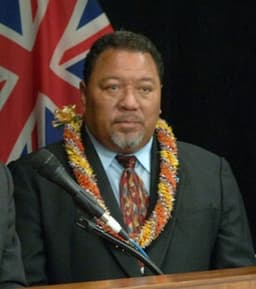
Joseph Urusemal
Politician · Modern
37.9Total

Julius Caesar
General · Ancient
82.8Total
Basic Information
Born
1952
-100
Died
—
-44
Era
Modern
Ancient
Nationality
Micronesia
Roman Republic
Occupation
Politician
General
Civilization
Other
Western
Score Comparison
Military (10%)
16.7
88.0
Political (20%)
29.3
78.0
Influence (20%)
47.1
85.0
Legacy (20%)
35.0
82.0
Leadership (15%)
48.4
80.0
Strategy (15%)
40.4
85.0
TOTAL
37.9
82.8
Joseph Urusemal — Complete Timeline
1999 AD
Election as President of the Federated States of MicronesiaPolitical Action◆ Major
Joseph Urusemal was elected as the sixth President of the Federated States of Micronesia, representing the state of Yap. He served from 1999 to 2003, overseeing the country's continued reliance on the Compact of Free Association with the United States.
PresidencyMicronesiaPolitical Leadership
Impact: national
2003 AD
End of PresidencyPolitical Action
Urusemal's term ended in 2003 after serving one term. He was succeeded by Manny Mori. The peaceful transfer of power continued the FSM's democratic tradition.
PresidencyTransitionMicronesia
Impact: national
Julius Caesar — Complete Timeline
58 BC
Gallic WarsWar◆ Major
Caesar, as proconsul of Gaul, launched a series of campaigns that conquered all of Gaul (modern France, Belgium, and parts of Switzerland). He fought numerous battles, including against the Helvetii, the Belgae, and the Gallic chieftain Vercingetorix. The wars brought immense wealth and a loyal army to Caesar.
Gallic WarsConquestRoman Expansion
Impact: regional
49 BC
Crossing the RubiconPolitical Action◆ Major
Caesar led Legio XIII across the Rubicon River into Italy, defying the Roman Senate's order to disband his army. This act triggered a civil war against Pompey and the Optimates, ultimately leading to Caesar's dictatorship and the end of the Roman Republic.
Roman Civil WarEnd of RepublicPower Struggle
Impact: global
48 BC
Battle of PharsalusWar◆ Major
Caesar's outnumbered army defeated the larger forces of Pompey the Great at Pharsalus in Greece. Caesar's tactical use of a reserve line to counter Pompey's cavalry charge proved decisive. Pompey fled to Egypt, where he was assassinated, leaving Caesar as the undisputed master of the Roman world.
Roman Civil WarBattleDecisive Victory
Impact: regional
44 BC
Appointment as Dictator for LifePolitical Action◆ Major
The Roman Senate appointed Caesar dictator perpetuo (dictator for life), granting him unprecedented personal power. This move concentrated military, legislative, and judicial authority in one person, effectively ending the Roman Republic's traditional system of checks and balances and alarming many senators.
DictatorshipEnd of RepublicPower Consolidation
Impact: regionaldestructive
Assassination on the Ides of MarchPolitical Action◆ Major
A group of Roman senators, led by Marcus Junius Brutus and Gaius Cassius Longinus, stabbed Caesar to death at a meeting of the Senate in the Theatre of Pompey. The assassination was intended to restore the Republic, but instead triggered another civil war that led to the rise of the Roman Empire.
AssassinationRoman PoliticsEnd of Republic
Impact: globaldestructive
Expert Analysis
joseph-urusemal-vs-julius-caesar
# The Conqueror and the Custodian
On a March morning in 44 BCE, a dictator bathed in imperial purple fell beneath twenty-three senatorial daggers, his blood pooling at the feet of his assassins in the Theatre of Pompey. Two thousand years later, on a small Pacific island, a president from Yap State quietly handed over his office to his successor, shook hands, and walked away into a life of obscurity. One man reshaped the known world; the other kept a small nation steady. How did two figures, both called to lead, come to represent such opposite poles of human ambition and consequence?
Origins
Gaius Julius Caesar was born into a patrician family that had seen better days. The Rome of 100 BCE was a volatile republic—bitter class struggles, generals accumulating private armies, and a Senate more concerned with privilege than governance. Caesar’s aunt had married Gaius Marius, a populist general; his father died when he was sixteen. The young aristocrat learned early that in Rome, survival meant alliances, debts, and audacity. He fled Sulla’s proscriptions, served in the east, and was captured by pirates—whom he later crucified, as promised, after raising the ransom himself. The lesson was clear: Caesar calculated every risk.
Joseph Urusemal was born in 1952 on the island of Yap, part of what would become the Federated States of Micronesia. His world was coral atolls, matrilineal clans, and oral traditions passed through generations. The Pacific was not a sea to conquer but a home to navigate. American trusteeship had replaced Japanese occupation, and the Cold War was distant thunder. Urusemal grew up in a society that measured success not by territory but by harmony—by how well one balanced tradition with the demands of a modernizing world. His education took him to the University of Guam and later into public service, but Yap never left him.
Rise to Power
Caesar’s path was a masterclass in strategic patience. He climbed the *cursus honorum*—quaestor, aedile, praetor—borrowing fortunes to fund spectacles that bought popularity. In 60 BCE, he formed the First Triumvirate with Pompey and Crassus, a backroom deal that gave him command of Gaul. The Gallic Wars (58–50 BCE) were his forge: eight campaigns, over a million enemies killed, and a veteran army loyal not to Rome but to Caesar. When the Senate ordered him to disband, he crossed the Rubicon in 49 BCE, a river that became a line between law and revolution. “The die is cast,” he reportedly said—but the dice were loaded.
Urusemal’s rise was quieter. Micronesia gained independence in 1986, a compact of free association with the United States. The nation was small, dispersed, and fragile. Urusemal served in various administrative roles, known more for consensus-building than charisma. In 1999, he was elected the sixth president, representing Yap—a symbolic victory for his home state, which had long felt marginalized. His “crossing” was not a river but a handshake, a peaceful transition of power that reflected a culture where leadership was stewardship, not seizure.
Leadership & Governance
Caesar governed like a storm. As dictator, he reformed the calendar (the Julian calendar, used for 1,600 years), granted citizenship to provincials, initiated public works, and centralized tax collection. He also packed the Senate with his supporters, minted coins with his image, and accepted the title “dictator for life” in 44 BCE. His military genius was undeniable—the siege of Alesia, the lightning campaign at Pharsalus—but his political wisdom was brittle. He pardoned enemies, expecting gratitude; they gave him daggers.
Urusemal governed like a tide. His presidency (2003–2007) focused on cultural preservation and sustainable development. He advocated for traditional navigation techniques, reef conservation, and education that respected indigenous knowledge. There were no grand reforms, no armies, no dramatic speeches. His strategy was survival—keeping a nation of 600 islands afloat amid climate change, economic dependence on U.S. aid, and the slow erosion of tradition. Where Caesar built monuments, Urusemal built dialogue.
Triumph & Tragedy
Caesar’s greatest triumph was Gaul—a conquest that doubled Rome’s territory and made him the richest man in the Republic. His greatest tragedy was his own success: he became a king in all but name, and Rome killed him for it. On the Ides of March, 44 BCE, he fell to men he had spared. “*Et tu, Brute?*” may be legend, but the betrayal was real.
Urusemal’s triumph was less visible: a peaceful term in a region where coups and corruption were common. His tragedy? He is virtually forgotten. No statues, no poems, no empire. His legacy is not a fall but a fade—a president who served, left, and returned to anonymity. That, too, is a kind of death.
Character & Destiny
Caesar was restless, brilliant, and reckless with his own safety. He slept with allies’ wives, forgave enemies, and believed his luck would hold. His personality—arrogant, magnanimous, calculating—drove him to remake the world. But that same personality blinded him: he could not imagine that anyone would dare strike a Caesar.
Urusemal was cautious, diplomatic, and content. He did not seek to remake the world; he sought to preserve a piece of it. His personality—humble, patient, rooted—allowed him to lead without drama. But it also ensured he would leave no mark beyond his islands. One man’s ambition wrote history in blood; the other’s humility wrote it in sand.
Legacy
Caesar’s legacy is the Roman Empire, the Latin language, the Western calendar, and the very idea of dictatorship as a path to power. Every European emperor, every Napoleon, every strongman who crossed a Rubicon—they walked in Caesar’s shadow. He is remembered because he demanded remembrance.
Urusemal’s legacy is a stable transition, a preserved tradition, a reef protected. He is remembered by a few, if at all. His name does not appear in world history textbooks. But perhaps that is not failure. In a world that fetishizes conquest, there is something quietly profound about a leader who left his people no poorer, no bloodier, no more broken than he found them.
Conclusion
History is a mirror that reflects our own values. We celebrate Caesar because we admire audacity, reach, and transformation—even when they come at a terrible cost. We forget Urusemal because we undervalue stability, humility, and preservation. But standing at the edge of our own century, with its climate crises and collapsing empires, perhaps the custodian has more to teach us than the conqueror. The Ides of March will always echo. But so, in their own way, will the quiet handovers on Pacific islands—proof that power can end without blood, and that a life of service need not be a life of fame.
Rankings
🥇
Julius CaesarLeader
Mil: 88.0Pol: 78.0Inf: 85.0
82.8
🥈
Joseph Urusemal
Mil: 16.7Pol: 29.3Inf: 47.1
37.9
+44.9 behind
How This Comparison Works
Algorithm
Each figure is scored on 6 dimensions (0—100 scale) based on structured historical data: Military (10%), Political (20%), Influence (20%), Legacy (20%), Leadership (15%), Strategy (15%). The weighted total produces the final ranking.
Data Sources
Scores are computed from structured sub-indicators in the database. Scale factors adjust for era (Ancient ×0.85, Modern ×1.0) and civilization size (Eastern ×1.05, Other ×0.80) to account for differences in population and military scale.
Maximum 3 Figures
Comparisons are limited to 2—3 figures to ensure readability and statistical meaningfulness.
Error Margins
±5 points per dimension — Sub-scores are derived from historical records with inherent uncertainty. Two figures within 5 points on a dimension should be considered roughly equivalent in that area.
Total Score Accuracy
±3 points overall — The weighted combination of 6 dimensions produces a total score with approximately ±3 points of uncertainty. Differences of less than 3 points are not statistically significant— the figures are effectively tied.
Known Limitations
- Historical records are incomplete and uneven across civilizations
- Figures from oral-tradition societies may be underrepresented
- Occupation labels can misclassify multi-role figures
- Scores measure capability and impact, not moral character
- Quantitative scoring is a comparison tool, not absolute truth
Capability Radar
Military (10%) — Battles & Warfare
Battles
24
95
Win Rate
28
92
Expansion
34
97
Political (20%) — Governance & Reform
Reform
15
90
Diplomacy
25
85
Economy
15
82
Influence (20%) — Cultural & Global Reach
Cultural
10
88
Global
10
94
Legacy (20%) — Historical Impact
Historical
10
95
Longevity
10
96
Leadership (15%) — Power & Stability
Tenure
20
75
Stability
20
60
Strategy (15%) — Tactics & Innovation
Strategy
33
94
Tactics
38
96
Reform
39
88
Similar Comparisons
Comments & Discussion
No comments yet. Be the first to share your thoughts!