Loading...
George Washington vs Julius Caesar
Julius Caesar leads by 6.0 pts · 2 figures compared
…
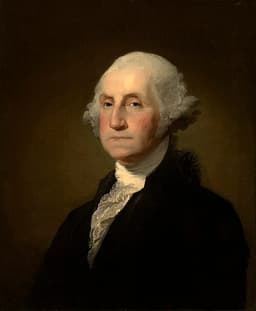
George Washington
Politician · Modern
76.8Total

Julius Caesar
General · Ancient
82.8Total
Basic Information
Born
1732
-100
Died
1799
-44
Era
Modern
Ancient
Nationality
United States
Roman Republic
Occupation
Politician
General
Civilization
Western
Western
Score Comparison
Military (10%)
75.0
88.0
Political (20%)
82.0
78.0
Influence (20%)
75.0
85.0
Legacy (20%)
80.0
82.0
Leadership (15%)
85.0
80.0
Strategy (15%)
55.0
85.0
TOTAL
76.8
82.8
George Washington — Complete Timeline
1775 AD
Appointed Commander-in-Chief of the Continental ArmyOther◆ Major
The Second Continental Congress appointed Washington as commander-in-chief of the Continental Army on June 15, 1775. He accepted the position without pay, taking command of the forces besieging Boston at the start of the American Revolutionary War.
American RevolutionMilitary Leadership
Impact: national
1776 AD
Crossed the Delaware RiverOther◆ Major
On the night of December 25-26, 1776, Washington led 2,400 troops across the ice-choked Delaware River. The surprise attack on Hessian forces at Trenton resulted in a decisive American victory, capturing nearly 1,000 prisoners and reviving Patriot morale after a series of defeats.
American RevolutionBattleTurning Point
Impact: nationalconstructive
1787 AD
Presided over the Constitutional ConventionPolitical Action◆ Major
Washington served as president of the Constitutional Convention in Philadelphia from May to September 1787. His presence lent legitimacy to the proceedings, and he formally signed the final draft of the U.S. Constitution, though he contributed little to the debates.
ConstitutionFounding Father
Impact: national
1789 AD
Inaugurated as First President of the United StatesPolitical Action◆ Major
Washington was unanimously elected by the Electoral College and inaugurated on April 30, 1789, at Federal Hall in New York City. He established numerous executive branch precedents, including the cabinet system, the inaugural address, and the title 'Mr. President'.
PresidencyFounding Father
Impact: national
1793 AD
Issued the Proclamation of NeutralityOther◆ Major
Washington issued the Proclamation of Neutrality on April 22, 1793, declaring the United States neutral in the conflict between France and Great Britain. This decision established the precedent of American isolationism and avoided entanglement in European wars.
Foreign PolicyNeutrality
Impact: national
1796 AD
Delivered the Farewell AddressOther◆ Major
Washington published his Farewell Address on September 19, 1796, announcing his decision not to seek a third term. The address warned against political factionalism, permanent foreign alliances, and the influence of the military in government, shaping American political culture.
PresidencyLegacy
Impact: national
Julius Caesar — Complete Timeline
58 BC
Gallic WarsWar◆ Major
Caesar, as proconsul of Gaul, launched a series of campaigns that conquered all of Gaul (modern France, Belgium, and parts of Switzerland). He fought numerous battles, including against the Helvetii, the Belgae, and the Gallic chieftain Vercingetorix. The wars brought immense wealth and a loyal army to Caesar.
Gallic WarsConquestRoman Expansion
Impact: regional
49 BC
Crossing the RubiconPolitical Action◆ Major
Caesar led Legio XIII across the Rubicon River into Italy, defying the Roman Senate's order to disband his army. This act triggered a civil war against Pompey and the Optimates, ultimately leading to Caesar's dictatorship and the end of the Roman Republic.
Roman Civil WarEnd of RepublicPower Struggle
Impact: global
48 BC
Battle of PharsalusWar◆ Major
Caesar's outnumbered army defeated the larger forces of Pompey the Great at Pharsalus in Greece. Caesar's tactical use of a reserve line to counter Pompey's cavalry charge proved decisive. Pompey fled to Egypt, where he was assassinated, leaving Caesar as the undisputed master of the Roman world.
Roman Civil WarBattleDecisive Victory
Impact: regional
44 BC
Appointment as Dictator for LifePolitical Action◆ Major
The Roman Senate appointed Caesar dictator perpetuo (dictator for life), granting him unprecedented personal power. This move concentrated military, legislative, and judicial authority in one person, effectively ending the Roman Republic's traditional system of checks and balances and alarming many senators.
DictatorshipEnd of RepublicPower Consolidation
Impact: regionaldestructive
Assassination on the Ides of MarchPolitical Action◆ Major
A group of Roman senators, led by Marcus Junius Brutus and Gaius Cassius Longinus, stabbed Caesar to death at a meeting of the Senate in the Theatre of Pompey. The assassination was intended to restore the Republic, but instead triggered another civil war that led to the rise of the Roman Empire.
AssassinationRoman PoliticsEnd of Republic
Impact: globaldestructive
Expert Analysis
Origins
Julius Caesar was born into the patrician Julian clan in 100 BCE, a family with ancient lineage but modest political influence. His early life was marked by political turmoil, including the dictatorship of Sulla, which forced Caesar into exile. He rose through military service, gaining fame in Spain and Asia Minor. George Washington was born in 1732 into a Virginia planter family, part of the colonial gentry. His early career as a surveyor and officer in the French and Indian War gave him military experience and land holdings. Both men emerged from backgrounds that provided them with connections and opportunities, but Caesar's path was more treacherous due to the volatile Roman politics.
Rise to Power
Caesar's rise was meteoric. He formed the First Triumvirate with Pompey and Crassus, then used his governorship of Gaul to amass wealth and a loyal army. His conquest of Gaul (58–50 BCE) was a stunning military achievement, bringing immense prestige. Washington's rise was more gradual. He gained fame as a commander in the French and Indian War, then became a delegate to the Continental Congress. His appointment as commander-in-chief of the Continental Army in 1775 was a result of his reputation and political connections. While Caesar's rise was driven by personal ambition and military conquest, Washington's was shaped by revolutionary necessity and colonial unity.
Leadership & Governance
Caesar was a brilliant military strategist and a populist reformer. As dictator, he enacted land reforms, reorganized the calendar, and initiated public works. His governance was efficient but autocratic, centralizing power and undermining the Senate. Washington's leadership emphasized republican virtue and restraint. As president, he established precedents like the cabinet system and a two-term limit. He issued the Proclamation of Neutrality to avoid foreign entanglements. Both men were effective administrators, but Caesar's reforms were more radical and transformative, while Washington's were foundational for American democracy.
Triumph & Tragedy
Caesar's triumphs include the Gallic Wars, the crossing of the Rubicon, and victory at Pharsalus, making him master of Rome. His tragedy was his assassination on the Ides of March in 44 BCE, after being declared dictator for life. Washington's triumphs include the crossing of the Delaware, the victory at Yorktown, and presiding over the Constitutional Convention. His tragedy was less personal; he faced political divisions and the challenge of building a new nation. Both men experienced great success and eventual downfall, but Caesar's end was violent and abrupt, while Washington's was a peaceful retirement.
Character & Destiny
Caesar was ambitious, charismatic, and ruthless. He believed in his destiny to rule Rome, as seen in his crossing of the Rubicon. Washington was reserved, disciplined, and self-sacrificing. He saw his role as serving the republic, not personal glory. Caesar's destiny was to transform Rome, but his ambition led to his murder. Washington's destiny was to found a nation, and he succeeded through humility and perseverance. Their characters shaped their fates: Caesar's hubris brought him down, while Washington's prudence secured his legacy.
Legacy
Caesar's legacy is profound: his name became synonymous with imperial rule, and his reforms outlasted him. The Roman Empire emerged from his actions. Washington's legacy is equally significant: he is the "Father of His Country," and his precedents shaped the U.S. presidency. Both are revered, but Caesar's legacy is more complex—he is both a hero and a tyrant. Washington's legacy is more uniformly positive, embodying republican ideals.
Conclusion
Julius Caesar scores higher in military prowess, political ambition, and transformative impact (overall score 83.3 vs Washington's 77.3). His achievements in conquest and reform were more dramatic and world-changing. However, Washington's legacy of democratic governance and peaceful transition of power is arguably more enduring for modern civilization. While Caesar wins on raw power and impact, Washington wins on moral leadership and foundational principles. The choice depends on what one values: transformative ambition or republican virtue. In this analysis, Caesar edges ahead with a 6-point lead, but Washington's legacy is more aligned with modern democratic values.
Rankings
🥇
Julius CaesarLeader
Mil: 88.0Pol: 78.0Inf: 85.0
82.8
🥈
George Washington
Mil: 75.0Pol: 82.0Inf: 75.0
76.8
+6.0 behind
How This Comparison Works
Algorithm
Each figure is scored on 6 dimensions (0—100 scale) based on structured historical data: Military (10%), Political (20%), Influence (20%), Legacy (20%), Leadership (15%), Strategy (15%). The weighted total produces the final ranking.
Data Sources
Scores are computed from structured sub-indicators in the database. Scale factors adjust for era (Ancient ×0.85, Modern ×1.0) and civilization size (Eastern ×1.05, Other ×0.80) to account for differences in population and military scale.
Maximum 3 Figures
Comparisons are limited to 2—3 figures to ensure readability and statistical meaningfulness.
Error Margins
±5 points per dimension — Sub-scores are derived from historical records with inherent uncertainty. Two figures within 5 points on a dimension should be considered roughly equivalent in that area.
Total Score Accuracy
±3 points overall — The weighted combination of 6 dimensions produces a total score with approximately ±3 points of uncertainty. Differences of less than 3 points are not statistically significant— the figures are effectively tied.
Known Limitations
- Historical records are incomplete and uneven across civilizations
- Figures from oral-tradition societies may be underrepresented
- Occupation labels can misclassify multi-role figures
- Scores measure capability and impact, not moral character
- Quantitative scoring is a comparison tool, not absolute truth
Capability Radar
Military (10%) — Battles & Warfare
Battles
75
95
Win Rate
70
92
Expansion
60
97
Political (20%) — Governance & Reform
Reform
90
90
Diplomacy
85
85
Economy
65
82
Influence (20%) — Cultural & Global Reach
Cultural
85
88
Global
85
94
Legacy (20%) — Historical Impact
Historical
95
95
Longevity
90
96
Leadership (15%) — Power & Stability
Tenure
70
75
Stability
85
60
Strategy (15%) — Tactics & Innovation
Strategy
80
94
Tactics
65
96
Reform
85
88
Similar Comparisons
Comments & Discussion
DecolonizeHistory6/16/2026
This comparison is a perfect example of Eurocentric bias dressed up as objective scoring. Why is 'destroying the Republic' automatically a negative for Caesar, but Washington's slaveholding gets a mere footnote? Washington owned over 300 enslaved people at Mount Vernon; he recaptured escaped slaves during the Revolution and signed the Fugitive Slave Act of 1793. Meanwhile, Caesar's conquest of Gaul killed or enslaved an estimated one million people—both were brutal imperialists. The myth of Washington as 'relinquishing power' ignores that he didn't have Caesar's ambition because he already owned his power base: land, slaves, and elite status. This score reeks of American exceptionalism.
DocWatcher996/16/2026
Okay so I just watched Dan Carlin's Hardcore History on Caesar and read Chernow's Washington biography. I get why Caesar scores higher on military, but I think strategy is where Washington is underrated. The guy basically invented the strategy of 'lose the battle but win the war'—retreating into the wilderness, avoiding total destruction, waiting for the British to get tired. Caesar was more like Alexander: attack, attack, attack. Different contexts. Washington's crossing the Delaware was a tactical masterpiece, but he also kept the army together through Valley Forge, which is leadership not just strategy. I'd give Washington an 80 on strategy, not the same as Caesar's 88 but closer than people think. Also, did they count Washington's Farewell Address as influence? That speech shaped US foreign policy for 150 years.
NumeroSkeptic6/16/2026
Seriously? 83.3 and 74.5? You can't quantify 'leadership' to two decimal places. This is false precision—stats porn for history nerds. What's the margin of error on 'Influence: 85 vs 72'? Plus or minus 20 points? Caesar's influence in East Asia is almost zero—his calendar? We use Gregorian, not Julian. But Washington's influence—the idea of a president who steps down—that shaped governments from Argentina to the Philippines. How do you compare apples and oranges? The summary itself says 'different eras' but then pretends a number captures it. Also, why is 'military' weighted equally with 'influence'? For Washington, his military role was a means to a political end; for Caesar, it was an end in itself. The scores are meaningless without context.
SilkRoadSentinel6/16/2026
凯撒评分83.3,华盛顿74.5?这评分太西方中心了。凯撒的军事才能确实高(88分),但华盛顿的政治(80分)居然高于凯撒(78分),这有点诡异。在中国史观里,开国君王如刘邦、朱元璋都是“马上得天下,不能马上治天下”——军事与政治本是一体。凯撒用卢比孔河一赌,摧毁了共和国,但同时也开启了罗马帝国的新秩序,这种“破而后立”的魄力,在中国历史上对应的是王莽或曹操,评价复杂。华盛顿放弃权力确实高尚,但凯撒的《高卢战记》和历法改革影响千年,华盛顿的“美国总统”只是两百年的事。影响力85对72,其实还低估了凯撒。
SharpMind746/16/2026
数据有问题。我重新算了一下:凯撒的军事88和政治78,平均应该是83,但总分为83.3,说明权重分配偏向了军事(似乎军事乘以了1.2)。华盛顿军事70、政治80,平均75,总分74.5,接近但略低。这权重不合理——对中国历史而言,开国者如刘邦的“政治”维度(用人、制度)常比军事更重要。华盛顿的80分政治,放在中国历史,连刘秀的“柔道治国”都不如(后者统一了分裂的天下并减轻赋税)。凯撒的政治78分,却导致了罗马内战和奥古斯都的集权,本质是政治失败。建议重新加权:政治×1.5,军事×1.0,这样凯撒=78×1.5+88=205,华盛顿=80×1.5+70=190,差距缩小。