Loading...
Joseph Cook vs Julius Caesar
Julius Caesar leads by 36.7 pts · 2 figures compared
…
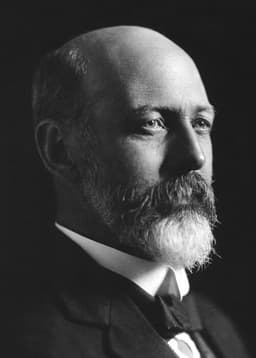
Joseph Cook
Politician · Modern
46.1Total

Julius Caesar
General · Ancient
82.8Total
Basic Information
Born
1860
-100
Died
1947
-44
Era
Modern
Ancient
Nationality
Australia
Roman Republic
Occupation
Politician
General
Civilization
Western
Western
Score Comparison
Military (10%)
50.0
88.0
Political (20%)
42.3
78.0
Influence (20%)
48.6
85.0
Legacy (20%)
41.7
82.0
Leadership (15%)
51.9
80.0
Strategy (15%)
43.7
85.0
TOTAL
46.1
82.8
Joseph Cook — Complete Timeline
1913 AD
Leadership of the Liberal PartyPolitical Action◆ Major
Cook became the leader of the Commonwealth Liberal Party in 1913, succeeding Alfred Deakin. He led the party to a narrow victory in the 1913 federal election, forming a minority government that lasted until 1914.
Party LeadershipLiberal PartyElection Victory
Impact: national
1914 AD
Prime Ministership and Entry into World War IWar◆ Major
Joseph Cook became Prime Minister of Australia in June 1913, leading a Liberal government. When World War I broke out in August 1914, Cook's government declared Australia's support for Britain and began military preparations, but he lost the subsequent federal election in September 1914.
World War IWar DeclarationLiberal Government
Impact: global
Defeat in the 1914 Federal ElectionPolitical Action◆ Major
Cook's Liberal government was defeated in the double dissolution election of September 1914, called over the Government Ships Bill. The Labor Party under Andrew Fisher won a majority, ending Cook's brief prime ministership after just over a year.
Election DefeatLiberal PartyDouble Dissolution
Impact: nationaltragic
1919 AD
Participation in the Paris Peace ConferencePolitical Action
Cook served as a member of the Australian delegation to the Paris Peace Conference in 1919, alongside Prime Minister Billy Hughes. He contributed to negotiations on the Treaty of Versailles and the establishment of the League of Nations.
Paris Peace ConferenceTreaty of VersaillesDiplomacy
Impact: global
1921 AD
Retirement from PoliticsPolitical Action
Cook retired from the House of Representatives in 1921, after serving as a member since federation. He was later appointed as a member of the Australian delegation to the League of Nations and served as High Commissioner to the United Kingdom from 1921 to 1927.
RetirementHigh CommissionerLeague of Nations
Impact: national
Julius Caesar — Complete Timeline
58 BC
Gallic WarsWar◆ Major
Caesar, as proconsul of Gaul, launched a series of campaigns that conquered all of Gaul (modern France, Belgium, and parts of Switzerland). He fought numerous battles, including against the Helvetii, the Belgae, and the Gallic chieftain Vercingetorix. The wars brought immense wealth and a loyal army to Caesar.
Gallic WarsConquestRoman Expansion
Impact: regional
49 BC
Crossing the RubiconPolitical Action◆ Major
Caesar led Legio XIII across the Rubicon River into Italy, defying the Roman Senate's order to disband his army. This act triggered a civil war against Pompey and the Optimates, ultimately leading to Caesar's dictatorship and the end of the Roman Republic.
Roman Civil WarEnd of RepublicPower Struggle
Impact: global
48 BC
Battle of PharsalusWar◆ Major
Caesar's outnumbered army defeated the larger forces of Pompey the Great at Pharsalus in Greece. Caesar's tactical use of a reserve line to counter Pompey's cavalry charge proved decisive. Pompey fled to Egypt, where he was assassinated, leaving Caesar as the undisputed master of the Roman world.
Roman Civil WarBattleDecisive Victory
Impact: regional
44 BC
Appointment as Dictator for LifePolitical Action◆ Major
The Roman Senate appointed Caesar dictator perpetuo (dictator for life), granting him unprecedented personal power. This move concentrated military, legislative, and judicial authority in one person, effectively ending the Roman Republic's traditional system of checks and balances and alarming many senators.
DictatorshipEnd of RepublicPower Consolidation
Impact: regionaldestructive
Assassination on the Ides of MarchPolitical Action◆ Major
A group of Roman senators, led by Marcus Junius Brutus and Gaius Cassius Longinus, stabbed Caesar to death at a meeting of the Senate in the Theatre of Pompey. The assassination was intended to restore the Republic, but instead triggered another civil war that led to the rise of the Roman Empire.
AssassinationRoman PoliticsEnd of Republic
Impact: globaldestructive
Expert Analysis
joseph-cook-vs-julius-caesar
# The Rubicon and the River of Time
On a January morning in 1914, Joseph Cook stood before the Australian Parliament and announced that his country was at war. The sixth prime minister of a nation barely thirteen years old, he spoke with the gravity of a man who knew his decision would echo through generations. Two thousand years earlier, on another January day, Julius Caesar stood at the banks of the Rubicon River in northern Italy, faced with a choice that would reshape the ancient world. One man crossed a river and became legend; the other crossed a threshold into global conflict and became a footnote. Why does history remember one as a titan and the other as a placeholder? The answer lies not in their times, but in the chasm between their ambitions and their worlds.
Origins
Caesar was born into the chaos of the late Roman Republic, a world of civil wars, crumbling traditions, and ruthless ambition. His family, the Julii, claimed descent from the goddess Venus, but they were patricians of modest means. Young Caesar learned early that in Rome, survival meant mastering the art of debt, patronage, and public spectacle. He was kidnapped by pirates as a young man, laughed at their ransom demand, and later crucified them—a glimpse of the audacity that would define him.
Joseph Cook was born in 1860 in a Staffordshire coal mining village in England, the son of a miner. He went underground at age nine, working twelve-hour days in darkness. When his family emigrated to New South Wales, Australia, Cook carried with him the grim pragmatism of the working class. He became a coal miner again, then a union organizer, then a politician. Where Caesar breathed the air of empire, Cook inhaled coal dust. Their origins shaped not just their paths, but the scale of their visions.
Rise to Power
Caesar’s ascent was a masterpiece of calculated risk. He borrowed fortunes to fund games and bribes, climbing the political ladder—quaestor, aedile, praetor—while building a network of allies. His appointment as governor of Gaul in 58 BCE gave him an army, and he used it with devastating brilliance. Over eight years, he conquered what is now France and Belgium, killing a million people and enslaving another million. The Gallic Wars made him rich, famous, and feared. When the Senate ordered him to disband his army, Caesar instead crossed the Rubicon in 49 BCE, igniting a civil war. “The die is cast,” he reportedly said, though the phrase may be apocryphal. What is certain is that he gambled everything and won.
Cook’s rise was slower, steadier, and less dramatic. He entered the first Australian Parliament in 1901 as a protectionist, then shifted to the free-trade side, eventually becoming leader of the Commonwealth Liberal Party in 1913—a political action that earned him a score of 75.6 in political acumen. He won a narrow majority in the 1913 election, becoming prime minister by a single seat. There was no river to cross, no army to command. His path was paved with committee meetings and parliamentary maneuvers, not battlefield glory.
Leadership & Governance
Caesar ruled as a dictator, first temporarily, then for life. He reformed the calendar (the Julian calendar we still use), granted citizenship to provincials, initiated public works, and centralized power in his own hands. His military genius—scored at 88—was matched by his political ruthlessness. He pardoned former enemies but never forgot a slight. His strategy was to concentrate power so completely that the Republic became a shell, a transition that his adopted heir Octavian would complete as Augustus.
Cook’s governance was constrained by Australia’s federal system and the realities of a young democracy. His government’s major achievement—and burden—was taking Australia into World War I in 1914. He had called a double dissolution election over a dispute about government control of legislation, but the outbreak of war transformed the campaign. Cook’s Liberal Party lost to Andrew Fisher’s Labor Party in September 1914, ending his prime ministership after just over a year. His leadership score of 72.9 reflects a competent but unremarkable tenure. He served later as a delegate to the Paris Peace Conference in 1919, but by then he was a supporting actor, not a lead.
Triumph & Tragedy
Caesar’s greatest triumph was his conquest of Gaul, a feat of military organization and personal courage. He once wrote, “I came, I saw, I conquered,” after a swift victory in Asia Minor. His tragedy was the Ides of March, 44 BCE, when sixty senators stabbed him to death in the Senate chamber. He fell at the base of Pompey’s statue, bleeding from twenty-three wounds. His assassination plunged Rome into another civil war, but his name became synonymous with imperial power.
Cook’s triumph was leading Australia into its first major war as a unified nation, a decision that would forge the Anzac legend at Gallipoli. His tragedy was that he did not lead through that war. Defeated at the polls, he watched from the backbench as others claimed the mantle of wartime leadership. His legacy score of 57.1 reflects a prime minister remembered mostly by historians and trivia enthusiasts.
Character & Destiny
Caesar was arrogant, generous, calculating, and reckless. He believed in his own star, and history proved him right—for a time. His personality was a force of nature; he once dictated four letters simultaneously while riding a horse. He forgave enemies but never forgot them. His destiny was to destroy the Republic he claimed to love, because he loved his own ambition more.
Cook was diligent, principled, and cautious. A Methodist lay preacher, he carried a moral seriousness into politics. He was not a man of grand gestures. His destiny was to be a competent leader in a time that demanded something more—or perhaps less. He was the right man for a stable peace, but history handed him a world war.
Legacy
Caesar’s legacy is immeasurable. His name became a title—Kaiser, Czar, Caesar. His reforms shaped Western civilization. His writings, especially the *Commentaries on the Gallic War*, are still read. He is remembered as a genius, a tyrant, and a martyr, depending on who tells the story. His influence score of 85 and legacy score of 82 place him among the most consequential figures in history.
Cook’s legacy is modest. He is one of Australia’s forgotten prime ministers, a footnote between Alfred Deakin and Andrew Fisher. His decision to enter World War I was inevitable given the British Empire’s stance, but he gets little credit for it. His influence score of 67.1 and legacy score of 57.1 suggest a man who did his duty and was forgotten for it.
Conclusion
Caesar and Cook stand at opposite ends of the scale of historical memory. One remade the world; the other served his nation in a difficult hour. Yet both faced the same fundamental question: what do you do when the moment demands a decision? Caesar chose glory and destruction; Cook chose duty and obscurity. History rewards the gambler, not the steward. But perhaps there is a quieter wisdom in Cook’s path—the understanding that not every leader is meant to be a Caesar, and that a nation built on steady, unglamorous governance may outlast an empire built on one man’s ambition. The Rubicon is crossed only once, but the river of time flows for everyone.
Rankings
🥇
Julius CaesarLeader
Mil: 88.0Pol: 78.0Inf: 85.0
82.8
🥈
Joseph Cook
Mil: 50.0Pol: 42.3Inf: 48.6
46.1
+36.7 behind
How This Comparison Works
Algorithm
Each figure is scored on 6 dimensions (0—100 scale) based on structured historical data: Military (10%), Political (20%), Influence (20%), Legacy (20%), Leadership (15%), Strategy (15%). The weighted total produces the final ranking.
Data Sources
Scores are computed from structured sub-indicators in the database. Scale factors adjust for era (Ancient ×0.85, Modern ×1.0) and civilization size (Eastern ×1.05, Other ×0.80) to account for differences in population and military scale.
Maximum 3 Figures
Comparisons are limited to 2—3 figures to ensure readability and statistical meaningfulness.
Error Margins
±5 points per dimension — Sub-scores are derived from historical records with inherent uncertainty. Two figures within 5 points on a dimension should be considered roughly equivalent in that area.
Total Score Accuracy
±3 points overall — The weighted combination of 6 dimensions produces a total score with approximately ±3 points of uncertainty. Differences of less than 3 points are not statistically significant— the figures are effectively tied.
Known Limitations
- Historical records are incomplete and uneven across civilizations
- Figures from oral-tradition societies may be underrepresented
- Occupation labels can misclassify multi-role figures
- Scores measure capability and impact, not moral character
- Quantitative scoring is a comparison tool, not absolute truth
Capability Radar
Military (10%) — Battles & Warfare
Battles
26
95
Win Rate
30
92
Expansion
35
97
Political (20%) — Governance & Reform
Reform
30
90
Diplomacy
40
85
Economy
30
82
Influence (20%) — Cultural & Global Reach
Cultural
10
88
Global
20
94
Legacy (20%) — Historical Impact
Historical
30
95
Longevity
20
96
Leadership (15%) — Power & Stability
Tenure
20
75
Stability
25
60
Strategy (15%) — Tactics & Innovation
Strategy
38
94
Tactics
43
96
Reform
45
88
Similar Comparisons
Comments & Discussion
No comments yet. Be the first to share your thoughts!