Loading...
Jose Luis Rodriguez Zapatero vs Keith Rowley
Jose Luis Rodriguez Zapatero leads by 2.9 pts · 2 figures compared
…
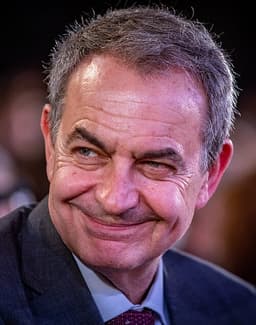
Jose Luis Rodriguez Zapatero
Politician · Modern
55.2Total
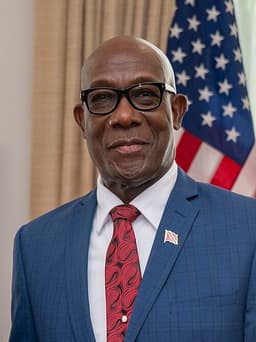
Keith Rowley
Politician · Modern
52.3Total
Basic Information
Born
1960
1949
Died
—
—
Era
Modern
Modern
Nationality
Spain
Trinidad and Tobago
Occupation
Politician
Politician
Civilization
Western
Other
Score Comparison
Military (10%)
50.0
41.8
Political (20%)
60.0
62.7
Influence (20%)
58.3
53.3
Legacy (20%)
50.0
41.7
Leadership (15%)
66.0
72.0
Strategy (15%)
42.7
41.3
TOTAL
55.2
52.3
Jose Luis Rodriguez Zapatero — Complete Timeline
2004 AD
Election as Prime Minister of SpainPolitical Action◆ Major
Zapatero's Spanish Socialist Workers' Party won the 2004 general election three days after the Madrid train bombings. He became Prime Minister on April 17, 2004, and immediately withdrew Spanish troops from Iraq.
ElectionGovernment
Impact: national
2005 AD
Legalization of Same-Sex MarriageReform◆ Major
Zapatero's government passed a law legalizing same-sex marriage on July 3, 2005, making Spain one of the first countries to do so. The law also granted adoption rights to same-sex couples, sparking opposition from the Catholic Church.
Social ReformLGBTQ Rights
Impact: nationalprogressive
2007 AD
Law of Historical MemoryReform◆ Major
Zapatero's government enacted the Law of Historical Memory on October 31, 2007, which recognized victims of the Spanish Civil War and Francoist regime. It provided for the removal of Francoist symbols and support for exhumations of mass graves.
Historical JusticeCivil War
Impact: nationalconstructive
2010 AD
Economic Crisis and AusterityPolitical Action◆ Major
Facing the Eurozone crisis, Zapatero's government implemented austerity measures in May 2010, including public sector wage cuts and pension freezes. This reversed his earlier expansionary policies and led to protests and a loss of popularity.
Economic CrisisAusterity
Impact: nationaldestructive
Keith Rowley — Complete Timeline
1970 AD
Volcanologist Career and Academic WorkCultural
Before entering politics, Rowley worked as a volcanologist, studying volcanic activity in the Caribbean. His scientific background influenced his approach to disaster management and environmental policy as Prime Minister.
ScienceVolcanologyCareer
Impact: regionalconstructive
2010 AD
Leadership of the People's National MovementPolitical Action◆ Major
Rowley became the political leader of the People's National Movement (PNM) after a leadership contest. He revitalized the party and led it to victory in 2015, ending a five-year opposition period.
Political PartyLeadershipRevitalization
Impact: nationalconstructive
2015 AD
Crime Reduction InitiativesReform◆ Major
Rowley launched a series of crime reduction initiatives, including increased police patrols, anti-gang legislation, and social programs. Despite efforts, crime rates remained high, drawing criticism from opposition and civil society.
CrimeSecurityPolicy
Impact: national
Prime Minister of Trinidad and TobagoPolitical Action◆ Major
Keith Rowley became Prime Minister of Trinidad and Tobago after leading the People's National Movement to victory in the 2015 general election. He succeeded Kamla Persad-Bissessar and focused on economic diversification and crime reduction.
Prime MinisterElectionGovernment
Impact: nationalconstructive
2020 AD
Re-election as Prime MinisterPolitical Action◆ Major
Rowley won re-election in the 2020 general election, securing a second term. His victory was attributed to his handling of the COVID-19 pandemic and economic management, though the opposition criticized his policies.
ElectionRe-electionCOVID-19
Impact: nationalconstructive
Expert Analysis
Origins
Jose Luis Rodriguez Zapatero was born on August 4, 1960, in Valladolid, Spain. His grandfather, Juan Rodriguez Lozano, was a Republican officer executed by Franco's forces, a fact that deeply influenced Zapatero's political views. He studied law at the University of Leon and became a professor of constitutional law before entering politics. His early exposure to the legacy of the Spanish Civil War shaped his commitment to social justice and historical memory.
Keith Rowley was born on October 24, 1949, in Tobago, Trinidad and Tobago. He earned a PhD in geology from the University of the West Indies and worked as a volcanologist, studying volcanic activity in the Caribbean. His scientific background gave him a data-driven approach to problem-solving. He entered politics in the 1980s, serving in various ministerial roles before becoming Prime Minister.
Rise to Power
Zapatero became the leader of the Spanish Socialist Workers' Party (PSOE) in 2000, after the resignation of Joaquin Almunia. He led the party to victory in the 2004 general election, held just three days after the Madrid train bombings. The election was heavily influenced by the government's handling of the attacks. Zapatero's campaign focused on withdrawing Spanish troops from Iraq and social reforms. He became Prime Minister on April 17, 2004, at age 43.
Rowley became the political leader of the People's National Movement (PNM) in 2010 after a leadership contest. He revitalized the party and led it to victory in the 2015 general election, becoming Prime Minister on September 9, 2015. His victory was attributed to his promise of economic reform and crime reduction.
Leadership & Governance
Zapatero's governance was marked by progressive social reforms. He legalized same-sex marriage in 2005, granted adoption rights to same-sex couples, and introduced gender equality laws. His government also enacted the Law of Historical Memory in 2007, recognizing victims of the Franco regime. However, his handling of the economic crisis after 2008 was criticized. He initially denied the severity of the crisis but later implemented austerity measures in 2010, including public sector wage cuts and pension freezes. His political score is 60.0, reflecting mixed effectiveness.
Rowley's leadership focused on economic diversification and crime reduction. He launched initiatives to reduce violent crime, including increased police patrols and anti-gang legislation. His scientific background influenced his approach to policy, emphasizing evidence-based decisions. During the COVID-19 pandemic, he implemented strict lockdowns and a successful vaccination campaign, which contributed to his re-election in 2020. His leadership score of 72.0 reflects his crisis management skills.
Triumph & Tragedy
Zapatero's greatest triumph was the legalization of same-sex marriage, making Spain a global leader in LGBTQ+ rights. The law passed in 2005 with broad support and withstood legal challenges. His greatest failure was his handling of the economic crisis. Spain's unemployment rate soared to over 20%, and austerity measures led to widespread protests. His strategy score of 42.7 reflects poor economic planning.
Rowley's greatest success was his handling of the COVID-19 pandemic, which kept infection rates relatively low and earned him re-election. His greatest failure is the persistent high crime rate in Trinidad and Tobago. Despite initiatives, murder rates remained high, and his crime reduction efforts have not fully succeeded. His military score of 41.8 reflects limited impact on security.
Character & Destiny
Zapatero was idealistic and principled, driven by a commitment to social justice. His decision to withdraw Spanish troops from Iraq was controversial but consistent with his anti-war stance. However, his optimism and reluctance to address the economic crisis early hurt his legacy. Historians note that his character shaped his fate: his progressive reforms defined his tenure, but economic mismanagement overshadowed them.
Rowley is pragmatic and analytical, reflecting his scientific training. He is known for his direct communication style and focus on data. His character helped him navigate the pandemic effectively but has been less successful in addressing deep-rooted social issues like crime. His destiny is tied to his ability to balance economic growth with public safety.
Legacy
Zapatero's legacy is defined by social progress: same-sex marriage, gender equality, and historical memory laws. His influence scored 58.3, reflecting Spain's role as a pioneer in LGBTQ+ rights. However, his economic legacy is negative, with high unemployment and public debt. He is remembered as a transformative social reformer but a flawed economic manager.
Rowley's legacy is still developing. He is credited with stable governance and effective pandemic response. His legacy score of 41.7 reflects his shorter tenure and ongoing challenges. He may be remembered as a competent manager who maintained stability but failed to solve crime.
Conclusion
Zapatero had a greater overall impact on a global scale. His social reforms changed laws and lives, influencing other nations. His total score of 55.2 is slightly higher than Rowley's 52.3, reflecting broader influence. While Rowley's crisis management is commendable, Zapatero's legislative achievements have enduring significance. The clear position: Zapatero's impact on human rights outweighs Rowley's regional stability.
Rankings
🥇
Jose Luis Rodriguez ZapateroLeader
Mil: 50.0Pol: 60.0Inf: 58.3
55.2
🥈
Keith Rowley
Mil: 41.8Pol: 62.7Inf: 53.3
52.3
+2.9 behind
How This Comparison Works
Algorithm
Each figure is scored on 6 dimensions (0—100 scale) based on structured historical data: Military (10%), Political (20%), Influence (20%), Legacy (20%), Leadership (15%), Strategy (15%). The weighted total produces the final ranking.
Data Sources
Scores are computed from structured sub-indicators in the database. Scale factors adjust for era (Ancient ×0.85, Modern ×1.0) and civilization size (Eastern ×1.05, Other ×0.80) to account for differences in population and military scale.
Maximum 3 Figures
Comparisons are limited to 2—3 figures to ensure readability and statistical meaningfulness.
Error Margins
±5 points per dimension — Sub-scores are derived from historical records with inherent uncertainty. Two figures within 5 points on a dimension should be considered roughly equivalent in that area.
Total Score Accuracy
±3 points overall — The weighted combination of 6 dimensions produces a total score with approximately ±3 points of uncertainty. Differences of less than 3 points are not statistically significant— the figures are effectively tied.
Known Limitations
- Historical records are incomplete and uneven across civilizations
- Figures from oral-tradition societies may be underrepresented
- Occupation labels can misclassify multi-role figures
- Scores measure capability and impact, not moral character
- Quantitative scoring is a comparison tool, not absolute truth
Capability Radar
Military (10%) — Battles & Warfare
Battles
31
24
Win Rate
29
28
Expansion
33
32
Political (20%) — Governance & Reform
Reform
75
55
Diplomacy
60
60
Economy
45
55
Influence (20%) — Cultural & Global Reach
Cultural
55
30
Global
55
30
Legacy (20%) — Historical Impact
Historical
50
30
Longevity
40
20
Leadership (15%) — Power & Stability
Tenure
65
65
Stability
50
60
Strategy (15%) — Tactics & Innovation
Strategy
37
33
Tactics
42
33
Reform
44
36
Similar Comparisons
Comments & Discussion
No comments yet. Be the first to share your thoughts!