Loading...
Jose Luis Rodriguez Zapatero vs Napoleon Bonaparte
Napoleon Bonaparte leads by 15.7 pts · 2 figures compared
…
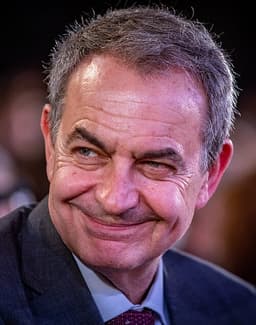
Jose Luis Rodriguez Zapatero
Politician · Modern
55.2Total

Napoleon Bonaparte
General · Modern
70.9Total
Basic Information
Born
1960
1769
Died
—
1821
Era
Modern
Modern
Nationality
Spain
France
Occupation
Politician
General
Civilization
Western
Western
Score Comparison
Military (10%)
50.0
94.0
Political (20%)
60.0
72.0
Influence (20%)
58.3
40.0
Legacy (20%)
50.0
80.0
Leadership (15%)
66.0
78.0
Strategy (15%)
42.7
90.0
TOTAL
55.2
70.9
Jose Luis Rodriguez Zapatero — Complete Timeline
2004 AD
Election as Prime Minister of SpainPolitical Action◆ Major
Zapatero's Spanish Socialist Workers' Party won the 2004 general election three days after the Madrid train bombings. He became Prime Minister on April 17, 2004, and immediately withdrew Spanish troops from Iraq.
ElectionGovernment
Impact: national
2005 AD
Legalization of Same-Sex MarriageReform◆ Major
Zapatero's government passed a law legalizing same-sex marriage on July 3, 2005, making Spain one of the first countries to do so. The law also granted adoption rights to same-sex couples, sparking opposition from the Catholic Church.
Social ReformLGBTQ Rights
Impact: nationalprogressive
2007 AD
Law of Historical MemoryReform◆ Major
Zapatero's government enacted the Law of Historical Memory on October 31, 2007, which recognized victims of the Spanish Civil War and Francoist regime. It provided for the removal of Francoist symbols and support for exhumations of mass graves.
Historical JusticeCivil War
Impact: nationalconstructive
2010 AD
Economic Crisis and AusterityPolitical Action◆ Major
Facing the Eurozone crisis, Zapatero's government implemented austerity measures in May 2010, including public sector wage cuts and pension freezes. This reversed his earlier expansionary policies and led to protests and a loss of popularity.
Economic CrisisAusterity
Impact: nationaldestructive
Napoleon Bonaparte — Complete Timeline
1799 AD
Coup of 18 BrumaireOther◆ Major
Napoleon Bonaparte, with support from his brother Lucien and key political figures, overthrew the Directory in a bloodless coup. He established the Consulate with himself as First Consul, effectively becoming the ruler of France. This event ended the French Revolution's most unstable period.
French RevolutionCoupRise to Power
Impact: regional
1804 AD
Promulgation of the Napoleonic CodeOther◆ Major
Napoleon enacted the Civil Code of the French, known as the Napoleonic Code, a comprehensive set of laws that replaced the fragmented feudal legal systems. The code established legal equality, protected property rights, and secularized law. It became the basis for legal systems in many European and world countries.
Legal ReformNapoleonic CodeCivil Law
Impact: globalconstructive
1805 AD
Battle of AusterlitzWar◆ Major
Napoleon's Grande Arm
Napoleonic WarsBattleDecisive Victory
Impact: global
1812 AD
Invasion of RussiaWar◆ Major
Napoleon led the Grande Arm
Napoleonic WarsInvasionDisaster
Impact: globaldestructive
1815 AD
Battle of WaterlooWar◆ Major
Napoleon's French army was defeated by the combined forces of the Duke of Wellington's Anglo-Allied army and Gebhard Leberecht von Bl
Napoleonic WarsBattleFinal Defeat
Impact: globaldestructive
Expert Analysis
jose-luis-rodriguez-zapatero-vs-napoleon-bonaparte
# The Emperor and the Reformer: Two Paths to Power in Modern Europe
On a June evening in 1815, Napoleon Bonaparte stood on the rain-soaked fields of Waterloo, watching his Imperial Guard retreat for the first time in history. Nearly two centuries later, on a crisp March morning in 2004, José Luis Rodríguez Zapatero walked into the Moncloa Palace in Madrid, having won an election three days after bombs tore through commuter trains. One man commanded armies that reshaped a continent; the other shepherded laws that redefined a nation. Both were products of their times, yet their trajectories could hardly have been more different. What explains the gulf between a conqueror who died in exile and a reformer who left office peacefully?
Origins
Napoleon Bonaparte was born in 1769 on the island of Corsica, a year after France purchased it from Genoa. His family was minor nobility—poor, proud, and resentful of French rule. Young Napoleon spoke Italian before French, and his childhood was steeped in the volatile politics of a Mediterranean island caught between empires. He entered a military academy at nine, where classmates mocked his accent and his poverty. That outsider’s fury would later fuel an ambition that consumed Europe.
Zapatero’s origins could not have been more different. Born in 1960 in León, Castile, he grew up in the shadow of Franco’s dictatorship. His grandfather, a Republican army captain, was executed by Nationalist forces in 1936. That family wound—a grandfather shot, a father who never spoke of it—shaped Zapatero’s quiet determination. He studied law at the University of León, joined the Spanish Socialist Workers' Party, and entered parliament in 1986 at age twenty-six. Where Napoleon learned war, Zapatero learned patience.
Rise to Power
Napoleon’s ascent was meteoric and violent. At twenty-four, he drove the British out of Toulon. At twenty-six, he crushed a royalist uprising in Paris with a “whiff of grapeshot.” At twenty-seven, he led a ragged army into Italy and won six battles in a month. By thirty, he was First Consul of France. His rise depended on military genius—a score of 94 in strategy and 93 in military acumen—and a willingness to shed blood. The 1799 coup of 18 Brumaire was not a democratic mandate but a seizure of power backed by bayonets.
Zapatero’s path was electoral and gradual. He became party leader in 2000 after his predecessor lost two elections. The 2004 Madrid bombings—which killed 191 people—created a political earthquake. Voters, furious at the incumbent government’s handling of the attacks, handed Zapatero’s Socialists a surprise victory on March 14, 2004. He entered power not through conquest but through catastrophe, his mandate fragile and his nation grieving.
Leadership & Governance
Here the contrast sharpens into a chasm. Napoleon ruled with a iron will and a comprehensive vision. He reformed French law with the Napoleonic Code, establishing principles of equality before the law and secular administration. He reorganized education, built roads, centralized bureaucracy, and created the Bank of France. But his governance was autocratic: he crowned himself emperor in 1804, suppressed dissent, and controlled the press. His political score of 75 reflects a ruler who was brilliant at administration but hostile to democracy.
Zapatero governed through consensus and reform. His signature achievement—the 2005 law legalizing same-sex marriage, passed on July 3—made Spain one of the first nations to embrace marriage equality. The 2007 Law of Historical Memory recognized victims of Franco’s regime, exhuming mass graves and granting reparations. His leadership score of 79.4 reflects a man who led by persuasion, not command. Yet his military score of 37.5 and strategy score of 35.3 betray a politician uninterested in force. When the 2010 Eurozone crisis struck, he imposed austerity—cutting public wages and freezing pensions—that betrayed his socialist principles and shattered his popularity.
Triumph & Tragedy
Napoleon’s triumph was Austerlitz, December 2, 1805, where he destroyed a larger Russian-Austrian army in a battle still studied in war colleges. His tragedy was the 1812 invasion of Russia: 600,000 men marched east; fewer than 100,000 returned. The disaster broke his aura of invincibility and led to his first abdication in 1814. He returned from exile on Elba in 1815, rallied France for one hundred days, and met final defeat at Waterloo on June 18, 1815. He died on Saint Helena in 1821, at fifty-one, a prisoner of the British.
Zapatero’s triumph was the marriage equality law—a moment that transformed Spanish society and inspired movements worldwide. His tragedy was the 2008 financial crisis, which exposed the fragility of Spain’s construction boom and left unemployment at 20 percent. He left office in 2011, his party defeated, his reforms overshadowed by economic collapse. Unlike Napoleon, he did not fall from power; he surrendered it, peacefully, in an election.
Character & Destiny
Napoleon was driven by an insatiable hunger for glory. “I live only for posterity,” he once said. His character—arrogant, brilliant, ruthless—determined his fate. He could not stop conquering, could not share power, could not accept limits. That same ambition that raised him from Corsican obscurity to emperor of Europe also condemned him to exile.
Zapatero was driven by a quieter ambition: to heal Spain’s historical wounds. His grandfather’s execution haunted him; his reforms aimed at reconciliation. But his character—idealistic, cautious, conciliatory—left him ill-equipped for economic crisis. He believed in progress through law, not force. That faith gave Spain same-sex marriage and historical memory, but it could not prevent austerity.
Legacy
Napoleon’s legacy is immense and contradictory. He spread nationalism across Europe, dismantled feudalism, and codified laws that still govern France. But he also caused millions of deaths and left France smaller than he found it. His total score of 82.4 reflects a figure who changed the world but left it scarred.
Zapatero’s legacy is narrower but no less real. Spain’s same-sex marriage law remains, a model for other nations. The Law of Historical Memory forced a reckoning with Franco’s crimes. His total score of 64.1 reflects a reformer who advanced human rights but failed at economics. He is remembered not as a conqueror but as a healer—a man who used power to include, not to dominate.
Conclusion
Standing at Waterloo, Napoleon watched his world end. Standing in the Moncloa, Zapatero watched his world begin. One believed history was made by force; the other believed it was made by law. Both were right, and both were wrong. Napoleon showed that power without limits devours itself. Zapatero showed that reform without strength can be swept away by crisis. Their lives, so different, answer the same question: What does it mean to lead? For Napoleon, it meant bending the world to his will. For Zapatero, it meant bending the law toward justice. In the end, the world bends neither—but it remembers both.
Rankings
🥇
Napoleon BonaparteLeader
Mil: 94.0Pol: 72.0Inf: 40.0
70.9
🥈
Jose Luis Rodriguez Zapatero
Mil: 50.0Pol: 60.0Inf: 58.3
55.2
+15.7 behind
How This Comparison Works
Algorithm
Each figure is scored on 6 dimensions (0—100 scale) based on structured historical data: Military (10%), Political (20%), Influence (20%), Legacy (20%), Leadership (15%), Strategy (15%). The weighted total produces the final ranking.
Data Sources
Scores are computed from structured sub-indicators in the database. Scale factors adjust for era (Ancient ×0.85, Modern ×1.0) and civilization size (Eastern ×1.05, Other ×0.80) to account for differences in population and military scale.
Maximum 3 Figures
Comparisons are limited to 2—3 figures to ensure readability and statistical meaningfulness.
Error Margins
±5 points per dimension — Sub-scores are derived from historical records with inherent uncertainty. Two figures within 5 points on a dimension should be considered roughly equivalent in that area.
Total Score Accuracy
±3 points overall — The weighted combination of 6 dimensions produces a total score with approximately ±3 points of uncertainty. Differences of less than 3 points are not statistically significant— the figures are effectively tied.
Known Limitations
- Historical records are incomplete and uneven across civilizations
- Figures from oral-tradition societies may be underrepresented
- Occupation labels can misclassify multi-role figures
- Scores measure capability and impact, not moral character
- Quantitative scoring is a comparison tool, not absolute truth
Capability Radar
Military (10%) — Battles & Warfare
Battles
31
95
Win Rate
29
90
Expansion
33
95
Political (20%) — Governance & Reform
Reform
75
95
Diplomacy
60
80
Economy
45
85
Influence (20%) — Cultural & Global Reach
Cultural
55
85
Global
55
90
Legacy (20%) — Historical Impact
Historical
50
95
Longevity
40
90
Leadership (15%) — Power & Stability
Tenure
65
85
Stability
50
70
Strategy (15%) — Tactics & Innovation
Strategy
37
95
Tactics
42
98
Reform
44
92
Similar Comparisons
Comments & Discussion
GeneralMurat6/17/2026
Calling Zapatero "Spain's Napoleon" is like calling a speed bump a mountain range. Napoleon rewrote Europe's legal codes and redrew borders at Austerlitz. Zapatero? His legacy is pulling troops from Iraq and legalizing same-sex marriage—admirable reforms, yes, but not continent-shaking. One man died clutching his sword; the other left office and calmly retired. The gap isn't just ambition—it's scale. Napoleon forged empires; Zapatero tweaked a democracy. Respect the difference.
战术怀疑论者6/17/2026
把萨帕特罗和拿破仑对比?这像把保温杯比作大炮。拿破仑打出了七十多场战役,滑铁卢前横扫欧洲,而萨帕特罗最激烈的战斗是跟议会吵预算。数据不说谎:拿破仑控制过七千万人的帝国,萨帕特罗管着四千万人的国家,还不算当年西班牙失业率飙到20%。别扯什么“改革者可比征服者”,坦克碾过边境比法律文件有分量多了。一个被记住是因为铜像和法典,另一个是因为高铁和同性婚姻——不在一个量级。
CorsicanGhost6/17/2026
I'll give the Spaniard credit: he carried a silent wound deeper than any battlefield scar. His executed grandfather gave Zapatero something Napoleon never had—a moral inheritance instead of a military one. Napoleon's father died early too, but he turned that loss into rage and conquest. Zapatero turned his into the Law of Historical Memory. Both lost patriarchs; one built monuments to himself, the other to truth. That's not weakness—it's a different definition of victory.
法典控6/17/2026
拿破仑是法律史的巨兽,他亲手创造了《拿破仑法典》,至今影响半个欧洲的民法体系。萨帕特罗呢?搞了《历史记忆法》和同性婚姻合法化——有意义,但跟“废除封建制、确立产权自由”比,像是换窗帘和拆承重墙的区别。数据在这儿:拿破仑法典影响了60多个国家的法律体系;萨帕特罗的改革只在西班牙境内起作用。别拿小舢板去比航母。
AtlanticDealer6/17/2026
Look, both men gambled on history's roulette. Napoleon bet on cannon and lost at Waterloo; Zapatero bet on withdrawal from Iraq and lost the next election's momentum. One 1815, the other 2008—different stakes, same hazard. The true difference? Napoleon's defeat was spectacular, romantic, immortalized in poetry. Zapatero's was quiet, bureaucratic, forgotten in the next news cycle. Which is more tragic? The glorious failure or the effective mediocrity? I'm siding with the Corsican every time.