Loading...
Jorge Eliecer Gaitan vs Julius Caesar
Julius Caesar leads by 32.9 pts · 2 figures compared
…
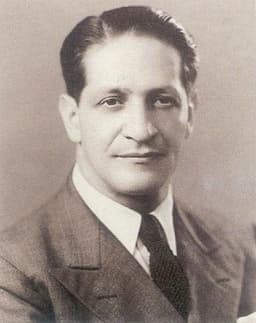
Jorge Eliecer Gaitan
Politician · Modern
49.9Total

Julius Caesar
General · Ancient
82.8Total
Basic Information
Born
1903
-100
Died
1948
-44
Era
Modern
Ancient
Nationality
Colombia
Roman Republic
Occupation
Politician
General
Civilization
Western
Western
Score Comparison
Military (10%)
49.6
88.0
Political (20%)
54.7
78.0
Influence (20%)
58.0
85.0
Legacy (20%)
52.0
82.0
Leadership (15%)
34.6
80.0
Strategy (15%)
40.9
85.0
TOTAL
49.9
82.8
Jorge Eliecer Gaitan — Complete Timeline
1946 AD
Presidential candidacy in 1946Political Action◆ Major
Gaitán ran for president in 1946 as the candidate of the Liberal Party, but lost due to a split in the Liberal vote. His populist platform appealed to the urban poor and rural workers, making him a powerful political force.
ElectionPopulismLiberal Party
Impact: national
1947 AD
Leadership of the Liberal PartyPolitical Action◆ Major
Gaitán became the sole leader of the Liberal Party in 1947, uniting its factions. He advocated for land reform, labor rights, and social justice, gaining massive popular support and threatening the conservative establishment.
Political LeadershipReformSocial Justice
Impact: nationalconstructive
1948 AD
Bogotazo and assassinationPolitical Action
Gaitán was assassinated on April 9, 1948, in Bogotá. His death sparked the Bogotazo, a massive riot and uprising that destroyed parts of the city and led to the period of La Violencia, a decade-long civil war in Colombia.
AssassinationBogotazoLa Violencia
Impact: nationaltragic
Julius Caesar — Complete Timeline
58 BC
Gallic WarsWar◆ Major
Caesar, as proconsul of Gaul, launched a series of campaigns that conquered all of Gaul (modern France, Belgium, and parts of Switzerland). He fought numerous battles, including against the Helvetii, the Belgae, and the Gallic chieftain Vercingetorix. The wars brought immense wealth and a loyal army to Caesar.
Gallic WarsConquestRoman Expansion
Impact: regional
49 BC
Crossing the RubiconPolitical Action◆ Major
Caesar led Legio XIII across the Rubicon River into Italy, defying the Roman Senate's order to disband his army. This act triggered a civil war against Pompey and the Optimates, ultimately leading to Caesar's dictatorship and the end of the Roman Republic.
Roman Civil WarEnd of RepublicPower Struggle
Impact: global
48 BC
Battle of PharsalusWar◆ Major
Caesar's outnumbered army defeated the larger forces of Pompey the Great at Pharsalus in Greece. Caesar's tactical use of a reserve line to counter Pompey's cavalry charge proved decisive. Pompey fled to Egypt, where he was assassinated, leaving Caesar as the undisputed master of the Roman world.
Roman Civil WarBattleDecisive Victory
Impact: regional
44 BC
Appointment as Dictator for LifePolitical Action◆ Major
The Roman Senate appointed Caesar dictator perpetuo (dictator for life), granting him unprecedented personal power. This move concentrated military, legislative, and judicial authority in one person, effectively ending the Roman Republic's traditional system of checks and balances and alarming many senators.
DictatorshipEnd of RepublicPower Consolidation
Impact: regionaldestructive
Assassination on the Ides of MarchPolitical Action◆ Major
A group of Roman senators, led by Marcus Junius Brutus and Gaius Cassius Longinus, stabbed Caesar to death at a meeting of the Senate in the Theatre of Pompey. The assassination was intended to restore the Republic, but instead triggered another civil war that led to the rise of the Roman Empire.
AssassinationRoman PoliticsEnd of Republic
Impact: globaldestructive
Expert Analysis
Origins
**Jorge Eliecer Gaitan** was born on January 23, 1903, in Bogotá, Colombia, into a middle-class family. His father, a teacher and journalist, and his mother, a seamstress, provided a modest upbringing. Gaitan excelled in school and studied law at the National University of Colombia, later earning a doctorate in jurisprudence from the University of Rome in 1928. His time in Italy exposed him to fascist and populist movements, shaping his oratorical style and political vision.
**Julius Caesar** was born on July 12, 100 BCE, into the patrician Julian clan in Rome. His family claimed descent from the goddess Venus, but they were not wealthy. Caesar received a privileged education in rhetoric, philosophy, and military tactics. His aunt married Gaius Marius, a prominent general and reformer, linking Caesar to the populares faction. Early on, he refused Sulla's order to divorce his wife, Cornelia, forcing him to flee Rome and begin a military career in Asia Minor.
Rise to Power
Gaitan entered politics in the 1930s, winning a seat in the Chamber of Representatives in 1931 as a Liberal. He quickly gained fame for his fiery speeches defending banana workers during the 1928 Santa Marta massacre trials. In 1936, he served as mayor of Bogotá, implementing social reforms. His populist appeal grew, and in 1946 he ran for president as the Liberal candidate, but a split in the party allowed Conservative Mariano Ospina Pérez to win with only 41% of the vote. Gaitan became the sole leader of the Liberal Party in 1947, uniting factions and building a mass movement. His assassination on April 9, 1948, cut short his rise, but his death ignited the Bogotazo, a massive uprising that destroyed downtown Bogotá.
Caesar rose through the Roman cursus honorum. He was elected quaestor in 69 BCE, aedile in 65 BCE, and praetor in 62 BCE. His military reputation began with his governorship in Hispania in 61-60 BCE. In 60 BCE, he formed the First Triumvirate with Pompey and Crassus, securing election as consul for 59 BCE. As proconsul of Gaul from 58 BCE, he launched the Gallic Wars, conquering all of Gaul by 51 BCE. His victories made him immensely wealthy and popular with his legions. When the Senate ordered him to disband his army, he crossed the Rubicon River in 49 BCE, starting a civil war. He defeated Pompey at the Battle of Pharsalus in 48 BCE and was appointed dictator for life in 44 BCE.
Leadership & Governance
Gaitan's leadership style was charismatic and populist. He connected with the masses through emotional speeches, often addressing them as "el pueblo" (the people). His platform focused on land reform, labor rights, and social justice. He proposed redistributing large estates to peasants and increasing wages for workers. Gaitan had a political score of 60.2, reflecting his ability to mobilize support but limited experience in executive office. He never held national power, so his governance is theoretical. However, his movement demonstrated a deep desire for change among Colombia's poor.
Caesar's leadership was autocratic and reformist. As dictator, he implemented sweeping changes: he reformed the calendar (Julian calendar), granted citizenship to many provincials, launched public works, and reorganized debt. His military score of 88.0 and leadership of 82.0 reflect his command skills. He centralized power, reduced the Senate's authority, and appointed loyalists. His reforms were efficient but undermined the Republic. Caesar's political score of 78.0 shows his adeptness at manipulating institutions, though his autocracy alienated the senatorial class.
Triumph & Tragedy
Gaitan's greatest success was uniting the Liberal Party and building a mass movement that challenged Colombia's oligarchy. His assassination turned him into a martyr, symbolizing the struggle for social justice. However, his death triggered La Violencia (1948-1958), a civil war that killed over 200,000 people. Gaitan's failure was his inability to achieve power peacefully; his movement was suppressed, and his legacy is intertwined with violence.
Caesar's triumphs include the conquest of Gaul, which expanded Roman territory and brought immense wealth. His victory in the civil war ended the Republic and established the precedent for imperial rule. His reforms had lasting impact. However, his assassination on the Ides of March in 44 BCE plunged Rome into another civil war. His concentration of power alienated the Senate, leading to his murder. Caesar's legacy of dictatorship paved the way for Augustus, but the Republic never recovered.
Character & Destiny
Gaitan was passionate, eloquent, and uncompromising. He believed in the power of the people and was willing to confront the elite. His charisma made him a threat to the established order. His destiny was cut short by an assassin's bullet, but his ideas lived on. He scored 38.4 in leadership and 35.3 in strategy, indicating he was more an agitator than a tactician.
Caesar was ambitious, calculating, and ruthless. He took risks (crossing the Rubicon) but planned meticulously. His clemency toward defeated enemies was a political tool. His personality drove him to seek absolute power, which ultimately caused his downfall. He scored 88.0 in strategy, reflecting his military genius. His character shaped his destiny: he achieved supreme power but died by betrayal.
Legacy
Gaitan's legacy is as a martyr for social justice in Colombia. His death sparked La Violencia and shaped Colombian politics for decades. The Gaitanist movement influenced later leftist groups. He is remembered as a voice for the poor, but his assassination prevented him from implementing lasting reforms. His influence score is 72.8, but his legacy score of 68.8 reflects his symbolic rather than structural impact.
Caesar's legacy is foundational to Western civilization. His military campaigns, reforms, and role in the end of the Republic set the stage for the Roman Empire. The Julian calendar was used for centuries. His name became synonymous with imperial rule (Kaiser, Tsar). Caesar's influence (85.0) and legacy (82.0) scores reflect his enduring mark on history. He transformed the Roman world and his methods influenced countless leaders.
Conclusion
Julius Caesar had a greater impact on world history than Jorge Eliecer Gaitan. Caesar's military conquests and political reforms reshaped the Mediterranean world and established patterns of governance that lasted millennia. His total score of 83.3 far exceeds Gaitan's 55.2. While Gaitan's assassination catalyzed Colombia's descent into violence, his influence was limited to the Andean region and short-lived. Caesar's actions ended the Roman Republic and birthed the Roman Empire, altering the course of Europe and the Middle East. Gaitan was a significant figure in Colombian history, but Caesar was a world-historical figure who changed the trajectory of civilization.
Rankings
🥇
Julius CaesarLeader
Mil: 88.0Pol: 78.0Inf: 85.0
82.8
🥈
Jorge Eliecer Gaitan
Mil: 49.6Pol: 54.7Inf: 58.0
49.9
+32.9 behind
How This Comparison Works
Algorithm
Each figure is scored on 6 dimensions (0—100 scale) based on structured historical data: Military (10%), Political (20%), Influence (20%), Legacy (20%), Leadership (15%), Strategy (15%). The weighted total produces the final ranking.
Data Sources
Scores are computed from structured sub-indicators in the database. Scale factors adjust for era (Ancient ×0.85, Modern ×1.0) and civilization size (Eastern ×1.05, Other ×0.80) to account for differences in population and military scale.
Maximum 3 Figures
Comparisons are limited to 2—3 figures to ensure readability and statistical meaningfulness.
Error Margins
±5 points per dimension — Sub-scores are derived from historical records with inherent uncertainty. Two figures within 5 points on a dimension should be considered roughly equivalent in that area.
Total Score Accuracy
±3 points overall — The weighted combination of 6 dimensions produces a total score with approximately ±3 points of uncertainty. Differences of less than 3 points are not statistically significant— the figures are effectively tied.
Known Limitations
- Historical records are incomplete and uneven across civilizations
- Figures from oral-tradition societies may be underrepresented
- Occupation labels can misclassify multi-role figures
- Scores measure capability and impact, not moral character
- Quantitative scoring is a comparison tool, not absolute truth
Capability Radar
Military (10%) — Battles & Warfare
Battles
29
95
Win Rate
32
92
Expansion
35
97
Political (20%) — Governance & Reform
Reform
55
90
Diplomacy
40
85
Economy
30
82
Influence (20%) — Cultural & Global Reach
Cultural
45
88
Global
35
94
Legacy (20%) — Historical Impact
Historical
60
95
Longevity
50
96
Leadership (15%) — Power & Stability
Tenure
15
75
Stability
5
60
Strategy (15%) — Tactics & Innovation
Strategy
36
94
Tactics
40
96
Reform
42
88
Similar Comparisons
Comments & Discussion
No comments yet. Be the first to share your thoughts!