Loading...
Jorge Batlle vs Julius Caesar
Julius Caesar leads by 31.1 pts · 2 figures compared
…
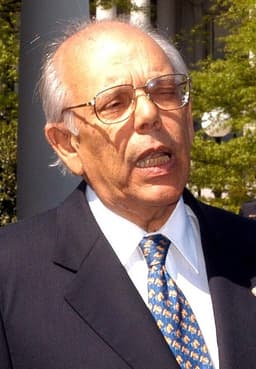
Jorge Batlle
Politician · Modern
51.7Total

Julius Caesar
General · Ancient
82.8Total
Basic Information
Born
1927
-100
Died
—
-44
Era
Modern
Ancient
Nationality
Uruguay
Roman Republic
Occupation
Politician
General
Civilization
Western
Western
Score Comparison
Military (10%)
50.0
88.0
Political (20%)
68.0
78.0
Influence (20%)
49.4
85.0
Legacy (20%)
40.8
82.0
Leadership (15%)
64.0
80.0
Strategy (15%)
43.2
85.0
TOTAL
51.7
82.8
Jorge Batlle — Complete Timeline
1999 AD
Elected President of UruguayPolitical Action◆ Major
Jorge Batlle was elected president of Uruguay in the 1999 general election as the Colorado Party candidate, defeating the Broad Front candidate Tabar
ElectionColorado PartyPresidential Victory
Impact: nationalconstructive
2002 AD
Faced Banking CrisisOther◆ Major
Uruguay experienced a severe banking crisis in 2002, triggered by the Argentine economic crisis. Depositors withdrew billions of dollars, leading to a bank run. Batlle's government imposed a freeze on bank deposits and negotiated a $3 billion loan from the IMF.
Banking CrisisEconomic CrisisIMF
Impact: nationaldestructive
2003 AD
Signed the Free Trade Agreement with MexicoPolitical Action
Batlle signed a free trade agreement with Mexico in November 2003, aiming to boost bilateral trade and investment. The agreement was part of Uruguay's strategy to diversify its trade relations beyond Mercosur.
Free TradeMexicoTrade Diversification
Impact: regionalconstructive
2005 AD
Ended Presidential Term with Low ApprovalPolitical Action
Batlle completed his presidential term in March 2005, handing power to Tabar
End of TermLow ApprovalEconomic Crisis
Impact: nationaldestructive
Julius Caesar — Complete Timeline
58 BC
Gallic WarsWar◆ Major
Caesar, as proconsul of Gaul, launched a series of campaigns that conquered all of Gaul (modern France, Belgium, and parts of Switzerland). He fought numerous battles, including against the Helvetii, the Belgae, and the Gallic chieftain Vercingetorix. The wars brought immense wealth and a loyal army to Caesar.
Gallic WarsConquestRoman Expansion
Impact: regional
49 BC
Crossing the RubiconPolitical Action◆ Major
Caesar led Legio XIII across the Rubicon River into Italy, defying the Roman Senate's order to disband his army. This act triggered a civil war against Pompey and the Optimates, ultimately leading to Caesar's dictatorship and the end of the Roman Republic.
Roman Civil WarEnd of RepublicPower Struggle
Impact: global
48 BC
Battle of PharsalusWar◆ Major
Caesar's outnumbered army defeated the larger forces of Pompey the Great at Pharsalus in Greece. Caesar's tactical use of a reserve line to counter Pompey's cavalry charge proved decisive. Pompey fled to Egypt, where he was assassinated, leaving Caesar as the undisputed master of the Roman world.
Roman Civil WarBattleDecisive Victory
Impact: regional
44 BC
Appointment as Dictator for LifePolitical Action◆ Major
The Roman Senate appointed Caesar dictator perpetuo (dictator for life), granting him unprecedented personal power. This move concentrated military, legislative, and judicial authority in one person, effectively ending the Roman Republic's traditional system of checks and balances and alarming many senators.
DictatorshipEnd of RepublicPower Consolidation
Impact: regionaldestructive
Assassination on the Ides of MarchPolitical Action◆ Major
A group of Roman senators, led by Marcus Junius Brutus and Gaius Cassius Longinus, stabbed Caesar to death at a meeting of the Senate in the Theatre of Pompey. The assassination was intended to restore the Republic, but instead triggered another civil war that led to the rise of the Roman Empire.
AssassinationRoman PoliticsEnd of Republic
Impact: globaldestructive
Expert Analysis
jorge-batlle-vs-julius-caesar
# The Ides of March and the Quiet Farewell
On a March morning in 44 BCE, Julius Caesar walked into the Senate chamber, ignoring the warnings of seers and the whispered anxieties of his wife. Within minutes, sixty senators surrounded him with daggers. He fell, according to legend, at the feet of a statue of his rival Pompey, his blood pooling on the marble floor. Two millennia later, on another March morning in 2005, Jorge Batlle walked out of Uruguay’s presidential palace for the last time. His term had ended quietly, his approval ratings in the single digits, his party shattered. He handed the sash to a socialist, Tabaré Vázquez, and disappeared into the private life of a lawyer and historian. Both men were Western politicians from small republics. One changed the world forever. The other changed almost nothing. Why?
Origins
Caesar was born into the chaos of the late Roman Republic, a world of civil wars, debt crises, and senatorial corruption. His family, the Julii, claimed descent from the goddess Venus, but they were politically marginal. His father died when Caesar was sixteen, leaving him in a city where power belonged to men like Sulla, who proscribed enemies by the thousand. Caesar refused Sulla’s order to divorce his wife, fled Rome, and spent his youth learning that survival meant audacity. He was shaped by a system that rewarded ruthlessness and punished hesitation.
Jorge Batlle was born in 1927 in Montevideo, Uruguay, into a political dynasty. His great-grandfather, José Batlle y Ordóñez, had transformed Uruguay into a welfare state in the early 1900s, establishing the eight-hour workday, women’s suffrage, and secular public education. Young Jorge grew up in a small, stable democracy that prided itself on being the “Switzerland of South America.” He studied law, entered politics, and believed in the same gradual, reformist path his family had walked for generations. His era was not one of daggers, but of ballots.
Rise to Power
Caesar’s path was a ladder of debts and triumphs. He borrowed fortunes to fund public games, bought his way into the priesthood, and served as governor of a Spanish province where he crushed local tribes and minted his own coins. In 60 BCE, he formed the First Triumvirate with Pompey and Crassus, an alliance that controlled Rome. Then came Gaul—eight years of war that made him the richest and most feared man in the Republic. He invaded Britain, crossed the Rhine, and wrote his own commentaries, crafting a legend in real time. When the Senate ordered him to disband his army, he crossed the Rubicon River in 49 BCE, declaring war on the Republic itself.
Batlle rose through the Colorado Party, a centrist institution that had governed Uruguay for most of the twentieth century. He served as a deputy, senator, and minister, but always in the shadow of his family name. In 1999, at age seventy-two, he finally won the presidency. His election was a triumph of patience, not rebellion. He defeated the Broad Front’s Tabaré Vázquez in a runoff, inheriting a country that was stable, peaceful, and utterly dependent on its neighbors.
Leadership & Governance
Caesar governed as a revolutionary. As dictator, he reformed the calendar, expanded citizenship to provincials, initiated public works projects, and centralized tax collection. He pardoned former enemies, including Brutus and Cassius, in a calculated display of mercy. His military genius was absolute—at Alesia, he besieged a Gallic army of 300,000 with only 60,000 legionaries, building fortifications that defied belief. But his political wisdom was brittle. He accepted the title “dictator for life,” placed his image on coins, and let the Senate become a stage for his dominance. He believed he could charm his enemies into submission.
Batlle governed as a technocrat in a crisis. In 2002, Argentina’s economic collapse triggered a banking panic in Uruguay. Depositors withdrew billions, the peso devalued by 50 percent, and unemployment soared. Batlle’s response was orthodox: he secured a $3 billion loan from the IMF, stabilized the banks, and signed a free trade agreement with Mexico in 2003. He pushed for regional integration through Mercosur, but his reforms were cautious and defensive. He had no army, no legions, no power to rewrite the rules. He could only manage decline.
Triumph & Tragedy
Caesar’s greatest moment was his final triumph in 46 BCE, a four-day celebration of his victories in Gaul, Egypt, Pontus, and Africa. He paraded captives, displayed treasures, and gave banquets for 200,000 citizens. It was the peak of Roman spectacle. His tragedy came on the Ides of March, 44 BCE, when the senators he had pardoned stabbed him to death. He left no heir, no stable succession, only a civil war that ended the Republic forever.
Batlle’s greatest moment was perhaps the banking crisis itself—he held the country together when many predicted collapse. He did not flee, did not declare a state of emergency, did not blame foreigners. He simply endured. His tragedy was the silence of his legacy. He left office in 2005 with an approval rating of 9 percent, the lowest of any Uruguayan president. His party never recovered. Within a decade, the Broad Front would govern for fifteen years.
Character & Destiny
Caesar was reckless, calculating, and narcissistic. He believed in his own star. When told that the Senate planned to kill him, he replied, “It is better to die once than to live in constant fear of death.” That hubris made him great and killed him. He could not imagine that the Republic would not love him.
Batlle was reserved, intellectual, and fatalistic. He once said, “I am not a leader of multitudes.” He governed as a manager, not a revolutionary. His destiny was to be a footnote—a decent man in a small country during a bad decade.
Legacy
Caesar’s legacy is the Roman Empire, the Western calendar, the title “kaiser” and “tsar,” and the template for every dictator who followed. He is remembered as both a tyrant and a genius, a man whose name means power itself.
Batlle’s legacy is a free trade agreement with Mexico, a stabilized banking system, and a family name that now belongs to the past. He is remembered, if at all, as the last Colorado president before a new era.
Conclusion
One man crossed a river and changed history. Another crossed a threshold and disappeared. Both were products of their times—Caesar of a dying republic that needed a master, Batlle of a small democracy that needed a manager. The difference is not just in their talents, but in the scale of the stage. Caesar’s Rome was an empire waiting to be born. Batlle’s Uruguay was a welfare state waiting to fade. One fell to daggers; the other, to indifference. Both remind us that history remembers the bold, but it is the stage that determines whether boldness becomes legend or footnote.
Rankings
🥇
Julius CaesarLeader
Mil: 88.0Pol: 78.0Inf: 85.0
82.8
🥈
Jorge Batlle
Mil: 50.0Pol: 68.0Inf: 49.4
51.7
+31.1 behind
How This Comparison Works
Algorithm
Each figure is scored on 6 dimensions (0—100 scale) based on structured historical data: Military (10%), Political (20%), Influence (20%), Legacy (20%), Leadership (15%), Strategy (15%). The weighted total produces the final ranking.
Data Sources
Scores are computed from structured sub-indicators in the database. Scale factors adjust for era (Ancient ×0.85, Modern ×1.0) and civilization size (Eastern ×1.05, Other ×0.80) to account for differences in population and military scale.
Maximum 3 Figures
Comparisons are limited to 2—3 figures to ensure readability and statistical meaningfulness.
Error Margins
±5 points per dimension — Sub-scores are derived from historical records with inherent uncertainty. Two figures within 5 points on a dimension should be considered roughly equivalent in that area.
Total Score Accuracy
±3 points overall — The weighted combination of 6 dimensions produces a total score with approximately ±3 points of uncertainty. Differences of less than 3 points are not statistically significant— the figures are effectively tied.
Known Limitations
- Historical records are incomplete and uneven across civilizations
- Figures from oral-tradition societies may be underrepresented
- Occupation labels can misclassify multi-role figures
- Scores measure capability and impact, not moral character
- Quantitative scoring is a comparison tool, not absolute truth
Capability Radar
Military (10%) — Battles & Warfare
Battles
29
95
Win Rate
29
92
Expansion
37
97
Political (20%) — Governance & Reform
Reform
45
90
Diplomacy
50
85
Economy
45
82
Influence (20%) — Cultural & Global Reach
Cultural
20
88
Global
15
94
Legacy (20%) — Historical Impact
Historical
25
95
Longevity
20
96
Leadership (15%) — Power & Stability
Tenure
40
75
Stability
35
60
Strategy (15%) — Tactics & Innovation
Strategy
40
94
Tactics
42
96
Reform
42
88
Similar Comparisons
Comments & Discussion
No comments yet. Be the first to share your thoughts!