Loading...
Jonas Savimbi vs Jung Bahadur Rana
Jung Bahadur Rana leads by 4.9 pts · 2 figures compared
…

Jonas Savimbi
General · Modern
56.5Total
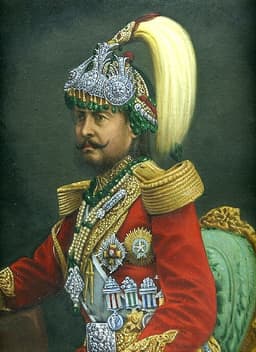
Jung Bahadur Rana
General · Modern
61.4Total
Basic Information
Born
1934
1817
Died
—
1877
Era
Modern
Modern
Nationality
Angola
Nepal
Occupation
General
General
Civilization
Other
Indian
Score Comparison
Military (10%)
67.5
55.0
Political (20%)
48.0
72.0
Influence (20%)
59.0
56.7
Legacy (20%)
48.3
55.0
Leadership (15%)
68.0
78.0
Strategy (15%)
55.0
55.0
TOTAL
56.5
61.4
Jonas Savimbi — Complete Timeline
1966 AD
Founding of UNITAPolitical Action◆ Major
Jonas Savimbi founded the National Union for the Total Independence of Angola (UNITA) as a breakaway from the FNLA. UNITA began a guerrilla war against Portuguese colonial rule, establishing a base in eastern Angola and gaining support from China and the Ovimbundu people.
UNITAGuerrilla MovementAnti-Colonial
Impact: national
1975 AD
Civil War Against MPLAWar
After Angolan independence, Savimbi's UNITA launched a civil war against the MPLA government. Backed by the US and South Africa, UNITA fought for control of the country, leading to a decades-long conflict that caused immense suffering and destabilized the region.
Civil WarCold War ProxyDestabilization
Impact: nationaldestructive
1991 AD
Bicesse Accords and Election DefeatPolitical Action◆ Major
Savimbi signed the Bicesse Accords with the MPLA, ending the civil war and leading to UN-monitored elections in 1992. When Savimbi lost the presidential election to Jos
Peace AccordsElection RejectionRenewed War
Impact: nationaldestructive
2002 AD
Death in CombatWar
Savimbi was killed in a firefight with Angolan government forces in Moxico province. His death effectively ended the 27-year civil war, as UNITA quickly sued for peace. His removal allowed for the consolidation of MPLA rule and the beginning of post-war reconstruction.
DeathEnd of Civil WarUNITA Collapse
Impact: national
Jung Bahadur Rana — Complete Timeline
1846 AD
Kot MassacrePolitical Action
Jung Bahadur Runa orchestrated the Kot Massacre in Kathmandu, where dozens of nobles and courtiers were killed. This event eliminated his political rivals and allowed him to seize effective control of the Nepalese government, establishing the hereditary Rana prime ministership.
CoupMassacreRana Dynasty
Impact: nationaldestructive
Establishment of Rana DynastyPolitical Action◆ Major
Following the Kot Massacre, Jung Bahadur Rana appointed himself prime minister and commander-in-chief. He made the position hereditary, founding the Rana dynasty that ruled Nepal for over a century, reducing the Shah monarchs to figureheads.
DynastyGovernmentNepal
Impact: national
1850 AD
Visit to EuropeCultural
Jung Bahadur Rana traveled to Britain and France, becoming the first South Asian ruler to visit Europe. He observed Western military and industrial technology, which influenced his modernization efforts in Nepal, including army reforms.
DiplomacyModernizationTravel
Impact: nationalconstructive
1856 AD
Nepal-Tibet War and Treaty of ThapathaliWar◆ Major
Jung Bahadur Rana led a Nepalese military campaign into Tibet. The conflict ended with the Treaty of Thapathali, which secured Nepalese territorial claims and established a tributary relationship with Tibet, enhancing Nepal's regional influence.
WarTreatyTibet
Impact: regional
Expert Analysis
Origins
Jonas Savimbi (born 1934) was the son of a railway stationmaster and a Protestant pastor. He studied medicine in Portugal and later in Switzerland, where he was exposed to anti-colonial ideologies. Savimbi initially joined the Popular Movement for the Liberation of Angola (MPLA) but left due to ethnic tensions, later joining the National Front for the Liberation of Angola (FNLA). In 1966, he founded the National Union for the Total Independence of Angola (UNITA), drawing support from the Ovimbundu people.
Jung Bahadur Rana (born 1817) came from a noble family in the Kathmandu valley. His father, Bal Narsingh Kunwar, was a courtier, and his mother was a concubine. Jung Bahadur received training in swordsmanship and military tactics. He rose through the ranks of the Nepalese army, serving under King Rajendra Bikram Shah and Queen Samrajya Laxmi Devi.
Rise to Power
Savimbi's rise came during Angola's war for independence from Portugal. He leveraged Cold War dynamics, receiving support from the United States and South Africa. After independence in 1975, Savimbi launched a civil war against the MPLA government, which was backed by the Soviet Union and Cuba. The turning point was the 1992 Bicesse Accords, which led to UN-monitored elections. When Savimbi lost the presidential election, he rejected the results and resumed fighting.
Jung Bahadur Rana's rise was marked by the Kot Massacre in 1846. He orchestrated the killing of dozens of nobles and courtiers in the Kot palace, eliminating his political rivals. He then appointed himself prime minister and commander-in-chief, effectively sidelining the monarchy. He made the position hereditary, founding the Rana dynasty that ruled Nepal for 104 years.
Leadership & Governance
Savimbi's leadership style was autocratic and militaristic. He controlled UNITA through a combination of patronage and fear. He governed the territory under his control with a mix of traditional Ovimbundu structures and guerrilla tactics. His governance score of 48.0 reflects his inability to transition from rebel leader to legitimate ruler.
Jung Bahadur Rana, with a leadership score of 78.0, centralized power and modernized Nepal's administration. He introduced the Muluki Ain, a legal code that codified laws and reduced the power of the monarchy. He also initiated infrastructure projects, including roads and irrigation, and reformed the military. His governance was authoritarian but effective in stabilizing Nepal after decades of instability.
Triumph & Tragedy
Savimbi's greatest success was his ability to sustain a 27-year insurgency against a Soviet-backed government. He scored 67.5 in military, demonstrating tactical resilience. However, his refusal to accept electoral defeat in 1992 led to renewed war and ultimately his death in combat in 2002, which ended the civil war. His legacy score of 48.3 reflects the devastation he caused.
Jung Bahadur Rana's triumph was establishing the Rana dynasty, which brought political stability and modernization to Nepal. He scored 72.0 in political influence. However, his rule was marked by nepotism and suppression of dissent. The Kot Massacre, with a score of 55.0 in military, was a brutal elimination of rivals. His legacy is mixed: he modernized Nepal but entrenched an autocratic family rule that lasted over a century.
Character & Destiny
Savimbi was charismatic and ruthless, adept at manipulating Cold War powers. His personality score of 68.0 in leadership reflects his ability to inspire loyalty, but his stubbornness and refusal to compromise led to his downfall. He died in a firefight, a fitting end for a man who chose war over peace.
Jung Bahadur Rana was calculating and ambitious. He understood the importance of political alliances and was willing to use extreme violence to achieve his goals. His strategy score of 55.0 is similar to Savimbi's, but his political acumen was higher. He secured his family's power by making the prime minister position hereditary, ensuring his legacy.
Legacy
Savimbi's legacy is that of a divisive rebel leader. UNITA continues as a political party, but his name is associated with Angola's brutal civil war. His influence score of 59.0 is limited to African insurgencies. He is remembered more for the conflict he prolonged than for any constructive governance.
Jung Bahadur Rana's legacy is profound in Nepal. The Rana dynasty shaped Nepalese politics for over a century. His legal reforms, infrastructure projects, and diplomatic missions to Europe left a lasting impact. He scored 55.0 in legacy, reflecting his role as a modernizer but also as an autocrat. Nepal's monarchy was restored after the Rana regime, but the dynasty's influence persists.
Conclusion
Jung Bahadur Rana had a greater impact on his nation than Jonas Savimbi. Rana's political score of 72.0 and leadership score of 78.0 enabled him to establish a dynasty that governed Nepal for 104 years, implementing lasting reforms. Savimbi, despite his military score of 67.5, failed to achieve political power and left a legacy of destruction. While Savimbi's influence on Cold War dynamics is notable, Rana's structural changes to Nepal's governance have had a more enduring effect. The score gap of 4.9 points reflects Rana's superior ability to consolidate power and create a lasting system.
Rankings
🥇
Jung Bahadur RanaLeader
Mil: 55.0Pol: 72.0Inf: 56.7
61.4
🥈
Jonas Savimbi
Mil: 67.5Pol: 48.0Inf: 59.0
56.5
+4.9 behind
How This Comparison Works
Algorithm
Each figure is scored on 6 dimensions (0—100 scale) based on structured historical data: Military (10%), Political (20%), Influence (20%), Legacy (20%), Leadership (15%), Strategy (15%). The weighted total produces the final ranking.
Data Sources
Scores are computed from structured sub-indicators in the database. Scale factors adjust for era (Ancient ×0.85, Modern ×1.0) and civilization size (Eastern ×1.05, Other ×0.80) to account for differences in population and military scale.
Maximum 3 Figures
Comparisons are limited to 2—3 figures to ensure readability and statistical meaningfulness.
Error Margins
±5 points per dimension — Sub-scores are derived from historical records with inherent uncertainty. Two figures within 5 points on a dimension should be considered roughly equivalent in that area.
Total Score Accuracy
±3 points overall — The weighted combination of 6 dimensions produces a total score with approximately ±3 points of uncertainty. Differences of less than 3 points are not statistically significant— the figures are effectively tied.
Known Limitations
- Historical records are incomplete and uneven across civilizations
- Figures from oral-tradition societies may be underrepresented
- Occupation labels can misclassify multi-role figures
- Scores measure capability and impact, not moral character
- Quantitative scoring is a comparison tool, not absolute truth
Capability Radar
Military (10%) — Battles & Warfare
Battles
65
45
Win Rate
55
50
Expansion
60
40
Political (20%) — Governance & Reform
Reform
30
75
Diplomacy
55
70
Economy
20
65
Influence (20%) — Cultural & Global Reach
Cultural
40
55
Global
45
40
Legacy (20%) — Historical Impact
Historical
50
65
Longevity
30
60
Leadership (15%) — Power & Stability
Tenure
60
80
Stability
15
60
Strategy (15%) — Tactics & Innovation
Strategy
65
60
Tactics
70
55
Reform
50
70
Similar Comparisons
Comments & Discussion
No comments yet. Be the first to share your thoughts!