Loading...
John of England vs Nyatsimba Mutota
Nyatsimba Mutota leads by 4.6 pts · 2 figures compared
…
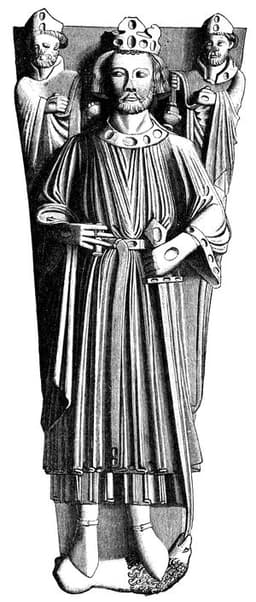
John of England
Emperor · Medieval
51.9Total

Nyatsimba Mutota
Emperor · Medieval
56.5Total
Basic Information
Born
1166
1400
Died
1216
1450
Era
Medieval
Medieval
Nationality
England
Mozambique
Occupation
Emperor
Emperor
Civilization
Western
Other
Score Comparison
Military (10%)
50.0
72.5
Political (20%)
39.4
68.0
Influence (20%)
62.0
59.0
Legacy (20%)
55.0
50.0
Leadership (15%)
45.0
40.0
Strategy (15%)
50.0
57.5
TOTAL
51.9
56.5
John of England — Complete Timeline
1204 AD
Loss of NormandyWar◆ Major
King John lost the Duchy of Normandy to King Philip II of France after the fall of Ch
Territorial LossFranceAngevin Empire
Impact: regionaldestructive
1208 AD
Interdict on EnglandPolitical Action◆ Major
Pope Innocent III placed England under interdict after John refused to accept Stephen Langton as Archbishop of Canterbury. This suspended church services, causing widespread discontent and leading to John's excommunication.
Church ConflictPapal InterdictExcommunication
Impact: nationaldestructive
1215 AD
First Barons' WarWar◆ Major
After repudiating Magna Carta, John faced the First Barons' War, where rebel barons invited Prince Louis of France to take the English throne. John fought to retain control, leading to widespread devastation.
Civil WarBaronial RevoltFrench Invasion
Impact: nationaldestructive
Signing of Magna CartaPolitical Action
Under pressure from rebellious barons, John signed Magna Carta at Runnymede. The charter limited royal power, established legal rights, and influenced constitutional law, though John later repudiated it.
CharterConstitutionalBaronial Revolt
Impact: globalconstructive
1216 AD
Death from DysenteryOther◆ Major
John died of dysentery at Newark Castle during the First Barons' War. His death allowed his young son Henry III to succeed, and the war ended with the Treaty of Lambeth.
DeathDisease
Impact: nationaltragic
Nyatsimba Mutota — Complete Timeline
1430 AD
Founding of the Mutapa EmpirePolitical Action
Nyatsimba Mutota led a migration north from Great Zimbabwe and founded the Mutapa Empire in the Zambezi valley. He established a new capital at Zvongombe and began territorial expansion.
Impact: regionalconstructive
1440 AD
Conquest of the TavaraWar◆ Major
Nyatsimba Mutota conquered the Tavara people in the Zambezi valley, incorporating their territory into the Mutapa Empire. This victory secured control over fertile agricultural lands and trade routes.
Impact: regional
1445 AD
Establishment of the Mwenemutapa TitlePolitical Action◆ Major
Nyatsimba Mutota adopted the title Mwenemutapa, meaning 'lord of the conquered lands,' formalizing the imperial structure. This title became hereditary and defined the ruler's authority over conquered peoples.
Impact: regionalconstructive
Expert Analysis
Origins
John of England was born in 1166, the youngest son of King Henry II and Eleanor of Aquitaine. His father's vast Angevin Empire included England, Normandy, and much of western France. John received limited lands and was nicknamed "Lackland" due to his lack of inheritance. He was educated in court politics but never expected to rule. In contrast, Nyatsimba Mutota was born around 1400 in the Great Zimbabwe Kingdom, a powerful Shona state. He was likely a member of the ruling elite, possibly a prince or general. Great Zimbabwe was a wealthy trading center, but internal pressures led to expansion northward. Mutota's background was shaped by the region's gold trade and pastoral economy.
Rise to Power
John became king in 1199 after the death of his brother Richard the Lionheart. He faced immediate challenges: his nephew Arthur of Brittany had a rival claim, and King Philip II of France supported Arthur. John's early rule was marked by the loss of Normandy in 1204 after the fall of Château Gaillard. This was a turning point, as he lost control of his ancestral lands. To fund his wars, John imposed heavy taxes, leading to conflict with the barons. Nyatsimba Mutota rose to power around 1420 when he led a migration from Great Zimbabwe north into the Zambezi valley. He conquered the Tavara people and established a new capital at Zvongombe. By defeating local chiefs, he founded the Mutapa Empire, adopting the title Mwenemutapa ("lord of the conquered lands"). His rise was based on military expansion and control of gold trade routes.
Leadership & Governance
John's leadership style was autocratic and distrustful. He alienated his barons by raising taxes without consent, imposing scutage and tallages. He also quarreled with the Church, leading to an interdict on England from 1208 to 1213. His governance was reactive, often making concessions only under pressure. For instance, he agreed to Magna Carta in 1215 but repudiated it months later, triggering the First Barons' War. In contrast, Mutota's governance was centralized and expansionist. He established a tribute system, demanding gold, cattle, and labor from conquered peoples. He appointed provincial governors and married into local elites to secure loyalty. Mutota's political score is 68.0 versus John's 39.4, reflecting his more effective state-building.
Triumph & Tragedy
John's greatest triumph was the signing of Magna Carta, which limited royal power and established legal principles like due process. However, he saw this as a humiliation. His greatest tragedy was the loss of Normandy, which reduced the Angevin Empire and tarnished his reputation. He also failed to retain baronial support, dying amid civil war. Mutota's triumph was founding the Mutapa Empire, which controlled gold-producing regions and became a major power in southern Africa. His tragedy was that his empire faced internal succession disputes after his death, and later Portuguese interference weakened it. Mutota's military score is 72.5, higher than John's 50.0, indicating his success in conquest.
Character & Destiny
John was known for his cunning and cruelty. He was suspicious and vengeful, which earned him the enmity of his barons. His character led to repeated rebellions. He died of dysentery in 1216 during the First Barons' War, leaving a nine-year-old son to inherit a fractured kingdom. Mutota was a visionary leader, strategic and ruthless when needed. His decision to migrate north was based on intelligence about gold resources. He died around 1450, leaving a stable empire that lasted centuries. Historical assessments view John as a failed king, while Mutota is seen as a founding father.
Legacy
John's legacy is overshadowed by Magna Carta, which influenced constitutional law in England and later the United States. However, his immediate impact was negative: he lost territory, alienated the Church, and sparked civil war. His total legacy score is 55.0. Mutota's legacy is the Mutapa Empire, which persisted until the 19th century. He established a dynasty and a political structure that integrated diverse peoples. His legacy score is 50.0, partly because the empire declined under Portuguese pressure. Yet his influence on Shona history is profound.
Conclusion
Nyatsimba Mutota had a greater overall impact as measured by historical scores (56.5 total vs. 51.9). While John's Magna Carta was a landmark document, his reign was a failure: he lost Normandy, provoked a civil war, and was a poor leader. Mutota successfully built an empire that shaped southern Africa for centuries. The data supports Mutota's higher military (72.5 vs. 50.0) and political (68.0 vs. 39.4) scores. Therefore, Nyatsimba Mutota was the more effective and impactful ruler.
Rankings
🥇
Nyatsimba MutotaLeader
Mil: 72.5Pol: 68.0Inf: 59.0
56.5
🥈
John of England
Mil: 50.0Pol: 39.4Inf: 62.0
51.9
+4.6 behind
How This Comparison Works
Algorithm
Each figure is scored on 6 dimensions (0—100 scale) based on structured historical data: Military (10%), Political (20%), Influence (20%), Legacy (20%), Leadership (15%), Strategy (15%). The weighted total produces the final ranking.
Data Sources
Scores are computed from structured sub-indicators in the database. Scale factors adjust for era (Ancient ×0.85, Modern ×1.0) and civilization size (Eastern ×1.05, Other ×0.80) to account for differences in population and military scale.
Maximum 3 Figures
Comparisons are limited to 2—3 figures to ensure readability and statistical meaningfulness.
Error Margins
±5 points per dimension — Sub-scores are derived from historical records with inherent uncertainty. Two figures within 5 points on a dimension should be considered roughly equivalent in that area.
Total Score Accuracy
±3 points overall — The weighted combination of 6 dimensions produces a total score with approximately ±3 points of uncertainty. Differences of less than 3 points are not statistically significant— the figures are effectively tied.
Known Limitations
- Historical records are incomplete and uneven across civilizations
- Figures from oral-tradition societies may be underrepresented
- Occupation labels can misclassify multi-role figures
- Scores measure capability and impact, not moral character
- Quantitative scoring is a comparison tool, not absolute truth
Capability Radar
Military (10%) — Battles & Warfare
Battles
25
55
Win Rate
20
60
Expansion
10
65
Political (20%) — Governance & Reform
Reform
60
50
Diplomacy
20
55
Economy
25
50
Influence (20%) — Cultural & Global Reach
Cultural
45
45
Global
65
40
Legacy (20%) — Historical Impact
Historical
75
55
Longevity
70
50
Leadership (15%) — Power & Stability
Tenure
40
60
Stability
15
55
Strategy (15%) — Tactics & Innovation
Strategy
25
55
Tactics
30
50
Reform
15
40
Similar Comparisons
Comments & Discussion
No comments yet. Be the first to share your thoughts!