Loading...
John III of Brabant vs Louis VI the Fat
John III of Brabant leads by 2.8 pts · 2 figures compared
…
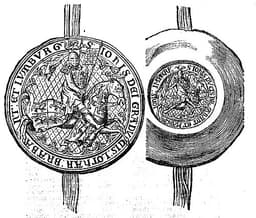
John III of Brabant
Emperor · Medieval
51.6Total
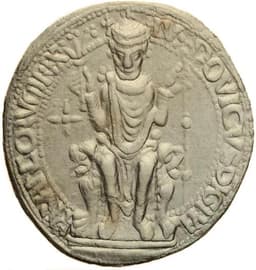
Louis VI the Fat
Emperor · Medieval
48.8Total
Basic Information
Born
1300
1081
Died
1355
1137
Era
Medieval
Medieval
Nationality
Brabant
France
Occupation
Emperor
Emperor
Civilization
Western
Western
Score Comparison
Military (10%)
40.0
45.0
Political (20%)
68.0
61.3
Influence (20%)
54.9
53.3
Legacy (20%)
46.7
47.5
Leadership (15%)
40.0
40.0
Strategy (15%)
60.0
38.6
TOTAL
51.6
48.8
John III of Brabant — Complete Timeline
1312 AD
Charter of KortenbergPolitical Action
John III, as Duke of Brabant, granted the Charter of Kortenberg, a landmark document that limited ducal power and established a council of nobles and towns to oversee governance. This charter is considered an early step toward constitutional rule in Brabant.
CharterConstitutional HistoryBrabant
Impact: regionalprogressive
1355 AD
War of the Brabant SuccessionWar◆ Major
Upon John III's death, his daughter Joanna inherited Brabant, but her husband Wenceslaus I of Luxembourg faced challenges from the Count of Flanders. This conflict, known as the War of the Brabant Succession, began immediately after John's death.
Succession WarBrabantLuxembourg
Impact: regional
1356 AD
Battle of ScheutWar◆ Major
John III of Brabant led the Brabantine army to victory against the forces of the Count of Flanders near Brussels. The battle secured Brabant's independence from Flemish expansion and solidified John's reputation as 'the Triumphant'.
BattleBrabant-Flanders ConflictMedieval Warfare
Impact: regional
Louis VI the Fat — Complete Timeline
1108 AD
Consolidation of Royal Power in the Ile-de-FrancePolitical Action◆ Major
Louis VI succeeded his father Philip I as King of the Franks. He focused on consolidating royal authority in the Ile-de-France, subduing rebellious nobles and securing the region as the core of the Capetian domain.
KingshipConsolidationIle-de-France
Impact: regionalconstructive
1119 AD
Battle of BrémuleWar◆ Major
Louis VI was defeated by Henry I of England at the Battle of Br
BattleNormandyDefeat
Impact: regionaltragic
1122 AD
Alliance with the Church and SugerPolitical Action
Louis VI formed a close alliance with the Church, particularly with Abbot Suger of Saint-Denis. Suger became a key advisor and chronicler, helping to legitimize Capetian rule and promote royal authority.
AllianceChurchSuger
Impact: nationalconstructive
1128 AD
War with the County of BloisWar
Louis VI fought a war against the County of Blois, which had allied with England. The conflict ended with a truce, but it demonstrated Louis's determination to expand royal influence beyond the Ile-de-France.
WarBloisExpansion
Impact: regional
Expert Analysis
Origins
John III of Brabant (born 1300) was the eldest son of John II, Duke of Brabant, and Margaret of England. He inherited a duchy that had been weakened by internal conflict and external threats from Flanders and France. John III was educated in the courts of Brabant and trained in the arts of governance and warfare. His early life was shaped by the need to restore ducal authority while navigating the complex feudal politics of the Low Countries.
Louis VI the Fat (born 1081) was the son of Philip I of France and Bertha of Holland. His nickname, "the Fat," referred to his physical size, but it belied his political acumen. Louis spent his early years as a co-king alongside his father, learning the intricacies of royal power in the Île-de-France. He was heavily influenced by the Church, particularly Abbot Suger of Saint-Denis, who became his chief advisor. His formative experiences included witnessing the weakness of the French crown against rebellious nobles.
Rise to Power
John III became Duke of Brabant in 1312 upon his father's death. His early reign was marked by the Charter of Kortenberg (1312), a turning point where he granted rights to the nobility and towns, establishing a council that limited his own power. This move was a strategic concession to prevent revolt and secure support. John III then focused on expanding Brabant's influence, culminating in the Battle of Scheut in 1356, where he led his army to victory against the Count of Flanders, securing Brabant's independence from Flemish aggression. His political score of 68.0 reflects his ability to navigate these challenges.
Louis VI was crowned King of the Franks in 1108, but his authority was initially confined to the Île-de-France. He spent two decades subduing robber barons like Hugh of Le Puiset and Thomas of Marle, using military force and alliances with the Church. His victory at the Battle of Brémule in 1119 ended in defeat by Henry I of England, forcing Louis to abandon claims to Normandy. Despite this, his alliance with Suger and the Church bolstered his legitimacy. Louis's political score of 61.3 indicates his effective consolidation of royal power, though his military record was mixed.
Leadership & Governance
John III governed Brabant as a constitutional ruler, balancing ducal authority with the privileges of nobles and towns. The Charter of Kortenberg established a council of nobles and burghers that could approve taxes, a precursor to representative governance. He also promoted trade and urban growth, granting charters to cities like Brussels and Antwerp. His leadership score of 40.0 reflects a more collaborative style, but his strategic score of 60.0 shows he was adept at maintaining stability through diplomacy and limited warfare.
Louis VI ruled France as a feudal king, centralizing power through military campaigns and Church support. He personally led troops against rebellious lords, often besieging castles. His alliance with Suger led to administrative reforms, including the use of provosts and bailiffs to enforce royal justice. Louis's leadership score of 40.0 matches John's, but his strategy score of 38.6 is lower, indicating less long-term planning. While John used charters to co-opt elites, Louis used force and ecclesiastical backing.
Triumph & Tragedy
John III's greatest triumph was the Battle of Scheut (1356), which secured Brabant's independence. His Charter of Kortenberg was a landmark in limiting ducal power and fostering civic participation. However, his tragedy was the succession crisis after his death in 1355. His daughter Joanna inherited, but her husband Wenceslaus faced challenges from the Count of Flanders, leading to the War of the Brabant Succession. This conflict undid some of John's stability, and Brabant eventually passed to the Dukes of Burgundy.
Louis VI's triumph was consolidating royal power in the Île-de-France, breaking the power of local lords. His alliance with the Church elevated the French monarchy's prestige. His tragedy was the defeat at Brémule, which ended his ambitions in Normandy. Additionally, his later years saw a resurgence of baronial resistance after his death, as his son Louis VII struggled to maintain control. Louis VI's legacy score of 47.5 reflects his role as a builder of royal authority, though his achievements were partly undone.
Character & Destiny
John III was pragmatic and diplomatic, willing to limit his own power for stability. His grant of the Charter of Kortenberg shows a ruler who understood the value of compromise. He was also a capable military commander, as shown at Scheut. His character shaped his destiny: by sharing power, he ensured peace during his reign but left a weakened duchy for his successors. Historical assessments note him as a consolidator rather than an innovator.
Louis VI was determined and aggressive, driven to assert royal authority. His persistence against nobles earned him respect, but his defeat at Brémule showed his limitations. His close relationship with Suger provided ideological support, framing his actions as defending the Church. Louis's character was that of a feudal king focused on immediate control, which left the monarchy stronger but still fragile. His total score of 48.8 reflects a competent but not transformative ruler.
Legacy
John III's legacy is most visible in the Charter of Kortenberg, which influenced later constitutional developments in the Low Countries. Brabant's independence was preserved during his reign, and his promotion of trade laid foundations for the region's economic prosperity. However, his dynasty ended with his daughter, and Brabant lost autonomy. His influence score of 54.9 is moderate, as his impact was regional.
Louis VI's legacy is the strengthening of the French monarchy. His campaigns subjugated the Île-de-France, creating a base for Capetian power. The alliance with the Church and Suger's chronicles shaped the ideology of the French crown. His son Louis VII inherited a more secure realm, but it was his grandson Philip Augustus who would expand it dramatically. Louis VI's legacy score of 47.5 reflects his role as a precursor to later Capetian success.
Conclusion
John III of Brabant, with a total score of 51.6, narrowly exceeds Louis VI the Fat's 48.8. John's Charter of Kortenberg was a more innovative political act than any of Louis's reforms, introducing representative governance. Louis's military defeat at Brémule and lower strategy score (38.6 vs. 60.0) indicate he was less effective in long-term planning. While Louis consolidated royal power, his methods were conventional for the time. John III had greater impact on governance structures, as his charter foreshadowed later constitutionalism. Therefore, John III of Brabant had a greater impact than Louis VI the Fat.
Rankings
🥇
John III of BrabantLeader
Mil: 40.0Pol: 68.0Inf: 54.9
51.6
🥈
Louis VI the Fat
Mil: 45.0Pol: 61.3Inf: 53.3
48.8
+2.8 behind
How This Comparison Works
Algorithm
Each figure is scored on 6 dimensions (0—100 scale) based on structured historical data: Military (10%), Political (20%), Influence (20%), Legacy (20%), Leadership (15%), Strategy (15%). The weighted total produces the final ranking.
Data Sources
Scores are computed from structured sub-indicators in the database. Scale factors adjust for era (Ancient ×0.85, Modern ×1.0) and civilization size (Eastern ×1.05, Other ×0.80) to account for differences in population and military scale.
Maximum 3 Figures
Comparisons are limited to 2—3 figures to ensure readability and statistical meaningfulness.
Error Margins
±5 points per dimension — Sub-scores are derived from historical records with inherent uncertainty. Two figures within 5 points on a dimension should be considered roughly equivalent in that area.
Total Score Accuracy
±3 points overall — The weighted combination of 6 dimensions produces a total score with approximately ±3 points of uncertainty. Differences of less than 3 points are not statistically significant— the figures are effectively tied.
Known Limitations
- Historical records are incomplete and uneven across civilizations
- Figures from oral-tradition societies may be underrepresented
- Occupation labels can misclassify multi-role figures
- Scores measure capability and impact, not moral character
- Quantitative scoring is a comparison tool, not absolute truth
Capability Radar
Military (10%) — Battles & Warfare
Battles
45
25
Win Rate
50
30
Expansion
40
30
Political (20%) — Governance & Reform
Reform
55
55
Diplomacy
65
50
Economy
60
40
Influence (20%) — Cultural & Global Reach
Cultural
40
30
Global
30
20
Legacy (20%) — Historical Impact
Historical
45
45
Longevity
35
40
Leadership (15%) — Power & Stability
Tenure
60
60
Stability
55
55
Strategy (15%) — Tactics & Innovation
Strategy
45
25
Tactics
40
20
Reform
30
15
Similar Comparisons
Comments & Discussion
No comments yet. Be the first to share your thoughts!