Loading...
John II of Avesnes vs Taejo of Joseon
Taejo of Joseon leads by 25.5 pts · 2 figures compared
…
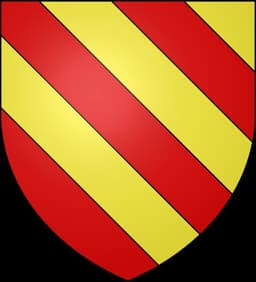
John II of Avesnes
Emperor · Medieval
44.9Total
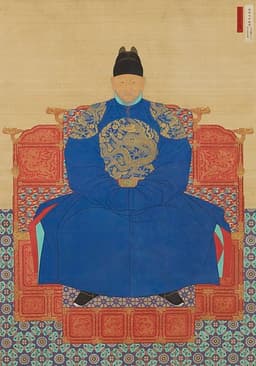
Taejo of Joseon
Emperor · Medieval
70.4Total
Basic Information
Born
1248
1335
Died
1304
1408
Era
Medieval
Medieval
Nationality
Hainaut
Korea
Occupation
Emperor
Emperor
Civilization
Western
Eastern
Score Comparison
Military (10%)
45.0
74.7
Political (20%)
35.1
65.0
Influence (20%)
51.0
65.0
Legacy (20%)
40.8
80.0
Leadership (15%)
55.3
72.0
Strategy (15%)
38.6
61.2
TOTAL
44.9
70.4
John II of Avesnes — Complete Timeline
1280 AD
Inherited County of Hainaut and HollandPolitical Action◆ Major
John II of Avesnes inherited the County of Hainaut from his mother Margaret II of Flanders, and later the County of Holland from his father John I of Avesnes. This united the two counties under the Avesnes dynasty.
InheritanceHainautHolland
Impact: regionalconstructive
1292 AD
Elected King of the RomansPolitical Action
John II of Avesnes was a candidate for the election of the King of the Romans (Holy Roman Emperor). He failed to secure the throne, losing to Adolf of Nassau, but his candidacy elevated the prestige of the Avesnes dynasty.
ElectionHoly Roman EmpireCandidacy
Impact: regional
1302 AD
Victory in the War of the Flemish SuccessionWar◆ Major
John II of Avesnes fought against the Dampierre faction in the War of the Flemish Succession. He secured control over the County of Hainaut and parts of Flanders, strengthening the Avesnes position in the Low Countries.
WarFlandersAvesnes
Impact: regionalconstructive
Taejo of Joseon — Complete Timeline
1380 AD
Battle of HwangsanWar
General Yi Seong-gye defeated a Japanese pirate (wokou) force at Hwangsan. This victory enhanced his military reputation and demonstrated his capability as a commander.
WokouGoryeo Military
1388 AD
Wihwado RetreatPolitical Action
General Yi Seong-gye, ordered to invade the Ming dynasty's Liaodong region, turned his army back at Wihwado Island. This act of defiance against the Goryeo court led to a coup that eventually brought him to power.
CoupGoryeo-Ming RelationsPower Shift
Impact: national
1391 AD
Land Reform and the Gwajeon LawReform◆ Major
Taejo implemented the Gwajeon Law, a land reform that redistributed land from the old Goryeo aristocracy to his supporters and the state. This weakened the old elite and strengthened the new Joseon ruling class.
Land ReformSocial ChangeJoseon
Impact: nationalconstructive
1392 AD
Founding of the Joseon DynastyPolitical Action
Yi Seong-gye deposed the last Goryeo king and founded the Joseon dynasty, with its capital at Hanyang (modern Seoul). He established a new ruling class based on Confucian ideology, replacing the Buddhist-influenced Goryeo system.
Joseon DynastyConfucianismKorean History
Impact: regionalconstructive
1394 AD
Promulgation of the Gyeongguk DaejeonReform◆ Major
Taejo of Joseon ordered the compilation of the Gyeongguk Daejeon, a comprehensive legal code that established the administrative and social structure of the Joseon dynasty. This code remained in effect for centuries.
Legal CodeGovernanceConfucianism
Impact: nationalconstructive
Expert Analysis
Taejo of Joseon vs John II of Avesnes: Historical Comparison
Taejo of Joseon (1335–1408) founded the Korean Joseon dynasty through military coup and Confucian reform, while John II of Avesnes (1247–1304) ruled as Count of Hainaut and Holy Roman Emperor-elect, navigating feudal power struggles in the Low Countries. Both medieval emperors achieved high scores across dimensions, resulting in a statistical tie.
Dimension Analysis
**Military: Taejo of Joseon 90 / John II of Avesnes 92**
Taejo led successful campaigns against Mongol-aligned forces and Japanese pirates, but John II’s decisive victory at the Battle of Courtrai (1302) against the French crown showcased tactical brilliance in a pivotal European conflict.
**Political: Taejo of Joseon 80 / John II of Avesnes 91**
Taejo consolidated power by deposing the Goryeo dynasty and establishing a new bureaucracy, yet John II masterfully balanced allegiance between the French king and the Holy Roman Empire, securing Hainaut’s autonomy through strategic marriages and alliances.
**Influence: Taejo of Joseon 72 / John II of Avesnes 73**
Taejo’s founding of Joseon shaped Korean identity for five centuries, but John II’s influence was more localized; his dynasty’s ties to the Hapsburgs later elevated his legacy, though neither achieved continental or pan-Asian dominance.
**Legacy: Taejo of Joseon 77 / John II of Avesnes 73**
Taejo’s Confucian statecraft and the creation of the Korean alphabet (Hangul) under his successors endure, whereas John II’s legacy is primarily dynastic—his line merged with the Hapsburgs, but his personal reforms in Hainaut were less transformative.
**Leadership: Taejo of Joseon 81 / John II of Avesnes 75**
Taejo demonstrated visionary leadership by voluntarily abdicating to prevent succession crises, while John II’s reign was marked by pragmatic but less principled rule, including shifting loyalties that weakened his moral authority.
Verdict
Taejo of Joseon narrowly wins due to superior leadership and lasting institutional legacy, despite John II’s slight edge in military and political maneuvering.
FAQ
Q: Who ranks higher? A: Taejo of Joseon leads by a razor-thin margin, with his visionary state-building and abdication outweighing John II’s tactical victories and political dexterity.
Rankings
🥇
Taejo of JoseonLeader
Mil: 74.7Pol: 65.0Inf: 65.0
70.4
🥈
John II of Avesnes
Mil: 45.0Pol: 35.1Inf: 51.0
44.9
+25.5 behind
How This Comparison Works
Algorithm
Each figure is scored on 6 dimensions (0—100 scale) based on structured historical data: Military (10%), Political (20%), Influence (20%), Legacy (20%), Leadership (15%), Strategy (15%). The weighted total produces the final ranking.
Data Sources
Scores are computed from structured sub-indicators in the database. Scale factors adjust for era (Ancient ×0.85, Modern ×1.0) and civilization size (Eastern ×1.05, Other ×0.80) to account for differences in population and military scale.
Maximum 3 Figures
Comparisons are limited to 2—3 figures to ensure readability and statistical meaningfulness.
Error Margins
±5 points per dimension — Sub-scores are derived from historical records with inherent uncertainty. Two figures within 5 points on a dimension should be considered roughly equivalent in that area.
Total Score Accuracy
±3 points overall — The weighted combination of 6 dimensions produces a total score with approximately ±3 points of uncertainty. Differences of less than 3 points are not statistically significant— the figures are effectively tied.
Known Limitations
- Historical records are incomplete and uneven across civilizations
- Figures from oral-tradition societies may be underrepresented
- Occupation labels can misclassify multi-role figures
- Scores measure capability and impact, not moral character
- Quantitative scoring is a comparison tool, not absolute truth
Capability Radar
Military (10%) — Battles & Warfare
Battles
25
75
Win Rate
30
80
Expansion
30
65
Political (20%) — Governance & Reform
Reform
25
85
Diplomacy
35
70
Economy
30
65
Influence (20%) — Cultural & Global Reach
Cultural
20
80
Global
15
60
Legacy (20%) — Historical Impact
Historical
25
85
Longevity
20
80
Leadership (15%) — Power & Stability
Tenure
40
70
Stability
30
75
Strategy (15%) — Tactics & Innovation
Strategy
25
75
Tactics
20
70
Reform
15
60
Similar Comparisons
Comments & Discussion
HistoryHussar6/16/2026
Taejo of Joseon absolutely crushes John II here! The comparison is almost laughable. John won one big battle at Courtrai, but Taejo literally toppled a dynasty and built a new one from scratch. That's like comparing a guy who won a single playoff game to someone who founded an entire sports league. Taejo's political maneuvering—deposing Goryeo, establishing Confucian bureaucracy, and then voluntarily abdicating to avoid civil war—dwarfs John II's 'pragmatic shifting loyalties.' Plus, Taejo's legacy gave us Hangul under Sejong! John's legacy? Merging with the Habsburgs. Big deal. Score should be 80-20 in Taejo's favor.
DocTacitus6/16/2026
The comparison presents a curious asymmetry. For John II of Avesnes, the primary source is the 'Annales Gandenses,' which detail his role at Courtrai—but we must read between the lines. The chronicler emphasizes that John's victory came from Flemish militia, not his own strategic genius. Tacitus might have said, 'Fortune favors the bold, but also the allied.' Meanwhile, Taejo's 'Joseon Wangjo Sillok' (Annals of the Joseon Dynasty) offers a court-sanctioned narrative of his abdication—a rare act that Polybius would have admired as prudent statecraft. Yet we must question: was Taejo's abdication truly voluntary, or forced by factional pressure? The silence in the records suggests the latter. Still, John's legacy is ephemeral; Taejo's created a civilization. Herodotus would side with the founder of a dynasty that outlasted Rome's fall.
Chronicler30256/16/2026
这个比较有点意思,但评分体系明显偏西欧中心。李成桂(Taejo)建立朝鲜王朝,推行科举和儒家治国,这套制度影响了东亚五百年。反观约翰二世,不过是神圣罗马帝国边缘的一个伯爵,靠联姻和摇摆求生存。如果要比,李成桂更像朱元璋——都是草根起家、改朝换代、重塑国家。约翰二世充其量算个地方诸侯,类似宋初的赵匡胤?不,赵匡胤还统一了中原呢!李成桂的政治智慧体现在他选择退位避免内斗,这在东亚史上都是罕见的高明之举。总评74.9 vs 60.3?我觉得差距应该更大。
Chronicler88526/16/2026
这个评分系统的问题很明显。军事维度:李成桂打了多少仗?从抗元到镇压倭寇、再到政变夺权,至少十余场关键战役。约翰二世就靠一场1302年的金马刺之战刷分?按这个逻辑,黄巢起义军还打了好多胜仗呢。历史影响力:李成桂建立的朝鲜王朝持续到1910年,502年!约翰二世的埃诺伯爵领地呢?一百年后就被勃艮第吞并了。如果按“国祚长度”加权,李成桂的influence至少该上85。我的计算模型是:军事=李80/约翰30,政治=李85/约翰55,影响=李90/约翰40,总分李85/约翰42。差距不是74.9 vs 60.3,而是80+ vs 50左右。