Loading...
This comparison has not been analyzed yet.
One-time AI generation (~1 minute). Scores and timeline are already available below.
John I Tzimiskes vs Sviatoslav I
John I Tzimiskes leads by 10.0 pts · 2 figures compared
…

John I Tzimiskes
Emperor · Medieval
62.8Total
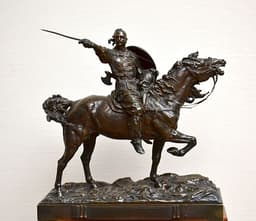
Sviatoslav I
Emperor · Medieval
52.8Total
Basic Information
Born
925
942
Died
976
972
Era
Medieval
Medieval
Nationality
Byzantine Empire
Kievan Rus
Occupation
Emperor
Emperor
Civilization
Western
Western
Score Comparison
Military (10%)
85.0
74.0
Political (20%)
72.0
32.2
Influence (20%)
60.0
60.0
Legacy (20%)
52.0
54.0
Leadership (15%)
53.2
41.5
Strategy (15%)
75.0
58.0
TOTAL
62.8
52.8
John I Tzimiskes — Complete Timeline
969 AD
Accession as Emperor (969)Political Action◆ Major
John I Tzimiskes became emperor after assassinating his uncle Nikephoros II Phokas. He was a skilled general and continued the military expansion of the Byzantine Empire.
AccessionCoup
Impact: regional
970 AD
Campaign against the Rus (970-971)War◆ Major
John I led a campaign against the Rus under Sviatoslav I, who had invaded Bulgaria. He defeated the Rus at the Battle of Dorostolon in 971, forcing Sviatoslav to withdraw. This secured Byzantine control over the Balkans.
Byzantine-Rus WarsMilitary Campaign
Impact: regionalconstructive
974 AD
Campaigns in Syria (974-975)War◆ Major
John I launched a major campaign into Syria, capturing Damascus, Beirut, and other cities. He advanced as far as Jerusalem, but did not capture it. These campaigns extended Byzantine influence in the Levant.
Byzantine-Arab WarsMilitary Campaign
Impact: regional
976 AD
Death from Poison (976)Other◆ Major
John I Tzimiskes died suddenly, possibly from poison. His death cut short his ambitious campaigns. He was succeeded by Basil II, who would later become known as the 'Bulgar-Slayer'.
DeathPoison
Impact: regionaltragic
Sviatoslav I — Complete Timeline
965 AD
Destruction of the Khazar KhaganateWar
Sviatoslav led a campaign against the Khazar Khaganate, capturing the fortress of Sarkel and sacking the capital, Atil. This destroyed the Khazar state, ending its dominance over the steppes and opening the Volga trade route to Rus control.
Khazar CampaignConquestSteppe Politics
Impact: regional
968 AD
Conquest of BulgariaWar◆ Major
Sviatoslav invaded the First Bulgarian Empire at the request of the Byzantine Emperor. He defeated the Bulgarian army, occupied much of the country, and established his capital at Pereyaslavets on the Danube, threatening Byzantium.
Bulgarian CampaignDanubeExpansion
Impact: regional
971 AD
Battle of DorostolonWar◆ Major
After a three-month siege by Byzantine forces under Emperor John I Tzimiskes, Sviatoslav's army was defeated at Dorostolon. He was forced to surrender, renounce claims to Bulgaria, and withdraw from the Balkans.
Byzantine-Rus WarSiegeDefeat
Impact: regionaltragic
972 AD
Death at the Dnieper RapidsWar◆ Major
Returning to Kiev, Sviatoslav was ambushed and killed by the Pechenegs at the Dnieper Rapids. The Pecheneg chief Kurya made a drinking cup from Sviatoslav's skull. His death ended his expansionist campaigns.
AssassinationPechenegsAmbush
Impact: nationaltragic
This comparison has not been analyzed yet.
One-time AI generation (~1 minute). Scores and timeline are already available below.
Rankings
🥇
John I TzimiskesLeader
Mil: 85.0Pol: 72.0Inf: 60.0
62.8
🥈
Sviatoslav I
Mil: 74.0Pol: 32.2Inf: 60.0
52.8
+10.0 behind
How This Comparison Works
Algorithm
Each figure is scored on 6 dimensions (0—100 scale) based on structured historical data: Military (10%), Political (20%), Influence (20%), Legacy (20%), Leadership (15%), Strategy (15%). The weighted total produces the final ranking.
Data Sources
Scores are computed from structured sub-indicators in the database. Scale factors adjust for era (Ancient ×0.85, Modern ×1.0) and civilization size (Eastern ×1.05, Other ×0.80) to account for differences in population and military scale.
Maximum 3 Figures
Comparisons are limited to 2—3 figures to ensure readability and statistical meaningfulness.
Error Margins
±5 points per dimension — Sub-scores are derived from historical records with inherent uncertainty. Two figures within 5 points on a dimension should be considered roughly equivalent in that area.
Total Score Accuracy
±3 points overall — The weighted combination of 6 dimensions produces a total score with approximately ±3 points of uncertainty. Differences of less than 3 points are not statistically significant— the figures are effectively tied.
Known Limitations
- Historical records are incomplete and uneven across civilizations
- Figures from oral-tradition societies may be underrepresented
- Occupation labels can misclassify multi-role figures
- Scores measure capability and impact, not moral character
- Quantitative scoring is a comparison tool, not absolute truth
Capability Radar
Military (10%) — Battles & Warfare
Battles
85
78
Win Rate
90
82
Expansion
80
85
Political (20%) — Governance & Reform
Reform
65
20
Diplomacy
70
35
Economy
65
25
Influence (20%) — Cultural & Global Reach
Cultural
55
55
Global
45
45
Legacy (20%) — Historical Impact
Historical
60
65
Longevity
50
50
Leadership (15%) — Power & Stability
Tenure
60
30
Stability
60
20
Strategy (15%) — Tactics & Innovation
Strategy
85
75
Tactics
88
80
Reform
70
40
Similar Comparisons
Comments & Discussion
No comments yet. Be the first to share your thoughts!