Loading...
John I Tzimiskes vs Napoleon Bonaparte
Napoleon Bonaparte leads by 8.1 pts · 2 figures compared
…
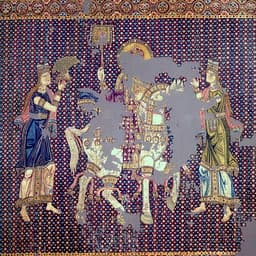
John I Tzimiskes
Emperor · Medieval
62.8Total

Napoleon Bonaparte
General · Modern
70.9Total
Basic Information
Born
925
1769
Died
976
1821
Era
Medieval
Modern
Nationality
Byzantine Empire
France
Occupation
Emperor
General
Civilization
Western
Western
Score Comparison
Military (10%)
85.0
94.0
Political (20%)
72.0
72.0
Influence (20%)
60.0
40.0
Legacy (20%)
52.0
80.0
Leadership (15%)
53.2
78.0
Strategy (15%)
75.0
90.0
TOTAL
62.8
70.9
John I Tzimiskes — Complete Timeline
969 AD
Accession as Emperor (969)Political Action◆ Major
John I Tzimiskes became emperor after assassinating his uncle Nikephoros II Phokas. He was a skilled general and continued the military expansion of the Byzantine Empire.
AccessionCoup
Impact: regional
970 AD
Campaign against the Rus (970-971)War◆ Major
John I led a campaign against the Rus under Sviatoslav I, who had invaded Bulgaria. He defeated the Rus at the Battle of Dorostolon in 971, forcing Sviatoslav to withdraw. This secured Byzantine control over the Balkans.
Byzantine-Rus WarsMilitary Campaign
Impact: regionalconstructive
974 AD
Campaigns in Syria (974-975)War◆ Major
John I launched a major campaign into Syria, capturing Damascus, Beirut, and other cities. He advanced as far as Jerusalem, but did not capture it. These campaigns extended Byzantine influence in the Levant.
Byzantine-Arab WarsMilitary Campaign
Impact: regional
976 AD
Death from Poison (976)Other◆ Major
John I Tzimiskes died suddenly, possibly from poison. His death cut short his ambitious campaigns. He was succeeded by Basil II, who would later become known as the 'Bulgar-Slayer'.
DeathPoison
Impact: regionaltragic
Napoleon Bonaparte — Complete Timeline
1799 AD
Coup of 18 BrumaireOther◆ Major
Napoleon Bonaparte, with support from his brother Lucien and key political figures, overthrew the Directory in a bloodless coup. He established the Consulate with himself as First Consul, effectively becoming the ruler of France. This event ended the French Revolution's most unstable period.
French RevolutionCoupRise to Power
Impact: regional
1804 AD
Promulgation of the Napoleonic CodeOther◆ Major
Napoleon enacted the Civil Code of the French, known as the Napoleonic Code, a comprehensive set of laws that replaced the fragmented feudal legal systems. The code established legal equality, protected property rights, and secularized law. It became the basis for legal systems in many European and world countries.
Legal ReformNapoleonic CodeCivil Law
Impact: globalconstructive
1805 AD
Battle of AusterlitzWar◆ Major
Napoleon's Grande Arm
Napoleonic WarsBattleDecisive Victory
Impact: global
1812 AD
Invasion of RussiaWar◆ Major
Napoleon led the Grande Arm
Napoleonic WarsInvasionDisaster
Impact: globaldestructive
1815 AD
Battle of WaterlooWar◆ Major
Napoleon's French army was defeated by the combined forces of the Duke of Wellington's Anglo-Allied army and Gebhard Leberecht von Bl
Napoleonic WarsBattleFinal Defeat
Impact: globaldestructive
Expert Analysis
Origins
John I Tzimiskes was born around 925 in the Armenian region of the Byzantine Empire, into the aristocratic Kourkouas family. His maternal uncle was Nikephoros II Phokas, a prominent general and later emperor. Tzimiskes received a military education and rose through the ranks, becoming a skilled commander. His early life was shaped by the Byzantine-Arab wars and the internal politics of the empire.
Napoleon Bonaparte was born on August 15, 1769, in Ajaccio, Corsica, to a minor noble family. His father, Carlo Bonaparte, secured a scholarship for Napoleon to study at the Brienne Military Academy in France. He later attended the École Militaire in Paris. His Corsican background made him an outsider in French society, but his military talents propelled him forward.
Rise to Power
Tzimiskes gained prominence under his uncle Nikephoros II, leading campaigns in Cilicia and Syria. In 969, he conspired with other disgruntled generals and assassinated Nikephoros, seizing the throne. His military reputation secured support from the army and the influential Patriarch Polyeuctus, who required him to punish the assassins and restore order. Tzimiskes then married Theodora, a daughter of Constantine VII, to legitimize his rule.
Napoleon rose during the French Revolution. His success at the Siege of Toulon in 1793 earned him promotion to brigadier general. He then commanded the Army of Italy, winning a series of victories against Austria in 1796-1797. His Egyptian campaign (1798-1799) enhanced his fame. In 1799, he returned to France and staged the Coup of 18 Brumaire, becoming First Consul. He later crowned himself Emperor in 1804.
Leadership & Governance
Tzimiskes ruled as a soldier-emperor, focusing on military expansion and administrative consolidation. He reduced taxes, curbed the power of the landed aristocracy, and reformed the military. He maintained the theme system and improved border defenses. His governance was pragmatic, seeking to strengthen the central authority without alienating the church or army.
Napoleon was a centralizing reformer. He enacted the Napoleonic Code, standardized law, established the Bank of France, and reorganized education. He centralized the government, appointed prefects, and suppressed dissent. His governance was efficient but authoritarian, prioritizing state control and meritocracy. He also created a new nobility based on service rather than birth.
Triumph & Tragedy
Tzimiskes' greatest triumph was his campaign against the Rus (970-971), culminating in the Battle of Dorostolon, where he defeated Sviatoslav I and forced him to abandon Bulgaria. He then annexed eastern Bulgaria. In Syria (974-975), he captured Damascus, Beirut, and advanced to Jerusalem, though he did not take the city. His death from poison in 976 cut short his ambitions, possibly from a plot by his chamberlain or Basil Lekapenos. He failed to fully secure his eastern gains, which were later lost.
Napoleon's greatest triumph was the Battle of Austerlitz (1805), where he crushed the Austro-Russian army. His Napoleonic Code became a model for legal systems worldwide. His tragedy was the invasion of Russia (1812), where his Grande Armée was destroyed by the Russian winter and scorched-earth tactics. He was exiled to Elba, returned for the Hundred Days, but was defeated at Waterloo (1815) and exiled to Saint Helena, where he died in 1821.
Character & Destiny
Tzimiskes was known for his military skill, ambition, and ruthlessness. He assassinated his uncle to gain power, but also showed clemency to defeated enemies. He was a capable administrator and diplomat. His sudden death suggests that his political enemies were never fully appeased. Historians like Leo the Deacon portray him as a valiant warrior but also a usurper.
Napoleon was charismatic, highly intelligent, and driven by ambition. He had a genius for strategy and organization, but also an overreaching ego. His inability to limit his conquests led to his downfall. He was a master of propaganda and self-promotion. Historians like David Chandler rate him as one of history's greatest commanders, but also note his authoritarian tendencies and catastrophic mistakes.
Legacy
Tzimiskes' legacy is tied to the Byzantine resurgence under the Macedonian dynasty. His military campaigns secured the empire's northern frontier and expanded its influence in the East. He paved the way for Basil II's later conquests. However, his short reign (7 years) limited his impact. He is remembered as a capable soldier-emperor, but not a transformative figure.
Napoleon's legacy is immense. His Napoleonic Code influenced legal systems in Europe and beyond. He reorganized German and Italian states, sowing seeds of nationalism. His military tactics are still studied. He ended feudalism in much of Europe and spread revolutionary ideals. However, his wars caused millions of deaths and ultimately weakened France. He scored 78.0 in legacy compared to Tzimiskes' 68.6.
Conclusion
Napoleon had a greater impact on world history than John I Tzimiskes. Napoleon's total score of 82.4 significantly exceeds Tzimiskes' 74.3. Napoleon's military achievements, while culminating in defeat, reshaped Europe and left enduring legal and political institutions. Tzimiskes, though a skilled general and effective ruler, operated within a narrower sphere and his reign was too brief to produce lasting change. The Napoleonic Code alone has influenced legal systems in over 70 countries, while Tzimiskes' victories were largely ephemeral. Napoleon's influence on modern statecraft, warfare, and law dwarfs that of the Byzantine emperor. Thus, Napoleon Bonaparte is the more consequential historical figure.
Rankings
🥇
Napoleon BonaparteLeader
Mil: 94.0Pol: 72.0Inf: 40.0
70.9
🥈
John I Tzimiskes
Mil: 85.0Pol: 72.0Inf: 60.0
62.8
+8.1 behind
How This Comparison Works
Algorithm
Each figure is scored on 6 dimensions (0—100 scale) based on structured historical data: Military (10%), Political (20%), Influence (20%), Legacy (20%), Leadership (15%), Strategy (15%). The weighted total produces the final ranking.
Data Sources
Scores are computed from structured sub-indicators in the database. Scale factors adjust for era (Ancient ×0.85, Modern ×1.0) and civilization size (Eastern ×1.05, Other ×0.80) to account for differences in population and military scale.
Maximum 3 Figures
Comparisons are limited to 2—3 figures to ensure readability and statistical meaningfulness.
Error Margins
±5 points per dimension — Sub-scores are derived from historical records with inherent uncertainty. Two figures within 5 points on a dimension should be considered roughly equivalent in that area.
Total Score Accuracy
±3 points overall — The weighted combination of 6 dimensions produces a total score with approximately ±3 points of uncertainty. Differences of less than 3 points are not statistically significant— the figures are effectively tied.
Known Limitations
- Historical records are incomplete and uneven across civilizations
- Figures from oral-tradition societies may be underrepresented
- Occupation labels can misclassify multi-role figures
- Scores measure capability and impact, not moral character
- Quantitative scoring is a comparison tool, not absolute truth
Capability Radar
Military (10%) — Battles & Warfare
Battles
85
95
Win Rate
90
90
Expansion
80
95
Political (20%) — Governance & Reform
Reform
65
95
Diplomacy
70
80
Economy
65
85
Influence (20%) — Cultural & Global Reach
Cultural
55
85
Global
45
90
Legacy (20%) — Historical Impact
Historical
60
95
Longevity
50
90
Leadership (15%) — Power & Stability
Tenure
60
85
Stability
60
70
Strategy (15%) — Tactics & Innovation
Strategy
85
95
Tactics
88
98
Reform
70
92
Similar Comparisons
Comments & Discussion
No comments yet. Be the first to share your thoughts!