Loading...
Kublai Khan vs Matthias Corvinus
Kublai Khan leads by 13.6 pts · 2 figures compared
…
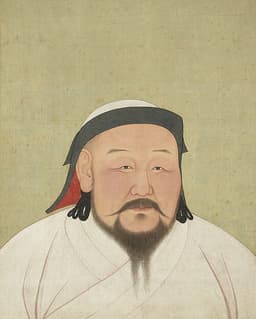
Kublai Khan
Emperor · Medieval
74.3Total
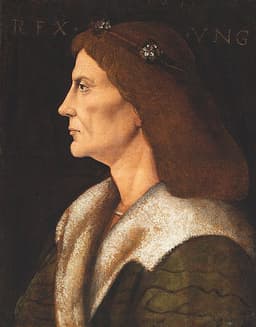
Matthias Corvinus
Emperor · Medieval
60.7Total
Basic Information
Born
1215
1443
Died
1294
1490
Era
Medieval
Medieval
Nationality
Mongolia
Hungary
Occupation
Emperor
Emperor
Civilization
Eastern
Western
Score Comparison
Military (10%)
77.5
80.0
Political (20%)
79.2
59.3
Influence (20%)
75.0
55.0
Legacy (20%)
70.0
52.0
Leadership (15%)
72.0
66.0
Strategy (15%)
76.0
72.0
TOTAL
74.3
60.7
Kublai Khan — Complete Timeline
1260 AD
Adoption of Tibetan Buddhism as State ReligionCultural◆ Major
Kublai Khan appointed the Tibetan lama Drog
Tibetan BuddhismReligionMongol-Tibet Relations
Impact: regional
1271 AD
Proclamation of the Yuan DynastyPolitical Action◆ Major
Kublai Khan officially proclaimed the Yuan dynasty, adopting a Chinese-style dynastic name. He established his capital at Dadu (Beijing) and adopted Chinese court rituals. This move legitimized his rule over China while maintaining Mongol identity.
Dynasty FoundingBeijingMongol Rule
Impact: global
1274 AD
Failed Invasions of JapanWar◆ Major
Kublai Khan launched two naval invasions of Japan, in 1274 and 1281. Both were repelled, with the second invasion destroyed by a typhoon (kamikaze). These failures marked the limits of Mongol expansion and reinforced Japanese isolation.
Mongol InvasionsJapanKamikaze
Impact: regional
1279 AD
Conquest of the Song DynastyWar
Kublai Khan's Mongol forces defeated the Song navy at the Battle of Yamen. The last Song emperor drowned, ending the Song dynasty. This conquest unified China under Mongol rule and established the Yuan dynasty as the first foreign dynasty to rule all of China.
Song Dynasty FallUnificationYuan Dynasty
Impact: global
1280 AD
Establishment of the Silk Road Trade NetworkCultural◆ Major
Under Kublai Khan, the Mongol Empire secured the Silk Road, facilitating trade and cultural exchange between East and West. Marco Polo visited his court. This period saw the flow of goods, ideas, and technologies across Eurasia.
Silk RoadTradeCultural Exchange
Impact: globalconstructive
Matthias Corvinus — Complete Timeline
1458 AD
Coronation as King of HungaryPolitical Action◆ Major
Matthias Corvinus was elected and crowned King of Hungary at the age of 14, following the death of his father John Hunyadi. His coronation was supported by the Hungarian nobility, who expected him to be a figurehead.
CoronationHungaryHunyadi
Impact: nationalconstructive
1460 AD
Establishment of the Black ArmyReform◆ Major
Matthias created a professional standing army, the Black Army, composed of mercenaries and paid soldiers. This force became one of the most effective in Europe, enabling his military campaigns and reducing reliance on feudal levies.
Military ReformBlack ArmyMercenaries
Impact: regionalconstructive
1470 AD
Foundation of the Bibliotheca CorvinianaCultural◆ Major
Matthias established one of the largest and most renowned libraries in Renaissance Europe, the Bibliotheca Corviniana in Buda. The library housed thousands of manuscripts and printed books, attracting scholars from across Europe.
LibraryRenaissanceCulture
Impact: regionalconstructive
1477 AD
War with Frederick III of HabsburgWar◆ Major
Matthias waged a war against Holy Roman Emperor Frederick III over claims to the Hungarian throne and Austrian territories. The conflict ended with the Peace of Pressburg, which recognized Matthias's conquests but failed to secure the imperial crown.
WarHabsburgAustria
Impact: regional
1485 AD
Conquest of ViennaWar◆ Major
Matthias captured Vienna after a prolonged siege, making it his new capital. This conquest marked the peak of Hungarian power, extending his rule over much of Austria and challenging the Habsburgs.
ConquestViennaHabsburg
Impact: regional
Expert Analysis
Origins
Kublai Khan (1215–1294) was born to the Mongol royal family, grandson of Genghis Khan. His mother, Sorghaghtani Beki, was a Nestorian Christian who ensured her sons received a broad education. Kublai grew up exposed to Chinese culture and administration, unlike his nomadic predecessors. Matthias Corvinus (1443–1490) was born in Kolozsvár, Hungary, son of John Hunyadi, a regent and military leader. His early life was marked by political turmoil after his father's death. Matthias was educated in Latin and humanist studies, preparing him for kingship.
Rise to Power
Kublai Khan rose to power through the Mongol succession struggles. In 1251, his brother Möngke became Great Khan and appointed Kublai as viceroy of northern China. Kublai adopted Chinese administrative practices, which alienated Mongol traditionalists. After Möngke's death in 1259, Kublai claimed the title of Great Khan in 1260, defeating his brother Ariq Böke in a civil war by 1264. He then focused on conquering the Song Dynasty, which fell in 1279 after the Battle of Yamen. Matthias Corvinus was elected King of Hungary in 1458 at age 14, following the death of his father. His early reign was challenged by Frederick III of Habsburg, who claimed the throne. Matthias secured his position through diplomacy and military action, eventually defeating Frederick and expanding his territory.
Leadership & Governance
Kublai Khan's governance blended Mongol military power with Chinese bureaucracy. He established the Yuan Dynasty in 1271, adopting the Chinese dynastic system. He divided society into four classes: Mongols, Semu (Central Asians), Han (northern Chinese), and Southern Chinese. He promoted trade, building roads and canals, and supported the Silk Road. His monetary policy introduced paper currency, but inflation eventually weakened the economy. Matthias Corvinus centralized power in Hungary, curbing the nobility's influence. He reformed the tax system and created a professional army, the Black Army, which numbered up to 30,000 men. He patronized Renaissance arts and sciences, founding the Bibliotheca Corviniana with over 2,500 manuscripts. However, his heavy taxation and autocratic style alienated many nobles.
Triumph & Tragedy
Kublai Khan's greatest triumph was the conquest of the Song Dynasty, uniting China under Mongol rule for the first time. He also established the Yuan Dynasty and secured the Silk Road, enabling unprecedented cultural exchange. His tragedies include the failed invasions of Japan in 1274 and 1281, where typhoons destroyed his fleets. These failures cost tens of thousands of lives and strained the empire's resources. He also faced rebellions in Vietnam and Burma, and his later years saw economic decline due to inflation and corruption. Matthias Corvinus's triumphs include capturing Vienna in 1485, making it his capital, and creating the Black Army, which won numerous campaigns. His Bibliotheca Corviniana was one of the largest libraries in Europe. However, his conquests overextended his resources, and after his death, the Black Army was disbanded, and Hungary fell into decline. His failure to secure a legitimate heir led to a succession crisis.
Character & Destiny
Kublai Khan was pragmatic and adaptable, willing to adopt Chinese customs to rule effectively. He was tolerant of religions, supporting Buddhism, Daoism, and Islam. However, his reliance on Mongol elites and heavy taxation created tensions. His decision to invade Japan reflected his ambition but also overconfidence. Matthias Corvinus was a Renaissance prince, ambitious and cultured. He was a skilled military leader but often ruthless toward opponents. His desire to build a powerful centralized state led to conflict with the nobility. His early death at 47 prevented him from consolidating his achievements, and his lack of a legitimate heir doomed his legacy.
Legacy
Kublai Khan's legacy is immense: he founded the Yuan Dynasty, which ruled China until 1368, and facilitated the spread of ideas, goods, and technologies across Eurasia. His support for trade and communication influenced global history. However, his dynasty was overthrown by the Ming, and Mongol rule in China is often viewed as foreign domination. Matthias Corvinus is remembered as a national hero in Hungary, a patron of the Renaissance, and a strong king. His Black Army and library symbolize a golden age. But his achievements were short-lived; after his death, Hungary declined under Habsburg influence. Kublai Khan's total score is 74.3, while Matthias Corvinus scores 60.7, reflecting Kublai's greater impact on world history.
Conclusion
Kublai Khan had a greater historical impact than Matthias Corvinus. His unification of China, establishment of the Yuan Dynasty, and promotion of the Silk Road influenced the course of Asian and global history for centuries. While Matthias Corvinus was a remarkable Renaissance ruler, his achievements were largely confined to Central Europe and did not endure. Kublai Khan's political and military actions shaped the development of China and the Mongol Empire, leaving a legacy that persisted beyond his dynasty. The score gap of 13.6 points supports this conclusion.
Rankings
🥇
Kublai KhanLeader
Mil: 77.5Pol: 79.2Inf: 75.0
74.3
🥈
Matthias Corvinus
Mil: 80.0Pol: 59.3Inf: 55.0
60.7
+13.6 behind
How This Comparison Works
Algorithm
Each figure is scored on 6 dimensions (0—100 scale) based on structured historical data: Military (10%), Political (20%), Influence (20%), Legacy (20%), Leadership (15%), Strategy (15%). The weighted total produces the final ranking.
Data Sources
Scores are computed from structured sub-indicators in the database. Scale factors adjust for era (Ancient ×0.85, Modern ×1.0) and civilization size (Eastern ×1.05, Other ×0.80) to account for differences in population and military scale.
Maximum 3 Figures
Comparisons are limited to 2—3 figures to ensure readability and statistical meaningfulness.
Error Margins
±5 points per dimension — Sub-scores are derived from historical records with inherent uncertainty. Two figures within 5 points on a dimension should be considered roughly equivalent in that area.
Total Score Accuracy
±3 points overall — The weighted combination of 6 dimensions produces a total score with approximately ±3 points of uncertainty. Differences of less than 3 points are not statistically significant— the figures are effectively tied.
Known Limitations
- Historical records are incomplete and uneven across civilizations
- Figures from oral-tradition societies may be underrepresented
- Occupation labels can misclassify multi-role figures
- Scores measure capability and impact, not moral character
- Quantitative scoring is a comparison tool, not absolute truth
Capability Radar
Military (10%) — Battles & Warfare
Battles
95
75
Win Rate
90
80
Expansion
95
75
Political (20%) — Governance & Reform
Reform
88
80
Diplomacy
85
70
Economy
90
75
Influence (20%) — Cultural & Global Reach
Cultural
85
75
Global
85
55
Legacy (20%) — Historical Impact
Historical
90
70
Longevity
80
60
Leadership (15%) — Power & Stability
Tenure
90
70
Stability
80
65
Strategy (15%) — Tactics & Innovation
Strategy
92
80
Tactics
85
85
Reform
88
85
Similar Comparisons
Comments & Discussion
No comments yet. Be the first to share your thoughts!