Loading...
This comparison has not been analyzed yet.
One-time AI generation (~1 minute). Scores and timeline are already available below.
John I of Castile vs Margaret II of Avesnes
Margaret II of Avesnes leads by 2.2 pts · 2 figures compared
…

John I of Castile
Emperor · Medieval
35.9Total
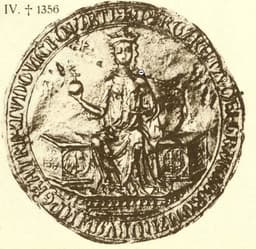
Margaret II of Avesnes
Emperor · Medieval
38.1Total
Basic Information
Born
1358
1311
Died
1390
1356
Era
Medieval
Medieval
Nationality
Castile
Hainaut
Occupation
Emperor
Emperor
Civilization
Western
Western
Score Comparison
Military (10%)
10.2
20.0
Political (20%)
27.9
29.3
Influence (20%)
47.9
46.3
Legacy (20%)
37.5
37.5
Leadership (15%)
38.1
41.5
Strategy (15%)
36.8
45.0
TOTAL
35.9
38.1
John I of Castile — Complete Timeline
1383 AD
Claimed the Portuguese thronePolitical Action◆ Major
Upon the death of King Ferdinand I of Portugal without a male heir, John I of Castile asserted his claim to the Portuguese throne through his wife Beatrice, daughter of Ferdinand I. This claim was contested by Portuguese nobles, leading to the 1383-1385 Portuguese interregnum.
Portuguese successionIberian politics
Impact: regional
1385 AD
Battle of AljubarrotaWar
John I of Castile led his army against Portuguese forces commanded by John of Aviz at Aljubarrota. The Castilian army was decisively defeated, securing Portuguese independence and ending Castilian claims to the Portuguese throne. The battle established the Aviz dynasty in Portugal.
Portuguese independenceIberian war
Impact: regionaldestructive
1386 AD
Treaty of Windsor (1386)Political Action◆ Major
Following the defeat at Aljubarrota, John I of Castile signed the Treaty of Windsor with England, formalizing an alliance between Castile and England. The treaty included provisions for mutual military support and trade agreements, strengthening Castile's position in the Hundred Years' War.
Anglo-Castilian allianceHundred Years' War
Impact: regionalconstructive
Margaret II of Avesnes — Complete Timeline
1345 AD
Inherited Counties of Hainaut, Holland, and ZeelandPolitical Action◆ Major
Margaret II inherited the counties of Hainaut, Holland, and Zeeland after the death of her brother William II at the Battle of Warns. She became the last Avesnes ruler of these territories.
InheritanceAvesnesHainaut
Impact: regional
1350 AD
Conflict with the Wittelsbachs over HollandWar◆ Major
Margaret II fought a war against her son William I of Bavaria (Wittelsbach) for control of Holland and Zeeland. The conflict ended with the Treaty of 1354, where she ceded these territories to William.
WarWittelsbachSuccession
Impact: regionaldestructive
1354 AD
Ceded Holland and Zeeland to the WittelsbachsPolitical Action◆ Major
Margaret II of Avesnes, Countess of Hainaut, ceded the counties of Holland and Zeeland to her son William I of Bavaria (Wittelsbach) after a period of conflict. This transfer ended Avesnes rule in Holland and Zeeland.
CessionWittelsbachHolland
Impact: regionaldestructive
This comparison has not been analyzed yet.
One-time AI generation (~1 minute). Scores and timeline are already available below.
Rankings
🥇
Margaret II of AvesnesLeader
Mil: 20.0Pol: 29.3Inf: 46.3
38.1
🥈
John I of Castile
Mil: 10.2Pol: 27.9Inf: 47.9
35.9
+2.2 behind
How This Comparison Works
Algorithm
Each figure is scored on 6 dimensions (0—100 scale) based on structured historical data: Military (10%), Political (20%), Influence (20%), Legacy (20%), Leadership (15%), Strategy (15%). The weighted total produces the final ranking.
Data Sources
Scores are computed from structured sub-indicators in the database. Scale factors adjust for era (Ancient ×0.85, Modern ×1.0) and civilization size (Eastern ×1.05, Other ×0.80) to account for differences in population and military scale.
Maximum 3 Figures
Comparisons are limited to 2—3 figures to ensure readability and statistical meaningfulness.
Error Margins
±5 points per dimension — Sub-scores are derived from historical records with inherent uncertainty. Two figures within 5 points on a dimension should be considered roughly equivalent in that area.
Total Score Accuracy
±3 points overall — The weighted combination of 6 dimensions produces a total score with approximately ±3 points of uncertainty. Differences of less than 3 points are not statistically significant— the figures are effectively tied.
Known Limitations
- Historical records are incomplete and uneven across civilizations
- Figures from oral-tradition societies may be underrepresented
- Occupation labels can misclassify multi-role figures
- Scores measure capability and impact, not moral character
- Quantitative scoring is a comparison tool, not absolute truth
Capability Radar
Military (10%) — Battles & Warfare
Battles
10
5
Win Rate
5
5
Expansion
10
5
Political (20%) — Governance & Reform
Reform
20
20
Diplomacy
25
30
Economy
20
20
Influence (20%) — Cultural & Global Reach
Cultural
10
10
Global
5
5
Legacy (20%) — Historical Impact
Historical
15
15
Longevity
10
10
Leadership (15%) — Power & Stability
Tenure
30
30
Stability
15
20
Strategy (15%) — Tactics & Innovation
Strategy
10
5
Tactics
15
5
Reform
5
5
Similar Comparisons
Comments & Discussion
No comments yet. Be the first to share your thoughts!