Loading...
Edmund Ironside vs John I of Castile
Edmund Ironside leads by 5.7 pts · 2 figures compared
…
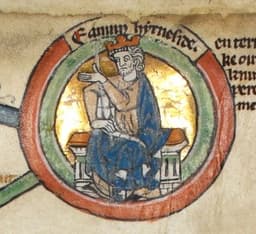
Edmund Ironside
Emperor · Medieval
41.6Total
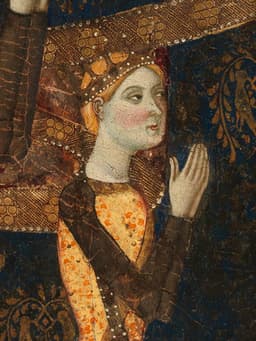
John I of Castile
Emperor · Medieval
35.9Total
Basic Information
Born
990
1358
Died
1016
1390
Era
Medieval
Medieval
Nationality
England
Castile
Occupation
Emperor
Emperor
Civilization
Western
Western
Score Comparison
Military (10%)
20.0
10.2
Political (20%)
27.9
27.9
Influence (20%)
52.5
47.9
Legacy (20%)
42.5
37.5
Leadership (15%)
38.1
38.1
Strategy (15%)
60.0
36.8
TOTAL
41.6
35.9
Edmund Ironside — Complete Timeline
1016 AD
Battle of PenselwoodWar◆ Major
Edmund Ironside defeated Cnut the Great at Penselwood in Somerset. This victory was part of a series of battles as Edmund fought to defend his claim to the English throne after his father Ethelred's death.
BattleVictoryCivil War
Impact: national
Battle of SherstonWar
Edmund fought Cnut to a draw at Sherston in Wiltshire. The battle was indecisive, with both sides suffering heavy casualties, and neither gaining a strategic advantage.
BattleStalemateCivil War
Impact: national
Battle of AssandunWar◆ Major
Cnut decisively defeated Edmund at Assandun (possibly Ashingdon in Essex). The defeat forced Edmund to negotiate a partition of England with Cnut.
BattleDefeatCivil War
Impact: nationaldestructive
Treaty of OlneyPolitical Action◆ Major
Edmund and Cnut agreed to divide England: Edmund ruled Wessex, Cnut ruled the rest. The treaty also stipulated that if one died, the other would inherit the entire kingdom.
TreatyPartitionPeace
Impact: national
Death of Edmund IronsidePolitical Action◆ Major
Edmund died on November 30, 1016, shortly after the Treaty of Olney. His death allowed Cnut to become sole king of England, ending Anglo-Saxon resistance.
DeathSuccessionEnd of Resistance
Impact: nationaltragic
John I of Castile — Complete Timeline
1383 AD
Claimed the Portuguese thronePolitical Action◆ Major
Upon the death of King Ferdinand I of Portugal without a male heir, John I of Castile asserted his claim to the Portuguese throne through his wife Beatrice, daughter of Ferdinand I. This claim was contested by Portuguese nobles, leading to the 1383-1385 Portuguese interregnum.
Portuguese successionIberian politics
Impact: regional
1385 AD
Battle of AljubarrotaWar
John I of Castile led his army against Portuguese forces commanded by John of Aviz at Aljubarrota. The Castilian army was decisively defeated, securing Portuguese independence and ending Castilian claims to the Portuguese throne. The battle established the Aviz dynasty in Portugal.
Portuguese independenceIberian war
Impact: regionaldestructive
1386 AD
Treaty of Windsor (1386)Political Action◆ Major
Following the defeat at Aljubarrota, John I of Castile signed the Treaty of Windsor with England, formalizing an alliance between Castile and England. The treaty included provisions for mutual military support and trade agreements, strengthening Castile's position in the Hundred Years' War.
Anglo-Castilian allianceHundred Years' War
Impact: regionalconstructive
Expert Analysis
Origins
Edmund Ironside was born around 990, the son of King Æthelred the Unready and his first wife, Ælfgifu of York. His upbringing was marked by the constant threat of Viking invasions, with his father's ineffective leadership leading to widespread Danish control. Edmund's early experiences in battle, including a stint as a commander in 1015, shaped his martial focus. He married Ealdgyth, widow of a Danish earl, to consolidate support.
John I of Castile was born on August 24, 1358, the son of King Henry II of Castile and Juana Manuel of Castile. He inherited a kingdom that had recently emerged from civil war. His education centered on chivalric ideals and dynastic politics. He married Eleanor of Aragon in 1375, strengthening ties with Aragon. His claim to the Portuguese throne came through his wife Beatrice, daughter of King Ferdinand I of Portugal.
Rise to Power
Edmund's rise began in 1015 when he rebelled against his father's policies, marrying the widow of a Danish earl and gaining support in the Danelaw. After Æthelred's death in April 1016, Edmund was elected king by the London witan, while Cnut was chosen by the nobility at Southampton. Edmund fought a series of battles in 1016: he won at Penselwood in May, fought to a draw at Sherston in June, and was defeated at Assandun in October. The Treaty of Olney in October 1016 partitioned England, with Edmund ruling Wessex. His death on November 30, 1016, ended his rule after just seven months.
John I ascended to the Castilian throne in 1379 upon his father's death. His reign was dominated by the Castilian succession crisis in Portugal. Upon the death of King Ferdinand I of Portugal in 1383, John I claimed the throne through his wife Beatrice, Ferdinand's daughter. This claim was contested by John of Aviz, Ferdinand's illegitimate half-brother. John I invaded Portugal in 1384 but was repelled. In 1385, he led another invasion, resulting in the decisive Battle of Aljubarrota on August 14, 1385, where his army was routed by Portuguese and English forces.
Leadership & Governance
Edmund's leadership was defined by his military actions. He scored 38.1 in leadership and 60.0 in strategy, reflecting his tactical competence. He successfully rallied Anglo-Saxon resistance against Cnut, winning at Penselwood and drawing at Sherston. However, his governance was limited by his short reign. He made no major administrative reforms, focusing on war. His treaty with Cnut showed pragmatism, but his premature death left no lasting domestic impact.
John I's leadership score of 38.1 matches Edmund's, but his strategy score of 36.8 is lower. He focused on dynastic expansion but failed in his key military campaign. His governance included efforts to centralize royal authority, but the defeat at Aljubarrota weakened his position. He signed the Treaty of Windsor with England in 1386, which solidified an alliance but did not recover his lost prestige. His reign saw no major domestic reforms, and his military defeat overshadowed his political efforts.
Triumph & Tragedy
Edmund's greatest triumph was his victory at Penselwood in May 1016, where he defeated Cnut's forces. He also managed to negotiate the Treaty of Olney, securing Wessex for himself. His greatest tragedy was his death shortly after, which allowed Cnut to become sole king. His defeat at Assandun forced him into a partition that he could not sustain.
John I's triumph was his initial claim to the Portuguese throne, which seemed viable given his marriage to Beatrice. However, his tragedy was the crushing defeat at Aljubarrota, where his army of about 30,000 was routed by a smaller Portuguese force of 6,500. The battle ended his Portuguese ambitions and cemented Portuguese independence. His total score of 35.9 reflects this failure, with military score of 10.2 indicating his poor performance.
Character & Destiny
Edmund was characterized by his martial vigor and determination. He earned the nickname "Ironside" for his resilience in battle. His decision to partition England showed a pragmatic streak, but his early death suggests a lack of foresight in securing his dynasty. Historians view him as a capable warrior who was ultimately unlucky.
John I was ambitious and persistent, as seen in his repeated invasions of Portugal. However, his strategic judgment was flawed, leading to the disaster at Aljubarrota. He was also known for his piety and patronage of the Church. His character combined dynastic ambition with poor military execution, sealing his fate as a failed expansionist.
Legacy
Edmund's legacy is that of a king who briefly resisted Danish conquest. His death paved the way for Cnut's reign, which brought stability and integration of Anglo-Saxon and Danish rule. He is remembered as a symbol of Anglo-Saxon resistance, but his impact was short-lived. His score of 42.5 in legacy reflects this limited but symbolic role.
John I's legacy is defined by his defeat at Aljubarrota, which secured Portuguese independence and led to the Anglo-Portuguese Alliance. The Treaty of Windsor (1386) remains one of the oldest alliances in the world. His failure also strengthened the House of Aviz in Portugal. His legacy score of 37.5 is lower than Edmund's, as his defeat had more lasting consequences for his own kingdom.
Conclusion
Edmund Ironside, with a total score of 41.6, had a greater impact than John I of Castile (35.9). Edmund's military and strategy scores (20.0 military, 60.0 strategy) were higher than John's (10.2 military, 36.8 strategy). Edmund's actions directly affected the course of English history, even if his reign was short. John's defeat at Aljubarrota was a pivotal event for Portugal, but it was a failure that diminished Castile's power. Edmund's legacy as a defender of Anglo-Saxon England endures, while John's is primarily as a loser of a crucial battle. Therefore, Edmund Ironside holds the edge in historical significance.
Rankings
🥇
Edmund IronsideLeader
Mil: 20.0Pol: 27.9Inf: 52.5
41.6
🥈
John I of Castile
Mil: 10.2Pol: 27.9Inf: 47.9
35.9
+5.7 behind
How This Comparison Works
Algorithm
Each figure is scored on 6 dimensions (0—100 scale) based on structured historical data: Military (10%), Political (20%), Influence (20%), Legacy (20%), Leadership (15%), Strategy (15%). The weighted total produces the final ranking.
Data Sources
Scores are computed from structured sub-indicators in the database. Scale factors adjust for era (Ancient ×0.85, Modern ×1.0) and civilization size (Eastern ×1.05, Other ×0.80) to account for differences in population and military scale.
Maximum 3 Figures
Comparisons are limited to 2—3 figures to ensure readability and statistical meaningfulness.
Error Margins
±5 points per dimension — Sub-scores are derived from historical records with inherent uncertainty. Two figures within 5 points on a dimension should be considered roughly equivalent in that area.
Total Score Accuracy
±3 points overall — The weighted combination of 6 dimensions produces a total score with approximately ±3 points of uncertainty. Differences of less than 3 points are not statistically significant— the figures are effectively tied.
Known Limitations
- Historical records are incomplete and uneven across civilizations
- Figures from oral-tradition societies may be underrepresented
- Occupation labels can misclassify multi-role figures
- Scores measure capability and impact, not moral character
- Quantitative scoring is a comparison tool, not absolute truth
Capability Radar
Military (10%) — Battles & Warfare
Battles
45
10
Win Rate
50
5
Expansion
30
10
Political (20%) — Governance & Reform
Reform
15
20
Diplomacy
30
25
Economy
20
20
Influence (20%) — Cultural & Global Reach
Cultural
15
10
Global
10
5
Legacy (20%) — Historical Impact
Historical
25
15
Longevity
20
10
Leadership (15%) — Power & Stability
Tenure
20
30
Stability
25
15
Strategy (15%) — Tactics & Innovation
Strategy
50
10
Tactics
55
15
Reform
20
5
Similar Comparisons
Comments & Discussion
No comments yet. Be the first to share your thoughts!