Loading...
John I of Castile vs Mokjong of Goryeo
Mokjong of Goryeo leads by 0.3 pts · 2 figures compared
…
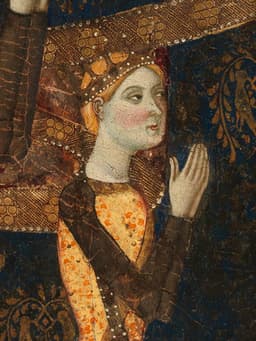
John I of Castile
Emperor · Medieval
35.9Total
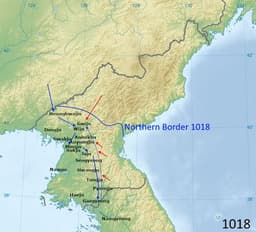
Mokjong of Goryeo
Emperor · Medieval
36.2Total
Basic Information
Born
1358
980
Died
1390
1009
Era
Medieval
Medieval
Nationality
Castile
Korea
Occupation
Emperor
Emperor
Civilization
Western
Eastern
Score Comparison
Military (10%)
10.2
20.0
Political (20%)
27.9
26.4
Influence (20%)
47.9
46.3
Legacy (20%)
37.5
35.8
Leadership (15%)
38.1
34.6
Strategy (15%)
36.8
45.0
TOTAL
35.9
36.2
John I of Castile — Complete Timeline
1383 AD
Claimed the Portuguese thronePolitical Action◆ Major
Upon the death of King Ferdinand I of Portugal without a male heir, John I of Castile asserted his claim to the Portuguese throne through his wife Beatrice, daughter of Ferdinand I. This claim was contested by Portuguese nobles, leading to the 1383-1385 Portuguese interregnum.
Portuguese successionIberian politics
Impact: regional
1385 AD
Battle of AljubarrotaWar
John I of Castile led his army against Portuguese forces commanded by John of Aviz at Aljubarrota. The Castilian army was decisively defeated, securing Portuguese independence and ending Castilian claims to the Portuguese throne. The battle established the Aviz dynasty in Portugal.
Portuguese independenceIberian war
Impact: regionaldestructive
1386 AD
Treaty of Windsor (1386)Political Action◆ Major
Following the defeat at Aljubarrota, John I of Castile signed the Treaty of Windsor with England, formalizing an alliance between Castile and England. The treaty included provisions for mutual military support and trade agreements, strengthening Castile's position in the Hundred Years' War.
Anglo-Castilian allianceHundred Years' War
Impact: regionalconstructive
Mokjong of Goryeo — Complete Timeline
1009 AD
Overthrow by Gang JoPolitical Action◆ Major
King Mokjong was deposed and killed in a coup led by the general Gang Jo. The coup was triggered by a power struggle between the king and his mother, Queen Dowager Cheonchu, and resulted in Gang Jo placing Hyeonjong on the throne, altering the Goryeo succession.
CoupAssassinationGoryeo
Impact: nationaldestructive
Expert Analysis
Origins
John I of Castile was born in 1358 to King Henry II of Castile and his wife Juana Manuel of Villena. He was the first monarch of the Trastámara dynasty, which gained power after the murder of King Peter I. John received a military education and was thrust into the politics of the Iberian Peninsula at a young age. His marriage to Beatrice of Portugal in 1383 was a strategic move to unite the two kingdoms.
Mokjong of Goryeo was born in 980 as the son of King Seongjong and Queen Hyeonjeong. He ascended the throne at the age of 17 in 997 after his father's death. His early life was dominated by the influence of his mother, Queen Dowager Heonae, who acted as regent. Mokjong's education focused on Confucian classics and governance, but he lacked hands-on military training.
Rise to Power
John I inherited the Castilian throne in 1379 upon his father's death. His reign began with challenges from the Portuguese and internal nobles. The turning point came in 1383 when King Ferdinand I of Portugal died without a male heir. John I claimed the Portuguese throne through his wife Beatrice, Ferdinand's daughter. This claim led to the 1383–1385 Crisis in Portugal, where John of Aviz (later John I of Portugal) opposed him. John I of Castile invaded Portugal in 1384 but failed to capture Lisbon. The decisive Battle of Aljubarrota in 1385 saw his army soundly defeated by the Portuguese and their English allies.
Mokjong became king at 17, but real power lay with his mother, Queen Dowager Heonae, who was the daughter of a powerful general. She controlled the court and appointed her relatives to key positions. Mokjong attempted to assert his authority by promoting Confucian scholars and reducing the influence of the military aristocracy. This sparked tension with his mother and the general Gang Jo. In 1009, Gang Jo led a coup, deposing Mokjong and installing his uncle as King Hyeonjong. Mokjong was exiled and later killed.
Leadership & Governance
John I of Castile's leadership was marked by his ambition to expand Castilian influence. He centralized royal authority, reducing the power of the nobility. His governance style was authoritative, but his military decisions were flawed. He underestimated the Portuguese resistance and the effectiveness of the English longbow at Aljubarrota. His score of 38.1 in Leadership reflects his inability to inspire loyalty or adapt tactics. Politically, he scored 27.9, as his claim to Portugal backfired and strengthened his enemies.
Mokjong attempted to reform Goryeo's government by curbing the power of the military aristocracy and promoting civil officials. He supported Confucian education and sought to stabilize the kingdom. However, his political score of 26.4 indicates his failure to manage the power struggle with his mother and Gang Jo. His leadership score of 34.6 suggests he was well-intentioned but lacked the decisiveness or military backing to enforce his policies. His strategy score of 45.0 shows some foresight, but he could not execute effectively.
Triumph & Tragedy
John I's greatest success was securing an alliance with England through the Treaty of Windsor in 1386, which brought Castile into the English sphere and provided trade benefits. He also maintained internal stability in Castile after the war. However, his greatest failure was the defeat at Aljubarrota, which cost him the Portuguese throne and solidified Portuguese independence. The battle resulted in heavy Castilian losses and a permanent rift between the kingdoms.
Mokjong's triumph was his attempt to reform Goryeo's governance, moving away from military dominance toward a civil bureaucracy. He also promoted cultural activities, including the compilation of historical texts. His tragedy was his overthrow and murder, which derailed his reforms and plunged Goryeo into a period of military rule under Gang Jo. The coup weakened the monarchy and set a precedent for future military interventions.
Character & Destiny
John I was determined and ambitious, but also overconfident. He ignored advice from his generals and pushed forward with the invasion of Portugal despite logistical challenges. His character led him to take risks that ended in disaster. Historical assessments note his stubbornness and lack of tactical flexibility. His destiny was to be remembered as the king who failed to unite Iberia under Castile.
Mokjong was idealistic and reform-minded, but politically naive. He underestimated the power of his mother and the military faction. His desire to rule independently led him to challenge established interests too quickly. His character was gentle but indecisive, which contributed to his downfall. Historians view him as a tragic figure whose reforms were ahead of their time but poorly executed.
Legacy
John I's legacy is mixed. He strengthened the Castilian monarchy and secured the English alliance, but his failure in Portugal allowed the House of Aviz to establish a strong, independent Portugal. His scores: Military 10.2, Influence 47.9, Legacy 37.5. He is remembered primarily for the Battle of Aljubarrota, a symbol of Portuguese resistance. In Castile, he is overshadowed by his successors.
Mokjong's legacy is also limited. His overthrow led to the rise of military dictators in Goryeo, weakening the monarchy. His reforms were reversed, but his efforts to promote Confucianism had a lasting cultural impact. His scores: Military 20.0, Influence 46.3, Legacy 35.8. He is remembered as a young king who tried to change the system but failed.
Conclusion
While both kings ended their reigns in defeat, Mokjong of Goryeo had a slightly higher total score (36.2 vs 35.9) and a more innovative, though unsuccessful, reform agenda. John I's impact was largely negative for Castile's ambitions, while Mokjong's failed reforms at least attempted to address systemic issues. However, neither left a lasting positive legacy. In terms of influence and strategic vision, Mokjong edges ahead, but both are cautionary tales of monarchs who lost their thrones. The greater impact belongs to Mokjong because his attempts at reform, though crushed, highlighted the tensions between civil and military power that would shape Korean history for centuries. John I's defeat merely confirmed Portuguese independence, a reality that was already entrenched.
Rankings
🥇
Mokjong of GoryeoLeader
Mil: 20.0Pol: 26.4Inf: 46.3
36.2
🥈
John I of Castile
Mil: 10.2Pol: 27.9Inf: 47.9
35.9
+0.3 behind
How This Comparison Works
Algorithm
Each figure is scored on 6 dimensions (0—100 scale) based on structured historical data: Military (10%), Political (20%), Influence (20%), Legacy (20%), Leadership (15%), Strategy (15%). The weighted total produces the final ranking.
Data Sources
Scores are computed from structured sub-indicators in the database. Scale factors adjust for era (Ancient ×0.85, Modern ×1.0) and civilization size (Eastern ×1.05, Other ×0.80) to account for differences in population and military scale.
Maximum 3 Figures
Comparisons are limited to 2—3 figures to ensure readability and statistical meaningfulness.
Error Margins
±5 points per dimension — Sub-scores are derived from historical records with inherent uncertainty. Two figures within 5 points on a dimension should be considered roughly equivalent in that area.
Total Score Accuracy
±3 points overall — The weighted combination of 6 dimensions produces a total score with approximately ±3 points of uncertainty. Differences of less than 3 points are not statistically significant— the figures are effectively tied.
Known Limitations
- Historical records are incomplete and uneven across civilizations
- Figures from oral-tradition societies may be underrepresented
- Occupation labels can misclassify multi-role figures
- Scores measure capability and impact, not moral character
- Quantitative scoring is a comparison tool, not absolute truth
Capability Radar
Military (10%) — Battles & Warfare
Battles
10
5
Win Rate
5
5
Expansion
10
5
Political (20%) — Governance & Reform
Reform
20
20
Diplomacy
25
20
Economy
20
20
Influence (20%) — Cultural & Global Reach
Cultural
10
10
Global
5
5
Legacy (20%) — Historical Impact
Historical
15
15
Longevity
10
10
Leadership (15%) — Power & Stability
Tenure
30
30
Stability
15
10
Strategy (15%) — Tactics & Innovation
Strategy
10
5
Tactics
15
5
Reform
5
5
Similar Comparisons
Comments & Discussion
No comments yet. Be the first to share your thoughts!