Loading...
Joe Clark vs Julius Caesar
Julius Caesar leads by 41.3 pts · 2 figures compared
…
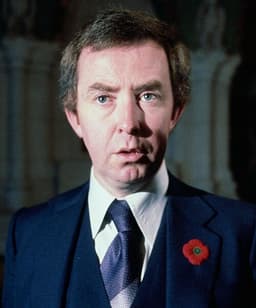
Joe Clark
Politician · Modern
41.5Total

Julius Caesar
General · Ancient
82.8Total
Basic Information
Born
1939
-100
Died
—
-44
Era
Modern
Ancient
Nationality
Canada
Roman Republic
Occupation
Politician
General
Civilization
Western
Western
Score Comparison
Military (10%)
10.2
88.0
Political (20%)
37.9
78.0
Influence (20%)
48.6
85.0
Legacy (20%)
38.3
82.0
Leadership (15%)
58.8
80.0
Strategy (15%)
42.2
85.0
TOTAL
41.5
82.8
Joe Clark — Complete Timeline
1979 AD
Became Prime Minister of CanadaPolitical Action◆ Major
Clark became the 16th Prime Minister of Canada, leading a Progressive Conservative minority government. At age 39, he was the youngest person to hold the office.
Government FormationYouthConservatism
Impact: national
Defeated on budget and lost governmentPolitical Action◆ Major
Clark's minority government was defeated on a motion of non-confidence over his budget, which proposed an 18-cent-per-gallon tax on gasoline. The defeat triggered an election that returned Pierre Trudeau's Liberals to power.
BudgetNon-ConfidenceElection
Impact: national
1984 AD
Returned as Minister of Foreign AffairsPolitical Action
Clark returned to cabinet as Secretary of State for External Affairs under Prime Minister Brian Mulroney. He served in this role until 1991, focusing on foreign policy and international relations.
CabinetForeign AffairsMulroney
Impact: national
Julius Caesar — Complete Timeline
58 BC
Gallic WarsWar◆ Major
Caesar, as proconsul of Gaul, launched a series of campaigns that conquered all of Gaul (modern France, Belgium, and parts of Switzerland). He fought numerous battles, including against the Helvetii, the Belgae, and the Gallic chieftain Vercingetorix. The wars brought immense wealth and a loyal army to Caesar.
Gallic WarsConquestRoman Expansion
Impact: regional
49 BC
Crossing the RubiconPolitical Action◆ Major
Caesar led Legio XIII across the Rubicon River into Italy, defying the Roman Senate's order to disband his army. This act triggered a civil war against Pompey and the Optimates, ultimately leading to Caesar's dictatorship and the end of the Roman Republic.
Roman Civil WarEnd of RepublicPower Struggle
Impact: global
48 BC
Battle of PharsalusWar◆ Major
Caesar's outnumbered army defeated the larger forces of Pompey the Great at Pharsalus in Greece. Caesar's tactical use of a reserve line to counter Pompey's cavalry charge proved decisive. Pompey fled to Egypt, where he was assassinated, leaving Caesar as the undisputed master of the Roman world.
Roman Civil WarBattleDecisive Victory
Impact: regional
44 BC
Appointment as Dictator for LifePolitical Action◆ Major
The Roman Senate appointed Caesar dictator perpetuo (dictator for life), granting him unprecedented personal power. This move concentrated military, legislative, and judicial authority in one person, effectively ending the Roman Republic's traditional system of checks and balances and alarming many senators.
DictatorshipEnd of RepublicPower Consolidation
Impact: regionaldestructive
Assassination on the Ides of MarchPolitical Action◆ Major
A group of Roman senators, led by Marcus Junius Brutus and Gaius Cassius Longinus, stabbed Caesar to death at a meeting of the Senate in the Theatre of Pompey. The assassination was intended to restore the Republic, but instead triggered another civil war that led to the rise of the Roman Empire.
AssassinationRoman PoliticsEnd of Republic
Impact: globaldestructive
Expert Analysis
joe-clark-vs-julius-caesar
# The Weight of Command
In March of 44 BCE, a man with a toga stained crimson fell at the foot of a marble statue in Rome’s Theatre of Pompey. In February of 1980, a man in a business suit watched from the visitor’s gallery as his government collapsed in Canada’s House of Commons. Between these two scenes—one of ancient violence, the other of parliamentary procedure—lies the vast gulf of history, but also a question that binds them: what does it mean to lead, and what happens when a leader’s moment arrives too soon or ends too abruptly?
Origins
Julius Caesar was born into a patrician family at the twilight of the Roman Republic, a world of senatorial intrigue, civil wars, and expanding frontiers. His uncle Marius had been a populist general; his aunt’s husband, Sulla, a dictator. From childhood, Caesar breathed the air of ambition and danger. He learned that in Rome, power belonged to those who could command armies, sway crowds, and outmaneuver rivals. The Republic was a machine of competition, and Caesar was forged to master it.
Joe Clark was born in 1939 in High River, Alberta, a small town on the Canadian prairies. His father was a newspaper editor, his mother a schoolteacher. The Canada of his youth was a stable, orderly dominion within the British Empire, a country where politics meant coalition-building, compromise, and respect for parliamentary tradition. Clark grew up debating at university, editing the student newspaper, and working as a political aide. He was intelligent, earnest, and deeply committed to the idea that government should serve the common good. But he had never commanded a legion, never faced a hostile army, never held a life in his hands.
Rise to Power
Caesar’s path was ruthless and deliberate. He served as a military tribune in Asia, then as quaestor in Spain, where he wept before a statue of Alexander the Great, lamenting that he had done nothing at an age when Alexander had conquered the world. He climbed the cursus honorum—the ladder of Roman offices—through a mix of bribery, oratory, and strategic marriages. In 60 BCE, he formed the First Triumvirate with Pompey and Crassus, an alliance that gave him command of Gaul. Over the next eight years, he conquered a territory larger than Italy, wrote his own commentaries, and built an army loyal to him alone.
Clark’s rise was quieter but no less determined. He entered Parliament in 1972, became leader of the Progressive Conservative Party in 1976 at age 37, and led his party to a narrow victory in the 1979 federal election. At 39, he became the youngest prime minister in Canadian history. His path was not paved with battlefields but with nomination meetings, policy conventions, and television debates. The turning point was not a river crossed under arms but a budget vote on a cold December night.
Leadership & Governance
Caesar governed as he conquered: with speed, clarity, and an iron will. As dictator, he reformed the calendar, granted citizenship to provinces, launched public works, and centralized power in his own hands. His military genius was undeniable—at Alesia, he besieged a Gallic army while simultaneously repelling a massive relief force, a feat of logistics and nerve. But his political wisdom was tempered by arrogance. He pardoned his enemies, but he also stacked the Senate with his supporters. He sought to heal the Republic, but he did so by breaking its ancient traditions.
Clark governed with a minority government, a fragile vessel in a parliamentary system. His leadership style was consultative, even cautious. He appointed a talented cabinet, including a young Brian Mulroney, but his government lacked the muscle to enforce its will. His budget—proposing an 18-cent-per-gallon tax hike on gasoline—was a reasonable attempt to address fiscal deficits, but it alienated both the opposition and his own backbenchers. Where Caesar would have crushed dissent, Clark tried to negotiate. Where Caesar would have marched, Clark waited.
Triumph & Tragedy
Caesar’s greatest triumph was his conquest of Gaul, which brought him wealth, glory, and a veteran army. His most devastating failure was his assassination on the Ides of March, 44 BCE, when senators he had pardoned stabbed him 23 times. He died not on a battlefield but in a chamber, betrayed by those he trusted.
Clark’s greatest triumph was simply becoming prime minister—a victory against odds, a proof that a young man from Alberta could lead a nation. His tragedy came nine months later, on December 13, 1979, when his government lost a motion of non-confidence by a single vote. The defeat was not dramatic; it was procedural, almost anticlimactic. But it ended his premiership as suddenly as a knife. He later returned as foreign minister under Mulroney, a respected elder statesman, but never again held the highest office.
Character & Destiny
Caesar was driven by an insatiable hunger for glory. He believed that destiny favored the bold, and he proved it again and again. His personality—charming, calculating, ruthless—shaped every decision. He crossed the Rubicon knowing it meant civil war. He refused a crown knowing it might mean death. He could not stop, because stopping was not in his nature.
Clark was driven by a sense of duty. He believed in institutions, in process, in the slow work of democracy. His personality—polite, principled, reserved—shaped his decisions. He did not cross rivers; he followed rules. He did not seize power; he earned it. And when he lost it, he accepted the verdict of Parliament with dignity. Where Caesar’s character led to assassination, Clark’s character led to a long, honorable career—but also to a short, unfulfilled prime ministership.
Legacy
Caesar’s legacy is immeasurable. He transformed the Roman Republic into an empire, set the stage for Augustus, and left his name as a title for emperors: Caesar. His writings are studied in military academies. His reforms shaped Western law and governance. He is remembered as a genius and a tyrant, a hero and a warning.
Clark’s legacy is more modest. He is remembered as a footnote in Canadian history, the prime minister who lasted nine months. But he is also remembered as a decent man who governed with integrity, who championed minority rights, who served his country long after his premiership ended. His legacy is not a monument but a lesson: that in a democracy, even the highest office can be fleeting, and that character matters more than duration.
Conclusion
What separates Caesar from Clark is not ability but context. Caesar lived in a world where power was taken at swordpoint, where a man could remake history through sheer force of will. Clark lived in a world where power was borrowed from the people, where every move required consensus, where the system itself was designed to limit ambition. Caesar’s tragedy was that he could not stop reaching for more. Clark’s tragedy was that he could not reach far enough. Both men, in their own ways, were shaped by their eras—and both paid the price.
Rankings
🥇
Julius CaesarLeader
Mil: 88.0Pol: 78.0Inf: 85.0
82.8
🥈
Joe Clark
Mil: 10.2Pol: 37.9Inf: 48.6
41.5
+41.3 behind
How This Comparison Works
Algorithm
Each figure is scored on 6 dimensions (0—100 scale) based on structured historical data: Military (10%), Political (20%), Influence (20%), Legacy (20%), Leadership (15%), Strategy (15%). The weighted total produces the final ranking.
Data Sources
Scores are computed from structured sub-indicators in the database. Scale factors adjust for era (Ancient ×0.85, Modern ×1.0) and civilization size (Eastern ×1.05, Other ×0.80) to account for differences in population and military scale.
Maximum 3 Figures
Comparisons are limited to 2—3 figures to ensure readability and statistical meaningfulness.
Error Margins
±5 points per dimension — Sub-scores are derived from historical records with inherent uncertainty. Two figures within 5 points on a dimension should be considered roughly equivalent in that area.
Total Score Accuracy
±3 points overall — The weighted combination of 6 dimensions produces a total score with approximately ±3 points of uncertainty. Differences of less than 3 points are not statistically significant— the figures are effectively tied.
Known Limitations
- Historical records are incomplete and uneven across civilizations
- Figures from oral-tradition societies may be underrepresented
- Occupation labels can misclassify multi-role figures
- Scores measure capability and impact, not moral character
- Quantitative scoring is a comparison tool, not absolute truth
Capability Radar
Military (10%) — Battles & Warfare
Battles
22
95
Win Rate
25
92
Expansion
28
97
Political (20%) — Governance & Reform
Reform
25
90
Diplomacy
40
85
Economy
20
82
Influence (20%) — Cultural & Global Reach
Cultural
15
88
Global
15
94
Legacy (20%) — Historical Impact
Historical
20
95
Longevity
10
96
Leadership (15%) — Power & Stability
Tenure
30
75
Stability
25
60
Strategy (15%) — Tactics & Innovation
Strategy
32
94
Tactics
33
96
Reform
36
88
Similar Comparisons
Comments & Discussion
No comments yet. Be the first to share your thoughts!