Loading...
Jia Xu vs Zhang Hua
Zhang Hua leads by 4.5 pts · 2 figures compared
…
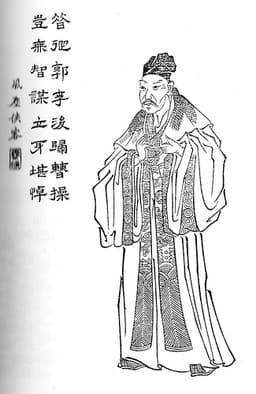
Jia Xu
Politician · Ancient
51.4Total

Zhang Hua
Politician · Ancient
55.9Total
Basic Information
Born
147
232
Died
223
300
Era
Ancient
Ancient
Nationality
China
China
Occupation
Politician
Politician
Civilization
Eastern
Eastern
Score Comparison
Military (10%)
45.0
50.0
Political (20%)
39.4
68.0
Influence (20%)
56.4
54.9
Legacy (20%)
50.0
48.3
Leadership (15%)
67.0
72.0
Strategy (15%)
43.3
41.0
TOTAL
51.4
55.9
Jia Xu — Complete Timeline
192 AD
Advised Li Jue and Guo Si to attack Chang'anWar◆ Major
After Dong Zhuo's death, Jia Xu advised his subordinates Li Jue and Guo Si to gather their troops and attack Chang'an rather than disbanding. This led to the capture of the capital and the restoration of their power, though it plunged the region into further chaos.
Han DynastyWarlord EraChang'an
Impact: nationaldestructive
199 AD
Switched allegiance to Cao CaoPolitical Action
Jia Xu left Zhang Xiu's service and joined Cao Cao, bringing with him strategic advice. Cao Cao welcomed him and later relied on his counsel for major decisions.
Cao CaoAllegiance ChangeAdvisor
Impact: national
200 AD
Advised Cao Cao to attack Yuan Shao at GuanduWar◆ Major
When Cao Cao hesitated to engage Yuan Shao due to lack of supplies, Jia Xu argued that Cao Cao's strategic acumen and the morale of his troops outweighed Yuan Shao's numerical advantage. Cao Cao followed the advice and won the Battle of Guandu.
Battle of GuanduCao CaoMilitary Advice
Impact: regionalconstructive
208 AD
Opposed Cao Cao's plan to attack Sun QuanPolitical Action
After Cao Cao's defeat at Red Cliffs, Jia Xu advised against a hasty second invasion of Jiangdong, arguing that Cao Cao should consolidate his gains first. Cao Cao did not follow this advice and suffered further setbacks.
Red CliffsCao CaoStrategic Advice
Impact: regionalconstructive
215 AD
Advised Cao Cao to invade Hanzhong via the Qinling MountainsWar
Jia Xu recommended that Cao Cao launch a campaign against Zhang Lu in Hanzhong using a mountain route. The campaign succeeded, and Cao Cao gained control of Hanzhong.
Hanzhong CampaignCao CaoMilitary Strategy
Impact: regionalconstructive
Zhang Hua — Complete Timeline
279 AD
Advocated Conquest of WuPolitical Action◆ Major
Zhang Hua strongly urged Emperor Wu of Jin to launch a campaign against the Wu kingdom. His advocacy helped overcome court opposition, leading to the successful invasion in 280.
AdvocacyConquestJin Dynasty
Impact: nationalconstructive
290 AD
Compiled the BowuzhiCultural◆ Major
Zhang Hua authored the Bowuzhi, an encyclopedic work covering geography, natural history, and folklore. It became a key text in Chinese literature and science.
LiteratureEncyclopediaScience
Impact: regionalconstructive
300 AD
Executed by Sima LunPolitical Action◆ Major
During the War of the Eight Princes, Zhang Hua was executed by Sima Lun for refusing to support his usurpation. His death removed a key minister from the Jin court.
ExecutionWar of the Eight PrincesJin Dynasty
Impact: nationaltragic
Expert Analysis
Origins
Jia Xu (147–224 CE) was born in Wuwei Commandery (modern Gansu) during the Eastern Han dynasty. His family was of modest official background, and he was known for his strategic acumen from a young age. He initially served as a minor official under Dong Zhuo. Zhang Hua (232–300 CE) was born in Fanyang Commandery (modern Hebei) during the Three Kingdoms period. His family had a tradition of scholarship; his father was a county magistrate. Zhang Hua was a prolific writer and erudite scholar, gaining recognition for his literary talents early in his career.
Rise to Power
Jia Xu rose to prominence after Dong Zhuo's assassination in 192 CE. When Li Jue and Guo Si, former subordinates of Dong Zhuo, planned to disband, Jia Xu advised them to gather their troops and attack Chang'an. This bold move succeeded, placing the capital under their control and making Jia Xu a key advisor. His reputation for flawless advice grew, leading him to serve multiple warlords, including Zhang Xiu, before finally joining Cao Cao around 199 CE. Zhang Hua's rise came through his literary achievements. He impressed Emperor Wu of Jin (Sima Yan) with his writings and was appointed to the Imperial Secretariat. He became a leading advocate for the conquest of the Wu kingdom, which was achieved in 280 CE, cementing his political influence. He later served as Minister of Works and was a central figure in the Jin court.
Leadership & Governance
Jia Xu's leadership was characterized by cautious, strategic advice. He never held supreme command but influenced outcomes through counsel. He advised Cao Cao to attack Yuan Shao at Guandu in 200 CE, arguing that Cao Cao's strategic acumen and morale outweighed supply shortages—a key factor in Cao Cao's victory. He also recommended the invasion of Hanzhong via the Qinling Mountains in 215 CE, which succeeded. However, after the defeat at Red Cliffs, he advised against a hasty second invasion of Jiangdong, urging consolidation instead. Zhang Hua was a more active political leader. He strongly advocated the conquest of Wu, overcoming court opposition by emphasizing the strategic opportunity. As Minister of Works, he managed state affairs competently. His governance style was scholarly and reform-minded, but he lacked Jia Xu's tactical precision in military matters.
Triumph & Tragedy
Jia Xu's greatest triumph was his near-perfect track record of advice. He scored 43.3 in strategy, but his counsel shaped major events: the capture of Chang'an, the victory at Guandu, and the conquest of Hanzhong. His tragedy was his inability to prevent the eventual fall of Cao Wei's successors—his advice was often ignored at critical moments, such as when Cao Cao's son Cao Pi disregarded Jia Xu's guidance on attacking Wu. Zhang Hua's triumph was the conquest of Wu in 280 CE, a campaign he championed. He also compiled the Bowuzhi, an influential encyclopedia. His tragedy was his execution in 300 CE by Sima Lun during the War of the Eight Princes, a chaotic period that shattered Jin stability. His death removed a capable minister from the court.
Character & Destiny
Jia Xu was pragmatic and self-preserving, often switching allegiances to survive. His character was cautious; he avoided personal ambition and focused on offering sound advice. This allowed him to die naturally at age 77. Zhang Hua was idealistic and principled, advocating for unification and learning. He refused to support Sima Lun's usurpation, leading to his execution. His destiny was shaped by his commitment to the Jin dynasty's legitimacy amidst internal strife.
Legacy
Jia Xu's legacy lies in his strategic counsel, which influenced the Three Kingdoms period. His advice at Guandu is studied as a classic example of psychological warfare. He scored 56.4 in influence and 50.0 in legacy. Zhang Hua's legacy is twofold: his political role in unifying China under Jin and his literary contribution, the Bowuzhi, which influenced later encyclopedias. He scored 54.9 in influence and 48.3 in legacy. Both men left marks, but Jia Xu's impact on events was more immediate and direct.
Conclusion
Zhang Hua had a higher total score (55.9 vs. 51.4) but Jia Xu's advice was more decisive in shaping the Three Kingdoms outcome. Zhang Hua's conquest of Wu unified China, but his execution cut short his influence. Jia Xu's counsel affected major battles and transitions, and his survival allowed him to continue advising. Taking a stance: Jia Xu had greater impact per decision, as his advice altered the course of wars. Zhang Hua's broader political and literary legacy is significant, but Jia Xu's strategic precision was more consequential in the short term. Thus, Jia Xu's influence on the era's events was greater.
Rankings
🥇
Zhang HuaLeader
Mil: 50.0Pol: 68.0Inf: 54.9
55.9
🥈
Jia Xu
Mil: 45.0Pol: 39.4Inf: 56.4
51.4
+4.5 behind
How This Comparison Works
Algorithm
Each figure is scored on 6 dimensions (0—100 scale) based on structured historical data: Military (10%), Political (20%), Influence (20%), Legacy (20%), Leadership (15%), Strategy (15%). The weighted total produces the final ranking.
Data Sources
Scores are computed from structured sub-indicators in the database. Scale factors adjust for era (Ancient ×0.85, Modern ×1.0) and civilization size (Eastern ×1.05, Other ×0.80) to account for differences in population and military scale.
Maximum 3 Figures
Comparisons are limited to 2—3 figures to ensure readability and statistical meaningfulness.
Error Margins
±5 points per dimension — Sub-scores are derived from historical records with inherent uncertainty. Two figures within 5 points on a dimension should be considered roughly equivalent in that area.
Total Score Accuracy
±3 points overall — The weighted combination of 6 dimensions produces a total score with approximately ±3 points of uncertainty. Differences of less than 3 points are not statistically significant— the figures are effectively tied.
Known Limitations
- Historical records are incomplete and uneven across civilizations
- Figures from oral-tradition societies may be underrepresented
- Occupation labels can misclassify multi-role figures
- Scores measure capability and impact, not moral character
- Quantitative scoring is a comparison tool, not absolute truth
Capability Radar
Military (10%) — Battles & Warfare
Battles
10
20
Win Rate
15
25
Expansion
5
35
Political (20%) — Governance & Reform
Reform
10
50
Diplomacy
70
55
Economy
10
45
Influence (20%) — Cultural & Global Reach
Cultural
30
40
Global
20
20
Legacy (20%) — Historical Impact
Historical
50
45
Longevity
40
35
Leadership (15%) — Power & Stability
Tenure
30
60
Stability
40
50
Strategy (15%) — Tactics & Innovation
Strategy
70
40
Tactics
60
30
Reform
5
10
Similar Comparisons
Comments & Discussion
No comments yet. Be the first to share your thoughts!