Loading...
Jia Xu vs Xun Xu
Xun Xu leads by 6.6 pts · 2 figures compared
…
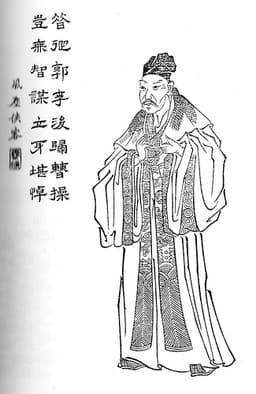
Jia Xu
Politician · Ancient
51.4Total

Xun Xu
Politician · Ancient
58.0Total
Basic Information
Born
147
220
Died
223
289
Era
Ancient
Ancient
Nationality
China
China
Occupation
Politician
Politician
Civilization
Eastern
Eastern
Score Comparison
Military (10%)
45.0
50.0
Political (20%)
39.4
68.0
Influence (20%)
56.4
61.0
Legacy (20%)
50.0
54.0
Leadership (15%)
67.0
66.0
Strategy (15%)
43.3
41.6
TOTAL
51.4
58.0
Jia Xu — Complete Timeline
192 AD
Advised Li Jue and Guo Si to attack Chang'anWar◆ Major
After Dong Zhuo's death, Jia Xu advised his subordinates Li Jue and Guo Si to gather their troops and attack Chang'an rather than disbanding. This led to the capture of the capital and the restoration of their power, though it plunged the region into further chaos.
Han DynastyWarlord EraChang'an
Impact: nationaldestructive
199 AD
Switched allegiance to Cao CaoPolitical Action
Jia Xu left Zhang Xiu's service and joined Cao Cao, bringing with him strategic advice. Cao Cao welcomed him and later relied on his counsel for major decisions.
Cao CaoAllegiance ChangeAdvisor
Impact: national
200 AD
Advised Cao Cao to attack Yuan Shao at GuanduWar◆ Major
When Cao Cao hesitated to engage Yuan Shao due to lack of supplies, Jia Xu argued that Cao Cao's strategic acumen and the morale of his troops outweighed Yuan Shao's numerical advantage. Cao Cao followed the advice and won the Battle of Guandu.
Battle of GuanduCao CaoMilitary Advice
Impact: regionalconstructive
208 AD
Opposed Cao Cao's plan to attack Sun QuanPolitical Action
After Cao Cao's defeat at Red Cliffs, Jia Xu advised against a hasty second invasion of Jiangdong, arguing that Cao Cao should consolidate his gains first. Cao Cao did not follow this advice and suffered further setbacks.
Red CliffsCao CaoStrategic Advice
Impact: regionalconstructive
215 AD
Advised Cao Cao to invade Hanzhong via the Qinling MountainsWar
Jia Xu recommended that Cao Cao launch a campaign against Zhang Lu in Hanzhong using a mountain route. The campaign succeeded, and Cao Cao gained control of Hanzhong.
Hanzhong CampaignCao CaoMilitary Strategy
Impact: regionalconstructive
Xun Xu — Complete Timeline
270 AD
Developed the 'Xun Xu' Musical ScaleInvention
Xun Xu designed a new set of bronze bells and established a standardized musical pitch system for the Jin court. His work influenced Chinese music theory for centuries.
MusicAcousticsJin Dynasty
Impact: nationalconstructive
275 AD
Served as Minister of WorksPolitical Action
Xun Xu was appointed as Minister of Works (Sikong) under Emperor Wu of Jin, overseeing state construction projects and infrastructure. He also participated in the compilation of legal codes.
Jin DynastyGovernmentInfrastructure
Impact: nationalconstructive
280 AD
Compiled the 'Jin Zhongjing' (Jin Imperial Library Catalog)Cultural◆ Major
Xun Xu, as a Jin minister, oversaw the compilation of the imperial library catalog, classifying over 18,000 scrolls. This work became a model for later Chinese bibliographic classification systems.
Jin DynastyBibliographyLibrary Science
Impact: nationalconstructive
Expert Analysis
Origins
Jia Xu (147–224) was born in Wuwei Commandery (modern Gansu) during the late Eastern Han dynasty. Little is known of his early life, but he was recognized for his intellect and began his career as a minor official. He first served under Dong Zhuo, then under Li Jue and Guo Si after Dong Zhuo's death. Jia Xu's early experiences in the chaotic warlord period shaped his pragmatic and often morally flexible approach.
Xun Xu (died 289) was born into the prestigious Xun clan of Yingchuan (modern Henan). His grandfather was the famed strategist Xun Yu, who served Cao Cao. Xun Xu grew up in a scholarly environment and inherited the family's literary and bureaucratic traditions. He entered service under the Cao Wei state and later the Jin dynasty, where his expertise in bibliography and music flourished.
Rise to Power
Jia Xu's rise began with his advice to Li Jue and Guo Si in 192: instead of disbanding after Dong Zhuo's death, he urged them to attack Chang'an. This succeeded, and they captured the capital, but the ensuing chaos made Jia Xu notorious as a catalyst for further instability. He later served Zhang Xiu, then switched to Cao Cao in 199. Cao Cao valued his counsel, notably at the Battle of Guandu (200), where Jia Xu argued for attacking Yuan Shao despite supply shortages. His advice was correct, contributing to Cao Cao's victory.
Xun Xu rose through the ranks of the Wei bureaucracy after the Sima family seized power. He was appointed as a Gentleman of the Imperial Library and later became Minister of Works (Sikong) under Emperor Wu of Jin (Sima Yan). His major achievement was compiling the Jin Zhongjing (Jin Imperial Library Catalog), a systematic classification of over 18,000 scrolls, completed around 280. This work became a standard for later Chinese bibliographies.
Leadership & Governance
Jia Xu was not a ruler but an advisor; his leadership style was indirect, influencing decisions through strategic reasoning. He often recommended caution, as when he opposed Cao Cao's plan to attack Sun Quan after Red Cliffs (208). Cao Cao ignored him and suffered defeat. Jia Xu's governance contributions were minimal, as he never held high administrative office. His scores reflect this: Political 39.4, Leadership 67.0.
Xun Xu, as Minister of Works, oversaw construction projects and infrastructure. He also implemented the Xun Xu musical scale, standardizing pitch for court ceremonies. His leadership was administrative and scholarly, earning a Political score of 68.0 and Leadership 66.0. He focused on institutionalizing knowledge rather than military strategy.
Triumph & Tragedy
Jia Xu's greatest triumph was his consistent strategic advice: he was correct in urging Li Jue and Guo Si to attack Chang'an, in advising Cao Cao at Guandu, and in recommending the Hanzhong campaign via the Qinling Mountains (215). His tragedy was that his advice often enabled ruthless warlords, and he was blamed for the chaos after Chang'an. He scored 43.3 in Strategy, reflecting his tactical but not overarching strategic vision.
Xun Xu's triumph was the Jin Zhongjing, which preserved and organized knowledge. His musical scale influenced Chinese music theory for centuries. His tragedy was that his bureaucratic work was overshadowed by the political turmoil of the Jin dynasty; the catalog was later lost. He scored 54.0 in Legacy, indicating moderate enduring impact.
Character & Destiny
Jia Xu was pragmatic and detached, often called "the poison advisor" for his amoral counsel. He survived multiple regime changes by staying politically neutral and avoiding high office. His character allowed him to navigate danger but limited his historical reputation. Xun Xu was a dedicated scholar-bureaucrat, focused on order and tradition. His destiny was tied to the Jin court, and he died before seeing its decline.
Legacy
Jia Xu's legacy is mixed: he is remembered as a brilliant but unscrupulous strategist. His military advice influenced key battles of the Three Kingdoms period, but his lack of moral compass tarnishes his image. He scored 50.0 in Legacy. Xun Xu's legacy is more positive: his cataloging system influenced later bibliographies, and his musical scale was used for centuries. He scored 54.0 in Legacy, slightly higher.
Conclusion
Xun Xu had greater long-term impact because his work in bibliography and music created lasting institutions, while Jia Xu's influence was tied to specific events. Xun Xu's total score of 58.0 exceeds Jia Xu's 51.4, reflecting his broader contributions to governance and culture. Jia Xu was a tactical genius, but Xun Xu's legacy in preserving knowledge and standardizing music shaped Chinese civilization more enduringly.
Rankings
🥇
Xun XuLeader
Mil: 50.0Pol: 68.0Inf: 61.0
58.0
🥈
Jia Xu
Mil: 45.0Pol: 39.4Inf: 56.4
51.4
+6.6 behind
How This Comparison Works
Algorithm
Each figure is scored on 6 dimensions (0—100 scale) based on structured historical data: Military (10%), Political (20%), Influence (20%), Legacy (20%), Leadership (15%), Strategy (15%). The weighted total produces the final ranking.
Data Sources
Scores are computed from structured sub-indicators in the database. Scale factors adjust for era (Ancient ×0.85, Modern ×1.0) and civilization size (Eastern ×1.05, Other ×0.80) to account for differences in population and military scale.
Maximum 3 Figures
Comparisons are limited to 2—3 figures to ensure readability and statistical meaningfulness.
Error Margins
±5 points per dimension — Sub-scores are derived from historical records with inherent uncertainty. Two figures within 5 points on a dimension should be considered roughly equivalent in that area.
Total Score Accuracy
±3 points overall — The weighted combination of 6 dimensions produces a total score with approximately ±3 points of uncertainty. Differences of less than 3 points are not statistically significant— the figures are effectively tied.
Known Limitations
- Historical records are incomplete and uneven across civilizations
- Figures from oral-tradition societies may be underrepresented
- Occupation labels can misclassify multi-role figures
- Scores measure capability and impact, not moral character
- Quantitative scoring is a comparison tool, not absolute truth
Capability Radar
Military (10%) — Battles & Warfare
Battles
10
24
Win Rate
15
27
Expansion
5
25
Political (20%) — Governance & Reform
Reform
10
55
Diplomacy
70
50
Economy
10
60
Influence (20%) — Cultural & Global Reach
Cultural
30
65
Global
20
30
Legacy (20%) — Historical Impact
Historical
50
60
Longevity
40
55
Leadership (15%) — Power & Stability
Tenure
30
60
Stability
40
55
Strategy (15%) — Tactics & Innovation
Strategy
70
31
Tactics
60
36
Reform
5
38
Similar Comparisons
Comments & Discussion
No comments yet. Be the first to share your thoughts!